The Yin Yang Master Zero (陰陽師ゼロ, Shimako Sato, 2024)

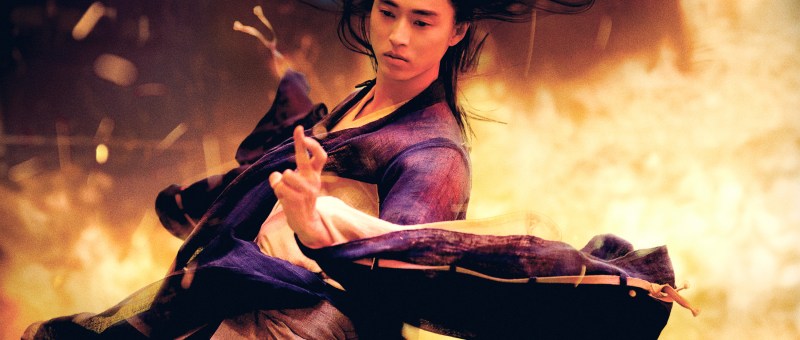
In the Heian era, who was it that kept the social order in check if not the onmyoji or “Yin Yang Master”? Shimako Sato’s big budget fantasy drama is technically a kind of prequel origin story adapted from Baku Yumemakura’s series of novels which were previously adapted as pair of movies in the early 2000s, and introducing the young Abe no Seimei (Kento Yamazaki), a Detective Dee-esque exorcist working as a state magician to protect the nation from supernatural threats such as demons and curses in an era in which ordinary people lived side-by-side with goblins and monsters.

That said, Seimei doesn’t really believe in that sort of thing, though in an ironic twist knows it to have a kind of truth at least, and is sick of being called out to look at a potential goblin infestation that turns out to be nothing more than a creaky old house settling amid the changeable weather. Which is all to say, he is both an earnest scientist looking for rational explanations to strange phenomena and an excellent diviner who can catch a dragon spirit in a bottle. In a touch of the Sherlock Holmes, he’s also gruff and aloof, distinctly uninterested in achieving high position and makes no secret of his contempt for his fellow alchemists insisting the Ying Yang Masters merely perpetuate superstitions to keep people frightened and themselves in employment.

When one of the other alchemists turns up dead of a suspected curse, the cat is set amongst the pigeons as the young apprentices respond to the offer of his higher status spot of they can solve the crime. This of course exposes their own greed and vanity as they each fall over each other desperate for a chance to get another foot on the ladder in a hierarchal system, a step that must be taken if they’re to make it all the way to the position of the emperor’s advisor on spiritual matters. Seimei’s disinterest further arouses suspicion against him with a fellow alchemist already 45 years old and stuck at the bottom rank directly accusing him of the crime perhaps less out of a genuine conviction than a desire to advance himself. 

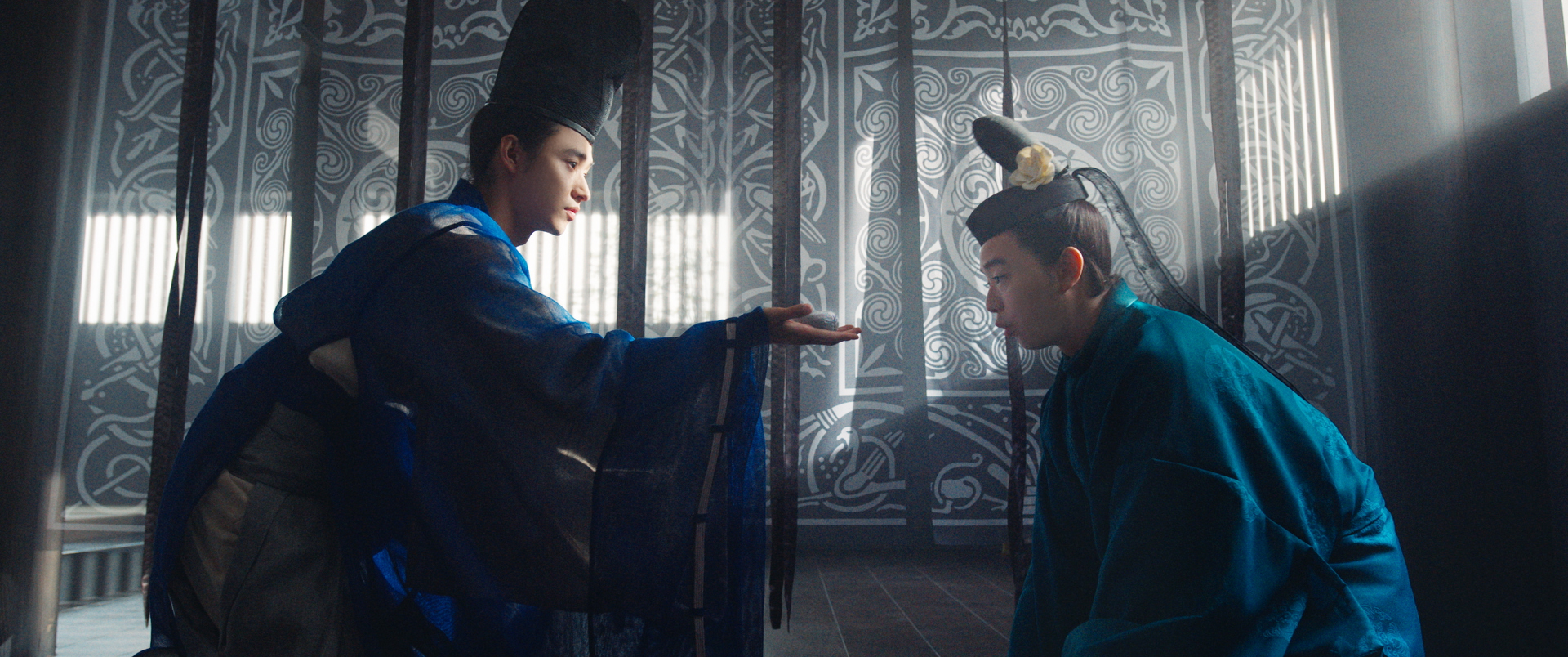
In any case, Seimei investigates in a more modern, scientific way gaining access to crime scene and corpse ironically through a connection he’s made at court to an influential musician, Hiromasa (Shota Sometani), who hired him to sort out a problem the princess, Yoshiko (Nao Honda), was having with snapping strings on her harp. That turned out to be caused by a giant golden dragon spirit which Seimei later claims represented her feelings for Hiromasa, who is also quietly in love with her, which are somewhat forbidden because of the class difference between them. In this way, the spirits are merely a manifestation of the conflict between personal feelings and the social order as Yoshiko finds herself all but powerless, a princess in a golden cage to be sent wherever she is called with no real say over her fate. 

Fittingly, these feelings are resolved in a kind of artificial reality that Seimei believes to be a space of shared consciousness though he’s also fond of remarking on the malleability of “reality” and the ways in which vision and perspective can be manipulated. Then again, he also says all that matters is what they are seeing and experiencing in that very moment which is as good a benchmark for objective reality as anything else. There is something quite poignant about his developing relationship with Hiromasa which has its homoerotic qualities even as he becomes the “idiot” stand in for the audience, a kind of Watson figure that Seimei can explain everything to so that he can explain it to us. Even we can see the restrictions of the court and the irony in the eventual victory of “order” rather than personal freedom as volatile emotional forces must be put back in their bottles lest they create problems for everyone. Such conditions will doubtless create a series of cases of Seimei and Hiromasa to solve in a potential series starring the ace exorcist and his flautist friend in a Heian society beautifully brought to life by Sato’s sumptuous production design and flair for fantasy action.


The Yin Yang Master Zero screened as part of this year’s New York Asian Film Festival

Original trailer (English subtitles)
Home Sweet Home (スイート・マイホーム, Takumi Saitoh, 2023)

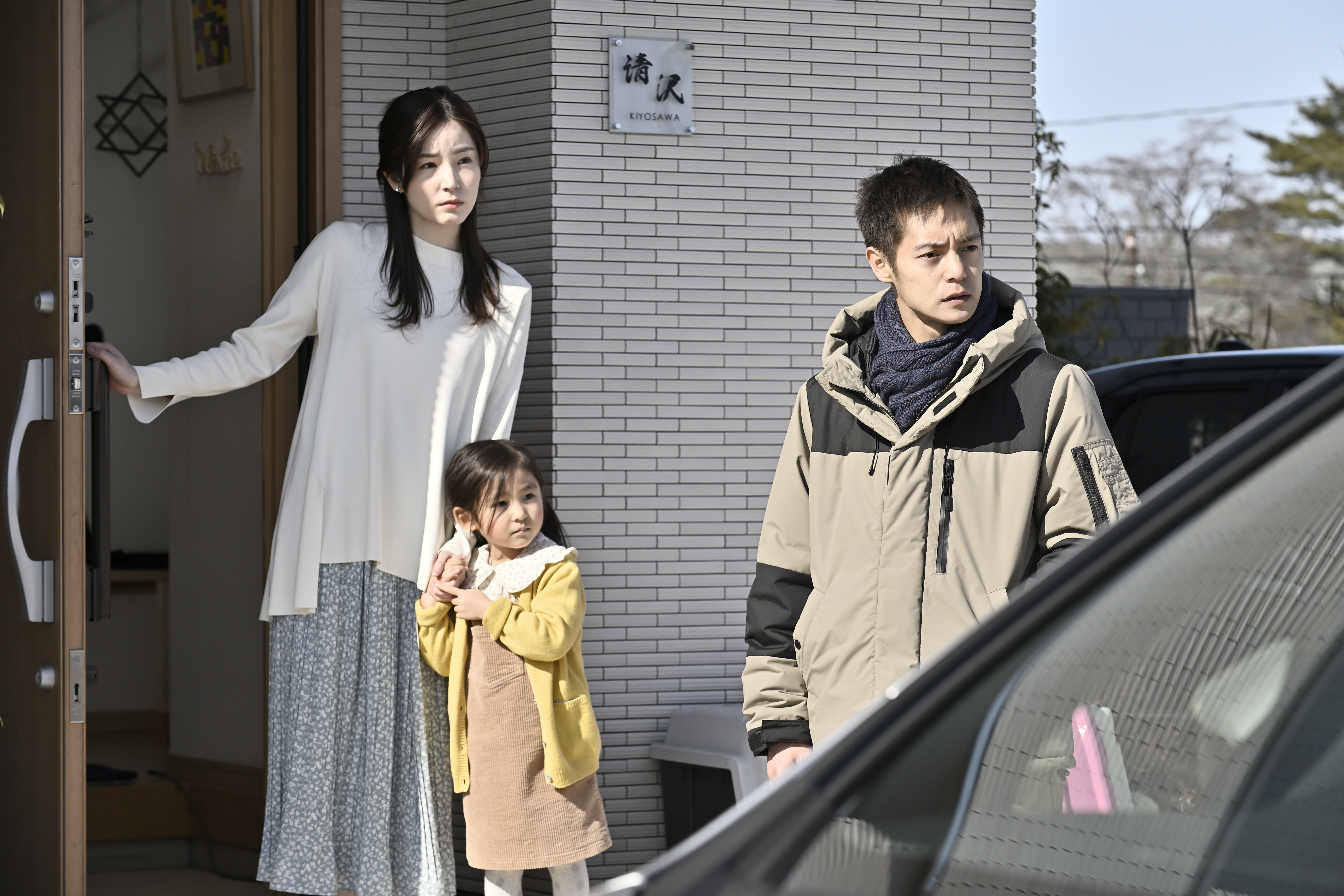
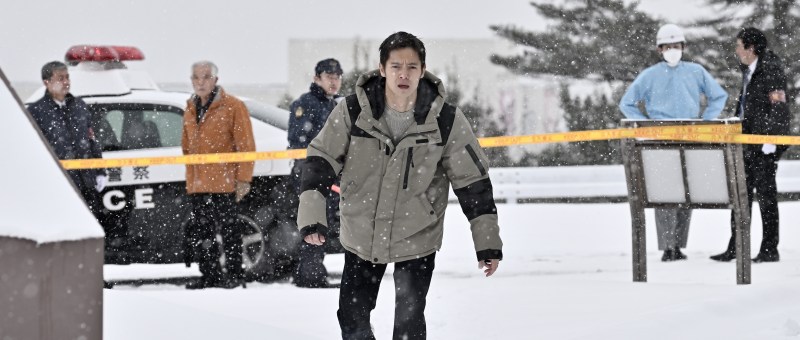
“The secret is in the basement” is not a phrase which inspires confidence when viewing a potential new living space, but as it turns out the cellar is the least of their worries in Takumi Saitoh’s eerie adaptation of Rinko Kamizu’s mystery horror novel, Home Sweet Home (スイート・マイホーム). The Kiyosawas are just looking for somewhere warm where they can enjoy life as a family in comfort and security, but if something sounds too good to be true then it usually is as they will discover to their cost. 

The saleswoman at Magic Homes describes the Kiyosawas as “the ideal family” for whom she is glad to build an “ideal” home. To many they may look “ideal” in that husband Ken (Masataka Kubota) has a steady job as a personal trainer while wife Hitomi (Misako Renbutsu) is a stay at home mum to four-year-old Sachi. But of course nothing’s quite as it seems and there are already cracks in the foundations of this happy family home as Ken has been having a years’ long affair with co-worker Yurie (Ririka). After finally deciding to take the plunge on the house, the affair comes to a natural end point as Yurie too decides to marry her longterm boyfriend with the aim of starting a family. But not long after the Kiyosawas have moved in to their new “magic home” complete with new addition Yuki, Yurie’s husband receives a video showing an unrecognisable Ken entering her apartment with the presumed motive of blackmail lending a note of anxiety to his moment of familial bliss. 

To begin with, the house itself takes on a eerie quality especially with the ominous rumble of the single AC unit in the pitch-black basement. The home does not seem to have been particularly well thought out for families with small children as the tiny doors leading to the hatch are at a toddler’s height and don’t appear to have any kind of safety locks in place. Everything else is run off the central smart system including a network of CCTV cameras sold to the family as a convenience that would allow them to keep an eye on the children wherever they might be in the house while getting on with other things, but also undoubtedly a privacy worry and no one likes to feel watched in their own home. Watched is exactly how they start to feel, Hitomi convinced someone’s been in the house while looking around realising how many vents and ducts there are ominously staring down at them in every room. 

Ken’s brother Satoru (Yosuke Kubozuka) is suffering with a mental illness that makes him paranoid, repeatedly insisting that there are people watching them and they need to protect the family because they are everywhere in the ceilings and the floors. Though it first seemed to us that the house was the problem, the family’s desire for conventional suburban living biting back at them, we wonder if the problem is Ken and his reckless endangerment of his family through his affair. When first viewing the house, the couple had been accosted by a creepy salesman, Amari (Yohei Matsukado), who makes barbed remarks about looking after the family that have Ken suspecting he’s got it in for them because they chose someone else to handle their sale or perhaps resents them for not being “ideal” enough to live in one of his “magic homes”. 

But then what is the “ideal” family, who gets to decide that? Why should the Kiyosawas have to fulfil a stereotypical ideal just to be judged worthy of homeownership? There might be something chilling in the uniformity of the house’s design, a utopian vision of suburban bliss founded on outdated patriarchal social norms of the nuclear family though in this case slightly adjusted for a new era, but then again the call is coming from within the house in more ways than one in Ken’s delayed response to traumatic childhood incident and concurrent anxiety around being able to protect his family in fulfilment in the social “ideal” for fatherhood. It’s the “ideal” that is the true enemy from the generic house design to the unfair expectations placed on the Kiyosawas to live up to a particular kind of suburban properness in order to qualify for the right to live there. Paranoid and eerie, Saito conjures a world of constant tensions in which we are all being “watched” if not to say judged and any bug in the system must be quickly removed so that the “ideal” may prevail.  


Home Sweet Home screens July 27 as part of this year’s New York Asian Film Festival.

Original trailer (no subtitles)

Images: ©2023 Rinko Kamizu, KODANSHA Ltd./ “Home Sweet Home” Film Partners

#Manhole (#マンホール, Kazuyoshi Kumakiri, 2023)

“Who are you? Why are you here?” both questions that might occur to anyone at any point in their lives, but don’t seem to bother the hero of Kazuyoshi Kumakiri’s off the wall B-movie thriller #Manhole (#マンホール) until he’s been trapped underground long enough to realise that his literal fall from grace might not be an accident after all. An existential journey deep into the soul of a seemingly blessed salaryman, Kumakiri’s defiantly absurdist drama is part social satire revolving around fluctuating identity in the social media age and meditation on the inevitability of karmic retribution. 

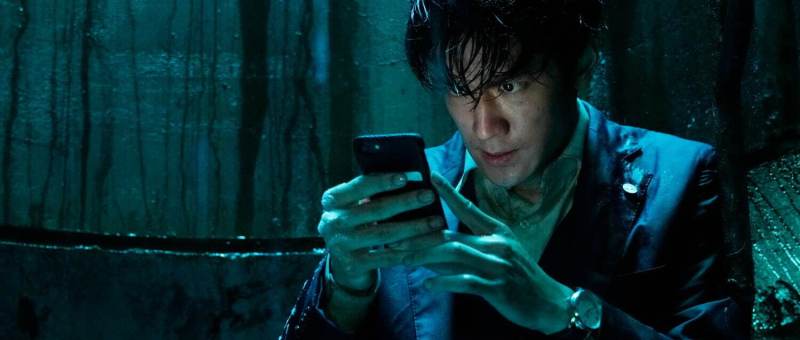
Shunsuke (Yuto Nakajima) does indeed seem to have it all. A successful estate agent, he’s about to get married and even has a baby on the way, only on his way home from a “surprise” party hosted by his work colleagues the night before his wedding he somehow manages to fall down an open manhole in the middle of Shibuya and becomes trapped there. His attempts to simply climb out are frustrated by a nasty gash on his thigh and a broken ladder while no one seems to be able to hear his cries for help. Though his phone still works, the only person who picks up when he calls is a former girlfriend, Mai (Nao), whom he threw over to court the boss’ daughter five years previously which makes it somewhat awkward to ask for help. 

As we can gradually gather, Shunsuke is not really a great guy and is in part in a hole of his own making. Even so, you can’t really confine someone to a hole just for being one. To begin with he busies himself with trying to solve various hole-related problems such as a leaking gas pipe with the salaryman tools at his disposal like the tiny of roll of sellotape in his pencil case or the cigarette lighter he was gifted by suspiciously aloof colleague Kase (Kento Nagayama) as a wedding present though there’s not much he can do about the weird foam or various animal corpses that surround him. 

It’s at this point he decides to enlist the help of the internet in setting up a profile on Twitter-like social media app Pecker where he identifies himself as “Manhole Girl” under the rationale that people are more likely to rush to the rescue of a pretty young woman than a 30-year-old salaryman who had too much to drink and fell in a hole. His readiness to do this hints at his internal duplicity and a confident sense of entitlement. It doesn’t seem to occur to him that whoever comes to his rescue might decide not to bother on discovering the truth. In any case, he soon becomes Pecker’s main character with engaged netizens keen to help him figure out where he is and, once it becomes clear it might not be an accident, who put him there. But claiming to be his own sister he’s also confronted with sordid speculation about his personal life and character that reveal there might be quite a few people who privately hoped he’d someday disappear down a hole in the ground and never come back up again.

Even before his ordeal, Kumakiri often frames Shunsuke looking at his own reflection hinting at a lack of self-recognition in the images that he sees of himself. Of course, he doesn’t know who any of the helpful netizens are either because most of them don’t use their “real” names or profile pictures that are actually of “themselves” just as he pulled a picture of a cute girl off the internet to create the Manhole Girl persona. He can’t even be sure of the identity of the people he speaks to on the phone, and wonders if Mai really did come to look for him when she says she’s been all over Shibuya and couldn’t find any open manholes. 

For a while it really does seem like he’s in “a completely different place”, some alternate dimension of existential purgatory. The sense of eeriness is only deepened by the strong blue-green lighting and ominous clouds above the hole that obscure the image of the full moon which, in the urban absence of stars and the disruption of his GPS seemingly caused by an unknown force, are all he has to go on in trying to figure out where exactly he is. Few will be prepared for the answer, though as some may expect Shunsuke knew all along for as much as it’s a “real” place it’s also a part of himself he sought to deny. Kumakiri excels in capturing the claustrophobic otherworldliness of Shunsuke’s near literal hell hole while mining a deep seam of cynical dark humour and anarchic absurdity culminating in an incredibly ironic and deliciously wry use of cheerful 1960s hit Sukiyaki. 


#Manhole screens at UltraStar Cinemas Mission Valley April 20/21 as part of this year’s San Diego Asian Film Festival Spring Showcase.

International trailer (English subtitles)

Mio’s Cookbook (みをつくし料理帖, Haruki Kadokawa, 2020)

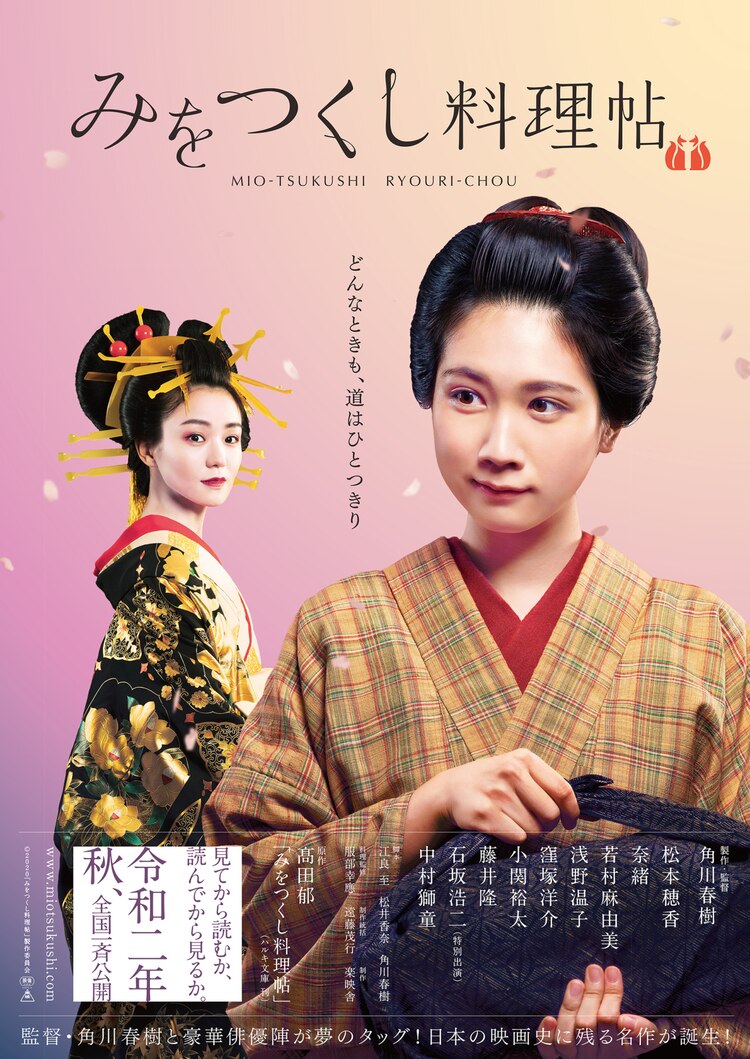
“Food nurtures like heaven” according to a piece of advice from a local doctor which quickly becomes a catchphrase of the heroine of Haruki Kadokawa’s slice of foodie cinema Mio’s Cookbook (みをつくし料理帖, Mi wo Tsukushi Ryoricho). Adapted from the novel by Kaoru Takada, the Meiji-era drama is at once a tale of a pioneering young woman making her way in fiercely patriarchal society, and a heartwarming exploration of chosen and re-formed families discovering new senses of solidarity in the of wake tragedy while resolving to extend that sense of community to other lonely souls. 

The titular Mio (Honoka Matsumoto) meanwhile has had her share of loss, orphaned during a catastrophic flood and thereafter separated from childhood best friend Noe (Nao Honda) who simply disappeared. 10 years later, Mio and her adoptive mother Yoshi (Mayumi Wakamura) have relocated from Osaka to Edo though their lives have not been easy, Yoshi’s son having run off never to be seen again following the failure of the family restaurant. Mio is now working in a small cafe owned by a kindly older gentleman, Taneichi (Koji Ishizaka), but struggling to adapt to the sophisticated tastes of the capital with customers flatly refusing to eat her overly subtle oysters. A sullen samurai, Komatsubara (Yosuke Kubozuka), points her on her way by explaining that her food lacks “foundation” which is why she hasn’t yet found her groove. 

Mio’s culinary journey is also one of growing confidence as she learns to reorient herself in her new city life eventually realising that the key lies in uniting the tastes of Osaka and Edo as if integrating the two cities into her essential identity. A fortune teller had once told her that she would suffer many hardships but eventually reach “blue sky beyond clouds”, discovering a taste of that in her unexpected success even as those around her marvel at the female chef, a hitherto unheard of phenomenon, as she climbs the ranks of the local restaurants with her innovative cuisine after taking over from Taneichi. 

Yet her success also brings her enemies in the conservative and increasingly greedy Edo society. A rival restaurant rips off her signature dish and charges twice the price, a customer admitting that many will gladly pay more just to be seen doing so, less interested in the quality of the food than what is fashionable (times it seems do not change all that much). Even so “food is only as good as the cook” Yoshi is fond of saying believing that a bad person can’t make good food, something brought out by Mio’s compassionate nature as she continues to help those around her, vowing to “take vengeance through food” in concentrating on perfecting her craft and nourishing people’s souls rather than allowing herself to be beaten into submission by elitist intimidation. 

Meanwhile she continues to wonder whatever happened to Noe, reflecting that she was lucky in having found Yoshi who took her in out of compassion and continues to stay with her all these years later while gaining a surrogate father in the kindly Taneichi who himself lost a daughter. Noe’s prophecy was that she would “rise like the sun” and achieve “world-conquering fortune” though as it turns out she was not so lucky even if the prophecy did in fact come true if ironically. Both women continue to suffer because of the world in which they live each prevented from pursuing their romantic freedom, Mio forced to give up on her probably impossible love for samurai Komatsubara in order to embark on a quest to save her friend through achieving true success with her restaurant while Noe is constrained by her inescapable life as an oiran.  

Even so the film never really digs into the division placed between the women by the existence of the Yoshiwara into which one cannot enter and from which the other can never leave while the open ended conclusion that only advances a hope that the division may be breached perhaps suggests that it may never be, in part because it depends on Mio’s success as an independent woman in a feudalistic, patriarchal society. Meanwhile the two women continue to support each other in ways they can, Mio trying to raise her friend’s spirits with frequent care packages designed to remind her of home and their more innocent childhood smuggled in by supportive friends while each of them have in their own way found new families based on mutual compassion as a means of overcoming despair to rediscover a sense of hope for a better future founded on human solidarity. 


Mio’s Cookbook streams until 27th February in several territories as part of Japanese Film Festival Online 2022.

Original trailer (English subtitles)
Sensei, Would You Sit Beside Me? (先生、私の隣に座っていただけませんか?, Takahiro Horie, 2021)

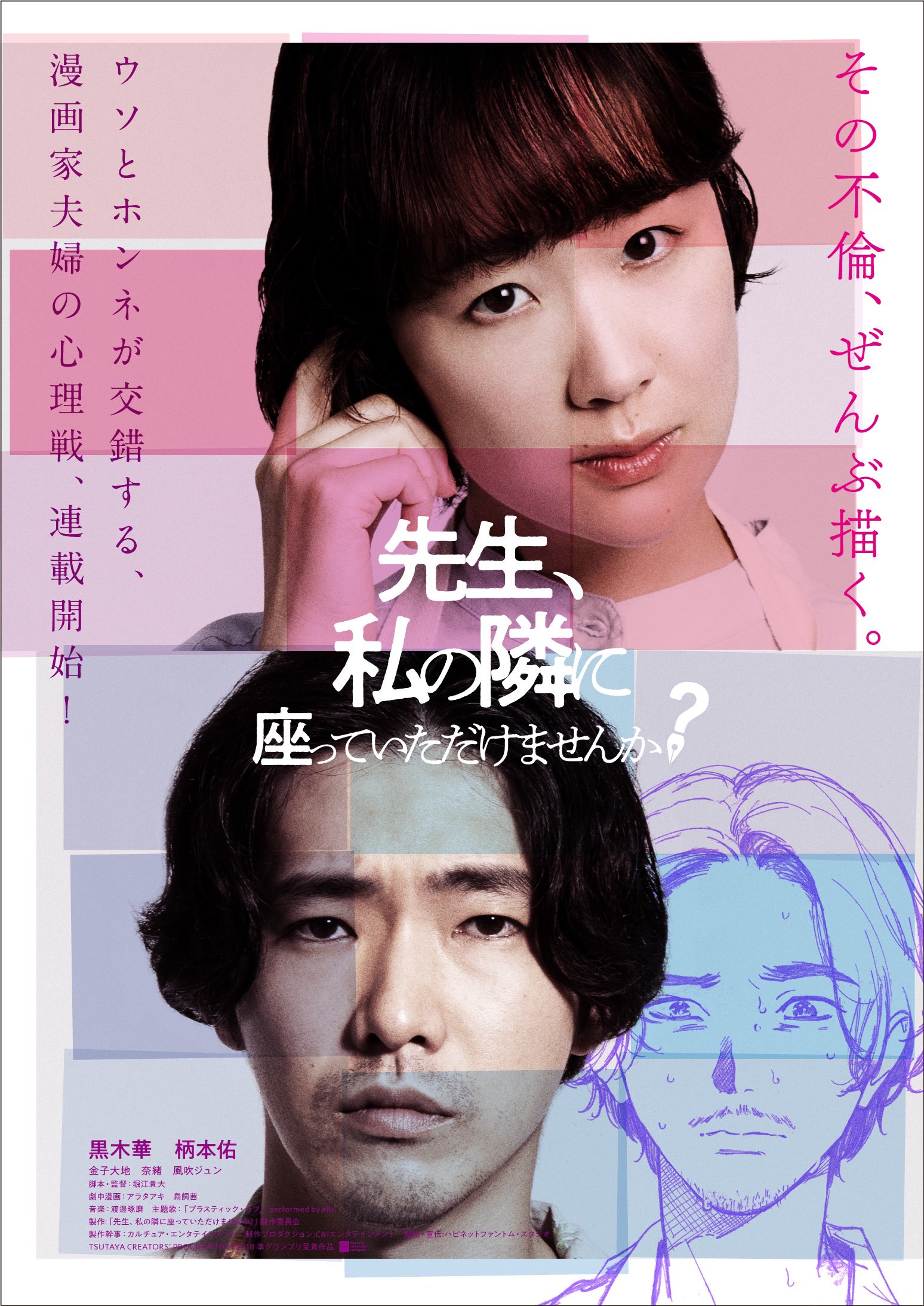
An under-confident mangaka tries to save her moribund marriage through a passive aggressive attempt at “realism”, but then is that really what she wants? What is she really up to? Takahiro Horie’s anti-rom-com Sensei, Would You Sit Beside me? (先生、私の隣に座っていただけませんか?, Sensei, Watashi no Tonari ni Suwatte Itadakemasenka?) is more complicated than it first seems, a tale of romantic revenge, of a woman’s determination to reclaim her independence, or perhaps even a slightly cynical not to mention sexist story of a betrayed wife’s attempts to rekindle her moody husband’s creative mojo in the hope of reigniting the spark in their marriage. What transpires is however a literary game of cat and mouse as a suddenly alarmed husband attempts to get ahead of the game through the transgressive act of reading his wife’s diary. 

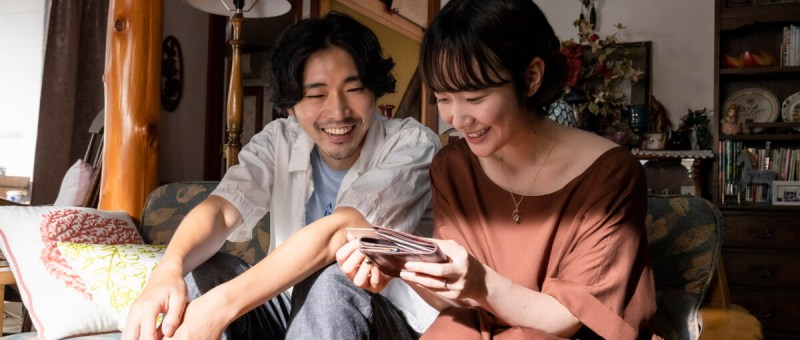
A successful manga artist, Sawako (Haru Kuroki) has just completed a long-running series assisted by her husband of five years, Toshio (Tasuku Emoto) who was once a bestselling mangaka himself but hasn’t worked on anything of his own since they got married. Toshio appears to be prickly on this subject, and is in something of a bad mood while Sawako’s editor Chika (Nao Honda) waits patiently for the completed pages. Seemingly suspecting something, Sawako asks Toshio to escort Chika back to the station with the intention of following them only she’s interrupted by a phone call from the police to the effect that her mother (Jun Fubuki), who lives out in the country, has been in an accident and broken her ankle. Sawako and Toshio decide to go and stay with her while she recovers, though a change of scene seems to do little to relieve the pressures on their marriage. 

Indeed, on their first night there Toshio remarks that it’s been a while since they’ve slept in the same room which might go some way to explaining the distance in their relationship. Aside from that, Toshio superficially seems much more cheerful perhaps putting on a best behaviour act for his mother-in-law who makes a point of telling her daughter how “great” her husband is and how she’s almost glad she broke her leg because it’s brought him to stay. Her gentle hints to Sawako to let her know if there’s something wrong elicit only a characteristic “hmm” while she otherwise makes only passive-aggressive comments which suggest she fears her marriage may be on the way out. Having long been resistant to the idea of learning to drive even though she grew up in the country, Sawako starts taking lessons at a nearby school cryptically explaining to Toshio that perhaps she’d better learn after all because she’ll be stuck when he leaves her. 

Sawako’s “driving phobia” as she first describes it appears to be a facet of her underlying lack of self-confidence. She simply doesn’t trust herself to take the wheel and cannot operate without the safety net of someone sitting next to her. Having not got on with the grumpy old man she was originally assigned, Sawako gains the courage to take her foot off the brake thanks to a handsome young instructor, Shintani (Daichi Kaneko), who makes her feel safe while slowly giving her the confidence to trust in herself. The implication is that Toshio has been unable to do something similar in part because he’s so wrapped up in his own inferiority complex over his creative decline complaining that nothing really moves him anymore. When Chika advises Sawako choose a more “realistic” subject for her next series, she passively aggressively decides to go all in with a clearly autobiographical tale of adultery that suggests she is well aware her husband and editor are having an affair behind her back while the heroine experiences a passionate reawakening thanks to her handsome, sensitive driving instructor. 

Of course, Toshio can’t resist reading her “diary” and obsessing over how much of it is “true”. Perhaps Sawako intended just this effect, driving her husband out of his mind with guilt and jealousy indulging in a little revenge whether in fantasy or reality. The irony is that there are at least three “senseis” floating around including Sawako herself with the eventual decision of who, if anyone, she wants to sit beside her the unanswered question of her “revenge” manga. Her real revenge, however, may lie in her determination to grab the wheel, reclaiming agency over her life along with a new independence born of her ability to drive and therefore decide its further direction while toying with Toshio’s inner insecurity in order to effect a plan which is far more insidious than it might first seem. Filled with twists and turns, Horie’s cynical love farce eventually cedes total control to its seemingly mousy heroine as she gains the confidence to go solo or hand-in-hand as it suits her towards a destination entirely of her own choosing. 


Sensei, Would You Sit Beside Me? screened as part of this year’s New York Asian Film Festival.

International trailer (English subtitles)