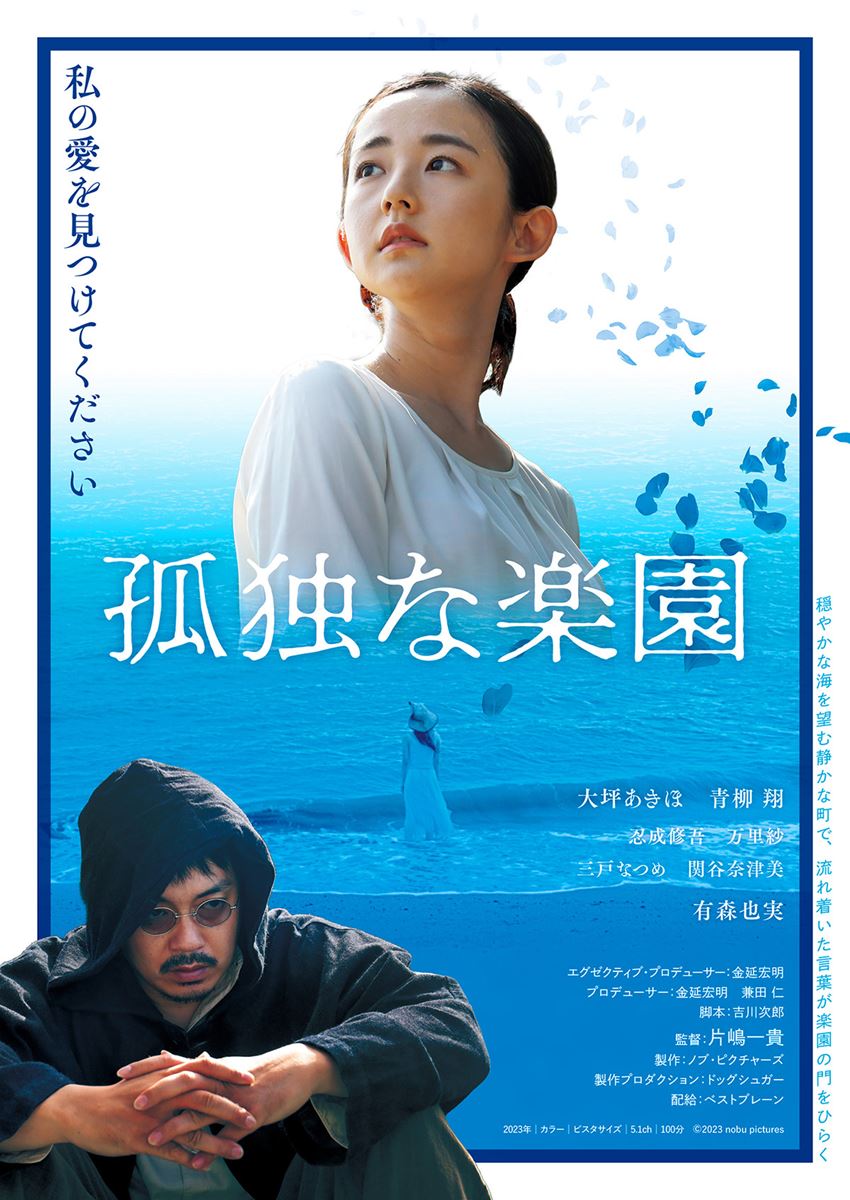
Paradise of Solitude (孤独な楽園, Ikki Katashima, 2024)

A blocked writer and a introverted young woman discover unexpected connection through accidental epistolary communication in Ikki Katashima’s poetic drama, Paradise of Solitude (孤独な楽園, Kodokuna Rakuen). Each wondering what exactly “paradise” means, the pair of them eventually find new ways to face the past and move on with their lives all while undergoing a vicarious romance with yearning at its centre that may or may not develop into something more “real” or else achieve its power solely through its lack of resolution. 

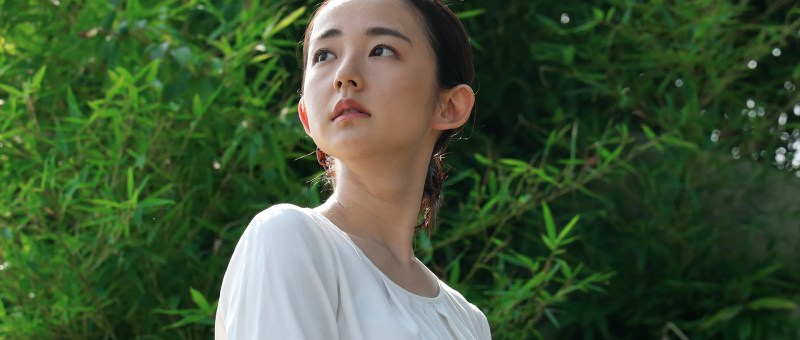
Yu Tsushima (Sho Aoyagi) is a writer struggling to meet his deadlines on a new serialised novel. Suffering with an illness, he’s retreated to his hometown and is now unable to leave because he experiences seizures on boats which understandably leaves him preferring not to get on them. One day, he receives an incredibly poetic love letter from an anonymous address only to notice a link to a porn site at the end of the email like a cruel punch line. Meanwhile, Ayame (Akiho Otsubo) is a nervous and introverted young woman working at a factory on the next island over. To begin with, it seems like she has suffered under the authoritarian rule of her aunt Tsukiko (Narimi Arimori), though as we later discover she may have meant well. 

Showing a talent for writing which sees her exploited by the factory boss, Ayame is tasked with writing a love letter on behalf of her friend Elena to a man she’s apparently only seen once yet has fallen hopelessly in love with. There’s something a little strange about this proposition, and not least because it seems like Elena may actually want this letter for herself and has unspoken (in Japanese, at least) feelings for Ayame. Elena is not the only non-Japanese person working at the factory at which it seems there may be some racist attitudes and behaviour among the employees, though there may be other reasons she feels isolated and otherwise drawn to Ayame.

But somehow, the letters find their way to Yu who is then “inspired” to write a new serial basically ripping off the anonymous correspondence but rewriting it in his own way while Ayame, having read his stories in a literary magazine, is not exactly angry yet confused and continues writing in order to complete this literary back and fore in crafting a new story together. Though the letters spin a tale of a lovelorn soul, it’s really the past that Ayame longs to revisit in the resultant trauma of her mother’s unexplained abandonment.

On top of the weird island drama, Katashima builds on the sense of uncanniness with a subplot about a cult-like local church and its own desire to reclaim Ayame thereby preventing her from fully confronting her past. Just as Yu is suffering from a medical condition, Ayame too experiences panic attacks when in contact with the church. Though it’s not always clear what is objectively true and what part of the story Yu is constructing from Ayame’s prose, parallel stories develop in which Ayame’s father hoped to liberate her mother’s soul though she eventually decided to chase paradise somewhere else. 

Because of her experiences, Ayame comes to believe that love within her has died, but perhaps begins to regain something of it thanks to her correspondence with Yu who becomes remorseful in learning that his actions may have been additionally unethical in encouraging Ayame to engage with her past trauma and risk dragging it all up again. He, meanwhile, begins to discover his creativity and overcomes the psychological dimensions of his condition by leaving his island and breaking out of his self-imposed isolation. The correspondence is like the message in a bottle discovered by Ayame’s mother which claimed to be from “paradise”, a hand across the ocean promising a better world over the horizon. Whether or not they find each other eventually in a more direct sense may not really matter, for simply having this invisible presence has enabled each of them to move past their internalised inertia and restart their lives. They may be trapped in a paradise of solitude, but on the other hand not quite alone and now a little more open to life’s possibilities rather than bound by its hurts and disappointments too frightened to leave the safety of their isolation in search of a more perfect paradise.


Paradise of Solitude screened as part of this year’s Cinema at Sea.

Trailer (no subtitles)

Hijacked Youth – Dare to Stop Us 2 (青春ジャック 止められるか、俺たちを2,  Junichi Inoue, 2024)

A loose sequel to 2018’s Dare to Stop Us, Hijacked Youth (青春ジャック 止められるか、俺たちを2, Seishun Hijack Tomerareruka, Oretachi wo 2) picks up a decade later with an autobiographically inspired tale from writer director Junichi Inouchi but in its way also becomes the latest in a series of indie films to offer a celebration of Japan’s mini theatres still struggling with the fallout from the COVID-19 pandemic while exploring the origins of the contemporary independent film scene. 

The allusion seems clear even from the film’s opening in which cinephile and former programmer Kimita (Masahiro Higashide) fears for the future of cinema amid the arrival of the VCR. Having quit his job to support a young family, he is puzzled but eventually won over when unexpectedly contacted by notorious film director Koji Wakamastu (Arata Iura) who has apparently decided to open a cinema in provinciail Nagoya after the screening of Ecstasy of the Angels was restricted because someone bombed a police box for real. Kimita wants to run it as a rep cinema, but Wakamatsu sees it partly as a vanity project and a side business so has his eye on the bottom line. Making the mistake of programming films he thinks are good rather than ones people want to see quickly puts them in the red with Wakamatsu pressuring Kimita to give in and agree to screen pink films even though he himself had admitted that pink cinema had had its day. 

Wakamatsu is forever taking Kimita to task for having a prejudice against these kinds of films which are after all the kind that Wakamatsu makes though he does concede that there are talented directors working in pink film who may someday become the leading lights of the Japanese cinema industry. Some of that is hindsight, but what the film is working towards is a link between pink film, which was independently produced in contrast to something like Roman Porno which was made by a studio with much higher budgets and production values, and the rise of independent cinema which is largely dependent on the mini cinema ecosystem to it keep going. 

But then the film is also a nostalgic memoir revolving around the director’s teenage dreams and his eventual meeting of Wakamatsu thanks to the cinema in Nagoya. The irony is that the first film had been titled “Dare to Stop Us,” focussing on Wakamatsu Pro during the turbulent days before Asama-sanso as an anarchic force in a sometimes staid film industry. But the through line here is that everyone gives up far too easily. Kimita abandoned his dreams to sell video recorders, while the young woman who works for him believes she has three strikes against her, the first being her gender, the second a lack of talent, and the third which she does not disclose that she’s a member of the Zainichi community of ethnic Koreans often discriminated against even the Japan of the 1980s and in fact today. 

Junichi gives up a bit easily too after making a twit of himself on Wakamatsu’s film set, though the picture he paints of him is larger than life. Fatherly and compassionate, he gives him solid advice to go to a proper uni and learn filmmaking with him while otherwise taking him under his wing, but also pretty much takes over after giving him his first opportunity to make a film and has a tendency to take no prisoners when it comes to his crew members. At least as far as the film would have it, he’s become a rather lonely figure now that his more politically minded friends have scattered following he decline of the student movement in Japan. As much as anything else, the film is a sort of hagiography as evidenced by the surreal coda which seems to reference the director’s early death in traffic accident in 2012, jumping forward 30 years to find the cinema still open and celebrating his legacy more literally yet also in its existence in supporting the indie scene Wakamatsu helped to birth. According to Wakamatsu, the most important thing is finding your own angle and sticking to it, something his rebellious spirit at least may have fostered in the many directors who started their careers at Wakamatsu Pro and not least Inoue himself.

Hijacked Youth – Dare to Stop Us 2  screened as part of this year’s Nippon Connection

Original trailer (English subtitles)

Single8 (Kazuya Konaka, 2023)

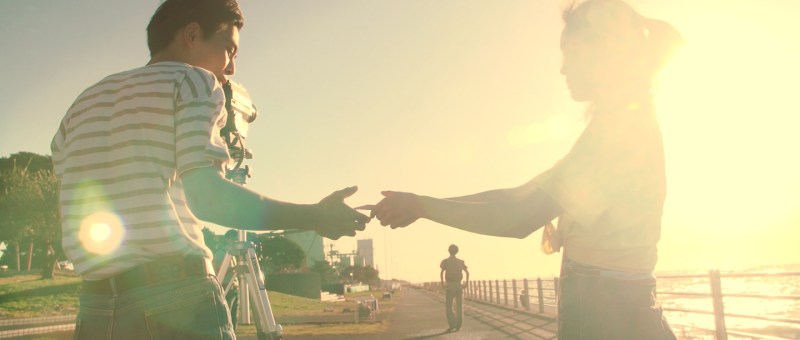
In a lot of ways, it’s never been easier to make a movie. You can capture sound and image with your phone, edit and add special effects on an ordinary laptop with no particular need for professional grade software or equipment. But on the other hand, perhaps there’s something that’s been lost now that you don’t need to work so hard to overcome technical limitations. Kazuya Konaka’s auto-biographically inspired high school drama Single8 follows hot in the heels of It’s a Summer Film! in pairing the classic summer adventure movie with filmmaking nostalgia while looking back to a now forgotten era of analogue creativity. 

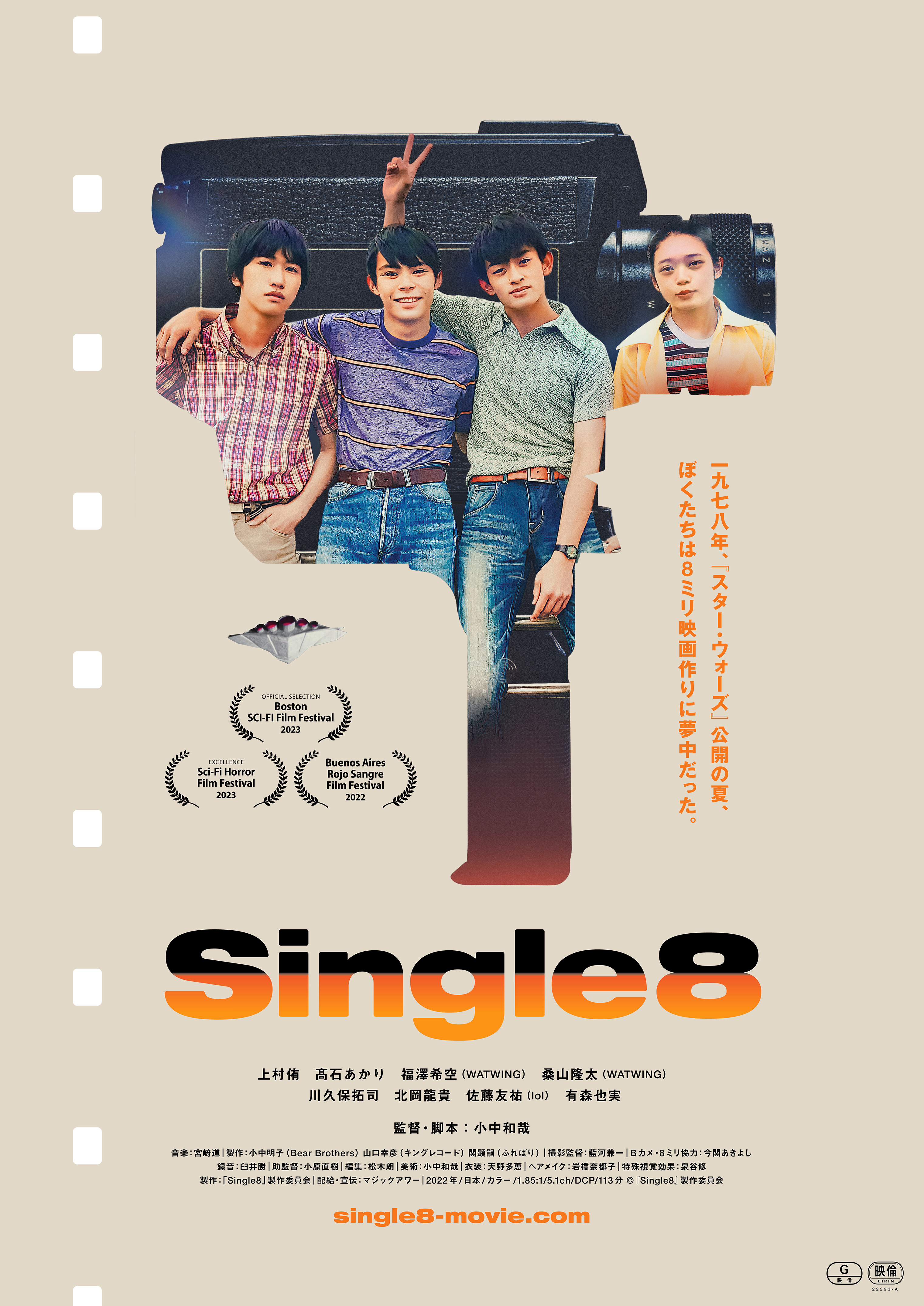
Set in the summer of 1978, the film opens with an homage to Star Wars which has captured the imagination of diffident high school boy Hiroshi (Yu Uemura). Hiroshi is not so much a film buff as special effects enthusiast and is particularly obsessed with figuring out how Lucas achieved the overwhelming sense of scale in his spaceship model shots. Aimed only with a regular, consumer-level 8mm camera, he teams up with a friend, Yoshio (Noa Fukuzawa), to experiment and thanks to the advice of the guy at the camera shop (Yusuke Sato) eventually manages to recreate the scene with a surprising level of dexterity. His new found confidence leads him to suggest they continue with the film as the class project for the upcoming school festival which will be the last of their high school lives. 

The snag is that Hiroshi hadn’t thought much beyond recreating the shot. His previous short film had been called “Claws” and was basically Jaws only with a bear. When people ask him what the film will be about, he looks at them quizzically as if it hadn’t really occurred to him that the plot would be important or something anyone would be interested in. It’s only by teaming up with another student, Sasaki (Ryuta Kuwayama), who actually is a film buff that they begin to come up with their own ideas even if they’re also often influenced by other science fiction films and tokusatsu television series. In a meta touch, the students openly discuss scriptwriting theory remarking that the most important aspect is how the protagonist evolves between the first scene and the last. The film itself and the film with in a film attack this in a similar way, with Hiroshi eventually deciding to end on a note of ambivalence in which it is clear that something has changed if perhaps not obviously. Now no longer quite so diffident, he steps into the role of a director and proudly declares that his next film will be even better than this one. 

Similarly, Konaka avoids falling into the trap of an overly neat conclusion in allowing events to play out in a more natural way than we would usually expect them to in a movie even if Hiroshi is eventually able to win over even the most obnoxious of his classmates, Yoshida. Through making the film together, each of team members including Hiroshi’s crush Natsumi (Akari Takaishi) who plays the film’s heroine grow in confidence and come to understand something of themselves while otherwise having fun and making friends across the last summer break of their teenage lives. The film is a collaborative effort and made with a true sense of generosity with a university student friend of the camera shop guy helping out with special effects by literally carving them directly into the film itself and the high school band Natsumi manages also agreeing to provide the score. 

A true tribute to the charming world of DIY filmmaking in the pre-digital era the film has has a charming nostalgic quality which is only enhanced by the fact that the film within the film, which is eventually shown in its entirety, is actually very good and quite touching in its earnestness. Konaka includes clips of the few of his own 8mm films over the closing credits which adds a meta note to the film’s message that “people should fix their own mistakes” even if there is also an irony in the insistence that they should look to the future rather than obsessing over the past. Using frequent screenwipes as a visual homage to Star Wars but also of course to The Hidden Fortress which inspired them, Konaka’s retro teen drama ends on a similarly ambiguous though less melancholy note than the film within a film filled with a sense of possibility for a new world of creativity which is only just beginning. 


Single8 screened as part of this year’s Nippon Connection. It will also be screening in New York on 30th July as part of this year’s JAPAN CUTS.

Original trailer (no subtitles)

Images: ©Single8 Film Partners

Graveyard of Honor (新・仁義の墓場, Takashi Miike, 2002)

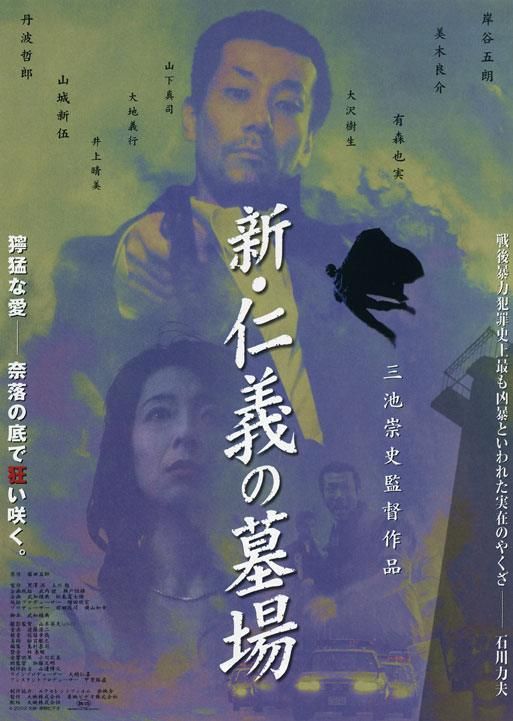
In Kinji Fukasaku’s 1975 jitsuroku eiga Graveyard of Honor, a collection of voices open the film musing on whether the hero was corrupted by the times in which he lived or merely born crazy. Like most jitsuroku or true account gangster movies of the ‘70s, Fukasaku’s Graveyard of Honor is a post-war story about a man who failed to adapt himself to the rules of his society which was of course in constant flux though the rules of the yakuza are perhaps as fixed and timeless as any. Inspired by the same source material Takashi Miike’s comparatively subdued, contemplative Graveyard of Honor (新・仁義の墓場, Shin Jingi no Hakaba) maintains the moody, noirish feel of the ‘70s gangster drama complete with melancholy jazz score but updates the legend of Rikio Ishikawa to late 20th century Japan which again finds itself in crisis, floundering for direction and filled with despair. The bubble has burst in more ways than one as the young in particular awaken to the fact they have been deceived by the false promise that the good times of the Bubble years were cost free and would last forever leaving them abandoned in a world they no longer recognise as their own. 

Unlike Rikio Ishikawa who, we are told, always wanted to be a gangster, Rikuo Ishimatsu (Goro Kishitani) falls into the gokudo world by chance, his life thereafter one long fall until the bloody suicide with which the film opens. A bleach blonde dishwasher at a Chinese restaurant, he gets an offer he can’t refuse when he calmly defuses a would be assassin by hitting him on the head with a chair, earning the eternal gratitude of boss Sawada (Shingo Yamashiro) who takes him on and makes him his protege. This meteoric rise in the yakuza ranks, however, is not without its drawbacks especially in that it destabilises the internal politics of the Sawada gang with old retainers instantly resentful that this young upstart has leap frogged them to sit at the boss’ side while they’ve patiently put the work in only to be sidelined. 

A stretch in prison for avenging the boss’ honour brings him into contact with Imamura (Ryosuke Miki), later his sworn brother but also his opposing number, possibly the last honourable yakuza. “A yakuza without honour isn’t worth shit” Imamura’s boss later remarks, instructing him that Rikuo is a liability he’ll have to take responsibility for, but in this graveyard of honour that kind of responsibility is the one that will get you killed. Honourable yakuza can no longer survive in the world of corporatised thuggery that is the modern gokudo existence. Later we realise that the tale is being narrated by Rikuo’s former underling, Kikkawa, who reminds us that “even yakuza are human beings” existing within a social structure with clearly defined rules which must be followed, yet the rules themselves are largely superficial and Kikkawa survives because he subverts them, abandoning the reckless Rikuo for the certainty of Sawada and setting himself on the traditional gokudo path of sucking up to the boss in the constant hope of advancement. 

Kikkawa is, in a sense, the grovelling salaryman to Rikuo’s frenzied maverick, one as much they symptom of the age as another. Rikuo’s rise occurs against the economic boomtown of Japan in the ‘80s which is as much a paradise for gangsters as for anyone else but also a kind of twilight, the yakuza as an institution relegated to the Showa era and the post-war past. Gangsters forced out of their families like the desperate ronin of the feudal era further destabilise an already chaotic environment which, like that of the post-war years, is filled with despair and disillusionment only to be further disrupted by the advent of natural disaster and economic collapse. 

Like the yakuza of the jitsuroku, those of Miike’s Graveyard of Honor struggle to reorient themselves in a changing society, no more equipped to deal with economic stagnation than their forbears were for the end of occupation and the increasing irrelevance of gangsterdom in a world of economic prosperity. Increasingly paranoid and anxious, Rikuo sees betrayal in all quarters and remains essentially powerless, eventually imprisoned in what appears to have been previously used as a child’s bedroom. He seeks escape in drugs which he finds by chance, and then in romance with an equally powerless woman who bizarrely seems to have fallen in love with him after he brutally raped her though their strange, drug-fuelled quasi-wedding ceremony is the tenderest, most vulnerable we ever see them. Yet as the opening scene implied, all there is is futility. Knowing what he knows, Kikkawa meditates on his memories of happier days when he was just a minion at Rikuo’s side. In this graveyard of honour only the slippery survive and the only way to be free is to fall, and fall hard. 


Original trailer (English subtitles)