The Dry Spell (渇水, Masaya Takahashi, 2023)

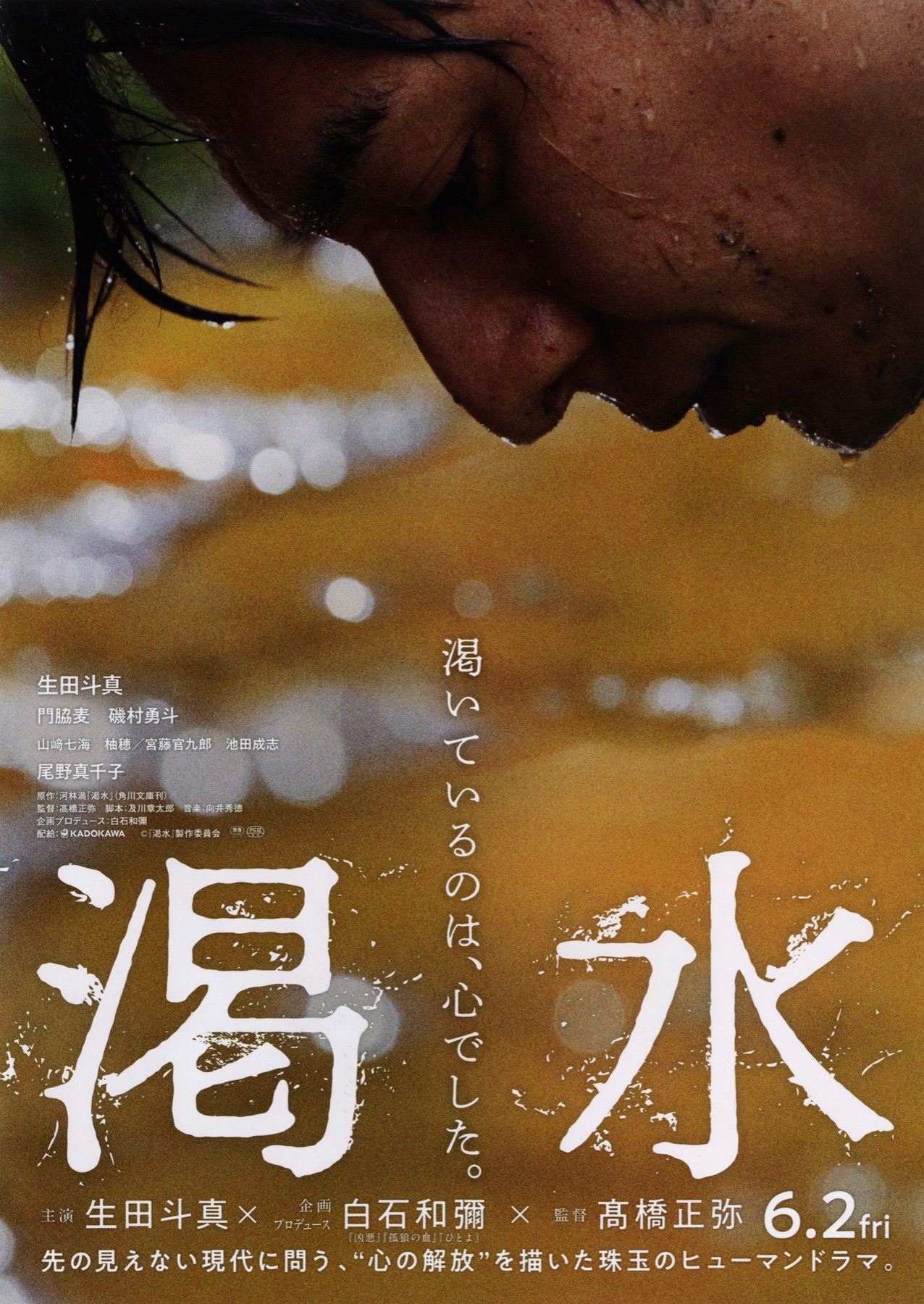
A literal drought becomes a metaphor for bureaucratic heartlessness in Masaya Takahashi’s empathetic social drama The Dry Spell (渇水, Kassui). Inspired by Mitsuru Kawabayashi’s 1990 novel, the film puts a contemporary spin on prejudice and poverty as a collection of officials from the waterboard point at airconditioners and mobile phones while asking why the residents have fallen into arrears with their water payments only to reflect that yes, water like air and sunlight should be free.

The argument that one of Iwakiri’s (Toma Ikuta) colleagues makes, is that they have a right and a duty to charge for the water supply to support the nation’s infrustructure along with their advanced purifcation system which keeps people safe. Iwakiri isn’t so sure about that, but as others later say of him he’s a man who’s made of water himself. He doesn’t like his job but he doesn’t really dislike it either and justifies himself that it’s not him turning people’s water off so much as it’s a natural consequence of them not paying their bills and all they need to do to get it turned back on is settle them. But then as another colleague who eventually refuses to continue cutting people off suggests, every time you do it you lose a little piece of your soul. 

Iwakiri may not have had much of a soul to begin with. He’s as dried up as the town in the middle of a recordbreaking drought and heatwave. Having endured a difficult childhood, he’s become alienated from his wife and son who have decamped to her hometown with no clear indication of when or if they’ll return. That may be one reason he finds himself empathsithig with a pair of sisters who have been abandoned by both parents and are living alone in a house that has already had its gas and electricity supplies cut off. Iwakiri turns off their water supply because it’s the rules, but begins to hate himself for doing it and develops a desire to go against the flow for the first time in his life.

Keiko (Nanami Yamazaki) and Kumiko (Yuzuho) are a pair of water babies who have a yearning for the sea and the father who was apparently once a sailor but seemingly disappeared a year previously while their disappointed mother does her best to support the family through sex work which is as she points out the only line of work open to a single mother with limited qualifications. Iwakiri advises her to apply for benefits but she refuses on the grounds that she doesn’t want them poking around in what she describes as a complicated family situation which makes plain her predicament. But even as Iwakiri begins to meditate on his own paternal failures, his partner Kida (Hayato Isomura) flows in the opposite direction keener to hold onto his job after he learns he’s a baby on the way and unwilling to rock the boat despite how much he may also feel that water should be free. 

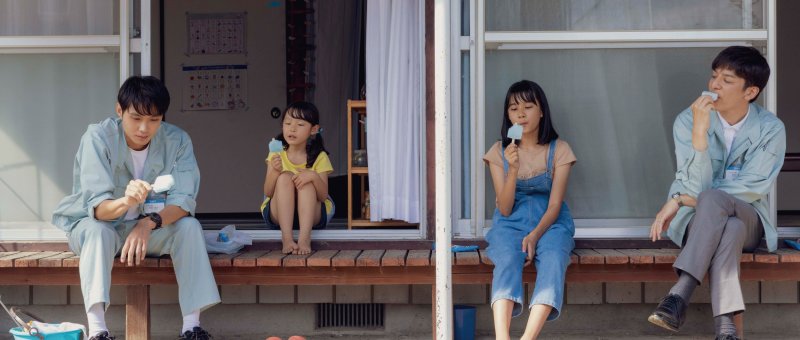
In any case, Iwakiri is trying to un-dam himself, waiting for the great big rain that Kumiko says will make everything go back to normal. Except it won’t, at least not literally  though it will in some senses open the flood gates liberating Iwakiri from his emotional repression and the girls from their illusions accepting that they are now alone but will always have each other. As he points out, they are just watermen and there’s not much they can do for the struggling people whose supplies they’ve cut off. It wouldn’t help to pay their bills for them even if they could, and in a better world water should indeed be free though it becomes much harder for them to justify their complicity with a heartless system that can arbitrarily remove access to something so essential for life. Takahashi flits between cheerful scenes of ice lollies in the sun to the cruel realities of the lives of Keiko and Kumiko who continue to long for the sea as does Iwakiri in struggling to repair his relationships with his wife and son while trying to escape the legacies of own traumatic upbringing. The film doesn’t offer any easy answers, but does perhaps suggest that the rain will bring change and the promise of a better future.


The Dry Spell screened as part of this year’s Camera Japan.

Original trailer (no subtitles)
Dear Etranger (幼な子われらに生まれ, Yukiko Mishima, 2017)

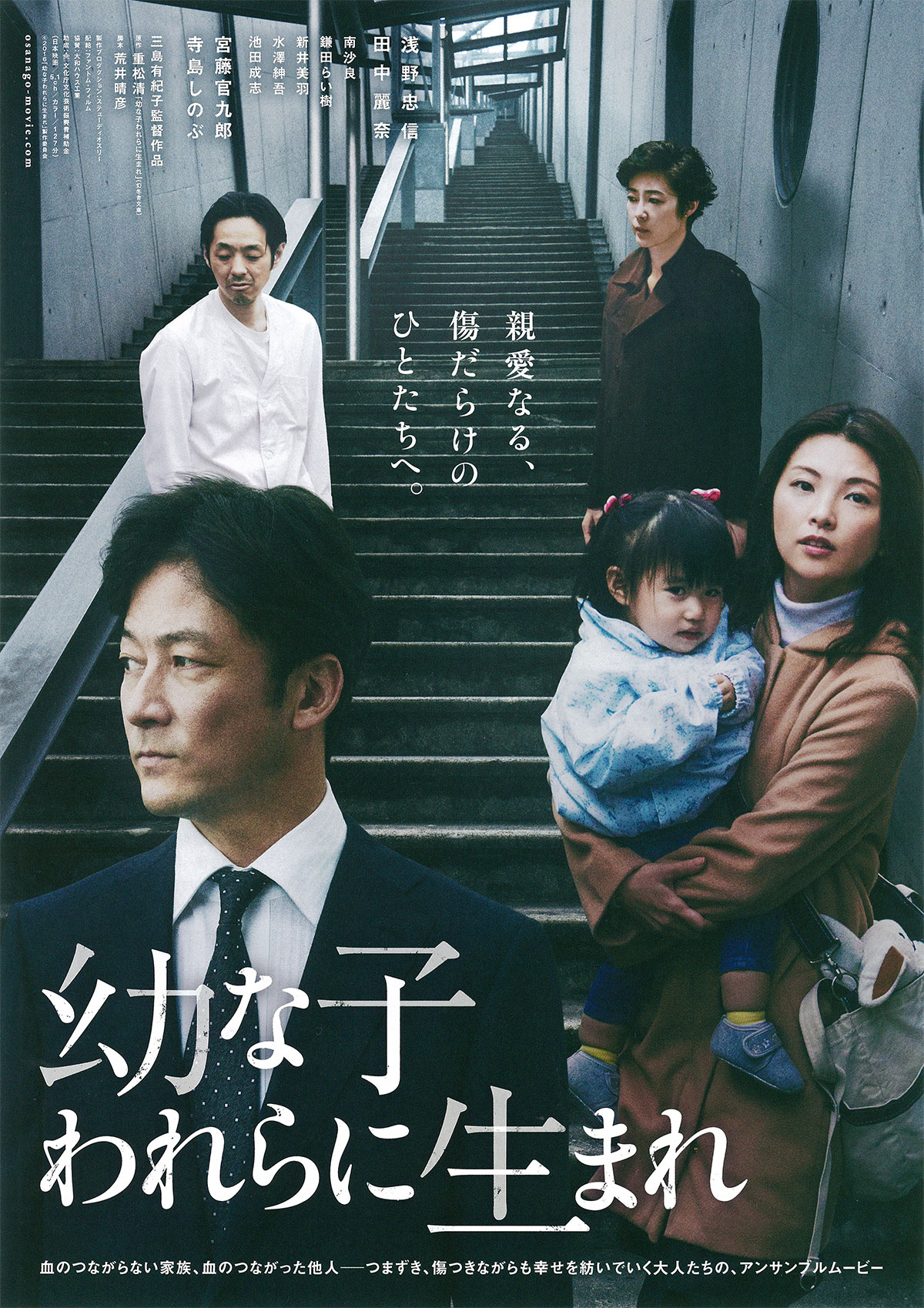
Dear Etranger posterThe family drama has long been considered the representative genre of Japanese cinema, but with the days of Ozu long gone the family itself has become a subject for reappraisal. Yukiko Mishima’s Dear Etranger (幼な子われらに生まれ, Osanago Warera ni Umare) is the latest to take a scalpel to the nation’s basic social unit and ask what the word “family” means in an ever changing social landscape. In an Ozu picture, one family must be broken for another to be formed – this is the way of things and in the end must be accepted if with sadness, but does it really need to be this way or is there room for more as connections become less easy to define?

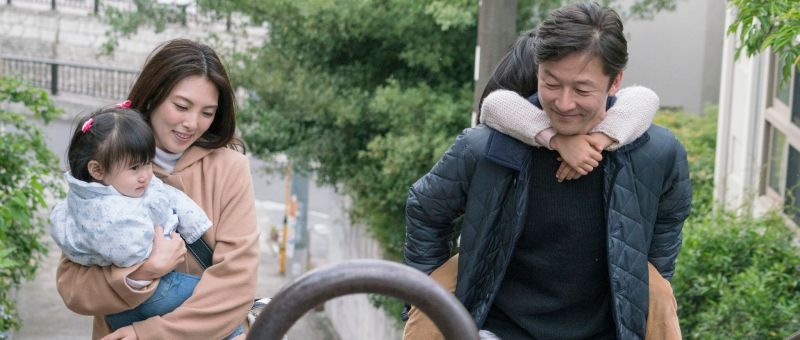
Makoto Tanaka (Tadanobu Asano) separated from his first wife some time ago and still spends time with his daughter, Saori (Raiju Kamata), though only a few times a year. Four years ago he married another woman, Nanae (Rena Tanaka), who had also been married before and has two children – Kaoru (Sara Minami) and Eri (Miu Arai). Nanae has recently discovered she is pregnant and is thrilled to bits to add to their family, but Makoto is conflicted. He liked the family as it was and worries that the new baby will place a wedge between himself and his step-daughters, that they may suddenly feel themselves pushed out and not really part of the new family that is being forged by a child who has a blood relation to both their parents rather than just one.

In truth, family dynamics aren’t all Makoto currently has to worry about. A 40-year-old man, he’s also hitting the scrap heap at work – rather than laying people off, they’re transferring them to unpleasant jobs in the hope they’ll resign. A lifelong salaryman, Makoto has been sent to the packing warehouse where his every move is logged on computer and he’s rated for speed. This is partly his own “fault”. Rather than play the salaryman game, Makoto wanted to be a family man. He doesn’t work weekends or overtime, he takes public holidays off, and never stays out late drinking with colleagues – all things which mark your card as an antisocial shirker in workaholic Japan.

Makoto’s superior, warning him about the imminent transfers, criticises his attitude. He tells him that he doesn’t think spending time with his children is his “job” as a father. He sees his responsibility as one of providing a role model and he thinks the best way to do that is to be seen working hard as a “respectable” member of society. Makoto couldn’t disagree more. He works to rule, but wants to be the sort of father that’s there for his kids, not just an authoritarian figure who comes home late smelling of booze and throws his weight around. He knows that as the children grow up they’ll grow away from him and won’t want to hang out with dad anymore, so he wants to spend time with them now while he still can.

Makoto’s intense desire to be a family man is perhaps unusual in Japan where men channel their ambition into work and women are (still) expected to channel theirs into the home. It is therefore doubly painful for Makoto when his elder step-daughter, Kaoru, heading into a difficult age, suddenly rejects him on hearing about the new baby. Despite the fact that Kaoru’s biological father (Kankuro Kudo) was violent towards both her and her mother, Kaoru begins to insist on seeing him, complaining that it’s unfair to be forced to live with “a stranger”. On one level, Kaoru is at the age at which most young women begin to find their father annoying and embarrassing, but her resentment is also informed by a fear of abandonment and cultural doubt about her place in a still atypical family, unconvinced that it’s possible for a man to become a father to a child that’s not his own by blood.

Blood ties still seem to trump all in most people’s minds, but bureaucracy plays its part too. Makoto still insists on making time to see Saori – something which is sadly unusual in Japan where divorce usually results not only in the children losing contact with the absent parent but also the entirety of an extended family. Kaoru doesn’t quite like it that Makoto does this, she feels almost betrayed as if he’s choosing his biological child over her and that continuing to associate with Saori means he hasn’t fully committed to her family. There seems to be an idea that the family unit is a distinct bubble and one can’t be inside more than one at a time, just as one can’t be listed on more than one “family register”. When an emergency occurs and Saori needs to get a lift from Nanae who has Eri in the back of the car, she isn’t sure if it’s OK for her to get in even with her father with her. She suddenly feels awkward, as if her presence in his car with his new family is inappropriate. None of these people know each other – the existence of a parallel family is so embarrassing as to be “unseen”, buried like a scandalous secret and kept entirely separate to avoid any cross-contamination. When Eri asks who Saori is, awkward silence prevails until she is forced to introduce herself as a “friend” of her father’s – something he doesn’t bother to correct until the drive home when another encounter has pushed him into reconsidering what it means to be a “father”. 

Makoto’s strong desire for acceptance and for forging a “family” that is “his” may perhaps seem selfish and possessive, yet he also tries to react with patience and empathy towards others in his position. He tries to be patient with Kaoru, advising her that he doesn’t think meeting her “real” dad is a good idea but if it’s what she wants he’ll try to make it happen. Likewise, he is grateful to Saori’s stepfather for raising his daughter when he wasn’t able to. Finally the walls begin to dissolve and it stops being about who belongs on which bit of paper and starts being about connections forged through love and understanding. The new baby, rather than forcing everyone apart, begins to bring them together, each joined by a feeling of joy and responsibility towards the new life to which they are all connected. 


Screened at Nippon Connection 2018.

Original trailer (no subtitles)