Human Resource (Nawapol Thamrongrattanarit, 2025)

Fren (Prapamonton Eiamchan) has been having trouble sleeping. The doctor she visits to confirm her pregnancy tells her that she’ll have to stop taking her sleeping tablets, but to try gentle exercise such as walking on a treadmill instead. But Fren’s whole life is walking on a treadmill. The reason that she can’t sleep is that she works in HR for a terrible company and is knowingly bringing people into this world of cruelty and exploitation. She doesn’t really want to do the same for her baby, which is one reason she hasn’t told her husband Thame (Paopetch Charoensook) about the pregnancy even though they’ve been trying for two years.

Nawapol Thamrongrattanarit’s Human Resources paints a fairly bleak picture of contemporary Thailand which is all the more chilling for its seeming normality. Fren listens to radio hosts talk about how the economy is tanking, there are floods in the north and no one’s doing anything about it, and also apples might be full of microplastics. You should also fit a filter in your shower because there’s cadmium in the water despite the government’s assurances that it’s safe. No wonder everyone feels on edge. Fren is increasingly uncomfortable with her own complicity, but sees no real way around it.

The main problem is that she works for a bully for who demands an apology from her when she has to have a word with him about his workplace behaviour which includes throwing piles of paper in the face of employees. June hasn’t been coming to work, and according to Fren’s colleague Tenn (Chanakan Rattana-Udom), a few other employees quit their jobs like this too because they just couldn’t live this way any more. Between Jak’s rages, low wages, and the demand to work six days a week, they know they can’t keep staff and feel bad about trying to recruit people. Tenn laments that given the economy, someone will desperate enough to bite, while the pair of them make themselves feel better by deciding to be upfront in interviews about the working culture and letting the candidates decide for themselves.

But how much do you really get to decide? When Thame finds out about the pregnancy, the couple to go look around an expensive international school. Fren agrees that’s very nice and the children seem happy, but it wasn’t their choice to be here and no one’s ever asked them if their parents’ idea of a “decent” person is what they really want to be. To Fren, the international school seems like another level of complicity in perpetuating the inequality in society that’s fuelling the violence and resentment all around them. The candidates might not have the option of turning down these jobs, and Fren doesn’t really have the option to leave, either. But Tenn comes from money and he could always get a job at his family’s company, so in the end only he has the choice of whether to stay or go.

Lectures Fren attends talk about the working revolution and the threat of AI, insisting that the “average” worker is dead because those jobs are gone, so the only way to make a mark is to work yourself to death and make use of personal connections. That seems to be the route Thame is taking after becoming chummy with the police chief in the hope of selling him some of their ultra thin stab vests that are comfortable to wear all day long as if implying the world has already got to that point that you need to be wearing armour at all times. He has a worryingly authoritarian streak and is incensed by the moped drivers who keep going the wrong way up their one-way street. Thame refuses to back up and let them pass, though isn’t so brave when one of them jumps off his bike and begins pounding the windscreen with his helmet. Humiliated by his inability to combat this kind of violence despite having brought it on himself, Thame later runs the guy over deliberately and then gets the police chief to make it go away. 

Meanwhile, Fren feels as if all she can do is carry on walking the treadmill. The shutter at the car wash comes to symbolise that of the furnace at the crematorium where a colleague who took their own life because of overwork and bullying was laid to rest as if Fren’s life were a kind of living death. A famous woman convicted of a crime reveals she’s had an abortion because she didn’t want her son to be born in prison or to bring a child into that world. Fren isn’t sure she wants to either, but like everything else, she might not have much choice.


Human Resource screens as part of this year’s BFI London Film Festival.

Trailer (English subtitles)
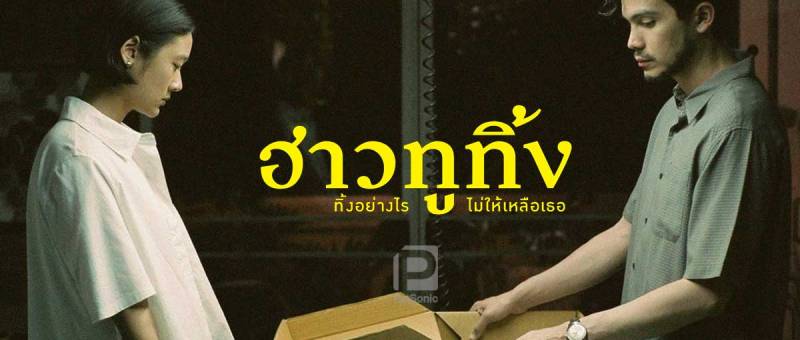
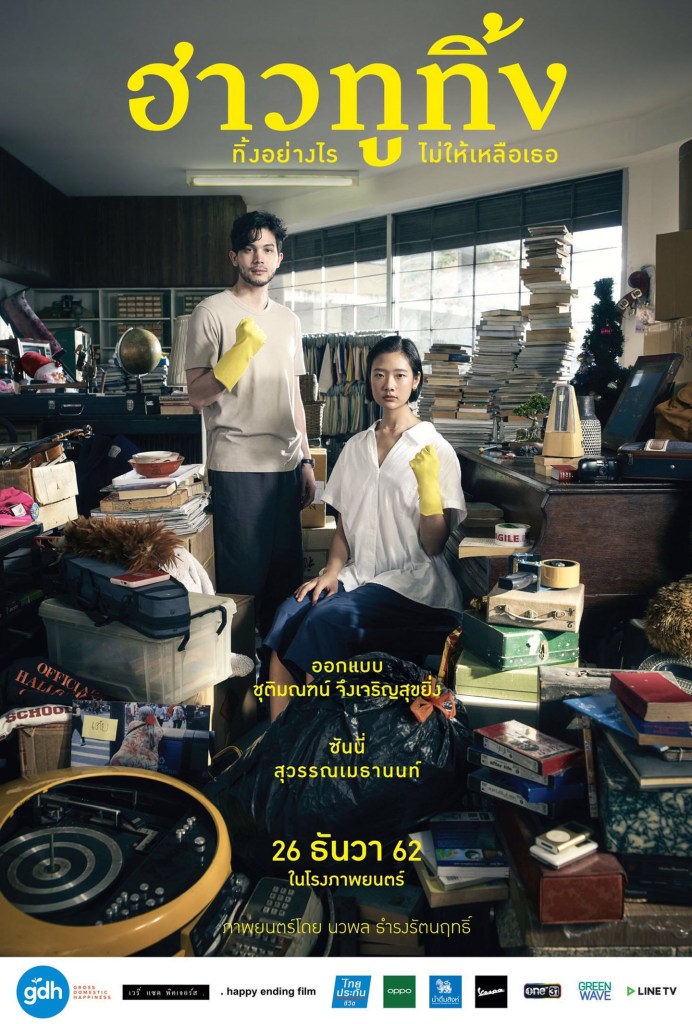
Happy Old Year (ฮาวทูทิ้ง..ทิ้งอย่างไรไม่ให้เหลือเธอ, Nawapol Thamrongrattanarit, 2019)

“Some things won’t go away just because you pretend to forget all about it” the heroine of Happy Old Year (ฮาวทูทิ้ง..ทิ้งอย่างไรไม่ให้เหลือเธอ) is reminded by an exasperated friend preparing to forgive her once again for another thoughtless hurt. According to Jean (Chutimon Chuengcharoensukying), “Minimalism is like…a Buddhist philosophy. It’s about letting go”, only her minimalism has been of an emotional kind and in essence the very opposite of letting go. Her approach to life’s many difficulties has been to throw them into a mental black bag, consign them to a black hole of memory, and then simply walk away, but there’s only so much space for delayed trauma and one day you’ll have to start opening some of those bags so that you can finally let go for real. 

20-something Jean has been living in Sweden for the past few years and has recently returned to Thailand, more or less against her will. For some reason, she seems to have asserted ownership over her family’s home which once housed her father’s musical instrument repair shop. Without bothering to ask her mother (Apasiri Nitibhon) or brother, Jean has decided to radically redesign the property’s ground floor into an office space, sending her remaining family members upstairs. Talking things over with her old friend Pink (Padcha Kitchaicharoen) who seems to be involved in construction, she wants to get the work started shortly after New Year not least because the new job she’s just been offered wants to make an office visit the following month. They’ve got a scant few weeks to clear 30 years’ worth of clutter so the builders can do their thing. 

Jean’s plan is basically to sweep everything into bin bags and dispose of them without giving it too much thought. Coming round to the idea, her brother Jay (Thirawat Ngosawang) starts watching Marie Kondo videos to get into the mood, but “complains” that everything he touches sparks joy. He can’t bring himself to part with the myriad “tacky” souvenirs he’s amassed over a lifetime because it’s the thought that counts and throwing them out is like throwing away kindness. According to Jean, “being emotional only brings trouble”, though she is perhaps a little troubled bagging up an oversize teddy gifted by a friend at graduation with a card that reads “take care of me”. She gets her comeuppance when Pink notices a CD she once gave her with a message inside lying on top of a to go pile and is understandably hurt. To Jean it’s just a meaningless object. No one listens to CDs anymore, but to Pink it doesn’t matter that it was gift from years ago, throwing out the CD is like erasing a moment in time, negating the importance of their teenage friendship. 

Pink’s reaction is Jean’s first clue that her wholesale bag and toss philosophy might be problematic. When she finds a scarf she’d knitted for Jay in his to go pile, she gets a taste of her own medicine. Reassessing her possessions, she realises she has more than a few items technically intended for other people that she has selfishly never passed on. Inspired by Pink and in a bid to find some kind of closure, she decides the best thing is to start returning the “borrowed” items to their rightful owners, but quickly discovers that not everyone is thrilled to have the past suddenly presented to them in the form of a random object. An attempt to return a double bass she was supposed to get her dad to repair goes very badly indeed, to the extent that Jean must simply have forgotten or just not realised how badly she had injured her friend. 

Emotionally immature, Jean has an almost childlike view of interpersonal relations, firmly believing that just saying sorry will make everything alright again (even you don’t really mean it). Her most difficult task is returning a camera and unused rolls of film to the high school boyfriend (Sunny Suwanmethanont) she dumped by ghosting after going to Sweden. Too cowardly to go in person, she tries mailing it, but when the parcel comes back return to sender she knows she has to try face to face. Aim listens to her heartfelt confession and seemingly forgives her, inviting her inside for tea with his new girlfriend Mi (Arisara Buaprang), but what Jean really wanted was a blazing row so she could expiate her guilt. 

Later, a slightly less magnanimous Aim points out that Jean’s quest to prove that she wasn’t selfish person is actually incredibly selfish. What she’s been doing, in essence, is dumping all of her emotional baggage on her friends and then walking away leaving them to deal with it on their own. The apology she made was for herself, not him. If she really cared, she’d have found a way to carry her guilt without burdening others. 

Nevertheless, some objects do have presence. “It seemed like an ordinary photo and now it’s priceless” Aim remarks on helping to find one of Jean’s errant objects, the first photo of a couple of high school sweethearts now about to get married. Another photo calls up memories of a supposedly happier time in Jean’s childhood but it’s a memory she can’t bear to keep or delete. While her mother doggedly clings to her father’s piano despite the fact that no one can play it, Jean wants to bulldoze everything, erase their history as a family by replacing their cluttered home with crisp white walls and shiny steel. Only too late may she realise what she’s losing, that with every discarded object a piece of her goes too and soon there may be nothing left at all. Turns out that trying to deal with your abandonment issues by abandoning things isn’t as sound a strategy as it might sound. “This is the era of cloud storage”, Jean points out, but in many ways it’s our orphaned files who make us who we are. Minimalism might be about letting go, but you need to remember to keep hold of yourself in the knowledge that memories don’t belong to you alone but connect you to the world through a thousand shared kindnesses and tiny hurts trapped inside the most banal of objects.


Currently available to stream on Netflix in the UK (and possibly other territories)

International trailer (English subtitles)

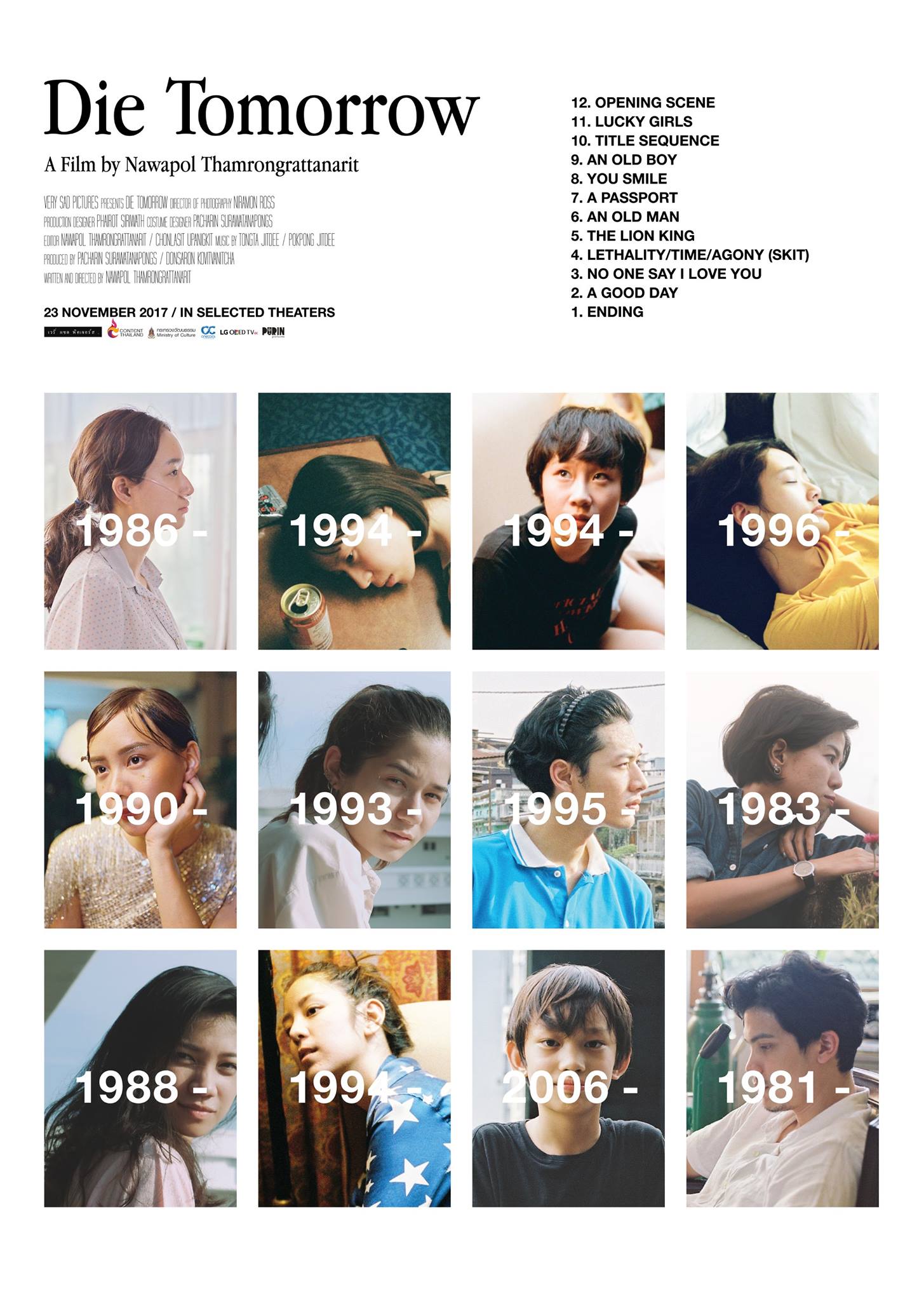
Die Tomorrow (พรุ่งนี้ตาย, Nawapol Thamrongrattanarit, 2017)

Die Tomorrow posterDeath gives life meaning, so they say, but if death is such a normal part of being alive, why do we live continually in its shadow? We spend our lives talking about a tomorrow which might never come, but it’s those tiny moments of mundanity which make life worth living. Nawapol Thamrongrattanarit’s Die Tomorrow (พรุ่งนี้ตาย) examines the “last day” of a number of oblivious citizens of Bangkok who are busy living life “as normal” little knowing that everything they do will be for the last time.

Shooting mainly within an oppressive square, Nawapol Thamrongrattanarit rams his point home with his first vignette in opening with a newspaper report recounting the death of a student in a road traffic accident the night before her college graduation. He then introduces us to a gaggle of excited students eagerly talking about horoscopes and their dreams for the future. We never quite figure out which of them will be dispatched to get more beer. It could be anyone, anywhere – even you, even right now.

As the ticking clock and time card remind us, 2 people die every second all over the world making dying possibly the world’s most popular activity. Most people dread it, but for one very elderly gentlemen it would be a relief. Convinced that his advanced old age is either a result of genetics or a mistake by someone upstairs, he selfishly wishes that he’d died before his wife and son so he wouldn’t have to go on enduring the pain of their loss. Meanwhile, a little boy quizzed on his beliefs about the afterlife is convinced that death is peaceful because everything just stops. He feels pretty much OK with the idea because he googled it straight away as soon as he found out so it all seems very straightforward. Nevertheless, he’d rather not know when death is coming because that would just make him “sad” and then he wouldn’t be able to enjoy his remaining time.

Death is, however, something you have almost no control over. A melancholy man gets his toenails clipped by his loving wife who is suffering from a terminal disease and awaiting a transplant. Grimly, he tells her that with every death there is fresh hope as he prepares for a trip abroad unaware that, as the preceding title card told us, a plane is about to go missing in the skies between Thailand and America. Meanwhile, across town a man pushes a stool up to his balcony and prepares to jump. Before he does so, he leaves a message for a friend instructing him to pass on his thanks and apologies to the others, affirming that he had no desire to bother them but he has tried his best and life is cruel. An old lover, presumably having her reasons and well within her rights, refuses to open her door to him and remains unrepentant even when her friend suggests she may regret it if he really does do “something stupid”.

With each death the frame expands to its fullest, as if echoing the sense of emptiness in the very present absence of the recently deceased. A brother somewhat irritated by his sister’s abrupt and unexplained return from the US, declares that her death (in a freak accident while parking his motorbike to take a picture of a cute puppy) has reminded him of the preciousness of life. He might have been embarrassed before, but now he makes a point of hugging and kissing his parents, telling those close to him they are loved in case there is no later opportunity to do so. The sad death of a salaryman, in his sleep in the stock exchange lying undiscovered for five hours, seems all the more absurd and pointless while that of a veteran musician, soon after getting his head massaged by his loving daughter, seems like the best of all ends – lying peacefully at home in the summer breeze. Yet as the old man tells us, those who are “young” should have no fear and simply live. Less about the omnipresence of death than the ephemerality of life, Die Tomorrow is a quiet paen to the small pleasures of being alive, discovered in mundanity and the knowledge that every breath may be one’s last.


Die Tomorrow was screened as a special preview at the BFI Southbank and opens in UK cinemas on 26th July courtesy of Day for Night. It is also currently available to stream in the UK via MUBI.

International trailer (English subtitles)