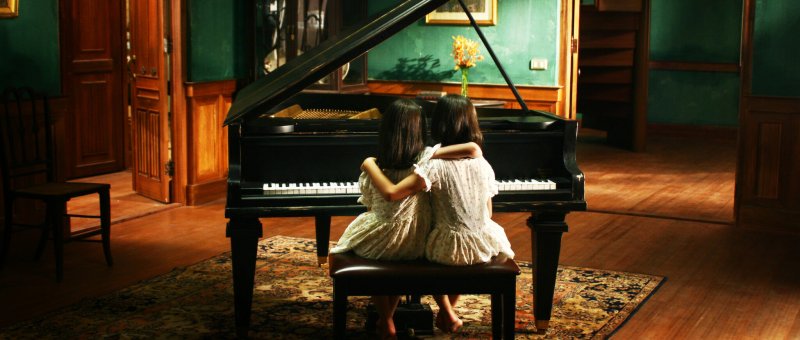

Alone (แฝด, Banjong Pisanthanakun & Parkpoom Wongpoom, 2007)

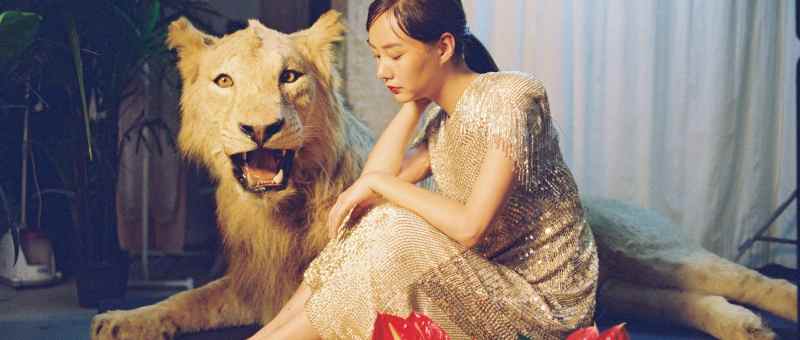
A young woman returns to her apartment in Seoul to find the lights don’t work. She begins to feel uneasy, as if there’s a presence around her she can’t see or hear. Slowly, she moves towards the source of her discomfort, but the lights soon come back on. This isn’t a haunting, it’s a party. Her devoted boyfriend Wee (Vittaya Wasukraipaisan) has organised a surprise birthday celebration, though Pim (Marsha Wattanapanich) is indeed a haunted woman attempting to outrun her ghosts in a new country a world away from the nexus of her trauma.

This is just one of many ways in which Banjong Pisanthanakun and Parkpoom Wongpoom attempt to misdirect us while foreshadowing Pim’s eventual confrontation with ghosts of her past on returning to Thailand after her mother suffers a stroke and is hospitalised. A brief prologue sequence had seen her mother sewing a dress that’s oddly shaped, we later realise intended for her daughters who are conjoined twins. A guest reading the tarot at Pim’s party had hinted that something she’s lost would soon return, or else someone to whom she’d broken a promise would come back seeking recompense. This soon proves to be true, Pim haunted by the spectre of her sister Ploy (also played by Marsha Wattanapanich) who passed away unable to adjust after Pim’s apparently unilateral decision to separate.

It’s for this reason that Pim feels intense guilt, convinced that she killed her sister in breaking their promise to always stay together because she desired individual fulfilment. To that extent, some might wonder if the ghost Pim sees is “real” or merely a manifestation of her unresolved trauma. Wee eventually convinces her to see a psychiatrist, who is also a good friend of his, who tells him that Pim is suffering from a delusion while advising her to try to make peace with herself over her sister’s death if she wants to stop seeing the ghost. But perhaps there really is something dark and malevolent, a resentful spirit haunting her family home which is otherwise full of childhood memories. Pim flips through old photos all featuring her and her sister living their shared life of enforced closeness that is at first blissfully happy in its isolation but then suffocating and constrained. 

Nevertheless, though it’s Pim who’s left “alone” in being the one left behind, it’s also true that Pim’s actions have left Ploy “alone” too, only on the other side. The film plays into their nature as twins who represent two halves of one whole rather than two separate beings and locates the source of trauma in their separation as if they must in some sense be reunited in order to exorcise its taboo. In many ways, the psychological drama revolves around a quest for identity as Pim tries to reassert herself in the face of Ploy’s reflection, to become the whole rather than an orphaned part of it, while in other ways affecting a persona that is not quite her own. One cannot take the place of the other, just the new dog the pair get after moving to Thailand cannot replace their old one even if as Pim says they are otherwise identical. 

Yet Pim wonders if it was alright to desire an individual future, choosing herself over Ploy and thereby condemning her to a life of loneliness. To that extent, her dilemma is that of a contemporary woman torn between familial devotion and personal fulfilment, though of course, her words turn out to have a hidden implication suggesting that all is not quite as it seems even if she begins to confront her trauma by finally explaining the circumstances of her separation to an ever supportive but increasingly worried Wee. As the tarot reader had implied, perhaps all promises must in the end be fulfilled as the grim conclusion suggests, literally burning down the house as if to purify this space and restore order in uniting the sisters in an eternal embrace, alone together. Banjong Pisanthanakun and Parkpoom Wongpoom engineer a slowly creeping sense of dread in the gothic eeriness of Pim’s family mansion while edging towards the fatalistic conclusion in which a kind of balance is finally restored, the sisters are both separated and united once again two halves one perfect whole.


Alone is available as part of Umbrella Entertainment’s Thai Horror Boxset.

International trailer (English subtitles)
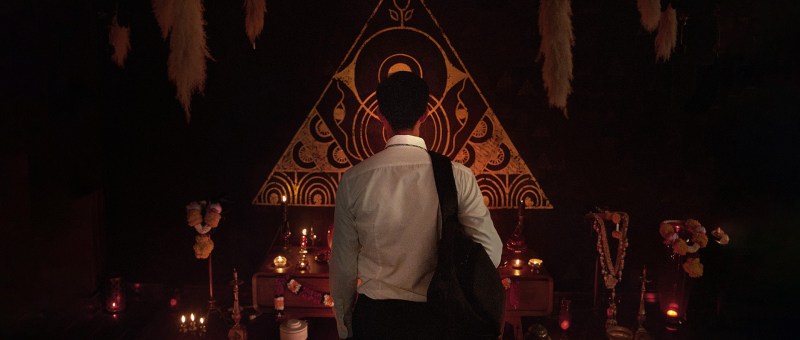
Home for Rent (บ้านเช่า..บูชายัญ, Sophon Sakdaphisit, 2023)

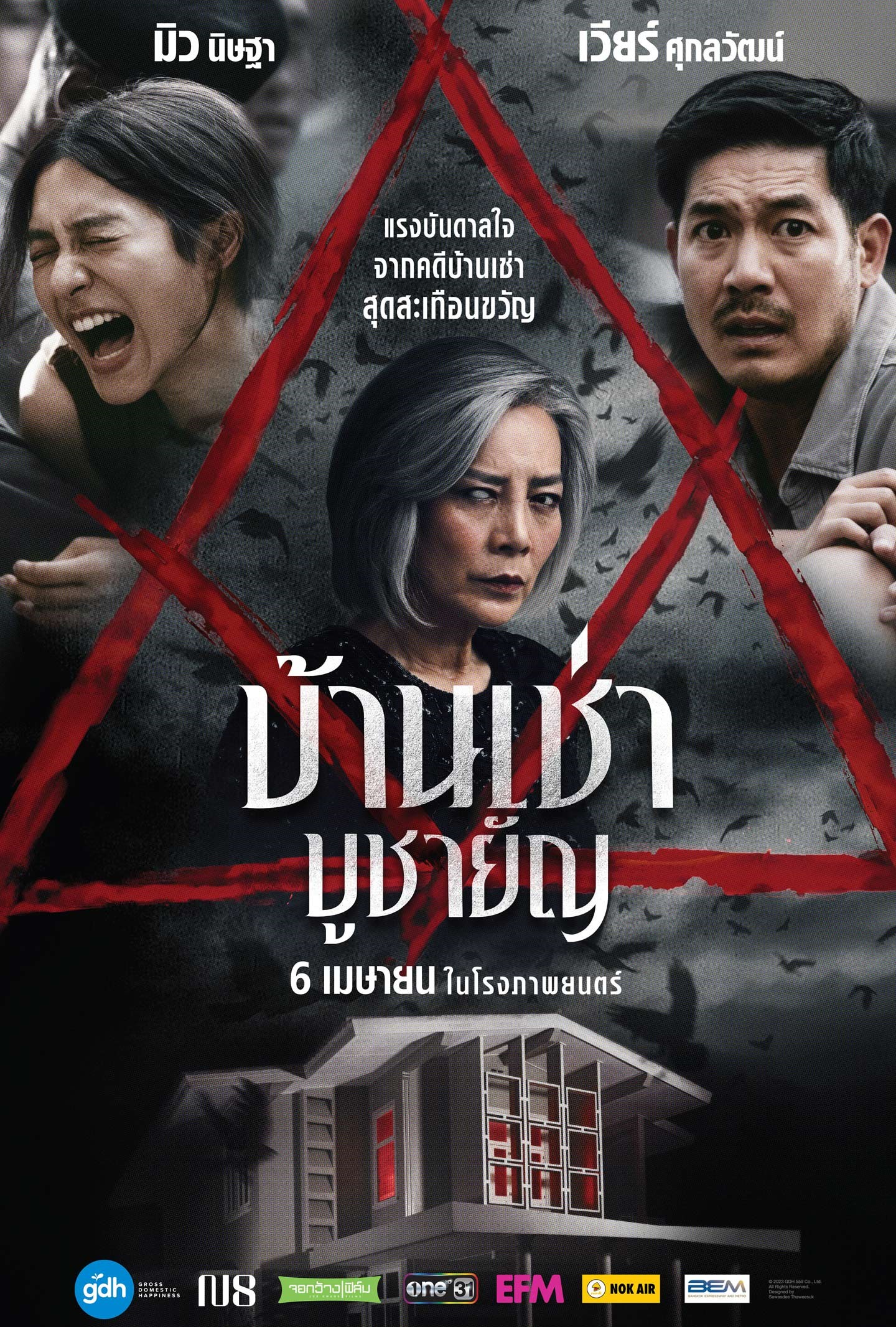
An inability to overcome the traumatic past leaves a family vulnerable to the dark machinations of a black magic cult in Sophon Sakdaphisit’s supernatural thriller, Home for Rent (บ้านเช่า..บูชายัญ). The film’s title is eventually revealed as a grim irony, the home in question a seat of the soul though like the director’s previous films it’s economic anxiety and social aspiration that open the door to damnation even if in this case there’s something more than fate in play.

All of Ning’s (Nittha Jirayungyurn) problems start when the flat she owns to let out is vandalised by a vacating talent. As she explains to the estate agent, Tom (Suphithak Chatsuriyawong), she can’t afford to refurbish it and the rent was covering the mortgage on the house she actually lives in which belongs to her husband, Kwin (Sukollawat Kanarot). Tom floats the idea of the family moving into the flat while they tidy it up and renting the house out instead, but Ning is worried Kwin won’t like the idea. She’s right, he doesn’t and suggests it would be easier to just sell the flat but Ning doesn’t want to do that either. The reasons for her attachment to it aren’t completely clear, but if she were keeping it as a safety net it might hint at a degree of insecurity in her marriage though as we later see she’s also job-hunting and not having much luck. Seeing the candidate next to her write down a much lower salary expectation she hastily changes hers too, fearing she’s pricing herself out of the market. 

As for Kwin’s reluctance to move, it may be a degree of snobbishness in not wanting to leave his large suburban house in a wealthy area for a small flat where he ends up sleeping on the sofa because the couple’s daughter Ing (Thanyaphat Mayuraleela) can’t seem to settle. As it turns out, Kwin has other reasons for remaining attached to the house and not wanting anyone else to live there but even as it stands it seems far too big for their small family and an obvious financial burden. Yet Kwin’s outward anxiety is to do with finding “high quality” tenants given what’s just happened with the flat. Ning is reassured by Tom’s confirmation that the prospective tenants are a retired doctor and her daughter though as Kwin points out, it’s mere snobbishness to assume a doctor will be a better tenant than anyone else. 

Nevertheless on meeting them, Kwin unexpectedly agrees only for Ning’s aunt and neighbour Phorn (Natniphaporm Ingamornrat) to report strange goings on at 4am such as ominous chanting and the sudden arrival of large numbers of crows. Strange things begin happening around Ning too, while Kwin’s behaviour has also become weird and irrational. Ning is however facing an uphill battle trying to get people to believe her that the couple renting her house are actually crazed cultists who may be targeting her daughter while others assume she’s going out of her mind because of the stress of maintaining it. 

The space that’s for rent in fact seems to be the human body as it becomes clear what kind of home is being sought. Aside from financial worries, the curse essentially stems from the inability to accept loss, or perhaps also the attempt to escape it by assuming new identities rather than deal with a painful past. Only Ning remains in the dark in this triangular series of relationships with pyramids an often repeated motif mimicking the dark symbol of the cult. Sophon Sakdaphisit conjures a genuine sense of eeriness within the genial suburban environment that hints at a largely invisible but pervasive evil that has Ning and her family firmly in its sights. But in other and perhaps slightly uncomfortable ways, it may be the family that eventually repairs itself in what amounts to the complete integration of the once buried traumatic past which may have destroyed what once was but has birthed something new in its place that at last seems to be free of the gloominess that once overhung the family home having relocated to a much warmer and down to earth environment in the absence of both financial and aspirational anxiety but simply content to have found a place to call home.


International trailer (English subtitles)
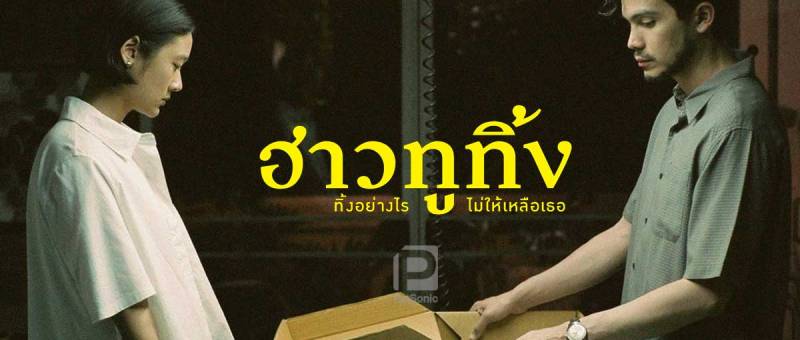
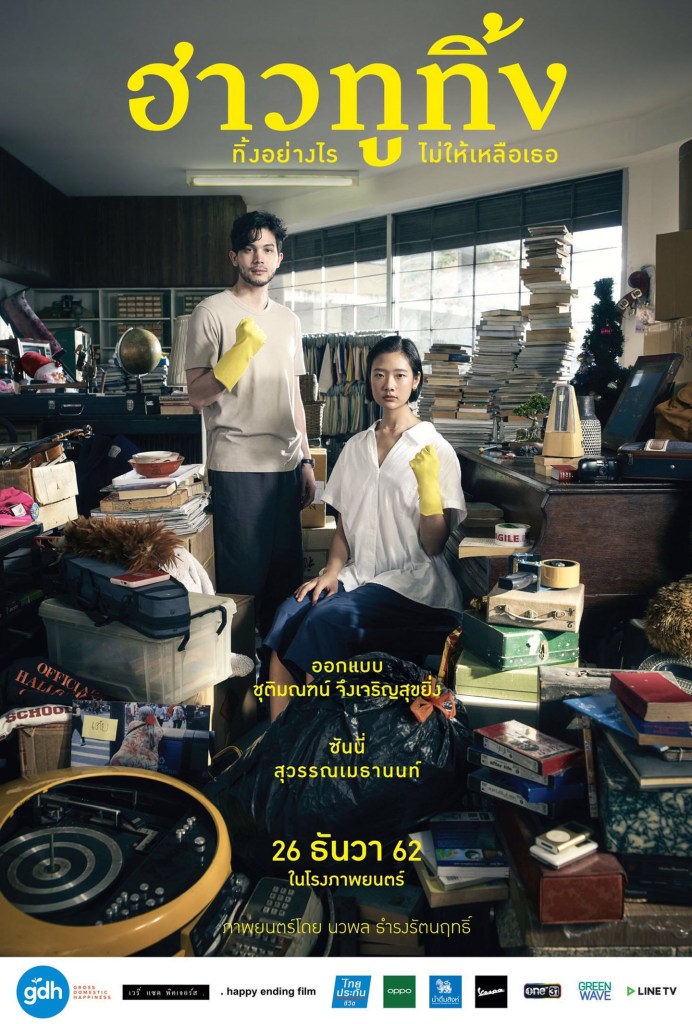
Happy Old Year (ฮาวทูทิ้ง..ทิ้งอย่างไรไม่ให้เหลือเธอ, Nawapol Thamrongrattanarit, 2019)

“Some things won’t go away just because you pretend to forget all about it” the heroine of Happy Old Year (ฮาวทูทิ้ง..ทิ้งอย่างไรไม่ให้เหลือเธอ) is reminded by an exasperated friend preparing to forgive her once again for another thoughtless hurt. According to Jean (Chutimon Chuengcharoensukying), “Minimalism is like…a Buddhist philosophy. It’s about letting go”, only her minimalism has been of an emotional kind and in essence the very opposite of letting go. Her approach to life’s many difficulties has been to throw them into a mental black bag, consign them to a black hole of memory, and then simply walk away, but there’s only so much space for delayed trauma and one day you’ll have to start opening some of those bags so that you can finally let go for real. 

20-something Jean has been living in Sweden for the past few years and has recently returned to Thailand, more or less against her will. For some reason, she seems to have asserted ownership over her family’s home which once housed her father’s musical instrument repair shop. Without bothering to ask her mother (Apasiri Nitibhon) or brother, Jean has decided to radically redesign the property’s ground floor into an office space, sending her remaining family members upstairs. Talking things over with her old friend Pink (Padcha Kitchaicharoen) who seems to be involved in construction, she wants to get the work started shortly after New Year not least because the new job she’s just been offered wants to make an office visit the following month. They’ve got a scant few weeks to clear 30 years’ worth of clutter so the builders can do their thing. 

Jean’s plan is basically to sweep everything into bin bags and dispose of them without giving it too much thought. Coming round to the idea, her brother Jay (Thirawat Ngosawang) starts watching Marie Kondo videos to get into the mood, but “complains” that everything he touches sparks joy. He can’t bring himself to part with the myriad “tacky” souvenirs he’s amassed over a lifetime because it’s the thought that counts and throwing them out is like throwing away kindness. According to Jean, “being emotional only brings trouble”, though she is perhaps a little troubled bagging up an oversize teddy gifted by a friend at graduation with a card that reads “take care of me”. She gets her comeuppance when Pink notices a CD she once gave her with a message inside lying on top of a to go pile and is understandably hurt. To Jean it’s just a meaningless object. No one listens to CDs anymore, but to Pink it doesn’t matter that it was gift from years ago, throwing out the CD is like erasing a moment in time, negating the importance of their teenage friendship. 

Pink’s reaction is Jean’s first clue that her wholesale bag and toss philosophy might be problematic. When she finds a scarf she’d knitted for Jay in his to go pile, she gets a taste of her own medicine. Reassessing her possessions, she realises she has more than a few items technically intended for other people that she has selfishly never passed on. Inspired by Pink and in a bid to find some kind of closure, she decides the best thing is to start returning the “borrowed” items to their rightful owners, but quickly discovers that not everyone is thrilled to have the past suddenly presented to them in the form of a random object. An attempt to return a double bass she was supposed to get her dad to repair goes very badly indeed, to the extent that Jean must simply have forgotten or just not realised how badly she had injured her friend. 

Emotionally immature, Jean has an almost childlike view of interpersonal relations, firmly believing that just saying sorry will make everything alright again (even you don’t really mean it). Her most difficult task is returning a camera and unused rolls of film to the high school boyfriend (Sunny Suwanmethanont) she dumped by ghosting after going to Sweden. Too cowardly to go in person, she tries mailing it, but when the parcel comes back return to sender she knows she has to try face to face. Aim listens to her heartfelt confession and seemingly forgives her, inviting her inside for tea with his new girlfriend Mi (Arisara Buaprang), but what Jean really wanted was a blazing row so she could expiate her guilt. 

Later, a slightly less magnanimous Aim points out that Jean’s quest to prove that she wasn’t selfish person is actually incredibly selfish. What she’s been doing, in essence, is dumping all of her emotional baggage on her friends and then walking away leaving them to deal with it on their own. The apology she made was for herself, not him. If she really cared, she’d have found a way to carry her guilt without burdening others. 

Nevertheless, some objects do have presence. “It seemed like an ordinary photo and now it’s priceless” Aim remarks on helping to find one of Jean’s errant objects, the first photo of a couple of high school sweethearts now about to get married. Another photo calls up memories of a supposedly happier time in Jean’s childhood but it’s a memory she can’t bear to keep or delete. While her mother doggedly clings to her father’s piano despite the fact that no one can play it, Jean wants to bulldoze everything, erase their history as a family by replacing their cluttered home with crisp white walls and shiny steel. Only too late may she realise what she’s losing, that with every discarded object a piece of her goes too and soon there may be nothing left at all. Turns out that trying to deal with your abandonment issues by abandoning things isn’t as sound a strategy as it might sound. “This is the era of cloud storage”, Jean points out, but in many ways it’s our orphaned files who make us who we are. Minimalism might be about letting go, but you need to remember to keep hold of yourself in the knowledge that memories don’t belong to you alone but connect you to the world through a thousand shared kindnesses and tiny hurts trapped inside the most banal of objects.


Currently available to stream on Netflix in the UK (and possibly other territories)

International trailer (English subtitles)
Die Tomorrow (พรุ่งนี้ตาย, Nawapol Thamrongrattanarit, 2017)

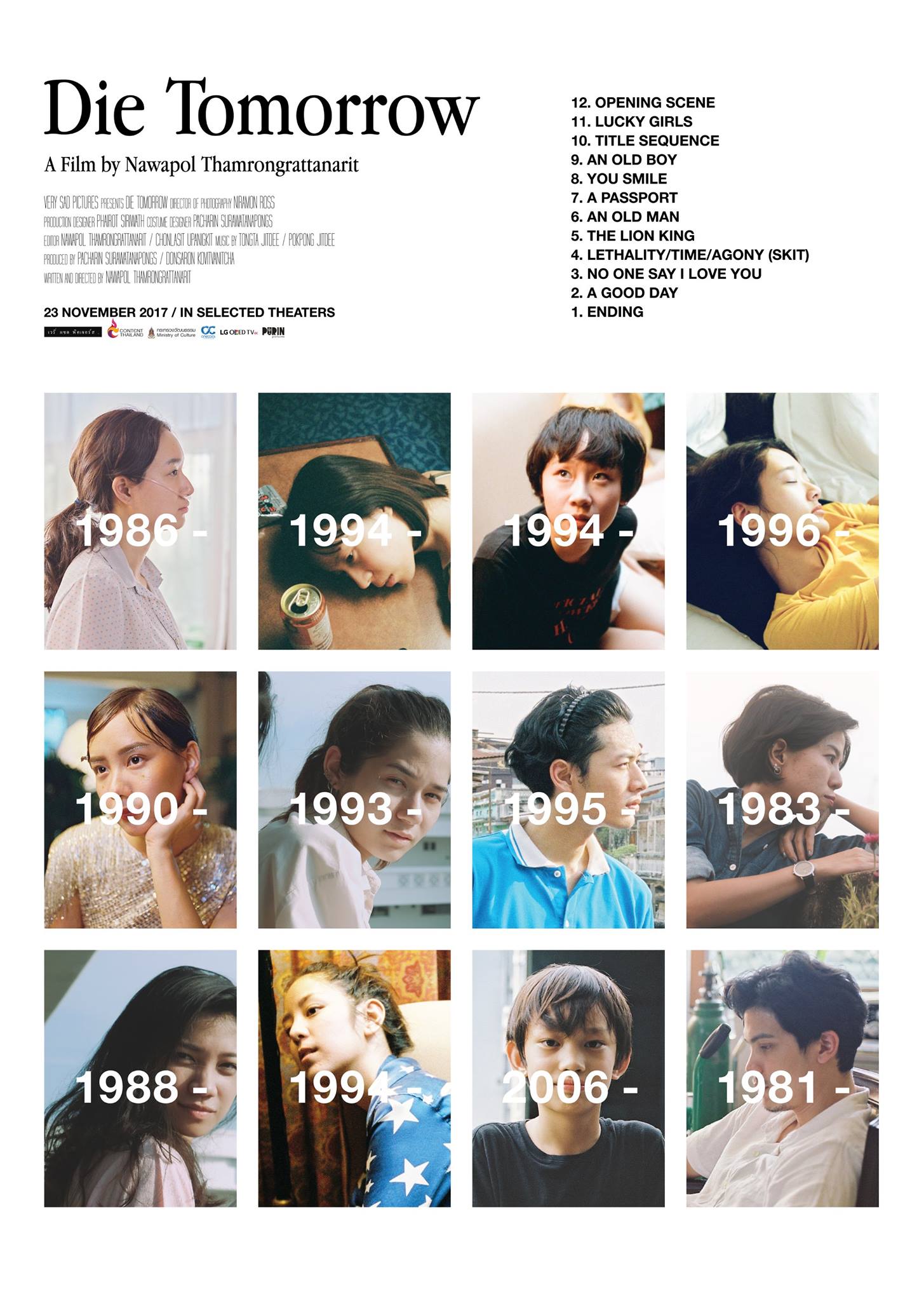
Die Tomorrow posterDeath gives life meaning, so they say, but if death is such a normal part of being alive, why do we live continually in its shadow? We spend our lives talking about a tomorrow which might never come, but it’s those tiny moments of mundanity which make life worth living. Nawapol Thamrongrattanarit’s Die Tomorrow (พรุ่งนี้ตาย) examines the “last day” of a number of oblivious citizens of Bangkok who are busy living life “as normal” little knowing that everything they do will be for the last time.

Shooting mainly within an oppressive square, Nawapol Thamrongrattanarit rams his point home with his first vignette in opening with a newspaper report recounting the death of a student in a road traffic accident the night before her college graduation. He then introduces us to a gaggle of excited students eagerly talking about horoscopes and their dreams for the future. We never quite figure out which of them will be dispatched to get more beer. It could be anyone, anywhere – even you, even right now.

As the ticking clock and time card remind us, 2 people die every second all over the world making dying possibly the world’s most popular activity. Most people dread it, but for one very elderly gentlemen it would be a relief. Convinced that his advanced old age is either a result of genetics or a mistake by someone upstairs, he selfishly wishes that he’d died before his wife and son so he wouldn’t have to go on enduring the pain of their loss. Meanwhile, a little boy quizzed on his beliefs about the afterlife is convinced that death is peaceful because everything just stops. He feels pretty much OK with the idea because he googled it straight away as soon as he found out so it all seems very straightforward. Nevertheless, he’d rather not know when death is coming because that would just make him “sad” and then he wouldn’t be able to enjoy his remaining time.

Death is, however, something you have almost no control over. A melancholy man gets his toenails clipped by his loving wife who is suffering from a terminal disease and awaiting a transplant. Grimly, he tells her that with every death there is fresh hope as he prepares for a trip abroad unaware that, as the preceding title card told us, a plane is about to go missing in the skies between Thailand and America. Meanwhile, across town a man pushes a stool up to his balcony and prepares to jump. Before he does so, he leaves a message for a friend instructing him to pass on his thanks and apologies to the others, affirming that he had no desire to bother them but he has tried his best and life is cruel. An old lover, presumably having her reasons and well within her rights, refuses to open her door to him and remains unrepentant even when her friend suggests she may regret it if he really does do “something stupid”.

With each death the frame expands to its fullest, as if echoing the sense of emptiness in the very present absence of the recently deceased. A brother somewhat irritated by his sister’s abrupt and unexplained return from the US, declares that her death (in a freak accident while parking his motorbike to take a picture of a cute puppy) has reminded him of the preciousness of life. He might have been embarrassed before, but now he makes a point of hugging and kissing his parents, telling those close to him they are loved in case there is no later opportunity to do so. The sad death of a salaryman, in his sleep in the stock exchange lying undiscovered for five hours, seems all the more absurd and pointless while that of a veteran musician, soon after getting his head massaged by his loving daughter, seems like the best of all ends – lying peacefully at home in the summer breeze. Yet as the old man tells us, those who are “young” should have no fear and simply live. Less about the omnipresence of death than the ephemerality of life, Die Tomorrow is a quiet paen to the small pleasures of being alive, discovered in mundanity and the knowledge that every breath may be one’s last.


Die Tomorrow was screened as a special preview at the BFI Southbank and opens in UK cinemas on 26th July courtesy of Day for Night. It is also currently available to stream in the UK via MUBI.

International trailer (English subtitles)
The Promise (เพื่อน..ที่ระลึก, Sophon Sakdaphisit, 2017)

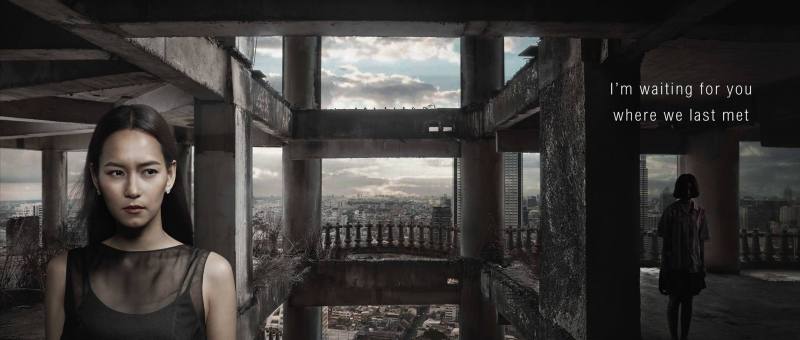
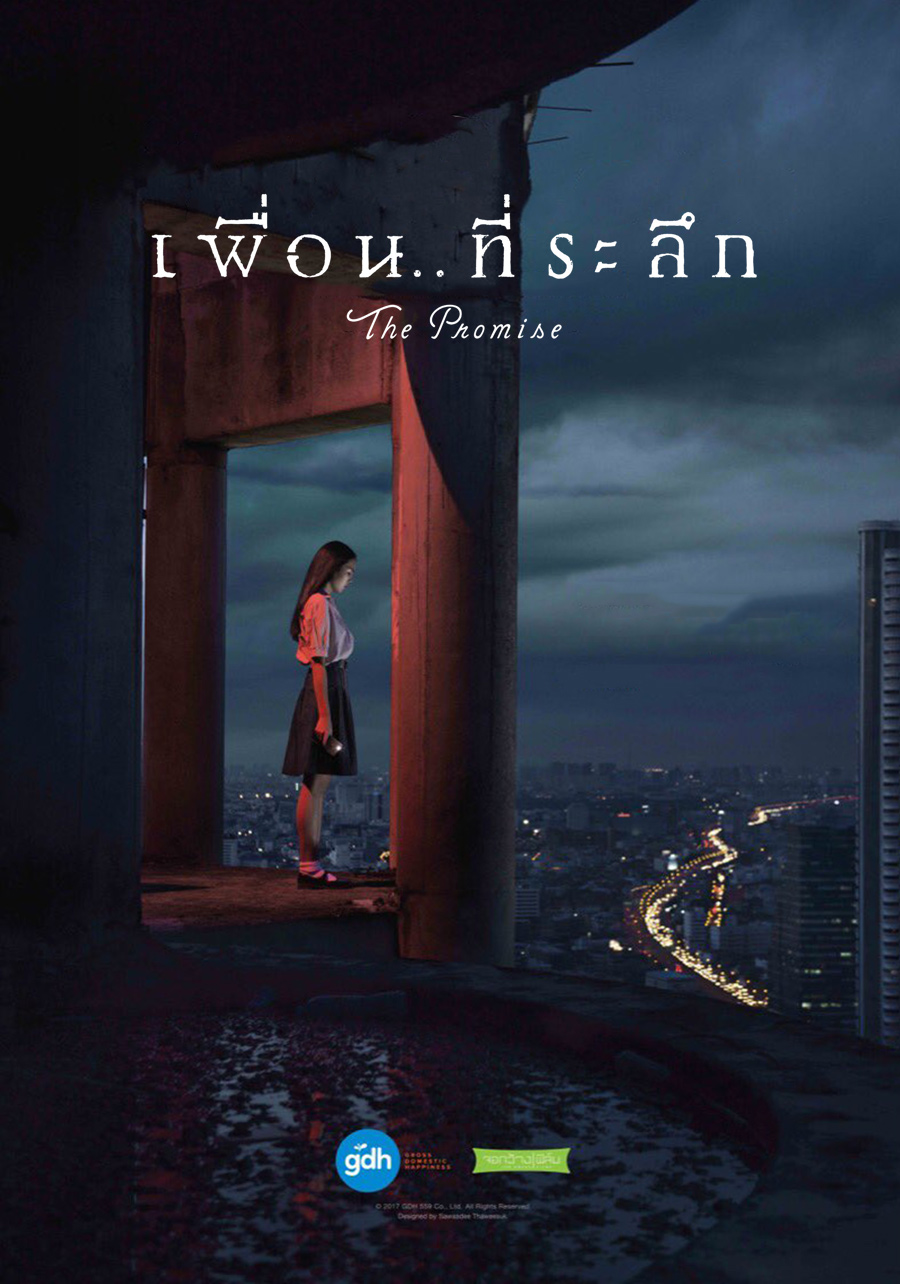
The Promise Thai 2018 poster20 years on the Asian financial crisis continues to loom large over the region’s cinema, providing fertile ground for extreme acts of transgression born of desperation in the wake of such a speedy decline. Sophon Sakdaphisit’s ghost story The Promise (เพื่อน..ที่ระลึก, Puen Tee Raluek) places the financial crisis at its centre in its cyclical tales of betrayed youth who find themselves paying heavily for their parents’ mistakes through no fault of their own. Yet there is a fault involved in the betraying of a sacred promise between two vulnerable young people made half in jest in a fit of pique but provoking tragic consequences all the same. Sometimes lonely death chases the young too, trapping them in solitary limbo growing ever more resentful of their heinous betrayal.

In 1997, Ib (Panisara Rikulsurakan) and Boum (Thunyaphat Pattarateerachaicharoen) are best friends. Daughters of wealthy industrialists making an ill fated move into real estate with the building of a luxury tower block destined never to be completed, Boum and Ib may have been separated by being sent to different schools, but they spend all of their free time together, often hiding out on the construction site fantasising about sharing an apartment there and listening to sad songs on Ib’s ever present Discman.

When the crisis hits and their fathers are ruined, the girls pay the price. Not only are they left feeling betrayed and humiliated in being so abruptly ejected from their privileged world of mansions and horse riding, but also suffer at the hands of the fathers they now despite – Ib more literally as she is physically beaten by her strung out, frustrated dad. Already depressed, Ib talks ominously about a gun her mother has hidden in fear her father may use it to kill himself. When Boum falls out with her mum, she gives the go ahead for a double suicide but can’t go through with it after watching the twitching body of her friend, lying in a pool of blood after firing a bullet up through her chin.

20 years later, Boum (Numthip Jongrachatawiboon) is a successful industrialist herself, apparently having taken over her father’s company and turned it around. The economy is, however, once again in a precarious position and Boum’s business is floundering thanks to a set back on a high profile project. The idea is floated to finish the tower left incomplete by the ’97 crisis to which Boum reluctantly agrees. Meanwhile, Boum’s daughter Bell (Apichaya Thongkham) is about to turn 15 – the same age as she was when she agreed to die with Ib, and has recently started sleepwalking in ominous fashion.

Sophon Sakdaphisit neatly compares and contrasts the teenagers of 20 years ago and those of today and finds them not altogether different. In 1997, Boum and Ib keep in touch with pagers and visit photo sticker booths in the mall, splitting earphones to listen to a Discman while they take solitary refuge at the top of a half completed tower. In 2017, Bell never sees her friend in person but keeps in touch via video messaging, posting photos on instagram, and sending each other songs over instant messenger. Yet Bell, in an ominous touch, still graffitis walls to make her presence felt just as her mother had done even if she fetishises the retro tech of her mother’s youth, picking up an abandoned pager just because it looks “cool”.

In 2017, the now widowed Boum appears to have no close friends though her relationship with her daughter is tight and loving. A “modern” woman, Boum dismisses the idea that a malevolent spirit could be behind her daughter’s increasingly strange behaviour but finds it hard to argue with the CCTV footage which seems almost filled with the invisible presence of something dark and angry. Realising that the circumstances have converged to bring her teenage trauma back to haunt her – Ib’s suicide, the tower, her daughter’s impending birthday, Boum is terrified that Ib has come back to claim what she was promised and plans to take her daughter in her place in revenge for her betrayal all those years ago.

Bell is made to pay the price for her mother’s mistakes, as she and Ib were made to pay for their fathers’. Motivated by intense maternal love, Boum nevertheless is quick to bring other people’s children into the chain of suffering when she forces a terrified little boy who has the ability to see ghosts to help her locate the frightening vision of her late friend as she darts all over the dank and spooky tower block, threatening the financial security of his family all of whom work for her company and are dependent on her for their livelihoods.

In order to move forward, Boum needs to address her longstanding feelings of guilt regarding her broken promise – the suicide was, after all, her idea even if she was never really serious and after witnessing her friend die in such a violent way, she simply ran away and left her there all alone and bleeding. Yet rather than attempting to keep her original promise Boum makes a new one with her imperilled daughter – that she will keep on living, no matter what. The slightly clumsy message being that commitment to forward motion is the only way to leave the past behind, accepting your feelings of guilt and regret but learning to let them go and the ghosts dissipate. Sophon Sakdaphisit makes use of the notorious, believed haunted Bangkok tower to create an eerie, supernaturally charged atmosphere of malevolence but the ghosts are in a sense very real, recalling the turbulence of two decades past in which fear and hysteria ruled and young lives were cut short by a nihilistic despair that even friendship could not ease.


Screened at the 20th Udine Far East Film Festival.

International trailer (English subtitles)