The Singer (소리꾼, Cho Jung-lae, 2020)

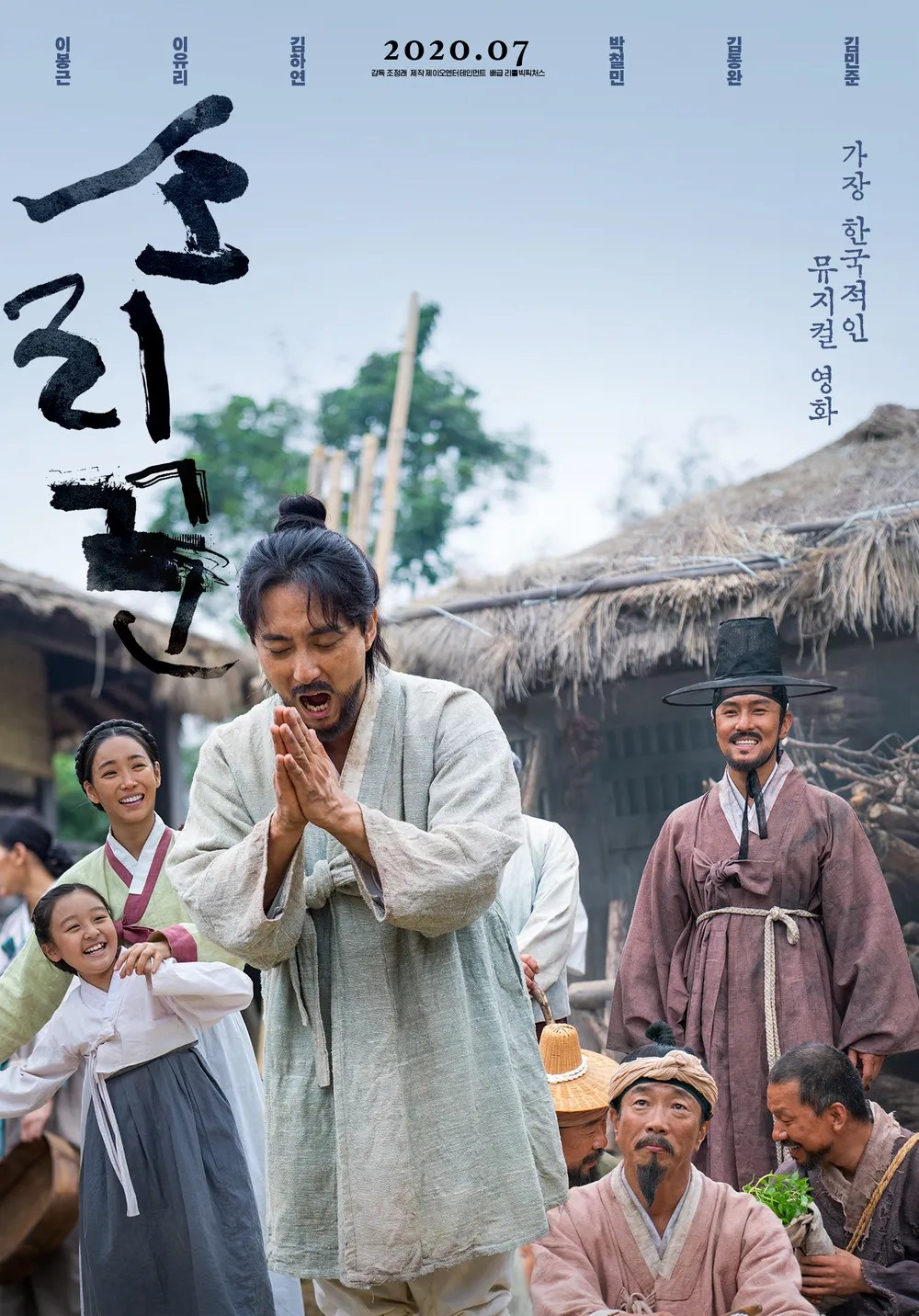
A Pansori singer shames the world into giving him his miracle in Cho Jung-lae’s musical fable, The Singer (소리꾼, Sorikkun). If there’s one thing you can bank on in old Joseon it’s that there is intrigue in the court, yet the rot seems to have penetrated even more deeply into the fabric of society as the hero discovers while looking for his kidnapped wife only later realising that the people who are supposed to protect you from violent criminals are in fact violent criminals themselves.  

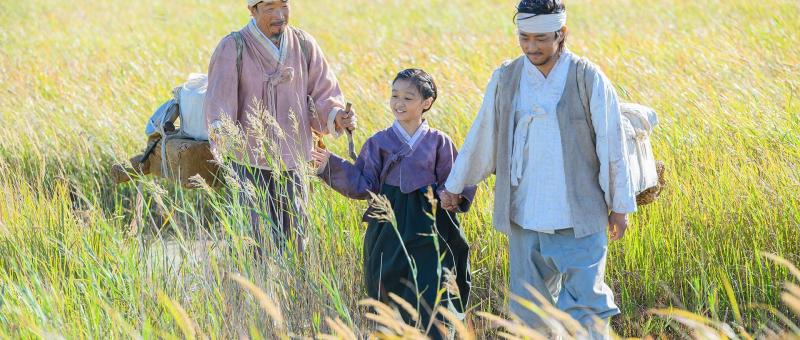
Set in 1734, the 10th year of King Yeongjo’s reign, the film opens with a cheerful scene as singer Hak-gyu (Lee Bong-geun) performs in the marketplace while his wife Gan-nan (Lee Yu-ri) and daughter Cheong (Kim Ha-yeon) watch from the sidelines. As the opening voiceover reveals, however, this is also a time of increasing chaos in which the accepted social order has broken down following successive incursions from China and Japan. The King has appointed a special courtier, Kim Tae-hyo, to investigate the so-called “Ja-mae gang” suspected of running a human trafficking ring while in collusion with corrupt lords. Of course, the king doesn’t know that Tae-hyo is one of the corrupt lords, but then there are so many of them to choose from. In any case, disaster strikes when Hak-gyu is late home after being accosted by a fan while returning some of the clothes Gan-nan had been mending to a nobleman and discovers his wife and child missing when he gets back. Gan-nan and Cheong have been kidnapped by the gang along with several others from the area. Cheong manages to escape thanks to her mother’s quick thinking but is badly injured and in a coma for some time eventually waking up to realise she has lost her sight. Hak-gyu along with his drummer friend Dae-bong (Park Chul-min) decides to take his daughter and search for his wife all over Korea if necessary. 

As the opening and closing titles remind us, Pansori gained popularity precisely because it told the stories of the common people and was often transgressively frank in its attacks on the class system, social inequality, and even the monarchy. Belonging to the lowest class of entertainers, Hak-gyu’s “lowborn” status is often used against him, the gang deliberately targeting those from the lower orders to enslave because they do not really think of them human, yet it is also in a sense his salvation in his innate ability to connect with ordinary people as he retells his life as fable gathering large crowds around him as he anxiously asks if anyone has seen his wife. He is joined in his travels by a “corrupt monk” he saves from drowning in a river, along with bumbling lower aristocrat supposedly bumming around too afraid to go home and tell his father he’s failed the civil service exam (again), providing an accidental microcosm of the current society. 

Yet what Hak-gyu didn’t know was that the gang is merely an extension of government oppression, corrupt lords flexing all of their muscles to fully exploit their subjects. Tae-hyo’s mentor reminds him that “politics is all about money” as the pair of them try to game the king pretending to hunt the gang that they are themselves running. A skilled seamstress, Gan-nan is firstly placed in the home of a local dignitary but later moved on to the mines for making too much trouble. She tells everyone she meets that she’s been kidnapped, but the nobles are all in on it and everyone else is too frightened to resist. Meanwhile, Tae-hyo and his fellow conspirators are also it seems in collaboration with the Japanese, buying up smuggled rifles to use in a potential insurrection. 

Drawing inspiration from his own life story, Hak-gyu re-imagines the gang as Chinese pirates and his daughter as a displaced princess determined to do whatever it takes to save her blind father, always leaving his audience wanting more with his cruelly positioned cliffhangers. He finds himself in an odd kind of trial by combat, given the opportunity to win back his life and his wife if only he make the heartless lords laugh or cry eventually saved only by his ability to move the hearts of others through the power of his sincerity. A Pansori fable in and of itself, Cho’s meta musical drama is fitting tribute to power of art to speak truth to power revealing its own truths in falsehoods and by it handing back the means to the people to demand justice and freedom.


Original trailer (English subtitles)
Rebound (리바운드, Jang Hang-jun, 2023)

A collection of underdog teens learn a few valuable lessons in perseverance and determination while taking their moribund high school basketball team all the way to the national championships in Jang Hang-jun’s sporting drama, Rebound (리바운드). Inspired by the real life tale of Busan Jungang High School’s meteoric rise from obscurity to top rated team, the film quietly touches on inter-city rivalry and social inequality while otherwise spinning an inspirational tale of the power of solidarity and a never say die spirit. 

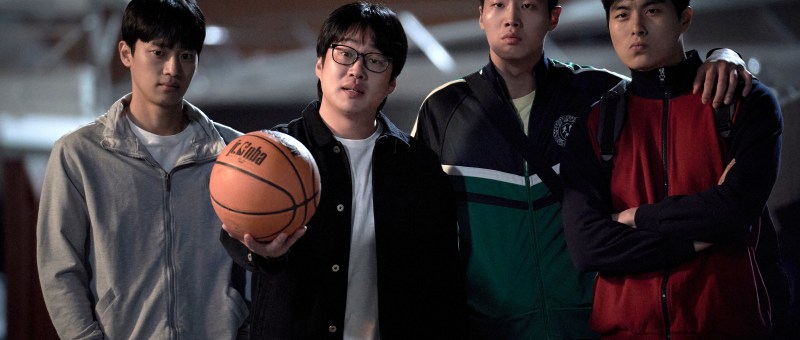
They are all in their way rebounding from something, and not least the team itself which is threatened with closure after being judged a bad investment by the penny pinching headmaster given its “embarrassing” series of total losses across a series of years. The team is given a brief reprieve but only as a token of its former reputation, the plan being to have one just for show but not actually enter any competitions while the school let it gradually fall into obscurity. Accordingly, they begins looking for “cheap” coaches who might be prepared to manage a phantom team and eventually land on 25-year-old social worker Kang Yang-hyun (Ahn Jae-hong) who is a former minor leaguer and alumnus of the school looking to reclaim his own failed hoop dreams vicariously through a new generation of new players. 

There are however only four left on the team, two of whom immediately quit leaving Kang scrambling around the city looking for tall boys who might be good with a ball and can be convinced to switch schools. The problem they have is that talented players are quickly snapped up by more prestigious institutions in Seoul which can after all offer more opportunities to ambitious youngsters aware that they probably won’t be playing basketball for the rest of their lives. No one really envisages a future for themselves in Busan which remains a kind of underdog in itself as it struggles against the the allure of Seoul as place of greater sophistication and possibility. Keen basketballer Ki-bum (Ahn Jae-hong) turns down Kang’s offer for just this reason insisting that his career is dead if he stays in Busban even while his parents seems to be turning down good offers on his behalf. He only agrees to join the team on learning that ace player Jun-yung (Lee Dae-hee) will be playing for them. 

Jun-yung is valued mainly for his height which sort of runs against the messages of the game in that it’s not something the players can control and no matter how hard they train they will always be at a disadvantage to those who are simply bigger. Kang’s first mistake is that he builds everything around the pillar of Jun-yung, barely letting the other players play while instructing them to pass every ball to him so he can shoot. In any case, Jun-yung too is eventually poached by a better team apparently forced to betray his teammates by his ambitious parents who are after all merely making what they see as a smart decision on his behalf. A disastrous fight between two players with unfinished business from middle school also results in a lengthy suspension ending the team’s hopes of competition success for the current season. 

But as Kang later says, it’s only really a “fake failure” in that it gave him a rebound he could use to realise his mistakes and start over prioritising their shared love of the game over his own insecurity now more willing to take a risk while concentrating on making the team as good as it can be rather than the external validation of championship wins. As he later tells them in an inspirational locker room speech, not all of your shots go in but that’s OK because they come back to you on the rebound and what matters is what you do with them then. Whatever happens, life goes on and fear of failure is not a reason to give up on something you love.

Jang does his best to avoid underdog sports movie cliches while subtly hinting at the pressures of social inequality as moody player Gang-ho (Jung Gun-joo) struggles with an old injury he couldn’t afford to have treated properly while trying to make extra cash betting on basketball games with other wayward neighbourhood kids. Capturing a real sense of energy in the various basketball games along with a wholesome sense of possibility as the team begin to bond and “improve” each other, Jang is careful not to be blinded by a false narrative of inspirational success but rather doubles down on the rebound mentality of seizing opportunities as they come and continuing to chase your dreams in your own way no matter how hopeless they may seem. 


Rebound screened as part of this year’s New York Asian Film Festival.

International trailer (English subtitles)

Images: ⓒ 2023 NEXON Korea Corporation, B.A. ENTERTAINMENT, WALKHOUSECOMPANY ALL RIGHTS RESERVED

Hansan: Rising Dragon (한산: 용의 출현, Kim Han-min, 2022)

“A battle of the righteous against the unrighteous” is how Admiral Yi (Park Hae-il) frames his resistance against the Japanese invasion, not a war between nations but an attempt to push back against the authoritarian ruthlessness of Toyotomi Hideyoshi’s desire to conquer most of Asia in a bid to cement his historical legacy as his health continued to fail. Hansan: Rising Dragon (한산: 용의 출현, Hansan: Yongui Chulhyeon) is a kind of prequel to 2014’s The Admiral: Roaring Currents set five years earlier during Hideyoshi’s first campaign and pits the the wise and steadfast Admiral Yi against ambitious yet overconfident Japanese general Wakizaka* (Byun Yo-han). 

Wakizaka’s ruthless cruelty is not in dispute even as the film opens with him dispatching a report stating that he intends to destroy the Korean naval detachment harboured on the southern coast which it seems is all that stands between him and conquest of the peninsula in its capacity to disrupt his supply line. When some of his men return in defeat talking about a “Bokkaisen” with a dragon’s head spouting fire, Wakizaka orders them killed to stop them spreading rumours of supernatural threat among the troops. Retrieving what looks to be a dragon’s tooth from the ruined vessel he begins to realise there might be something their story but still doesn’t take the threat of Admiral Yi’s fleet very seriously. 


Admiral Yi meanwhile, who was wounded in the same battle pitching his bow and arrow against a Japanese rifleman, is plagued by dreams and anxiety while trying to sort out a strategy for dealing with the Japanese invasion. Some of his fellow officers think offence is the best defence and they should try to strike before Wakizaka is able to amass his forces, while others think they should play it safe and continue to defend the coast. He and his chief engineer are working on improvements to their turtle boat which had so spooked the Japanese soldiers at the previous battle but at the same time had its limitations. They don’t call it a turtle boat for nothing, on ramming into the Japanese vessel its dragonhead became lodged in the side locking the two boats in a deathly embrace. Yi suggests removing it, but as it turns out the ability to latch on to the enemy like a snapping turtle can also be an advantage if you know how to use it while figuring out how to get the best out of limited resources, along with managing interpersonal relations, turns out to be Wakizaka’s weakness. 

Ever ambitious, Wakizaka is distracted by petty rivalry with his co-general who disagrees with his strategies and eventually betrays him. A Korean-speaking Japanese retainer sent as a spy later decides to defect precisely because of this ruthless disregard for the lives of one’s fellow soldiers, struck by Yi’s personal presence on the battlefield and willingness to put himself in harm’s way to protect his men. Though he is originally viewed with suspicion by some, Junsa (Kim Sung-kyu) is embraced as a fellow soldier after joining the defence forces at an inland fortress and told that all that is necessary is that he have a “shared righteous spirit” fighting together against the “unrighteous” Japanese invasion. 

In any case, neither Wakizaka or the Japanese care very much about Korea all they’re doing is clearing a path to China. Meanwhile, the nervous king continues to travel North leaving his generals fearful he will defect to the Ming and they will end up losing their sovereignty to China if not to Japan. Wakizaka’s strategy is somewhat hubristic, leaving himself vulnerable in the rear as he pushes forward while using land tactics to fight a war at sea and thereby allowing Yi to set a trap for him perfectly tailored to his vain complacency. Wakizaka may have the numbers, but Yi has superior technology and the respect of his men. Quite fittingly the real Wakizaka was marooned on an island after the battle and had to survive on seaweed while waiting for his chance to escape. With plenty of spy action, double crossings and betrayals, Kim Han-min saves the big guns for the final naval battle which begins in ominous fog before exploding in all out war but still makes clear that the battle is on the side of righteousness and that Yi owes his victory to human solidarity and compassion (leaving aside his torture of suspected spies) and Wakizaka his defeat to hubris and cruelty. 


Hansan: Rising Dragon screened as part of this year’s New York Asian Film Festival and is in US cinemas now courtesy of Well Go USA.

*these subtitles use Wakizaka but his name is sometimes also romanised as Wakisaka.

International trailer (English subtitles)

Images: Courtesy of Well Go USA Entertainment