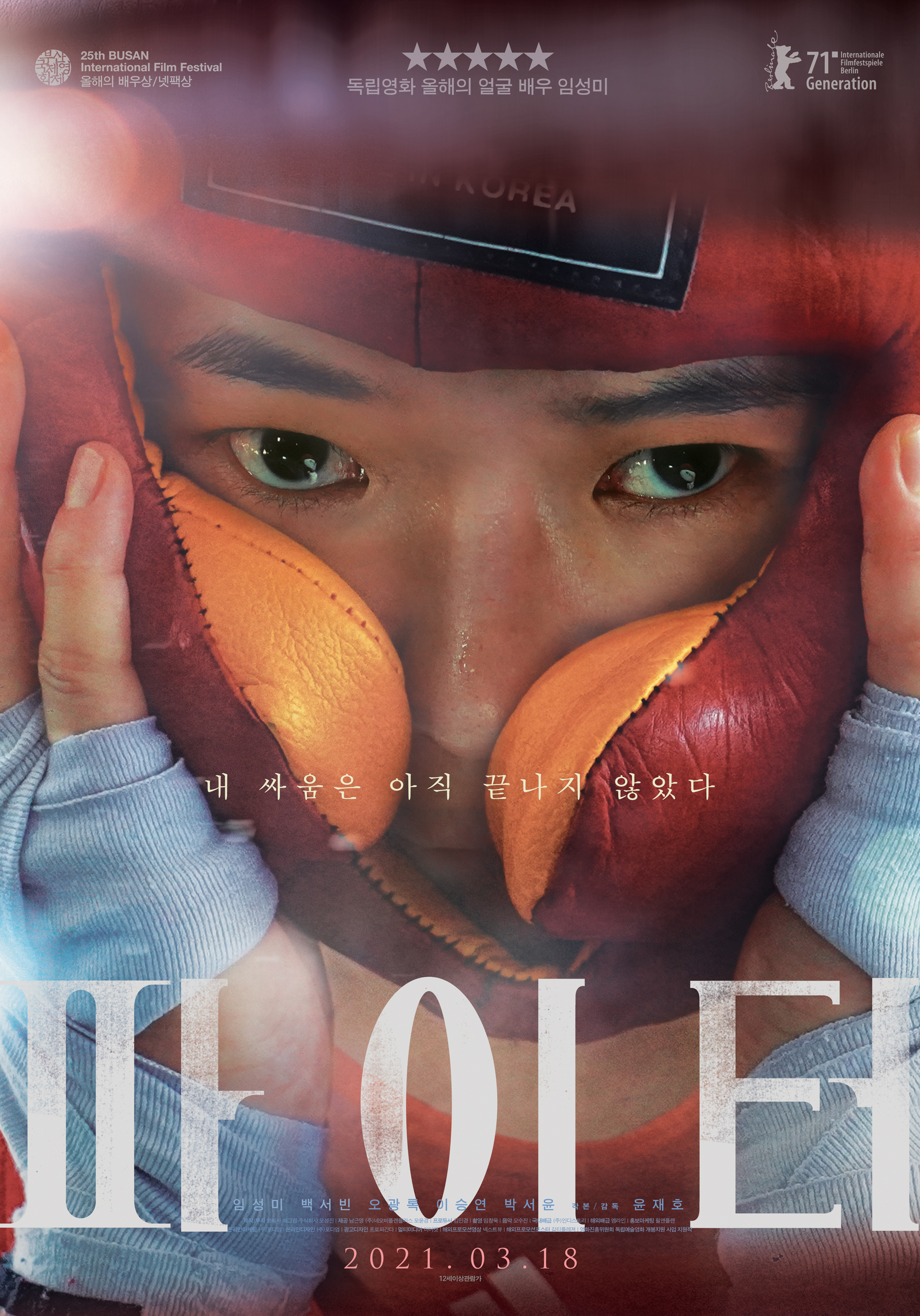
Fighter (파이터, Jéro Yun, 2020)

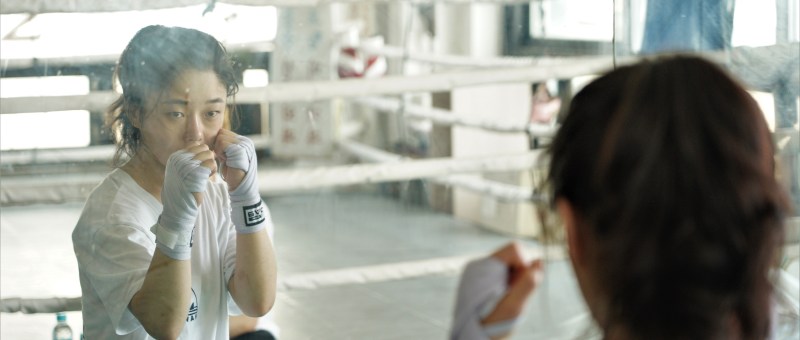
“My name is Ree Jina. I am a “North Korean Refugee”. This is how South Koreans call us. My fight is not over yet. I will keep fighting until the end. Even if I fail I will rise again.” a young woman insists, finding a new sense of purpose in the boxing ring while attempting to adjust to her new life in the South. As the title implies, Jéro Yun’s indie drama Fighter (파이터) follows one woman’s attempt to fight her way through personal trauma and societal anxiety but is less boxing movie than gentle character study as the heroine gains the courage to begin moving on through reconnecting with the estranged mother who abandoned her to come to the South alone. 

After a spell in a readjustment centre, Jina (Lim Sung-mi) is guided to a well-appointed flat by a social worker whose off the cuff remark that apartments like these are out of reach for most South Koreans speaks of a latent resentment. Most of Jina’s rent is subsidised, but she still needs to cover a part of it plus maintenance fees and so she contacts a North Korean fixer who helps her get a job in a restaurant. Needing more money to bring her father, who has escaped the North but remains trapped in hiding in China, to the South she decides to take a second job working as a cleaner at a boxing gym. She’s only there to clean, but despite herself Jina is captivated by the unexpected sight of female boxers. Encouraged to step into the ring herself, she remains reluctant, exclaiming that she doesn’t have time to waste on “fighting”, but eventually decides to give it a go on being told there may be money it if you’re good enough to turn pro. 

One of the reasons Jina gives sympathetic sub coach Tae-su (Baek Seo-bin) for her reluctance to box is due to the discrimination she faces from South Koreans who have a stereotypical vision of Northerners as a heavily militarised people as if they were all enemy combatants. She reminds him that ordinary people live there too, like presumably her father whom she’s desperate to save before he gets picked up by the Chinese authorities and sent back. The social worker’s barbed comments meanwhile echo the impression of some that North Koreans have an unfair advantage in the South with better access to a higher standing of living thanks to being taken care of by the government, but this obviously ignores the societal difficulties they face from isolation and discrimination to trouble gaining employment, potential exploitation, and the persistent culture shock of living in a modern capitalist economy. Even the kind and supportive Tae-su can’t help making a minor joke at her expense as she struggles to understand his contemporary Konglish slang. After making a few friendly overtures, the social worker later turns up drunk at Jina’s flat and attempts to proposition her as if he thinks he’s entitled to her attention, both misogynistic and xenophobic, while having the gaul to blackmail her into paying his medical fees when she attempts to defend herself and get away from him. 

Life in the South is certainly not easy. But Jina is also battling a sense of abandonment and displacement born of her mother’s defection when she was only 12. Planning to ask for money to help her father, Jina finds herself conflicted on meeting her, feeling a further sense of betrayal on realising her mother married again to a moderately wealthy man and had another daughter living a comfortable life in Seoul while she and her father continued to suffer. Yet as the opening quotation implied, Jina’s salvation lies in finding forgiveness and rebuilding old relationships while allowing herself to build new ones. Anchored by a supportive mentor in her coach, Jina finds a new family at the boxing club who actively care for and support her. Tae-su claims boxing restored his sense of purpose in life and gave him the courage to go on living it, but it’s less the sport with its rigid discipline and clearly defined structure that gives her a sense of safety than the unconditional kindness of her new friends which stands in such stark contrast to the rejection she senses from so many others in the South. 

Playing with boxing movie tropes, Yun includes a series of training montages and introduces a fleeting rivalry with a mean girl at the gym, but gradually shifts away from genre norms towards the realms of the family drama as Jina begins to overcome her trauma though reconnecting with her mother. “In life there are times we need to cry”, Jina’s unexpectedly sympathetic coach tells her, giving her the space to be vulnerable even in this most defiantly defensive place as she attempts to process all that life is currently throwing at her, gaining a new determination to keep on fighting no matter who or what tries to knock her down. 


Fighter streams in the US Aug. 7 to 12 as part of this year’s New York Asian Film Festival.

Original trailer (English subtitles)
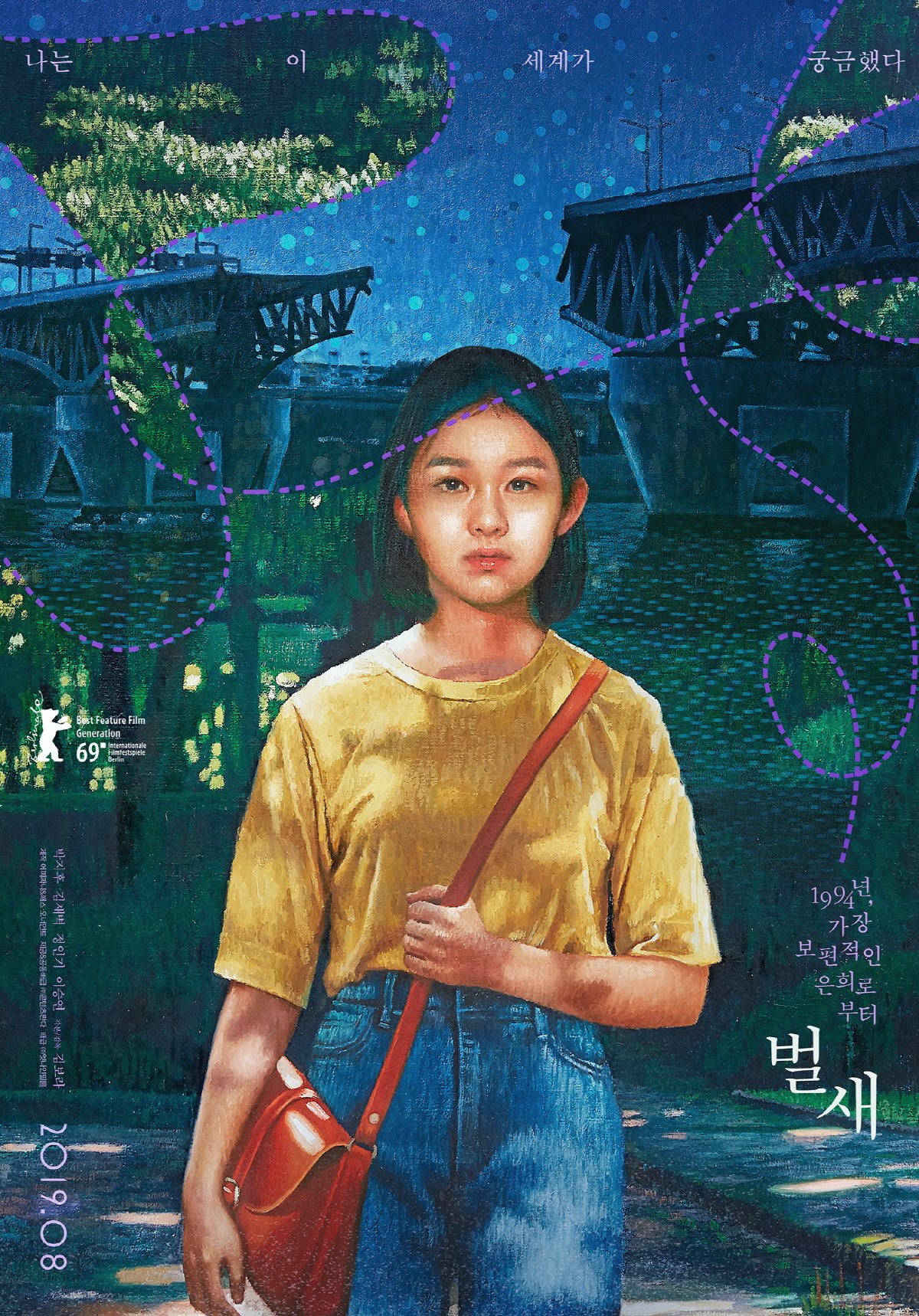
House of Hummingbird (벌새, Kim Bora, 2019) [Fantasia 2019]

House of hummingbird poster 1“The world is fascinating and beautiful” the teenage protagonist of Kim Bora’s House of Hummingbird (벌새, Beolsae) is told in an especially poignant letter recited in the film’s closing moments. It’s a lesson that she’s longing to learn, but finds few willing to teach her in a society whipping itself up into a frenzy of aspiration perhaps at the cost of true human connection. A chronicle of one surprisingly traumatic summer in the newly democratised Korea of 1994, Kim’s film charts its heroine’s gradual progress towards a kind of self acceptance with a melancholy ease as she begins to find her own way despite the toxicity of the world all around her.

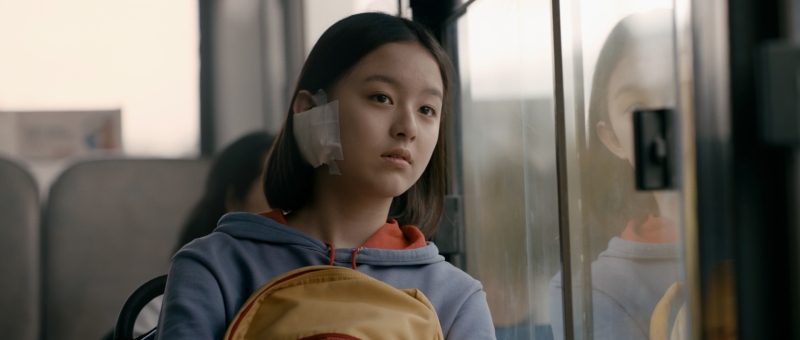
14-year-old Eun-hee (Park Ji-hu) is one of three siblings living in a cramped apartment with her harried, emotionally distant parents who run a small rice cake shop. A mediocre, disinterested student she falls asleep at school where the other kids cruelly exclaim that dozy girls like her never make it to college and are destined only to become housemaids to the “successful” adults they assume they’ll be. Meanwhile, Eun-hee’s hardline dad (Jung In-gi) makes her go to Chinese cram school where she “studies” along with her best friend, Ji-suk (Park Seo-yun), spending most of their lesson time making fun of the teacher in hastily written notes.

Previously purposeless, her world begins to widen when the Chinese teacher abruptly quits and is replaced by the infinitely cool, enigmatic university student Young-ji (Kim Sae-byuk) whom she first glimpsed smoking a melancholy cigarette by an open window on the stairs. Strangely captivated by this “odd” young woman, Eun-hee suddenly has the urge to study, especially as Young-ji turns out to be unique among the adults that she knows in that she seems to genuinely care about her and is interested in hearing all about her troubles, which, as we will find out are many.

In the mid-90s, Korea was a newly democratised and rapidly modernising society keen to claim its place on the economic world stage. Where Eun-hee’s parents are defeated, disappointed figures, they want better for their children in the new society but struggle as to how to get it for them. Eun-hee’s mother (Lee Seung-yeon), as we find out from her dejected brother, was bright but had to leave school to pay for his tuition (a promise he seems to think he has not fulfilled). Consequently, the parents are convinced “education” is the way out but fail to realise that their obsession with academic grades is slowly destroying their family home. While Eun-hee is sullen and withdrawn, pushed out by her rowdy family, her older brother’s exam stress often turns violent and her sister skips school to go clubbing in an attempt to escape adolescent anxiety.

Even when Eun-hee discovers a lump on the side of her neck, her mother sends her off to the doctor’s alone though he can’t actually treat her without parental consent which Eun-hee fears they won’t get round to giving. Though they visit her once, they don’t bother to pick her up from an extended stay in hospital and are not home when she returns. Not even an accusation of shoplifting rouses them from their busyness. Eun-hee’s father rudely tells the shopkeeper to stop bothering him and call the police, causing the shopkeeper to feel so sorry for her that he lets her go.

Meanwhile, Eun-hee looks for intimacy in other places. She tries innocent teenage romance with a feckless but good-looking boy, Ji-wan (Jeong Yun-seo), whom truth be told she perhaps likes more as an abstract idea than in himself. The unexpected gift of a bright red rose from a bashful girl (Seol Hye-in) sends her thoughts in another direction but leaves her more confused than ever when that too betrays. Through it all she idolises the mysterious figure of Young-ji with whom she seems to share some kind of affinity and the sense of connection so painfully absent in her frenetic family home.

Eun-hee’s difficult path towards an acceptance of adulthood mirrors that of her nation, finding itself in one particularly traumatic summer marked by a dangerous sense of anxiety in the end of eras as the North’s Kim Il-sung passes away, provoking fears of a disturbance in carefully won political equilibrium. Meanwhile, a literal bridge collapse threatens to destroy Eun-hee’s new path towards maturity once and for all, taking her only source of solace with it. Yet what she learns is that though bad things happen, good things happen too and there are always new people to share them with. She may feel herself to be alone, lost in a confusing landscape and uniquely indifferent to her nation’s relentless pursuit of consumerist success, but she does finally perhaps have herself and new hope for the future found in the security of her own hands.


House of Hummingbird was screened as part of the 2019 Fantasia International Film Festival.

Festival trailer (English subtitles)