
Home for Rent (บ้านเช่า..บูชายัญ, Sophon Sakdaphisit, 2023)

An inability to overcome the traumatic past leaves a family vulnerable to the dark machinations of a black magic cult in Sophon Sakdaphisit’s supernatural thriller, Home for Rent (บ้านเช่า..บูชายัญ). The film’s title is eventually revealed as a grim irony, the home in question a seat of the soul though like the director’s previous films it’s economic anxiety and social aspiration that open the door to damnation even if in this case there’s something more than fate in play.

All of Ning’s (Nittha Jirayungyurn) problems start when the flat she owns to let out is vandalised by a vacating talent. As she explains to the estate agent, Tom (Suphithak Chatsuriyawong), she can’t afford to refurbish it and the rent was covering the mortgage on the house she actually lives in which belongs to her husband, Kwin (Sukollawat Kanarot). Tom floats the idea of the family moving into the flat while they tidy it up and renting the house out instead, but Ning is worried Kwin won’t like the idea. She’s right, he doesn’t and suggests it would be easier to just sell the flat but Ning doesn’t want to do that either. The reasons for her attachment to it aren’t completely clear, but if she were keeping it as a safety net it might hint at a degree of insecurity in her marriage though as we later see she’s also job-hunting and not having much luck. Seeing the candidate next to her write down a much lower salary expectation she hastily changes hers too, fearing she’s pricing herself out of the market. 

As for Kwin’s reluctance to move, it may be a degree of snobbishness in not wanting to leave his large suburban house in a wealthy area for a small flat where he ends up sleeping on the sofa because the couple’s daughter Ing (Thanyaphat Mayuraleela) can’t seem to settle. As it turns out, Kwin has other reasons for remaining attached to the house and not wanting anyone else to live there but even as it stands it seems far too big for their small family and an obvious financial burden. Yet Kwin’s outward anxiety is to do with finding “high quality” tenants given what’s just happened with the flat. Ning is reassured by Tom’s confirmation that the prospective tenants are a retired doctor and her daughter though as Kwin points out, it’s mere snobbishness to assume a doctor will be a better tenant than anyone else. 

Nevertheless on meeting them, Kwin unexpectedly agrees only for Ning’s aunt and neighbour Phorn (Natniphaporm Ingamornrat) to report strange goings on at 4am such as ominous chanting and the sudden arrival of large numbers of crows. Strange things begin happening around Ning too, while Kwin’s behaviour has also become weird and irrational. Ning is however facing an uphill battle trying to get people to believe her that the couple renting her house are actually crazed cultists who may be targeting her daughter while others assume she’s going out of her mind because of the stress of maintaining it. 

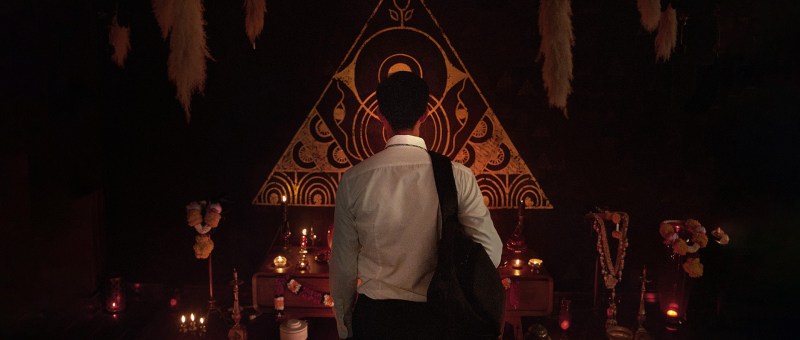
The space that’s for rent in fact seems to be the human body as it becomes clear what kind of home is being sought. Aside from financial worries, the curse essentially stems from the inability to accept loss, or perhaps also the attempt to escape it by assuming new identities rather than deal with a painful past. Only Ning remains in the dark in this triangular series of relationships with pyramids an often repeated motif mimicking the dark symbol of the cult. Sophon Sakdaphisit conjures a genuine sense of eeriness within the genial suburban environment that hints at a largely invisible but pervasive evil that has Ning and her family firmly in its sights. But in other and perhaps slightly uncomfortable ways, it may be the family that eventually repairs itself in what amounts to the complete integration of the once buried traumatic past which may have destroyed what once was but has birthed something new in its place that at last seems to be free of the gloominess that once overhung the family home having relocated to a much warmer and down to earth environment in the absence of both financial and aspirational anxiety but simply content to have found a place to call home.


International trailer (English subtitles)

Pop Aye (Kirsten Tan, 2017)

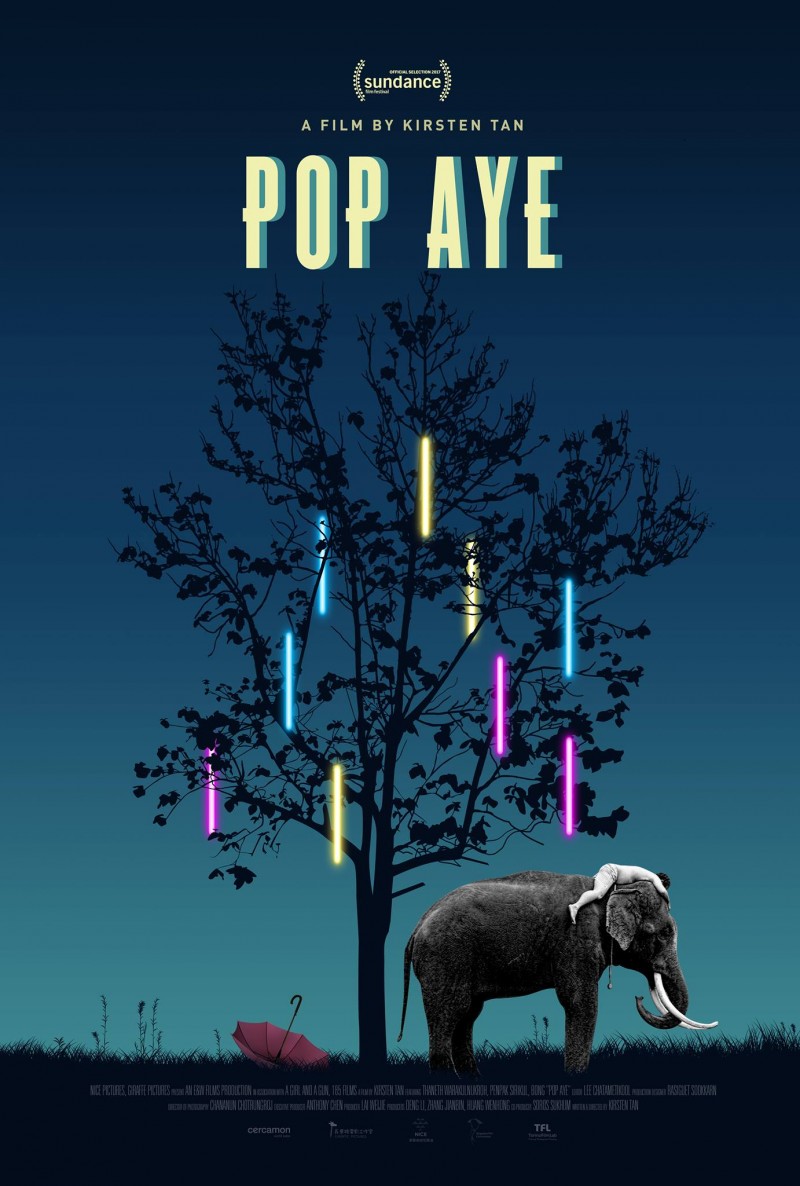
pop aye posterLife’s crises can take many forms but when they involve elephants it’s usually with a little more distance than in Kristen Tan’s whimsical debut, Pop Aye. A metaphorical return to source, a man entering late middle age tries to reclaim his childhood innocence by walking backwards (with an elephant) but discovers that you really can’t go home again. Man and elephant set off on a classic buddy movie road trip, enjoying a selection of encounters with fellow travellers each with a few lessons to impart.

A man in late middle age, Thana’s (Thaneth Warakulnukroh) carefully crafted life seems to be imploding all at once. The first building he designed, Gardenia Square, was an elegantly appointed modern shopping centre which seemed to perfectly reflect the growing consumerism of the ‘80s. 30 years later his futuristic design is now dated, and Gardenia Square is set for demolition to make way for the next modernist masterpiece ironically titled “Eternity”. If that weren’t depressing enough, the son of Thana’s former partner has taken over the business but has none of his father’s loyalty and is determined to sideline the office’s silly old man through pointedly underhanded ways such as deliberately telling him the wrong time for meetings and depositing the physical 3D model he spent a night at the office finishing with all the other rubbish in a now disused room.

If his work life is failing, Thana’s home life isn’t doing much better. His shopaholic wife, Bo (Penpak Sirikul), has little time for him and when Thana discovers her hidden vibrator, he finally realises he is entirely obsolete in every area of his life. So when he catches sight of a beautiful elephant dressed in elegant attire ready for posing for photos with foreign tourists, Thana has an immediate reaction which takes him right back to his boyhood days spent in the company of family pet, Popeye (Bong). Tracking the elephant down again and singing the cartoon’s famous theme tune to verify his identity, Thana decides to buy him (much to his wife’s horror). Seeing as you can’t really keep a giant elephant in your back garden, Thana decides his destiny is to take Popeye back to his rural village where he believes his uncle will look after him.

Undoubtedly part metaphor, Popeye represents the innocence and natural beauty of pre-modern Thailand – the very qualities Thana feels himself to have betrayed when he chose to leave home in less than ideal circumstances to pursue a “better” life in the big city. Thana got what he wanted. He became successful, wealthy, in some sense fulfilled, but now just when he should be entering a more contented phase of his life it’s all crumbling away from him and his ambivalence about the sacrifice he made as a young man is beginning to resurface. He thinks he can put something right by “rescuing” Popeye and reclaiming these qualities in the process but, as usual, nothing’s quite that simple.

Thana’s flight is as much from the modern world as it is from himself. Feeling unloved, Thana also feels eclipsed by his times, held in contempt by the younger generation whose sleek suits and obvious insincerity are a poor match for his disheveled befuddlement. This is a world in which monks accept Visa and take photos of elephants (which must surely be ten a penny) on their tablets. The city takes you in as quickly as it’ll spit you out, Thana warns a young truck driver, but his rare moment of direct emotional honesty is shrugged off as the rantings of an old man.

Despite the coldness of city life, Thana mostly meets warmhearted people on his journey through the countryside, beginning with a roadside saint who describes himself as being “like a tree” in the way he stays rooted to the spot observing the people and cars going by. Dee, noticing Thana’s blistered feet offers him his flip-flops which he won’t need anymore because he’s going to see his brother in Heaven. After all, even trees have to die someday. Grateful to the man, Thana takes Dee under his wing and vows to help him achieve his final wishes, but his intervention may have unforeseen consequences.

Thana even generates a strange bond with the policemen who arrest him for cluttering up the scenery in his nice middle-class neighbourhood which eventually leads him to a rural bar where he seems to meet a kindred spirit in Jenny – a melancholy transgender woman with a longstanding resentment of the bar’s resident “hostess”. Despite hitting it off with Jenny who seems to understand his particular pain, Thana disappoints himself by ending up in a humiliating, unsolicited situation with the bar girl but finds the equally disappointed Jenny forgiving and still willing to help a fellow traveller in need even if, as seems to be the case in much of his life, Thana has allowed himself to be bamboozled into doing something he didn’t really want to do.

At the end of his long, strange journey, Thana finds his illusions shattered, his romantic dream of his childhood home exposed as a mix of memory, nostalgia and idealism. Thana ends up where he started, only with a little more clarity and a new trend towards acceptance rather than defiance. He may think of Popeye merely as the manifestation of the innocence he sacrificed in childhood, but Popeye is his own elephant with his own ideas about his future which might or might not include Thana. Ending on a slightly upbeat note in which Thana is perhaps not as unloved as he believed himself to be, Pop Aye is charming odyssey through middle-age malaise set against the beautiful Thai landscape and told with a whimsical, melancholy humour.


Screened at BFI London Film Festival 2017.

Original trailer (English subtitles)