

The title of Carl Joseph E. Papa’s meta animation The Missing (Iti Mapukpukaw) most obviously refers to the hero’s uncle with whom his mother has lost contact, but in a deeper sense refers to the protagonist himself and the various things he too is missing which notably includes his mouth. Shot in a rotoscope style, Eric’s (Carlo Aquino) mouth is literally blurred out as if it had been erased and smoothed over. He can no longer speak but uses a dry erase board to communicate with those around him.
His troubles start just he’s about to go on a sort of date with coworker Carlo (Gio Gahol) which ends with them discovering the body of his uncle who has apparently passed away in a lonely death. It’s it at this point that Eric is plagued by an alien who keeps trying to abduct him claiming that they have unfinished business. Eric later asserts that he’s afraid the alien is trying to take over his body, hinting at a deeper childhood trauma and anxiety over bodily autonomy and intimacy. The alien’s attacks seem intensify as he grows closer to Carlo, frustrating their tentative romance as if it actively trying to obstruct it.
The alien’s presence leads to what may seem to others like strange or inconsiderate behaviour. He disappears on Carlo, locks him out of his flat, and seemingly drops out of contact for days on end causing him not an inconsiderate degree of worry given he’s just lost his uncle and appears to be in a state of emotional distress. Yet the most surprising thing is even on being told about the alien Carlo decides to just go with it, taking Eric’s explanation at face value and trying to help him evade it for as long as possible. He eventually admits that he can’t see what Eric sees and they aren’t where he thinks they are but otherwise provides a safe and non-judgmental presence that quietly supports him while he battles his internal demons. His mother Linda (Dolly De Leon) does something similar apparently aware of the alien’s existence, but not what lies behind it or what it really might mean.
Just as reality and fantasy begin to blur for Eric, Papa uses the medium to express his mental state as the world seems to literally crumble around him. The alien steals parts of his body and they literally disappear, a missing ear and blurred out eye along with a blankness where his hand should be. When Eric begins to recall his childhood memories, the animation style switches from the sophisticated rotoscoping of the rest of the film to something much simpler echoing a child’s drawings. In these sequences, the face of Eric’s uncle is always scribbled over in black pen echoing his more literal refusal to see and accept the past. He has been literally silenced by his trauma but now finds it banging on the doors of his mind demanding to be let in.
Yet the reason he is able to overcome it is precisely because of the love an acceptance he receives from his mother and Carlo who never question his reality or attempt to break him out of it, instead deciding to join him there and help him in his quest to get rid of the alien that has plagued him since his childhood. Only this way can he begin to reclaim the parts of himself that were missing, digging through the buried past to retrieve what was taken from him and eventually recovering his voice.
His quest has a gently absurd quality as parts of him suddenly detach themselves and run away, leaving it unclear for much of the film if Eric’s alien is “real” in a more concrete sense or merely a representation of his childhood trauma and very much inspired by logics and aesthetics of a small child who has been forced to keep a secret out of fear and shame and thereby unable to communicate his pain. In the end it’s love that brings him out of it, a gentle, patient and unconditional love that takes him as he is and gives him the space to find his own way out his trauma. Filled with a sense of warmth despite the darkness of its centre Carl Joseph E. Papa’s strangely poignant film for all its talk of aliens and destruction is remarkably human allowing its protagonist to finally begins to recover himself thanks to the loving support of those around him.
The Missing screened as part of this year’s Osaka Asian Film Festival.
Original trailer (English subtitles)

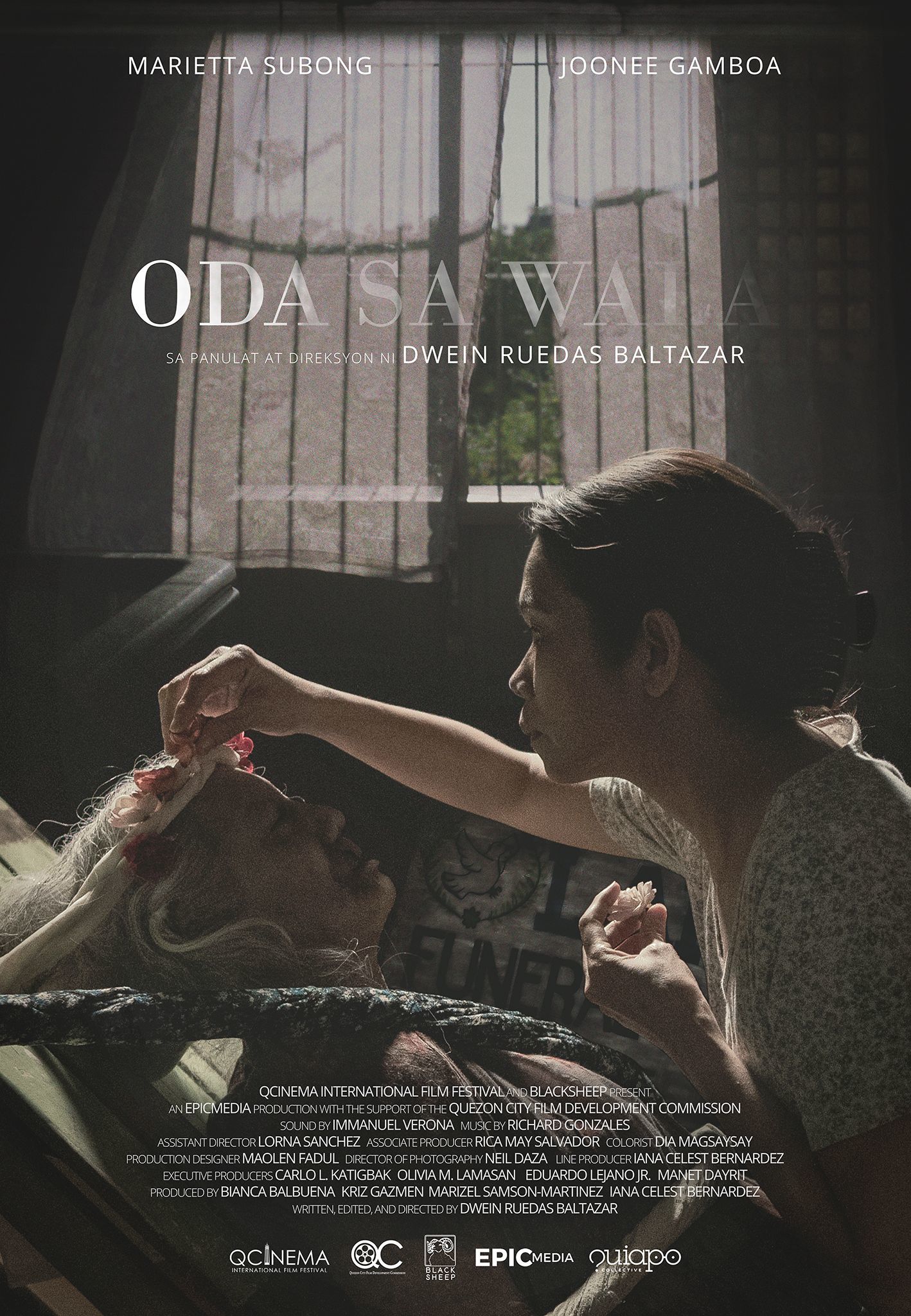 “Maybe it would be better if I just disappeared rather than physically be here but feel invisible all the time” the lonely heroine of Dwein Ruedas Baltazar’s Ode to Nothing (Oda sa wala) sadly laments to her only source of comfort, a semi-embalmed corpse. A melancholy meditation on the living death that is existential loneliness, Ode to Nothing takes its alienated heroine on a journey of hope and disappointment as she rediscovers a sense of joy in living only through befriending death.
  Windows on Worlds