
Space Sweepers (승리호, Jo Sung-hee, 2021)

If we’re content to ruin one world, why do we assume our salvation lies on another? Billed as Korea’s first blockbuster science-fiction extravaganza, Space Sweepers (승리호, Seungriho) finds a ragtag gang of junkers quite literally cleaning up humanity’s mess while ironically marginalised into outer space by internecine capitalist consumerism which in insult to injury offers to sell you a cure for the disease it has caused but only to those whom it deems worthy of its dubious promises. 

By 2092, the Earth has become all but uninhabitable. Led by 1952-year-old messianic scientist Sullivan, UTS Corporation has prepared a new artificial orbiting home but only the elite are invited while the remaining 95% linger on the poisoned ground below or else, like the crew of the Victory, wander in space attempting to make a living from clearing the debris left behind after countless sattelltes and space station launches. Yet as jaded space sweeper Tae-ho (Song Joong-ki) remarks, the more you work the more debt you earn. The Victory is a well equipped ship and you’d think that would mean greater earning potential but all it means is that it costs more to maintain while the initial outlay has landed them with unsustainable debt not to mention constant random fines and official interference. All of which is why when they find a little girl hidden in a storage compartment of an abandoned vessel and realise she’s the missing android that’s all over the news, they decide to play off the Black Foxes “terrorist” organisation who kidnapped her and UTC who want her back for all they can get. 

As might be expected for all his claims that “humanity is dirty” in its failure to protect the planet, Sullivan is no pure hearted saviour but an amoral elitist intent on terraforming Mars as some kind of authoritarian “utopia” populated only the “best” of humanity. He claims not to care about money, but cites the false equivalency that those with the deepest pockets must necessarily be those with the greatest capability while privately describing those left below as expendable and not really worth saving. Dressed like a cult leader, even at one point appearing as a giant hologram, Sullivan’s appearance owes a significant visual debt to Neon Genesis Evangelion’s Gendo Ikari, leaving little doubt as to his megalomaniacal intensions as he wilfully sells a solution to a problem he himself helped to cause while continuing to exploit the Earth and the people still on it to hasten its demise and his own enrichment. 

While the central message reinforces the idea that large corporations are not to be trusted while the capitalistic system they uphold is inherently destructive, it also perhaps undercuts that of the impending environmental crisis with which we are faced if we can’t mend our ways fast enough. Even so, it falls to the space sweepers to mount a unified global resistance against the wilful destruction of their homeland in protecting the android, Dorothy / Kot-nim (Park Ye-rin), who of course holds the key to saving the world. Despite having taken in her in with a view to ransoming her, the crew soon bond with the adorable little girl as unofficial daughter while Tae-ho alone remains reluctant in grief over child for whom he continually searches while internalising a sense of resentful failure in the knowledge that he lost her because of his own self-absorbed sense of hopelessness. 

Even so, there may be something a little uncomfortable in the final resolution in which the crew coalesces into a recognisable family unit each of them somehow “improved” as they accept their responsibility for Kot-nim whether in giving up drinking or erasing tattoos. Nevertheless, the film is refreshingly progressive in its depiction of a transgender character who gains the confidence to be their authentic self thanks to the unconditional solidarity among the crew members, though the sudden reversal of UTS from cult-like evil corporate entity to remorseful force for good seems rather optimistic as if the only problem was Sullivan and not the system that gave rise to him.  While the overall aesthetic may be somewhat televisual, Space Sweepers does feature some interesting production design and impressive CGI though its greatest strength lies in the jaded idealism of its space bandit protagonists as they band together to resist their marginalisation with mutual solidarity and compassion.


Original trailer (English subtitles)
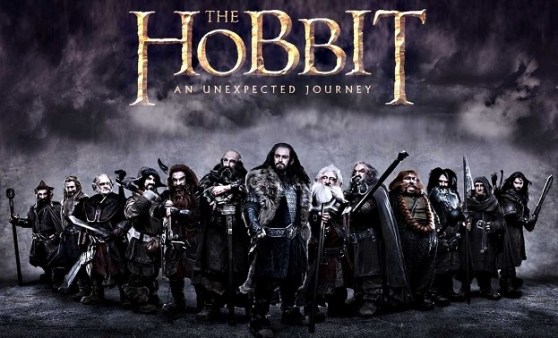
The Hobbit: An Unexpected Journey

the-hobbit-movie-e1343383853962

There’s no denying Peter Jackson’s return to Middle Earth has had its fair share of problems. Indeed, Jackson himself did not intend to direct, but following the high profile departure of (the extraordinary) Guillermo Del Toro reportedly unwilling to waste his talent waiting for the project to finally get going Jackson took up the reigns again. The Hobbit though is not Lord of the Rings and its now de facto position as a movie prequel is an awkward one. A comparatively slim volume aimed at a younger audience it obviously lacks the epic nature and imposing grandeur of the trilogy; it’s whimsical, playful even with its bumbling hobbit and perpetually singing dwarves where LOTR is heavy and melancholic – a world in danger of collapse. Jackson has, however, made the incongruous decision that The Hobbit will also be a trilogy of films and so has bulked out the Hobbit’s more meagre storyline with supplementary material which often foreshadows its bleaker successor. This first instalment, The Hobbit: An Unexpected Journey, alone runs to a whopping 169 minutes. Can such small and comparatively simple book really fill almost nine hours of screen time?

On the basis of part one, the answer has to be almost certainly not. Of the many things that could be said of An Unexpected Journey, the least disputable is that it’s too long. It isn’t just a little bit too long either, to paraphrase (if you’ll forgive me) – it feels thin, like butter scraped over too much bread. There are obvious set pieces and then there are the great gaping gaps between them. The pace is undoubtedly slow with occasional dead stretches which only seem to exist only to offer some clumsily delivered exposition more relevant to the opus as a whole rather than the film, or even films, themselves.

However, the parts that are good are very good. The encounter with the trolls is every bit as frightening as it seemed in childhood while the escape from the orcs and stone giants are undoubtedly exciting; the stand out scene though is of course the ‘first’ encounter with Gollum. Technology has moved on significantly even since LOTR was completed and Andy Serkis’ motion captured/CGI rendered Gollum is ever more convincing. The interplay between Freeman and Serkis sparkles along with a real sense of danger interspersed with wit.

When it comes to the film as a whole the unevenness of the tone is not so well managed. There’s still a kind of childlike simplicity to the telling of the tale – the dwarfs are kind of idiots, constantly messing everything up and falling into certain death situations only for Gandalf to show up at the last minute and and do something flashy with his wand to sort it all out for them. Despite this, and you’ll forgive me the slight spoiler, they all seem to inconceivably survive completely intact like some kind of invincible cartoon character. Yet we have this tone of seriousness and melancholy which seems to have one eye on later events – yes it’s funny now but everything’s going to go bad in sixty years time so you’d better not laugh too much. Ultimately it can’t quite decide what it wants to be  – whimsical farce about a group of displaced people trying to get home or weighty precursor to a dark tale that tries to prove that the seeds of the present are sown in the past. Jackson’s (understandable) attempts to tie The Hobbit more closely with the celebrated trilogy in terms of sensibility only serve to undermine the the original tales biggest selling point – its lighthearted questing.

There is, of course, the question of the technical sides of this film – the decision to film in 48fps 3D. There have been varying opinions as regards how well this has worked for this particular film and how it might work in general but, having seen an HFR 3D presentation the overriding impression was something like that of watching a Hallmark Movie. Suddenly everything looks cheap or artificial, a higher frame rate might more accurately represent reality but is reality what we really want from cinema? For extreme close ups and shallow static shots it seems to work very well, but anything with extensive background action ends up looking curiously amateurish. Perhaps some will prefer a harsher, less cinematic aesthetic that more closely resembles TV but audience members more accustomed to a traditional film look will likely find The Hobbit, at least, visually less palatable. It would be wrong to write off 48fps filming on the basis of how it’s been used in one film (and it isn’t as if other filmmakers haven’t experimented with frame rates before) but hopefully this experimentation is something that can be learned from and, perhaps, improved in years to come.

The Hobbit: An Unexpected Journey is, therefore, something of a disappointment. It isn’t a bad film but neither is it the film many people were looking forward to. Bloated and confused it falls between two stools attempting to stay true to both its literary roots and cinematic brethren. Hopefully the next two instalments will have a little more to offer us.