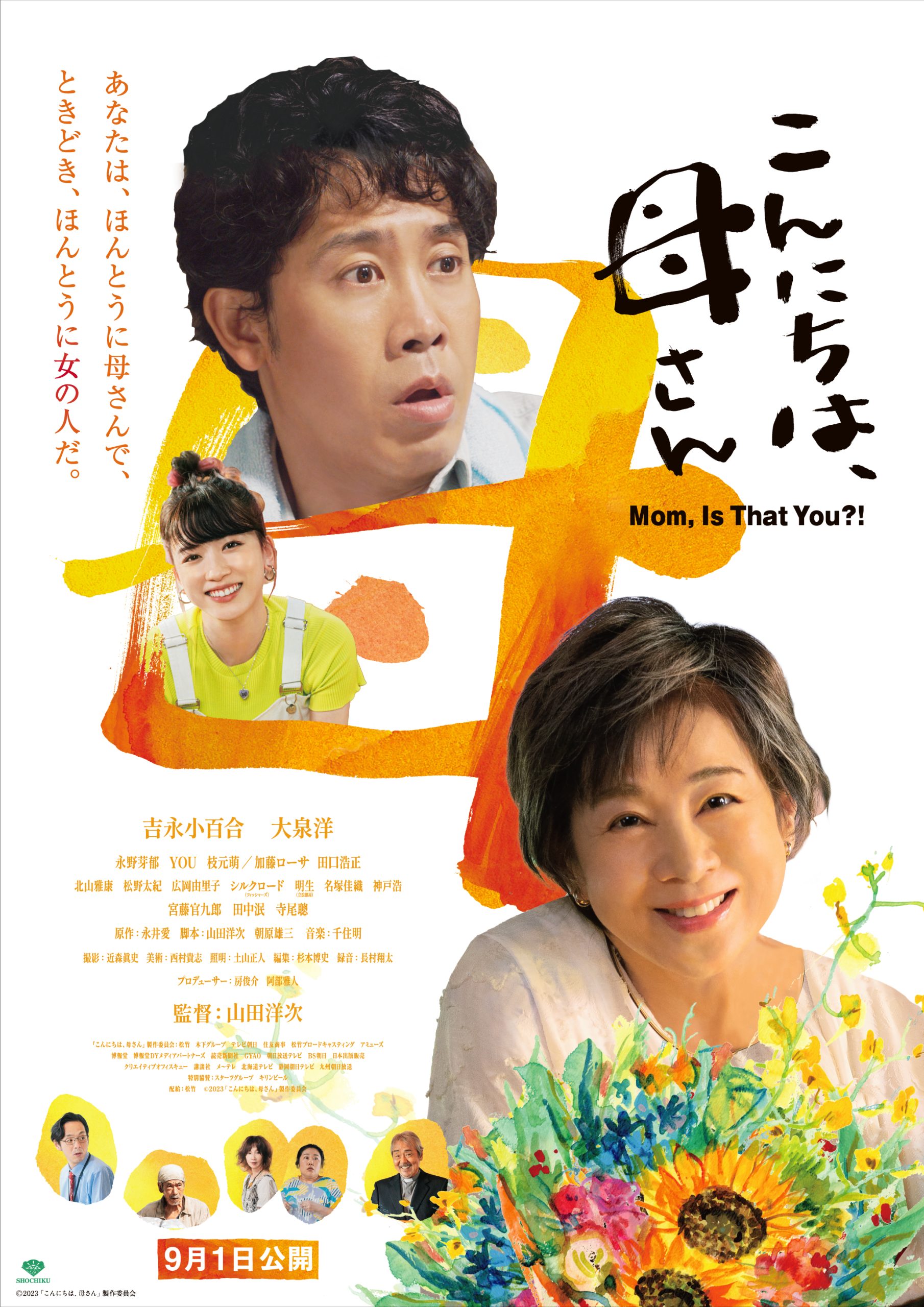
Mom, Is That You?! (こんにちは、母さん, Yoji Yamada, 2023)

“People of my generation can’t throw anything away,” an older woman admits on her hearing her daughter-in-law has just been featured in a TV series about decluttering. Inspired by Ai Nagai’s 2001 play, the latest from veteran director Yoji Yamada Mom, Is that You? (こんにちは、母さん, Konichiwa, Okasan) seems to hint at a series of circular generational divides while suggesting that the children of the Bubble-era in particular are too quick to get rid of things they don’t think they don’t need anymore.

That’s the irony of soon-to-be 50-year-old Akio’s (Yo Oizumi) salaryman job in HR. It’s his job to cut dead wood from the company and this current round of polite requests to employees of a certain level to take early retirement includes his uni friend Kibe (Kankuro Kudo) who doesn’t take kindly to what he sees as a personal betrayal. Unlike Akio who is beginning to tire of the salaryman dream, Kibe fiercely fights for his position and identity as an executive at a big company even when faced with banishment room treatment and disciplinary dismissal after an altercation with the boss.

But what Kibe doesn’t know is that Akio is already facing a series of crises. His marriage has collapsed and his university student daughter Mai (Mei Nagano) is having a crisis of her own. Fresh from her tidying success, her mother has told her that all she can do is get good grades followed by a boring salaryman job like her dad’s which doesn’t seem to be what she wants which is why she’s run off to stay with her grandmother Fukue (Sayuri Yoshinaga) who runs a traditional shop selling tabi socks near the Sumida River. Fukue has a kindly, laid-back attitude remiscent of the shitamachi spirit found in other Yamada films in contrast to the stressed out uptightness of Akio who hasn’t told her about his impending divorce nor work troubles but finds himself paying a visit home in an attempt to sort himself out only to find Fukue keeping herself busy with a local charity group and nascent relationship with a church pastor. 

Fukue’s charity work is emblematic of a waste not want not philosophy that has otherwise disappeared from the modern society as they pick up the things other people don’t want and donate them to the needy even if it sometimes seems a little simplistic or patronising. Biting into some reject crackers from the local rice cracker shop, Akio reflects that they’re something that’s made to console people and it’s work that has meaning unlike his soulless corporate job that gives him nothing other than stress and money. At the time the play was written, the fallacy of the salaryman dream was clear for all to see in the post-Bubble society but to a man like Akio getting a company job was a big deal and his success is still the talk of his mother’s friends even he starts to wonder if he still has time to start again and discover a more meaningful way of living.

Some of these ideas, and the timescales involved, make much more sense for the play’s millennial setting rather than the film’s apparent present day given the references to the firebombing of Tokyo which would require the older protagonists to be their late 80s to even remember. Akio dismisses his mother’s charity work and insists that the homeless are only those who opted out of the competitive society he too has come to doubt or else were excluded from it, while he’s resentful of her attachment to the pastor in contrast to Mai who is excited by the prospect of her grandmother’s love affair and enduring possibilities of age while Fukue is beginning to fear not death but dependency if her health should suddenly decline. 

It’s in the midst of her heartbreak that the film affords Fukue a new beginning if in coming full circle, Akio choosing to make a clean break with the unhappiness in his life and Mai embracing her youth while falling for the old world charms of her grandmother’s tabi sock shop almost exclusively catering to sumo wrestlers, who as someone points out never waste anything, and people trying ceremony for the first time at 60. Like most of Yamada’s work, the film has a gentle humanity and melancholy poignancy but also a sense of hope and continuity that run contrary to an overly corporatised society in which young and old are already losing faith.


Mom, Is That You?! screened as part of this year’s Toronto Japanese Film Festival.

Original trailer (No subitles)
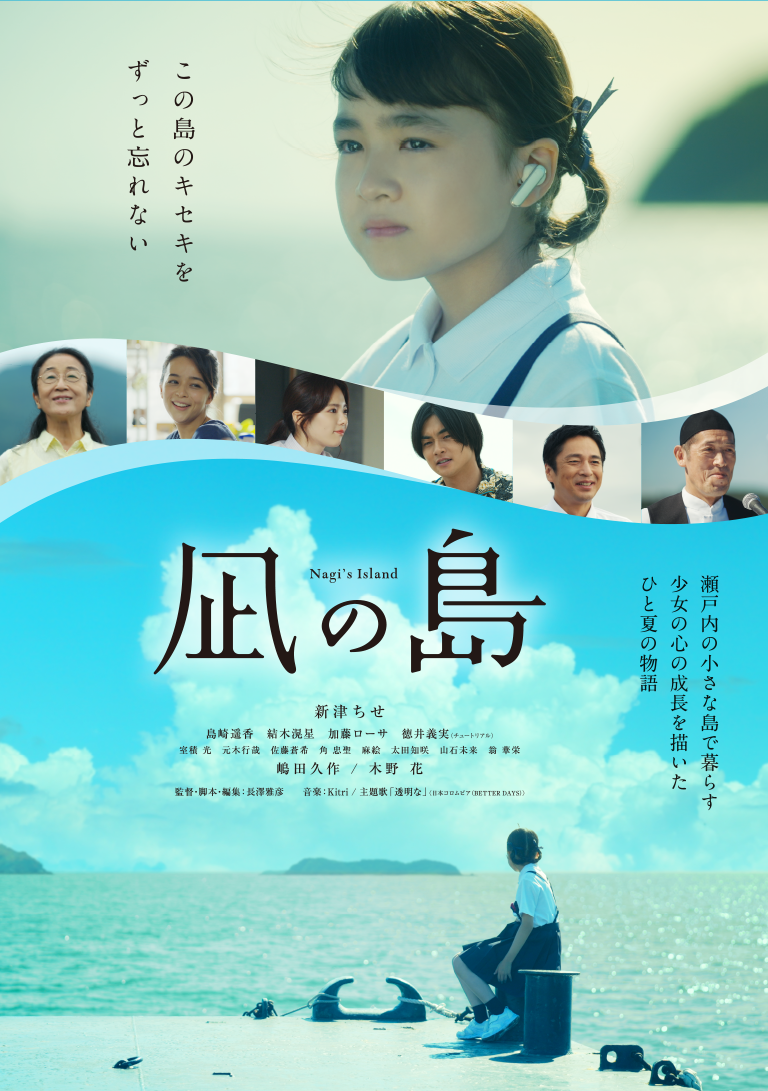
Nagi’s Island (凪の島, Masahiko Nagasawa, 2022)

“Doctors don’t heal patients. We just help them heal themselves” according to the kindly grandmother at the centre of Masahiko Nagasawa’s warmhearted drama Nagi’s Island (凪の島, Nagi no Shima). In many ways an island film, Nagasawa’s gentle tale of the power of community support and mutual compassion celebrates the healing power of laidback island life while simultaneously lamenting its decline amid rural depopulation and an ageing society which it leave it in someways vulnerable without the protections of big city infrastructure. 

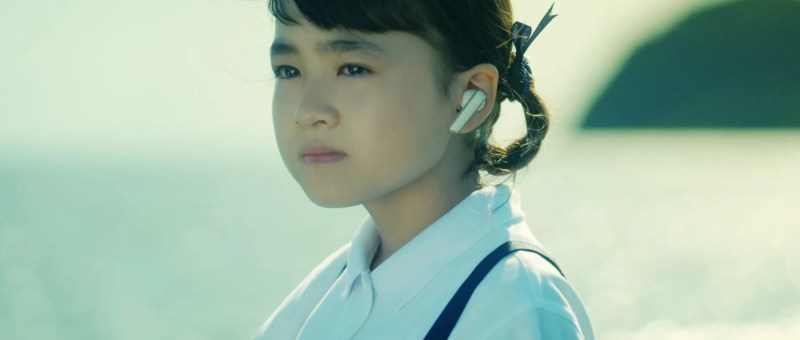
For young Nagi (Chise Niitsu), however, it’s a kind of haven. Following her parents’ divorce she’s returned to live with her grandmother Yoshiko (Hana Kino) who runs the island’s only medical clinic while her mother (Rosa Kato) has a secured a job as a nurse at the hospital on the mainland. Nagi has adjusted to island life fairly quickly, but is also haunted by her past and suffers from panic attacks when witnessing small acts of violence and aggression that recall painful memories of her father’s drunken rages. In any case it seems that Nagi has maintained contact with her dad, Shimao, through social media while he is trying his best to undergo treatment for alcohol abuse and repair his relationships with his family. 

As Yoshiko puts it, history has in a sense repeated as she too came to the island with her daughter, Mao, after leaving her husband and was comforted by the total acceptance of the island community who asked few questions and never attached any social stigma to the fact she was a single mother. Many people here are, however, also suffering such as Nagi’s new friend Raita who is touched by her relationship with her mother while missing his own. Irritated by his grandfather’s refusal to explain to him what’s happened to her other than that she’s in a hospital, he determines to find out dragging Nagi along for an adventure but perhaps discovers something he wasn’t quite prepared for only to be comforted by a frank yet compassionate outlaying of the facts from a sympathetic doctor and the gentle support of his friends and family. 

Nagi’s arrival also begins back painful memories for the school’s janitor who is nicknamed Grumpy Grandpa (Kyusaku Shimada) by the kids (of whom there are only five) because of his morose appearance and the fact he never smiles. Having lost his own daughter to a heart attack, he worries for Nagi who in turn becomes determined to make him smile and eventually succeeds in making him feel a part of the community allowing him to begin making peace with his daughter’s death. 

That sense of community is however threatened by the realities of contemporary island life. Nagi’s new friends Kengo and Raita are secretly worried that Mao will decide to remarry and Nagi will leave the island leaving them alone again as the only children of their age. In the local school all the kids are taught together because there are only five of them, the other two being an older boy and his younger sister. Life on the island may seem so idyllic that it’s difficult to see why anyone would want to leave, but with few jobs available younger people often seek better futures in the city while there’s no denying that because of the decreasing population there are few resources available. Yoshiko is the only doctor on the island and her clinic is only a regular GP’s office meaning those who require more serious medical treatment will have to travel to the mainland which is possible only by small fishing boats in good weather. 

In any case the island provides a healing environment of its own, allowing Nagi and her mother to begin putting the past behind them while offering a chance of redemption for Shimao who may be able to start over in a kinder place free of the pressures of city life. As the islanders celebrate the first marriage taking place in the village in 30 years, there is promise of new life and new beginnings despite the prevailing narrative that communities such as these have little future in a continually evolving society. What is clear is that Nagi has found her place to belong along with a purpose in life in the gentle lull of the island’s seas and its welcoming shores. 


Nagi’s Island screened as part of this year’s Camera Japan. It will also be screening at Japan Society New York on Nov. 20 as part of The Female Gaze: Women Filmmakers from JAPAN CUTS and Beyond.

Original trailer (no subtitles)