Strangers (Kenta Ikeda, 2024)

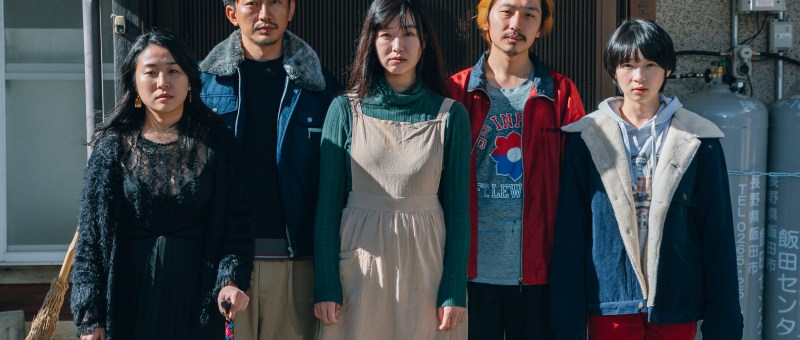
Naoko, the heroine of Kenta Ikeda’s Strangers, says she’s been pretending all her life. She’s been pretending to be what everyone wanted her to without really knowing or thinking about what it was she wanted to be or who she really is. On a baseline level, Ikeda suggests that we are and remain strangers to ourselves while equally confused about those around us, seeing what we want or expect to see rather than who they really are.

In part that may explain why Naoko has stayed with her unfaithful fiancé Takeo who got a colleague pregnant and then seemingly abandoned her. Shimizu then began harassing Naoko, stalking her and making silent calls. To make matters worse, Takeo is often away on “business trips”. He’s not currently responding to her phone calls or messages and has just embarrassed her by not turning up to a family event. Naoko’s sister thinks she should leave him and doesn’t understand why she hasn’t already. But Naoko just sighs that she’s decided not to expect too much from life and seems prepared to put up with this degradation because she doesn’t think she deserves anything better. 

That might be why she’s so drawn to her enigmatic colleague Yamaguchi who waltzes in past noon wearing a distinctive blue dress that floats in the air behind her. The other ladies at work gossip that their bullying boss Satome, who is married with two children, got her the job after picking her up on a dating app and the reason why she can get away with such unprofessional behaviour is because she’s sleeping with him. But Naoko later discovers that Yamaguchi’s dating app activities are a kind of side hustle in which she participates in idealised dating scenarios pretending to be the lover of lonely men who pay her handsomely for a few hours of fantasy romance.

Or as Yamaguchi describes it, the opportunity to experience only the good parts of love before you get sick of each other and run out of things to say. It sounds more than a little like the logic of someone who’s decided not to expect too much from life, and while it seems Yamaguchi may be trying to avoid her own grief and loneliness, it’s true that she otherwise remains a cypher. After losing contact with Yamaguchi and being left with her smartphone, Naoko receives a call from her handler who tells her that it doesn’t matter who she is or why she has “Yamaguchi’s” phone, all that matters is turning up at the appointment and never letting it slip that it’s all just role-play.

On her dating app profile, Yamaguchi’s face is blurred so that you only really see the image of her in her distinctive blue dress which Naoko too later starts wearing. The people around Naoko are often shot in soft focus so that we can’t really be sure of their identity beyond using their clothing to infer who they are. Men in particular are often shot from behind or with their faces out of frame as if they were all just a much of a muchness. We never even meet Takeo, who apparently does not return from his “business trip”. In any case, in agreeing to the fantasy date, Naoko is gradually taken over by the Yamaguchi persona. The spread of the graze she sustained at the beginning of the film seems to indicate the gradual erasure of her identity, yet in another sense becoming Yamaguchi also gives Naoko an excuse to stop pretending and accept herself or at least to start expecting more from life. She becomes more assertive, flirtatious, and confident in confronting Shimizu only to realise that she may not have been the mysterious force she felt watching her after all. 

In her Yamaguchi persona, Shimizu describes Naoko as a like a colourless and doorless detergent, but she replies she’s been hiding all her life. She ran ran away from her problems, refused confronting Takeo or Shimizu, avoided being honest with her family and simply played up to the image they had of her of a shy and obedient woman. There might be something in the fact that Yamaguchi kisses her suggesting that Naoko may have been running away from her sexuality, but equally it could just be that this is how the Yamaguchi curse is passed from woman to woman. Having once assumed it, Naoko now must try to shake it off but that too might not be as easy as she might assume. Meanwhile, those around her also have their own secret lives and faces they keep hidden from others. Ikeda creates a atmosphere of eeriness and hovering violence amid the faceless city where it doesn’t matter who you are so long as you show up and everyone is to some extent participating in a temporary fantasy in order to overcome the disappointment of life in which as Naoko had told herself it seems better not to expect too much.

Qualia (クオリア, Ryo Ushimaru, 2023)

“What is happiness for a chicken?” a recent recruit to a chicken farm wonders, though as she later points out they all meet a grim fate in the end. Yuko (Kokone Sasaki), a timid, quiet woman is much like the chickens she farms though apparently content with her captivity echoing only that it’s enough for her that she feels needed by the family who otherwise mistreat her. Actor Ryo Ushimaru’s directorial debut Qualia (クオリア) examines the place of women in the contemporary family along with its seething resentments and petty paybacks. 

On spotting one hen that’s being bullied by the others, Yuko places it in a protective cage and wonders if it will one day be able to return to the others while perhaps aware that it echoes her own circumstances. Having married into the family of her husband, Ryosuke (Kenta Kiguchi), she’s become little more than a drudge bullied by her embittered sister-in-law Satomi (Maya Kudamatsu) who walks with a cane after an accident caused by her brother which gives her some additional leverage over him. Perhaps to escape the sense of constraint he feels in his familial relationships, Ryosuke has been having an affair with a woman from a roadstop that buys their eggs, Saiki (Ruka Ishikawa), who has spun a tale about a false pregnancy in an attempt to get him to take their relationship more seriously. When that doesn’t quite work, she fetches up and the farm and is mistaken for a job applicant, overjoyed on realising the position comes with room and board. The unsuspecting Yuko is all too eager to accept her, almost browbeaten by Saiki into overriding her internalised compulsion to clear it with Satomi and Ryosuke first. 

Yuko is such a people pleaser that even after finding out about Saiki’s claims to be carrying her husband’s child she welcomes her into their home as if tacitly admitting her inferiority to this other woman who has done what she couldn’t do in conceiving a child. Much more direct by nature, Saiki cruelly retorts that becoming a mother is the key part of being a wife while making pointed and barbed remarks that express her desire to elbow Yuko out of the way and take her rightful place at Ryosuke’s side. After moving in, she quickly takes over the domestic space by requesting that she be allowed to help with the cooking and cleaning while Yuko takes care of the chickens outside, playing the part of the perfect housewife in an attempt to undercut Yuko’s place within the family.

Yet she also seems to feel sorry for Yuko and disapproves of the way Ryosuke treats her with his bullying manner and emotional coolness. Ryosuke had told her that he never loved Yuko and had married her only because his sister told him to, hinting at his feelings of emasculation amid this otherwise matriarchal environment where Satomi effectively rules the roost. The irony is that there are supposedly only female chickens on the farm which is how they ensure none of the eggs they send out are fertilised. If they find out any of the new chicks they take in are male, they get “removed” by conflicted farmhand Taichi (Chikara To) who is a bit of chicken obsessive and finds it hard to square his affection for the birds with this responsibilities as a farmer which mean they’ll all be “removed” when they stop laying and therefore lose their purpose.

The same is true for Yuko. Unable to conceive she’s now being replaced by a subsequent generation and has lost the will to fight back unable even to say that she objects to any of these new arrangements. Ryosuke, a rooster in the henhouse though one whose masculinity is scrutinised, seems to want a reaction from her but all she can tell him is that she treasures the memory of him proposing to her with all the chickens cheering them on and that she’s satisfied just with that one romantic moment. The question remains whether she too will one day find the courage to fly the coop and escape her bullying at the hands of the other women or otherwise discover a way to reassert herself that doesn’t leave her at their mercy. In any case, Ushimaru’s quirky, surreal dramedy eventually discovers that chickens too can fly if only they’re given the chance to do so.


Qualia screened as part of this year’s Nippon Connection

Original trailer (English subtitles)

His Bad Blood (いつくしみふかき, Koichiro Oyama, 2019) [Fantasia 2019]

His Bad Blood PosterThe sins of the father are visited on the son. Rural superstitions run deep, but is it really fair to condemn a child for having “bad blood” or will the prejudice itself become a self-fulfilling prophecy? The young man at the centre of Koichiro Oyama’s debut feature His Bad Blood (いつくしみふかき, Itsukushimi Fukaki) struggles to assert himself in a small community where his father’s (minor) crimes are still painfully present, but then perhaps like any other young man he himself needs to lay his father’s ghost to rest in order to find his own path.

Decades ago, no good drifter Hiroshi (Ikkei Watanabe) drifted into a small-town in search of a place to die after his latest business venture collapsed, but there found the kindly Kayoko who gave him a home and a chance to start again. Unfortunately, however, Hiroshi reverted to type and after being sent home to get the baby clothes while his wife was in labour, decided to run off with the family’s savings instead only to be caught in the act by Kayoko’s brother Yoshitaka whom he wounded in a fight that eventually saw him beaten by a mob and hounded out of town.

In the present day, Shinichi (Yu Toyama), the son, is a strange, shy young man who has been unable to hold down a job and is widely disliked by the community and especially by his resentful uncle. When the area is plagued by a spate of burglaries, Yoshitaka jumps to the “obvious” conclusion and attempts to have Shinichi hounded out of town the same way he got rid of his father. Hurt that not even his mother believes he is innocent of the crimes of which he is accused, Shinichi takes refuge with the local preacher (Akio Kaneda) where, unbeknownst to him, his estranged father has also decamped to hide out after a life of petty crime finally catches up to him.

Though set firmly in the present day, Oyama’s debut has a distinctly depression-era dustbowl feel with its rural backwater suddenly stirred up by rumours of the railroad’s eventual arrival while the non-conformist Christian church hands down messages of love and compassion in trying times. Hiroshi, possibly unreformable, even puts on a show of getting religion only to go full snake oil salesman in staging a revival inside the Reverend’s church in which his personal prophet, Tanaka Xavier XVI, makes a “disabled” woman walk and successfully stimulates the record crowd to hand over their cash in hope of salvation while Shinichi and the Reverend look on in confused horror.

To engineer some kind of forward motion, the Reverend pushes the two men together but keeps their connection a secret until finally revealing it in the hope that the pair might finally be able to put some kind of lid on the past. Looking for his father, Shinichi avows he’d like to mess up his life just like his father has done to his, but discovers that Hiroshi’s life is pretty messed up already and likely always has been. His fate was pretty much sealed the day pushed the baby clothes out of the way and opened the family safe instead. Shinichi’s job isn’t to save his dad, no one can, but try and accept him so that he can, a sense, reject his “bad blood” and those who condemn him for it to claim his own identity and walk his own path.

Before he can do all of that, however, he’ll have to escape the secondary curse of the unfair prejudice he faces from his home community as a supposed carrier of “bad blood”, destined for criminality and inherently untrustworthy. Despite all he suffers, Shinichi valiantly refuses to become what everyone says he is while deeply resenting his absent father for saddling him with this unhappy destiny. It is, however, Hiroshi who accidentally gives him forward motion through the unlikely shared dream of making an honest killing in the shortly to boom real estate business when the railroad comes to town. An equally unlikely love affair with a similarly strange young woman (Keiko Koike) provides additional possibilities, but still leaves Shinichi feeling trapped by his past despite her urgings to “just be yourself and live in the future with me”. A melancholy tale of freeing oneself from the judgement of others and learning to step out of a father’s shadow, His Bad Blood is a promising debut from Oyama who addresses a difficult subject with compassionate humanism as his melancholy hero finds the courage to walk away from a toxic past towards a more promising future.


His Bad Blood was screened as part of the 2019 Fantasia International Film Festival.

International trailer (English subtitles)