Cat Kiss (고양이 키스, Hwang Soo-bin, 2022)

A widowed single father’s life is suddenly thrown into disarray when his son’s decision to take in a local stray cat forces him to confront the trauma of his wife’s death in Hwang Soo-bin’s light-hearted drama, Cat Kiss (고양이 키스, Goyangi Kiss). Less a study in the inertia of grief than an empathetic tale of how caring for others can reopen a heart that was closed, the film leans in hard to its cat-themed metaphors of finding comfort and support in expected places. 

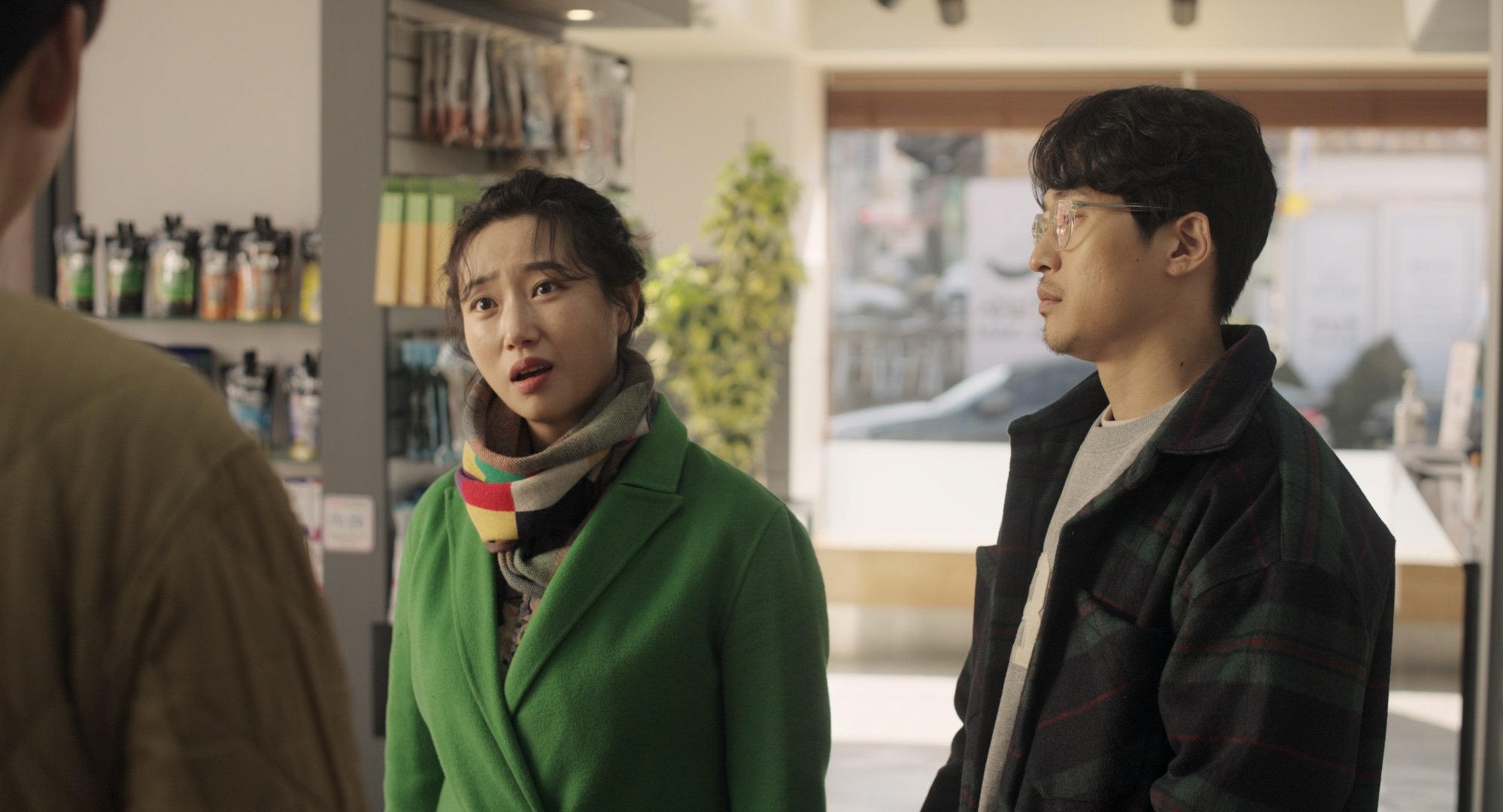
In any case, since his illustrator wife passed away Young-hee’s (Oh Dong-min) been unable to venture into her drawing room without having a panic attack. That might be why his son, Jae-in (Shin sua), decides to hide a kitten in there that he claims followed him home from a school trip. Unfortunately, Young-hee is allergic to cats and immediately wants to get rid of it but is convinced not to by Ro-un (Ryu Abel), an energetic and cheerful woman who runs a local repair shop and comes to fix their leaky roof.

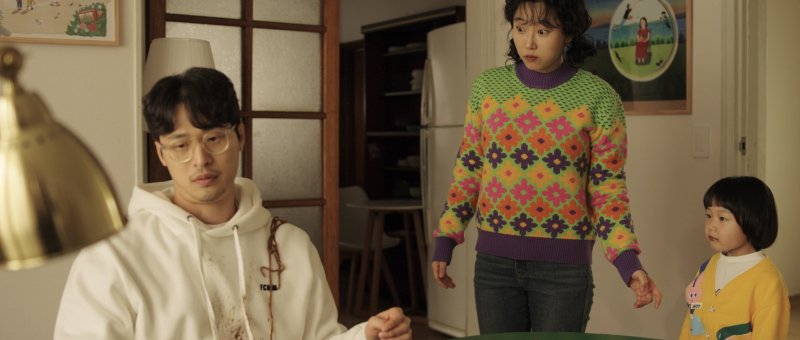
Fixing the roof is partly what she carries on doing, bonding with the family and trying to help them move on with their lives through turning the drawing room into a cat room in a kind of compromise with Young-hee’s allergies only it’s as much the emotional connection that he’s allergic to as the feline itself. The same might be said of his odd relationship with his neighbours, a family of three who live across the way that includes a little girl Jae-in sometimes plays with. Finding Young-hee collapsed after a panic attack, the neighbours tell him he can always come knock on their door if he has a problem but he isn’t really ready for that kind of connection yet. 

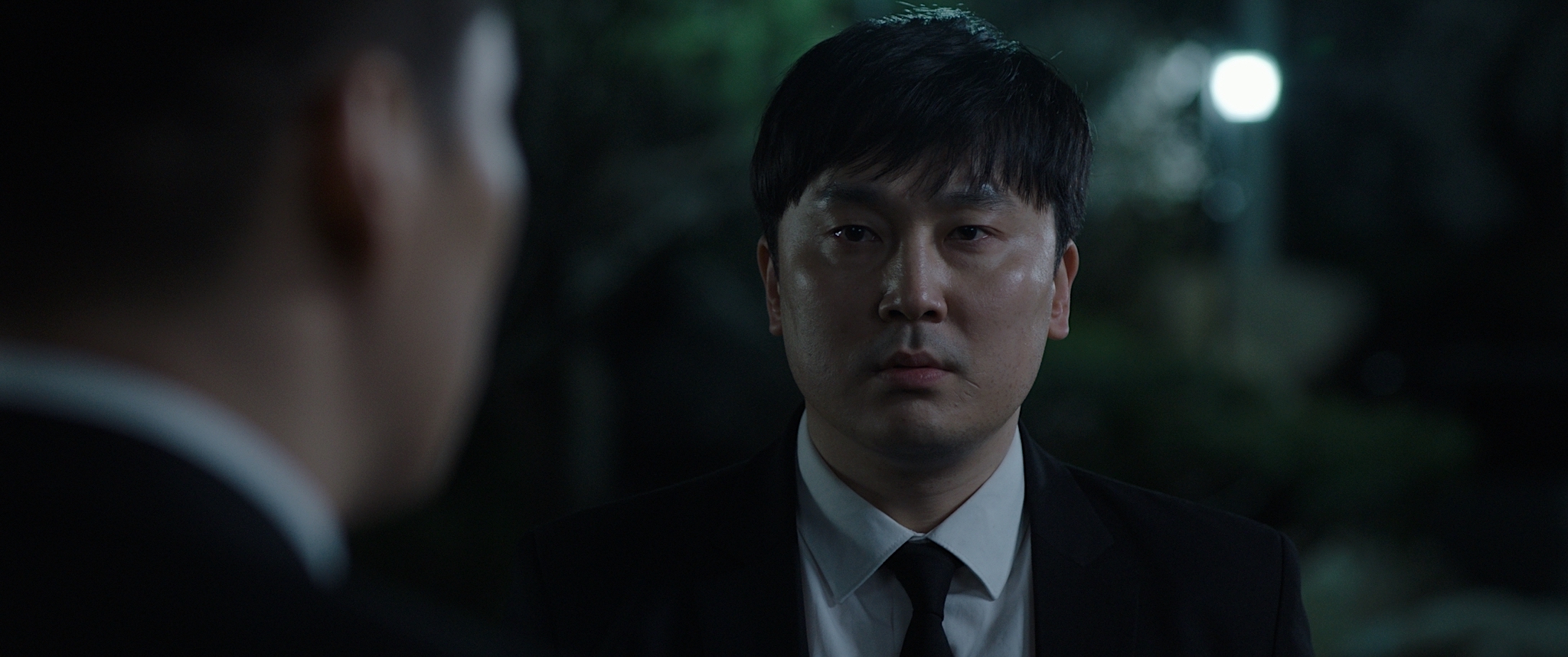
Young-hee’s grief-stricken inertia is plain from his expressionless face and generally melancholy aura. Even Jae-in remarks that he’s always sad a little moody. Ro-un’s mission is to make the family smile again though she has an uphill battle but equally, Young-hee does not try to deflect her attentions which some might see as overbearing given that she’s more or less forced him to erase the last traces of his late wife from their home, but as if responding to a cat kiss slowly allows her into their lives and hearts as a more positive influence amid their melancholy.

She meanwhile is carrying a heavy burden of her own which goes a little beyond the loss of her cat which closely resembles that rescued by Jae-in. They are all in a sense stray cats looking for someone to take care of them and restore some of what they’ve lost. Even the family across the way which Young-hee had so envied has its sources of tension stemming from the unfulfilled desires of the parents with salaryman dad dreaming of becoming a dancer and the mother looking for more things to do outside the home now her daughter’s a little older. The daughter meanwhile has a hangup of her own in regards to traditional femininity, resentful that people have said Jae-in is prettier than she is despite being boy, and criticising her being “strong”. 

Another strong woman, Ro-un tells her not to be afraid of her physicality though her choice of words somehow backfires. A kind of runaway herself, she too is trapped in a state of inertia by a traumatic past she hasn’t fully dealt with while remaining upbeat and relentlessly cheerful as a kind of coping mechanism for the blows life has dealt her. Focussing on the cat provides them with a roundabout way of communicating and an opportunity for developing a shared intimacy that gently guides them back into the world. 

Despite the melancholia of the situation, Hwang keeps the tone light and adds a little quirky, down to earth humour including small instances of animation echoing Young-hee’s late wife’s occupation as an illustrator. Somewhere between offbeat romcom and grieving drama, the film is a kind of testament to the healing power of cats along with their tendency to find good people to take care of them just as those who become cat butlers slowly begin to open their hearts while generally making the world a slightly less unfriendly place.


Cat Kiss screened as part of the 18th Season of Asian Pop-Up Cinema.

International trailer (English subtitles)
Seire (세이레, Park Kang, 2021) [Fantasia 2022]

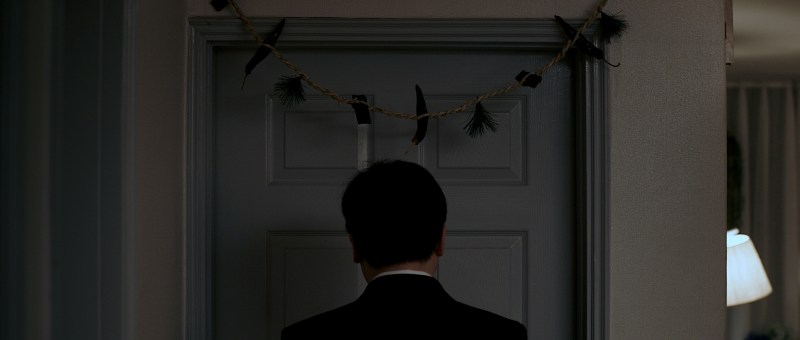
A new father finds himself plagued by strange dreams and an unquiet dread in Park Kang’s eerie paternal horror, Seire (세이레). Seire refers to the first three weeks of a baby’s life in which the family is expected to limit external contact and avoid any taboos especially those having to do with death. Such superstition might seem out of place in the modern society but then when you think about it it makes sense, limiting the number of people interacting with your medically vulnerable newborn helps protect it from illness or infection while dealing with grief in the wake of new life is necessarily difficult. 

Even so, Woo-jin (Seo Hyun-woo) is beginning to get fed up with his wife Hae-mi’s (Shim Eun-woo) obsession with ritualistic superstition. “Don’t engage in anything unusual” she ominously instructs him as he leaves to run an errand after a night of fevered dreams sleeping on the sofa. That Woo-jin is tired isn’t surprising, he’s the father of a newborn after all, but he seems to be weighed down by something more than bodily fatigue and has been having strange visions featuring fruit knives, rotten apples, and a woman who is not his wife. When he receives a text informing him that an old friend from university, Se-young (Ryu Abel), has passed away, Hae-mi tries to talk him out of going to the funeral advising him to send money instead rather than risk breaking a taboo during the baby’s Seire but Woo-jin doesn’t really believe in any of this stuff and not going to the funeral’s not really an option for him especially, as we later realise, as he may have had unfinished business with the deceased. 

Superstition becomes an odd kind of fault line in the couple’s relationship not so much in a matter of belief but of commitment. Hae-mi reads Woo-jin’s reluctance to abide by the superstitious practices she’s been taught as an early paternal failure, a sign that he wasn’t interested enough in his son’s welfare to follow a few simple rules for a period of three weeks while Woo-jin equally sees Hae-mi’s insistence on them as a personal rejection which is on one level fair enough when she’s literally pelting him with salt and refusing to let him into their bedroom let alone near the baby. To divert the misfortune born of attending the funeral, Hae-mi asks Woo-jin to commit three acts of theft, telling him that it won’t harm anyone and then they’ll be able to stop worrying except that it will definitely harm someone and perhaps everyone if Woo-jin gets caught and ends up losing his job. 

Despite claiming not to believe in any of this superstition, Woo-jin is very into traditional medicine and it seems there may be a connection to the strange events around him though it might not explain his fractured state of mind or increasing inability to tell dream from reality. He is quite literally haunted by the manifestation of a previous transgression which is already playing on his mind given his recent fatherhood. Paternal anxiety is indeed at the root of all his troubles, though we can also see that he feels belittled by his wealthy brother-in-law who makes a show of buying all the fancy meat for a family dinner while it later becomes clear that his relationship with Hae-mi is newer than we might have assumed and cemented by the birth of a baby Woo-jin may perhaps on some level resent. But it’s his own guilt that haunts him in the end, failing to deal with the implications of his past actions and their result whether by accident or design. 

Drifting between dream, memory, and a confused reality, Park imbues the everyday with a sense of dread and eerieness defined by an ever-present evil which must be constantly warded off though as it turns out Woo-jin’s darkness very much lies within. Some things you think are just superstitions really aren’t, Hae-mi’s sister annoyed by her superstitious mother’s instruction not to eat lettuce while pregnant which is probably more to do with E. coli than fear of a supernatural curse, though there seems to be no real reason why you shouldn’t eat apples at night save the superstition they cause unrestful sleep. Is this all happening to Woo-jin because he broke a taboo? In many ways yes, and his self-haunting seems set to continue in the impossibility of gaining forgiveness for the unforgivable. 


Seire screened as part of this year’s Fantasia International Film Festival

Original trailer (English subtitles)