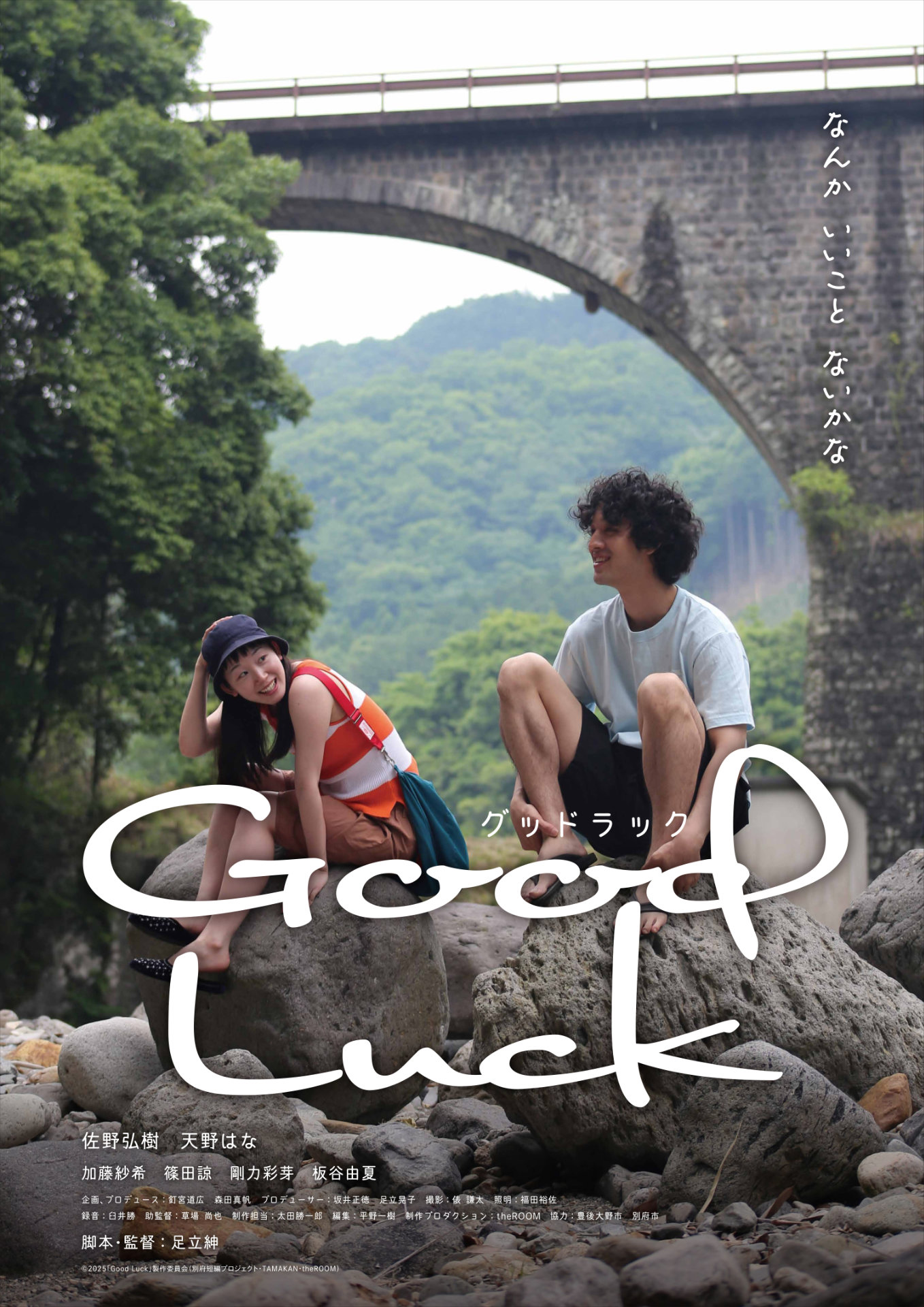
Good Luck (グッドラック, Shin Adachi, 2025)

Taro’s (Hiroki Sano) problem as far as he sees it, is that he lacks self-confidence and is unable to understand why other might like him, though he fears few do. That’s especially true of his girlfriend/financial backer Yuki (Saki Kato) about whom he makes a short documentary because he thought it would be good to make a film about the person who’s most important to him. But Yuki fires back that the person who’s most important to him is himself, so he should turn the camera around, but that’s exactly what he doesn’t want to do even if the film is really about himself anyway. 

To that extent the film backfires in that, when he’s unexpectedly invited to a festival in Beppu and and convinced by Yuki to go because she’s irritated by just how little effort he seems to put in, all anyone can talk about is Yuki who they say must love him very much or at any rate has a lot of patience and understanding. This is doubly true of the lady running the Bluebird Theatre who says out loud live during the Q&A that his film was boring, and she only chose it because of the contrast between how mediocre the film was and Yuki’s force of personality. She suggests that Taro doesn’t know what sort of films he wants to make, or even why he’s making them in the first place, and she’s right.

Awkwardly, this sense of confusion seems bound up with his relationship with Yuki which is unbalanced in his mind because she asked him out rather than the other way round. As he tells Miki (Hana Amano), an extremely extroverted young woman with an amazing laugh that he meets on his travels, his biggest regret in life is not being able to tell he girl he liked that he liked her in high school. This indecision and lack of confidence have left him directionless in his film career and uncertain in his relationships while it seems clear Yuki is not really his muse despite what others might say about her star quality if only by virtue of how sorry they feel for her for having to put up with Taro.

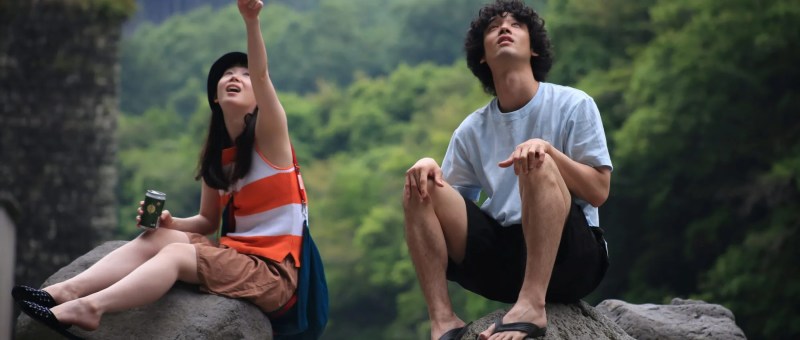
But then again, he’s basically swept away Miki too who hijacks his last couple of days touring the saunas around the hot springs resort. She explains that she likes to travel alone because she difficulties interacting with other people, though she gets along much better with strangers which is why she clicks so quickly with Taro even if he’s only hanging out with her by virtue of being too polite/spineless to decline her invitations. The pair end up echoing Before Sunrise in their walking tour of the natural attractions of the area, while Miki tells him that her biggest regret in life is that she hasn’t achieved anything that society values even if there are things that she’s good at and fears that she won’t be able to do the things that she wants to do before she dies. 

Truth be told, Taro doesn’t really do much for Miki or ask any real followup questions while simultaneously beginning to fantasise about her as recounted through an incrediblely meta sequence taking place in his treehouse room. Nevertheless, he begins to see in her the kind of muse he’s been looking for along with discovering why he wants to make films and what kind of films he wants to make. But in then in true Adachi fashion, maybe Taro is just as superficial as he says he is and later drawn to another pretty woman on a train all while not making that much of an effort to get back to Yuki whose father has had a heart attack to which Taro seems mostly indifferent. There are certainly lots of strange women around Taro from the gloomy innkeeper in Beppo to the gaggle of ladies at a shrine convinced he’s an old high school friend, but as much as he has a talent for encountering the surreal, Taro doesn’t seem to know what to do with it and remains a somewhat passive observer to afraid to voice his feelings, simultaneously making films only about himself that nevertheless express nothing of his own soul.


Good Luck screened as part of this year’s Camera Japan.

Trailer (no subtitles)

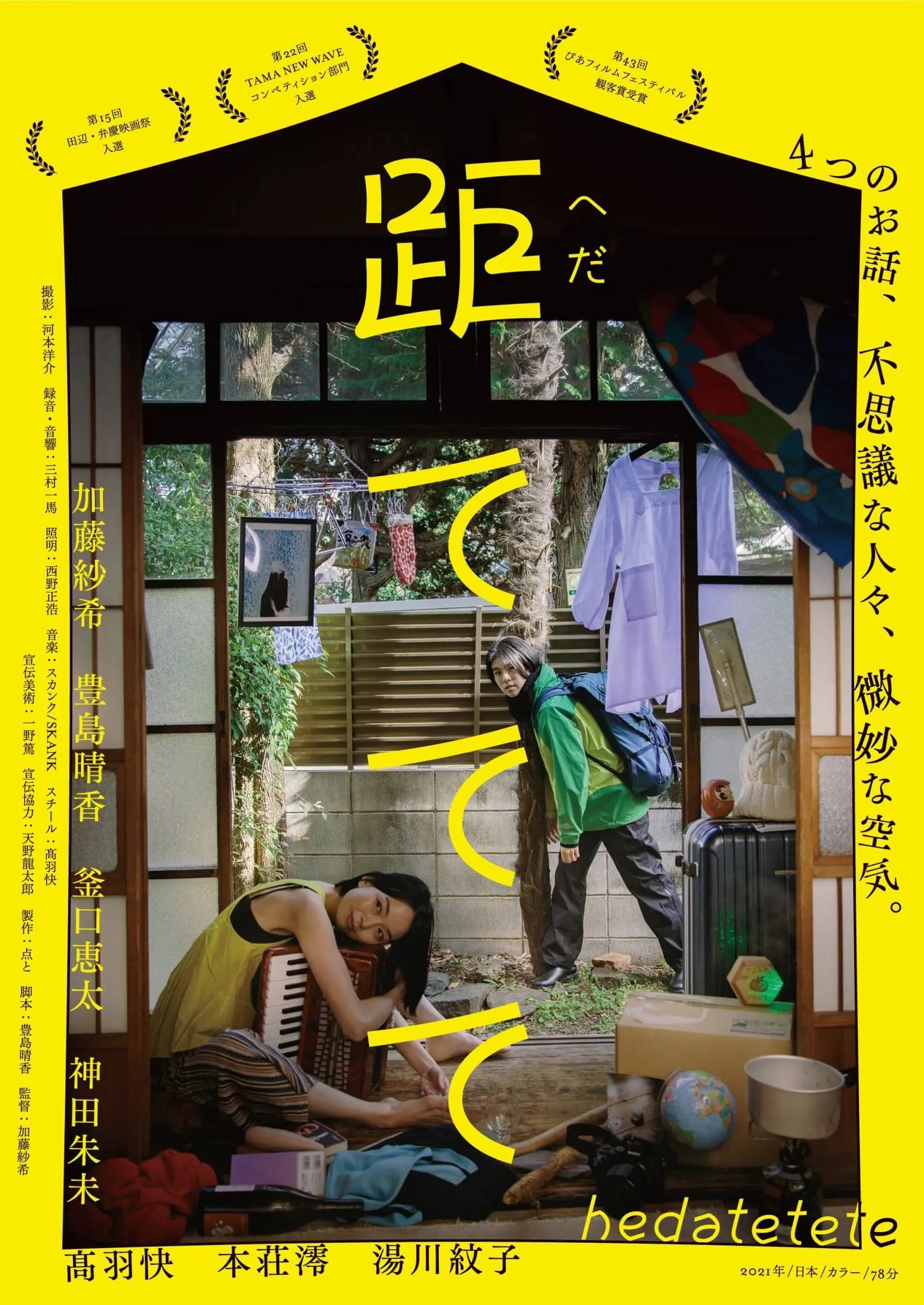
In the Distance (距ててて, Saki Kato, 2022)

Can two people who have completely different outlooks and ways of living learn to get along and eventually become friends? A pandemic-era dramedy, Saki Kato’s In the Distance (距ててて, Hedatetete) asks just this question when two women are unexpectedly forced to co-exist on a greater level after their roommate is suddenly stuck abroad. A series of surreal adventures might leave them with no option other than to confront their differences, but also shows them that difference can be complementary rather than disharmonious. 

The main issues between Ako and San are those which are common to any house sharing arrangement particularly if the people involved did know each other well previously. Ako is an aspiring photographer who sees part-time work as a necessary evil but continues to struggle amid the vagaries of the covid-era economy. She is neat and tidy and likes the house to be in order. San, meanwhile, is picking up most of the rent and has a job which has not been too badly affected by the pandemic. But she’s also a total mess when it comes to her share of the housework and has an annoying habit of picking up everyone’s post and stuffing it somewhere in her room without letting her roommates know a letter has come for them. Obviously, this is also an invasion of privacy on top of simply being annoying so Ako’s irritation is understandable but she has a kind of animosity towards San simply for being what she sees as a boring wage slave while she’s just slumming it until she gets a break with her photography.

But then again, San is “artistic” if in a problematic way in that her accordion playing has caused complaints from neighbours but when their property manager comes to have a word with them he ends up bringing his ocarina to join in the fun. San vents her frustrations to a friend, Tomoe, who has a similar problem of her own in that she’s in the process of breaking up with her boyfriend because they keep disagreeing over trivial things like brands of rice or misaligned printing on greetings cards. They only talk to each other in terms of metaphor with Tomoe apparently sick of their mismatched pairing and hoping to find a new partner with more common interests while the boyfriend seems near distraught by the thought of the relationship ending. 

Ironically it’s San who points out their relationship may be fairly complementary and it’s more the case that they can get along together because they are different yet she still struggles with her relationship with Ako whom she finds uptight and pretentious. Ako, meanwhile, is having a strange encounter of her own with a teenage girl looking for a misdirected letter presumably spirited away by San. She claims not to have a phone or use a computer and implies that her mother is very strict, though when she actually arrives at the house she’s incredibly nice and even cooks a hearty meal though there is something a little sinister in her manner lending the pair a kind of supernatural quality like something out of a fairytale. 

In any case, a misplaced keepsake eventually prompts a confrontation between the two women that allows them to clear the air and find a way to work together. Turning somewhat surreal in its final section, the film hints at a transportational quality of their new alliance that drops them in a new and unfamiliar place with only each other to rely on. The lesson seems to be that sharing an environment necessarily gives rise to various interpersonal issues which can be dissolved while outside of it, and that even if two people seem completely incompatible they can still find common ground and learn to get along especially against the stressful backdrop of a global pandemic in which enforced isolation can exert additional pressure on an already strained relationship just when mutual cooperation becomes an absolute necessity. Filmed with everyday naturalism and a surrealist, deadpan humour Kato’s indie dramedy hints at the strangeness of the ordinary but also discovers the small moments of unexpected connection often brokered by casual misunderstanding.


Original trailer (no subtitles)