The Lump in My Heart (あつい胸さわぎ, Shingo Matsumura, 2022)

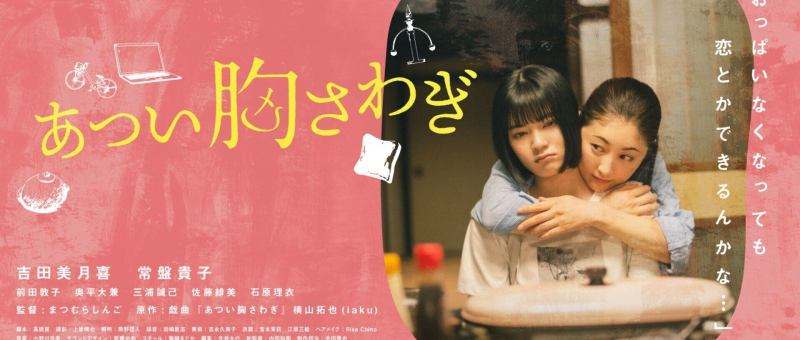
A young woman with a growing desire for independence is thrown into turmoil by a totally unexpected diagnosis of cancer in Shingo Matsumura’s gentle coming-of-age tale and maternal drama, The Lump in My Heart (あつい胸さわぎ, Atsui Munasawagi). Perhaps because of her youth, the heroine finds herself struggling not with a fear of pain or death but of being unsexed while preoccupied with what it might mean for the rest of her life if she were to lose her breasts at such an early age.

It seems that Chinatsu (Mizuki Yoshida) has had a particular hangup about her chest size since the onset of puberty when her mother, Akiko (Tokiko Tokiwa), first refused to buy her a bra, making her wait a year longer than the other girls and leaving her with a sense of embarrassment that might be out of keeping with her age. One of the things that most bothered her about the doctors visits is that she was treated by a middle-aged man who was then the first person ever to touch her breasts which is something she’s unhappy about while also feeling insecure that she’s never had a proper boyfriend and might never get one if it turns out she needs a mastectomy. As it turns out, she’s carrying a torch for childhood friend Ko (Daiken Okudaira), an aspiring actor, but is too shy to say anything especially with this threat to her sense of femininity hanging over her. Of course, it doesn’t help that the doctors are asking her to make advance decisions about things an 18-year-old wouldn’t usually consider such as if and when she might want children because her feelings about her fertility might affect her treatment options. 

Then again, it’s also true that she remains trapped in adolescence resentful when her mother tells her not to worry she’ll make all the decisions but also perhaps relieved. A little sick of their co-dependency she’d been thinking of moving out though it seems difficult to believe she’d be able to afford rent with just her part-time job while studying full-time at university. But when her mother shows a little interest in an incredibly awkward man at work it sends her in the other direction, now feeling resentful and rejected while fearing the loss of their familial intimacy given it had just been the two of them for so long after her father’s death when she was four.

Motoharu (Masaki Miura) accidentally demonstrates the entrenched sexism of the world around them when he makes a misogynistic joke as an attempt at an icebreaker when introduced as the boss at the factory where Akiko works. It later comes to light that he left his last job due to an accusation of sexual assault, and though it turns out to have been a misunderstanding highlights a lack of awareness in the working environment that feeds in to Chinatsu’s ongoing preoccupation with her femininity and the elusiveness of romance. Her homework assignment over the summer holidays is to write a story about her first love, a topic which might be seen as bordering on inappropriate, perhaps discriminatory against those who do not feel romantic desire not to mention that Chinatsu is only 18 so it is only natural that she is still in the process of figuring things out and cannot be expected to have much of a perspective on what is to her still a fairly recent (in fact ongoing) event. 

Meanwhile, her mother and Motoharu are each feeling a pang of regret that they always let things pass them by like the arrival of the circus, destined to be in town for a limited time only so it’s best to catch it while you can. Unfortunately that’s easier said than done especially when not everyone’s on the same page. The lump in Chinatsu’s heart is her yearning for romantic love, though she still lacks the courage to be honest with her feelings even if it’s helped her repair her relationship with her mother. An unexpected piece of compassionate advice also helps her begin to re-imagine her femininity in accepting that the loss of her breasts might not mean that she’s destined to be alone forever nor undeserving of romantic love symbolically dissolving the lump in her heart in allowing her to move forward with her life no matter what the future might hold.


The Lump in My Heart screened as part of this year’s Japan Foundation Touring Film Programme.

Original trailer (English subtitles
Love and Goodbye and Hawaii (恋とさよならとハワイ, Shingo Matsumura, 2017)

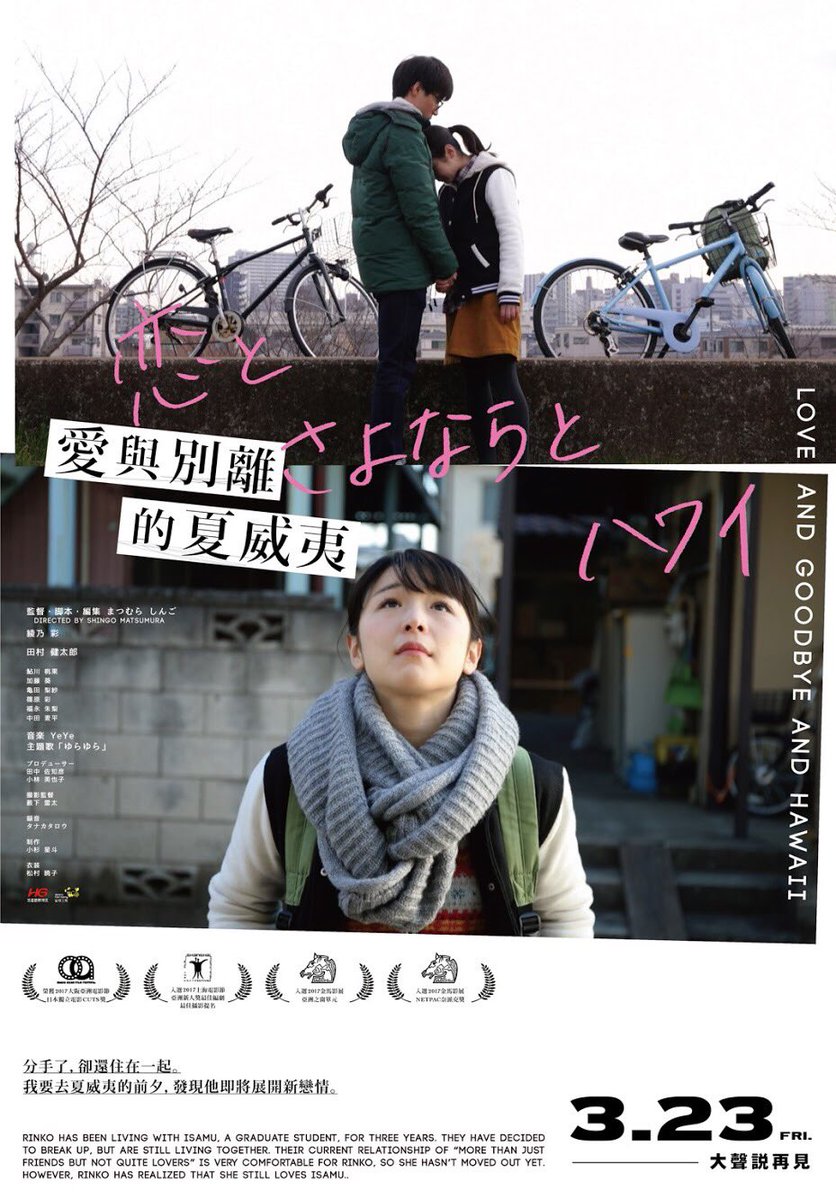
Love and Goodbye and Hawaii poster 1“To end something requires more courage than anything else” the conflicted heroine of Shingo Matsumura’s Love and Goodbye and Hawaii (恋とさよならとハワイ, Koi to Sayonara to Hawaii) is told by her well-meaning ex, but it’s a lesson she’s struggling to learn. Life may very well be a “road made of decisions”, but Rinko (Aya Ayano) doesn’t know how to make them and is rapidly becoming aware that if you don’t hit the relevant dialogue box fast enough they will largely be made for you. Less a tale of romantic confusion, Love and Goodbye and Hawaii is a young woman’s gradual path towards accepting that her attachment to the status quo is as much about the fear of moving forward as it is the pain of faded love.

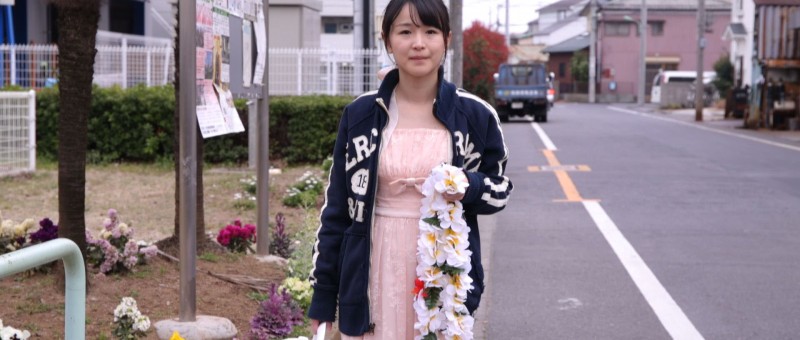
Office worker Rinko has been living with her graduate student boyfriend Isamu (Kentaro Tamura) for the last three years. To all of their friends, they seem to have the perfect relationship but what no one knows is that, though they continue to live together, the couple broke up some months previously. Seeing as it was Isamu’s apartment in the first place, Rinko plans to move out as soon as she’s saved enough money to find somewhere new in the precarious Tokyo housing market, but then again now that they’re no longer “together” the arrangement has become so comfortable that there’s really no hurry to make a change. Matters come to a head, however, when Rinko discovers that a fellow student at Isamu’s university has taken a liking to him, and it seems he to her.

Despite having been broken up for almost six months, Rinko hasn’t quite accepted that it’s over. She demurs when her friends ask her if she’ll be getting married soon, only latterly admitting that they’ve technically broken up, and explaining that she really has it good now because it was too “heavy” before which is why they fought all the time. Now that there’s “nothing” to fight over and they’ve gone back to being platonic friends it’s all so much easier. Too easy, in fact, which why she isn’t really ready to move on.

Rinko’s unconventional living arrangements seem extremely strange to her friends. “Break up like normal people and never see him again” her friend tells her, offering her a space on the sofa if it’s money that’s the issue. Not that money’s not a problem, but even when well-meaning people offer financial help to end this “weird” situation, Rinko doesn’t really want to take it. She tells her friend that relationships are like driving and you don’t want to jump on the breaks incase they jam and you end up on the skids, but as her perceptive younger sister points out perhaps she just wants to get back together and doesn’t know how to go about it.

Analogies are something Rinko seems to have a taste for, unable to state her feelings plainly in a way others will understand she wraps them up in a more palatable narrative. So it is that she ends up telling her friend’s drunken younger sister that with Isamu she felt like she was CD no other player had worked out how to play. She figured out she liked the sound inside her when she was with him, but time moves on and it feels like she’s still a CD but Isamu is now an iPod and she doesn’t really know what to do with that. What she’s trying to say is that they’ve grown apart, but what she hasn’t quite admitted to herself is that maybe it’s not Isamu that she’s afraid of leaving but the vision of herself as reflected in him.

“Show your real self, put your real feelings out there” the younger woman tells her, but that’s something that doesn’t necessarily get easier with age. Finally gathering the courage, Rinko makes her way back to Isamu for a “serious talk”, only to run into her romantic rival but contrary to expectation the two women find that they have no interest in competition and only wish each other well. Rather than that “serious talk” however, Rinko ends up trying to sort out her romantic dilemma through the familiar medium of a walking race which does at least allow the diffident Isamu to make his feelings plain without actually having to say anything. Sometimes actions are kinder than words, and easier to understand. What Rinko needs to learn is that you can find self acceptance without needing to see it reflected in someone else, and that fear of moving forward is not a good reason for holding back. A quiet and melancholy look at life after love, Love, Goodbye and Hawaii is a gentle ode to the art of moving on with no hard feelings, looking straight ahead.


Original trailer (English subtitles)