
Alone (แฝด, Banjong Pisanthanakun & Parkpoom Wongpoom, 2007)

A young woman returns to her apartment in Seoul to find the lights don’t work. She begins to feel uneasy, as if there’s a presence around her she can’t see or hear. Slowly, she moves towards the source of her discomfort, but the lights soon come back on. This isn’t a haunting, it’s a party. Her devoted boyfriend Wee (Vittaya Wasukraipaisan) has organised a surprise birthday celebration, though Pim (Marsha Wattanapanich) is indeed a haunted woman attempting to outrun her ghosts in a new country a world away from the nexus of her trauma.

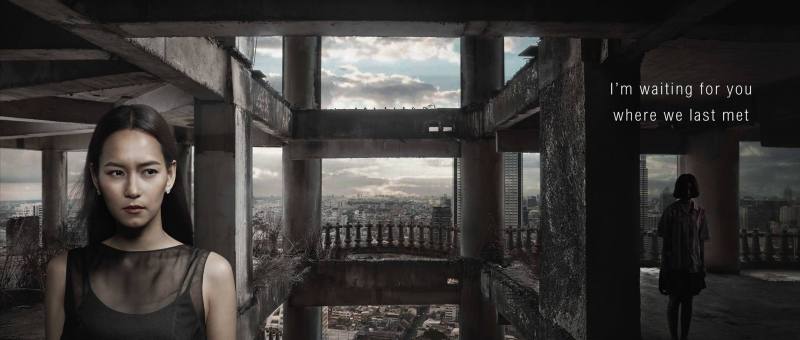
This is just one of many ways in which Banjong Pisanthanakun and Parkpoom Wongpoom attempt to misdirect us while foreshadowing Pim’s eventual confrontation with ghosts of her past on returning to Thailand after her mother suffers a stroke and is hospitalised. A brief prologue sequence had seen her mother sewing a dress that’s oddly shaped, we later realise intended for her daughters who are conjoined twins. A guest reading the tarot at Pim’s party had hinted that something she’s lost would soon return, or else someone to whom she’d broken a promise would come back seeking recompense. This soon proves to be true, Pim haunted by the spectre of her sister Ploy (also played by Marsha Wattanapanich) who passed away unable to adjust after Pim’s apparently unilateral decision to separate.

It’s for this reason that Pim feels intense guilt, convinced that she killed her sister in breaking their promise to always stay together because she desired individual fulfilment. To that extent, some might wonder if the ghost Pim sees is “real” or merely a manifestation of her unresolved trauma. Wee eventually convinces her to see a psychiatrist, who is also a good friend of his, who tells him that Pim is suffering from a delusion while advising her to try to make peace with herself over her sister’s death if she wants to stop seeing the ghost. But perhaps there really is something dark and malevolent, a resentful spirit haunting her family home which is otherwise full of childhood memories. Pim flips through old photos all featuring her and her sister living their shared life of enforced closeness that is at first blissfully happy in its isolation but then suffocating and constrained. 

Nevertheless, though it’s Pim who’s left “alone” in being the one left behind, it’s also true that Pim’s actions have left Ploy “alone” too, only on the other side. The film plays into their nature as twins who represent two halves of one whole rather than two separate beings and locates the source of trauma in their separation as if they must in some sense be reunited in order to exorcise its taboo. In many ways, the psychological drama revolves around a quest for identity as Pim tries to reassert herself in the face of Ploy’s reflection, to become the whole rather than an orphaned part of it, while in other ways affecting a persona that is not quite her own. One cannot take the place of the other, just the new dog the pair get after moving to Thailand cannot replace their old one even if as Pim says they are otherwise identical. 

Yet Pim wonders if it was alright to desire an individual future, choosing herself over Ploy and thereby condemning her to a life of loneliness. To that extent, her dilemma is that of a contemporary woman torn between familial devotion and personal fulfilment, though of course, her words turn out to have a hidden implication suggesting that all is not quite as it seems even if she begins to confront her trauma by finally explaining the circumstances of her separation to an ever supportive but increasingly worried Wee. As the tarot reader had implied, perhaps all promises must in the end be fulfilled as the grim conclusion suggests, literally burning down the house as if to purify this space and restore order in uniting the sisters in an eternal embrace, alone together. Banjong Pisanthanakun and Parkpoom Wongpoom engineer a slowly creeping sense of dread in the gothic eeriness of Pim’s family mansion while edging towards the fatalistic conclusion in which a kind of balance is finally restored, the sisters are both separated and united once again two halves one perfect whole.


Alone is available as part of Umbrella Entertainment’s Thai Horror Boxset.

International trailer (English subtitles)
Laddaland (ลัดดาแลนด์, Sophon Sakdaphisit, 2011)

Laddaland (ลัดดาแลนด์) is a strangely haunted place. The people who live there are mainly ghosts, but also haunted by the spirits of financial anxiety and toxic masculinity amid the continual impossibility of an aspirational suburban existence and happy family life. In the opening scenes, a man patiently sets up the new home he’s bought for his family, painting a cherry blossom tree on his daughter’s wall and throwing a Ben 10 quit over his son’s bed. “I’m glad all four of us are finally together,” he sighs to an empty room while sitting alone at his dining table. 

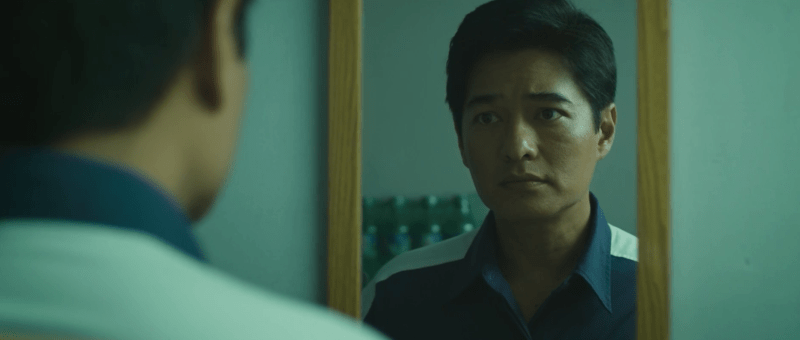
But there are already cracks in the foundations of this family which probably can’t be repaired by simply moving into another life. They had already been separated by financial anxiety with eldest daughter Nan (Sutatta Udomsilp) living largely with her grandmother who seems to come from a much wealthier, class-conscious background. Her father Thee’s (Saharat Sangkapreecha) desire to reunite his family breaks that Nan had formed with her grandmother, to whom she is constantly on the phone, and it is unsurprising that she isn’t happy about being forced to leave her friends in Bangkok to live in this suburban paradise. Yet her attitude towards her father is in part motivated by his failure to give her this life, repeatedly reminding him that he essentially abandoned her and is incapable of doing what is expected of a man in providing for his family.

It’s this sense of toxic masculinity that may have prompted Thee to embark on this grand venture. The house he’s bought on an aspirational housing estate in a recently gentrified area is a large family home and as his wife Parn (Piyathida Woramusik) reminds him, the mortgage is bit of a stretch. But Thee is so focused on his dream that he can’t think of anything else. He’s given up his steady job and gone in with a friend on what is very obviously a dodgy pyramid scheme. The foundations of his new middle-class life are built on shaky ground, while every attempt at rapprochement with Nan seems destined to fail as he becomes an increasingly authoritarian father and she a resentful and contemptuous teen. 

But times are hard for everyone. The woman next door already lives like a ghost because her husband is violent and abusive. Parn tries to help her, but there isn’t much that can be done. We learn that the man is also, like Thee, under increasing strain from financial anxiety as his factory business flounders amid the turbulent Thai economy. He too is subject to the same sense of humiliation and insecurity as a man who is failing to live up to the codes of masculinity in being unable to provide his family with a comfortable life. Thee doesn’t exactly become violent, but he does later buy a gun after being burgled and fantasise about using it to free himself of his responsibility and the burden of this aspirational life that he can’t really afford.

In an odd way, the ultimate transgression may have been his attempt to hire a maid. A local Burmese woman, she is soon found dead in a house owned by a foreigner and thereafter becomes a more literal ghost haunting the local area and his family in particular due to their attempt to exploit her for cheap labour, perhaps hinting at Thailand’s relationship with Myanmar. Yet it’s also Thee who seems to have been possessed by a vengeful spirit, becoming increasingly cruel and irrational in his attempts to hold on to his home while simultaneously alienating Nan by refusing to listen to her or let her hang out with her new friends. Even Parn begins to turn against him, fed up with his financial fecklessness and pondering swallowing her pride and going back to her mother who loathes Thee for ruining Parn’s life by getting her pregnant in college. Parn suggests going back to work, but that doesn’t fit Thee’s old-fashioned vision of a patriarchal family while he also accuses her of having had an affair with her admittedly sleazy former boss and needles her about leaving him for someone with better financial means. Perhaps this the curse of Laddaland, a liminal space inhabited by hungry ghosts obsessed with fulfilling aspirational, if outdated, ideas of suburban bliss only to end up destroying the very house they were trying to build.


International trailer (English subtitles)
The Swimmers (ฝากไว้..ในกายเธอ, Sophon Sakdaphisit, 2014)

Fragile masculinity and male failure bring about tragic consequences in Sophon Sakdaphisit’s possibly ironically named psychological horror, The Swimmers (ฝากไว้..ในกายเธอ). Though some might alternately claim that its final resolutions are overly moralising or else morally ambiguous, it’s also true that the film otherwise has a progressive quality in suggesting that it wasn’t sex itself that was the problem but the failure to use protection and a subsequent inability on the part father to accept any responsibility for an unplanned pregnancy. 

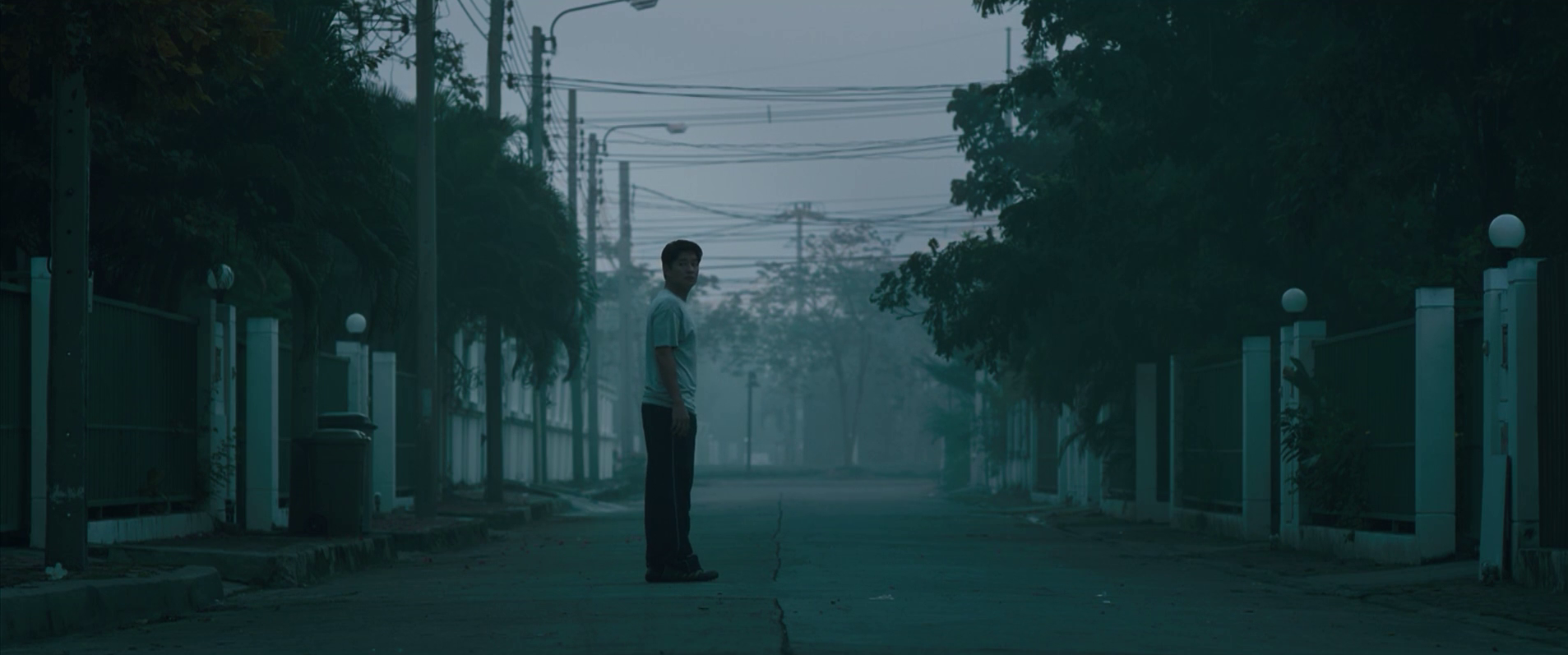
At least, though it is revealed only gradually, it seems obvious to us that high schooler Perth (Chutavuth Pattarakampol) must have fathered Ice’s (Supassra Thanachat) baby and has kept quiet about it amid rumours that she took her own life after becoming pregnant. In actuality, there’s a lot more to it than that, but it appears as if he does this mostly out of a sense of awkwardness because Ice had been the girlfriend of his best friend and rival, Tan (Thanapob Leeratanakachorn), who, though they had broken up, is now determined to enact revenge on the dirtbag who got Ice pregnant and then presumably left her to deal with it on her own at which point she decided to end her life.

We can see that Perth idolises Tan and feels inadequate in his presence. After Ice’s death, he hooks up with another girl, Mint (Violette Wautier), and asks her if she would have been interested in him if hadn’t just won a gold medal in the swimming tournament. There are others that say he only won because Tan was not able to compete. Though Ice asks him to tell Tan about their relationship himself, Perth can’t do it and continues to act sheepishly around his friend out of some kind of bro code or fear of disappointing him. But we might also wonder if his desire for Ice is only a way of mediating his desire for Tan in the context of the obviously homoerotic relationship between them though in another sense it’s perhaps more that he simply wishes to become Tan and would be glad if he were out of the way. If that were the case, however, he’d forever be haunted by the spectre of his own inadequacy with no way of knowing if he could ever really have beaten his rival and psychologically will always be in second place. 

His failure to measure up to Tan also impacts on Perth’s fragile masculinity as his coach, who has begun an affair with his mother, pressures him to eat raw eggs to improve his stamina. The fact it’s eggs he’s eating has a continual irony while Perth begins to exhibit a degree of gender confusion as he puts on weight and loses his athletic physique. He’d jokingly told Ice, after explaining he didn’t bring a condom, that he’d carry the child if they got pregnant and is now convinced that, like the seahorses they’re learning about in class, he is actually gestating his unborn baby. Perhaps as Ice would have to have done, he wears baggy jackets, binds his belly, and attempts to hide his physique at the swimming pool in the hope of concealing what he fully believes to be a pregnancy that is also the result of his latent guilt for his treatment of ice coupled with the awkwardness of Tan finding out it was him who fathered her child.

Perth’s secrecy and cowardliness are directly contrasted with the equally problematic masculinity exhibited by Tan in his obsession with revenge which sees him attempt to hack Ice’s phone and social media accounts before later beating up another boy Perth had set up as a scapegoat. One could argue much of this could have been avoided if Perth had only been honest with Tan from the beginning about his relationship with Ice, but he was incapable of doing so and is willing to go to extreme lengths to conceal the truths about himself. Sophon Sakdaphisit, however, reveals them to us patiently and exposes Perth as an unreliable narrator, a snivelling coward and insecure sociopath who will do anything and everything to avoid facing reality. Though the film may suggest that he will face no consequences for his treatment of Ice, it simultaneously implies that he will forever be haunted by the spectres of his inadequacy, male failure, and hopelessness no matter how he may otherwise prosper in life.


International trailer (English subtitles)
The Promise (เพื่อน..ที่ระลึก, Sophon Sakdaphisit, 2017)

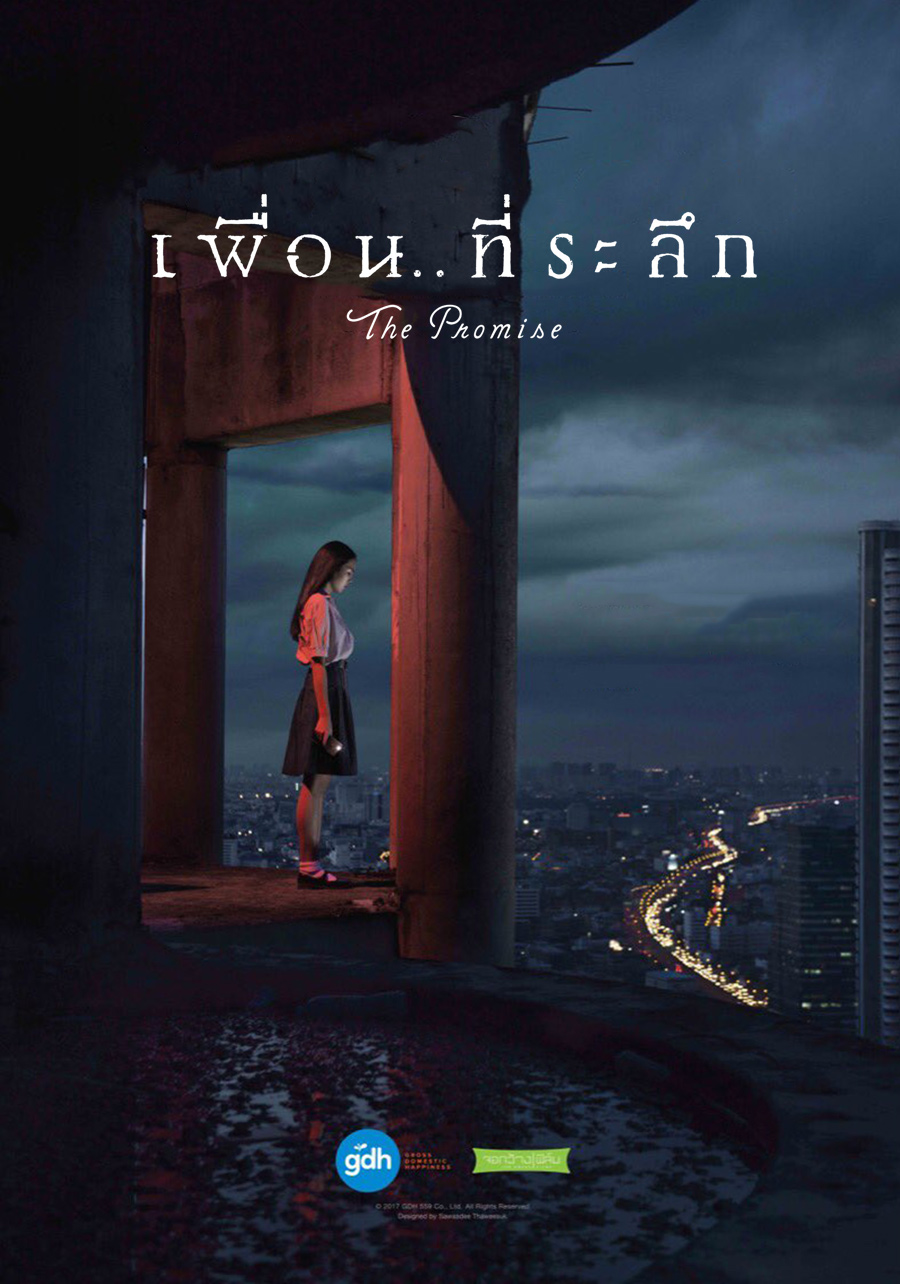
The Promise Thai 2018 poster20 years on the Asian financial crisis continues to loom large over the region’s cinema, providing fertile ground for extreme acts of transgression born of desperation in the wake of such a speedy decline. Sophon Sakdaphisit’s ghost story The Promise (เพื่อน..ที่ระลึก, Puen Tee Raluek) places the financial crisis at its centre in its cyclical tales of betrayed youth who find themselves paying heavily for their parents’ mistakes through no fault of their own. Yet there is a fault involved in the betraying of a sacred promise between two vulnerable young people made half in jest in a fit of pique but provoking tragic consequences all the same. Sometimes lonely death chases the young too, trapping them in solitary limbo growing ever more resentful of their heinous betrayal.

In 1997, Ib (Panisara Rikulsurakan) and Boum (Thunyaphat Pattarateerachaicharoen) are best friends. Daughters of wealthy industrialists making an ill fated move into real estate with the building of a luxury tower block destined never to be completed, Boum and Ib may have been separated by being sent to different schools, but they spend all of their free time together, often hiding out on the construction site fantasising about sharing an apartment there and listening to sad songs on Ib’s ever present Discman.

When the crisis hits and their fathers are ruined, the girls pay the price. Not only are they left feeling betrayed and humiliated in being so abruptly ejected from their privileged world of mansions and horse riding, but also suffer at the hands of the fathers they now despite – Ib more literally as she is physically beaten by her strung out, frustrated dad. Already depressed, Ib talks ominously about a gun her mother has hidden in fear her father may use it to kill himself. When Boum falls out with her mum, she gives the go ahead for a double suicide but can’t go through with it after watching the twitching body of her friend, lying in a pool of blood after firing a bullet up through her chin.

20 years later, Boum (Numthip Jongrachatawiboon) is a successful industrialist herself, apparently having taken over her father’s company and turned it around. The economy is, however, once again in a precarious position and Boum’s business is floundering thanks to a set back on a high profile project. The idea is floated to finish the tower left incomplete by the ’97 crisis to which Boum reluctantly agrees. Meanwhile, Boum’s daughter Bell (Apichaya Thongkham) is about to turn 15 – the same age as she was when she agreed to die with Ib, and has recently started sleepwalking in ominous fashion.

Sophon Sakdaphisit neatly compares and contrasts the teenagers of 20 years ago and those of today and finds them not altogether different. In 1997, Boum and Ib keep in touch with pagers and visit photo sticker booths in the mall, splitting earphones to listen to a Discman while they take solitary refuge at the top of a half completed tower. In 2017, Bell never sees her friend in person but keeps in touch via video messaging, posting photos on instagram, and sending each other songs over instant messenger. Yet Bell, in an ominous touch, still graffitis walls to make her presence felt just as her mother had done even if she fetishises the retro tech of her mother’s youth, picking up an abandoned pager just because it looks “cool”.

In 2017, the now widowed Boum appears to have no close friends though her relationship with her daughter is tight and loving. A “modern” woman, Boum dismisses the idea that a malevolent spirit could be behind her daughter’s increasingly strange behaviour but finds it hard to argue with the CCTV footage which seems almost filled with the invisible presence of something dark and angry. Realising that the circumstances have converged to bring her teenage trauma back to haunt her – Ib’s suicide, the tower, her daughter’s impending birthday, Boum is terrified that Ib has come back to claim what she was promised and plans to take her daughter in her place in revenge for her betrayal all those years ago.

Bell is made to pay the price for her mother’s mistakes, as she and Ib were made to pay for their fathers’. Motivated by intense maternal love, Boum nevertheless is quick to bring other people’s children into the chain of suffering when she forces a terrified little boy who has the ability to see ghosts to help her locate the frightening vision of her late friend as she darts all over the dank and spooky tower block, threatening the financial security of his family all of whom work for her company and are dependent on her for their livelihoods.

In order to move forward, Boum needs to address her longstanding feelings of guilt regarding her broken promise – the suicide was, after all, her idea even if she was never really serious and after witnessing her friend die in such a violent way, she simply ran away and left her there all alone and bleeding. Yet rather than attempting to keep her original promise Boum makes a new one with her imperilled daughter – that she will keep on living, no matter what. The slightly clumsy message being that commitment to forward motion is the only way to leave the past behind, accepting your feelings of guilt and regret but learning to let them go and the ghosts dissipate. Sophon Sakdaphisit makes use of the notorious, believed haunted Bangkok tower to create an eerie, supernaturally charged atmosphere of malevolence but the ghosts are in a sense very real, recalling the turbulence of two decades past in which fear and hysteria ruled and young lives were cut short by a nihilistic despair that even friendship could not ease.


Screened at the 20th Udine Far East Film Festival.

International trailer (English subtitles)