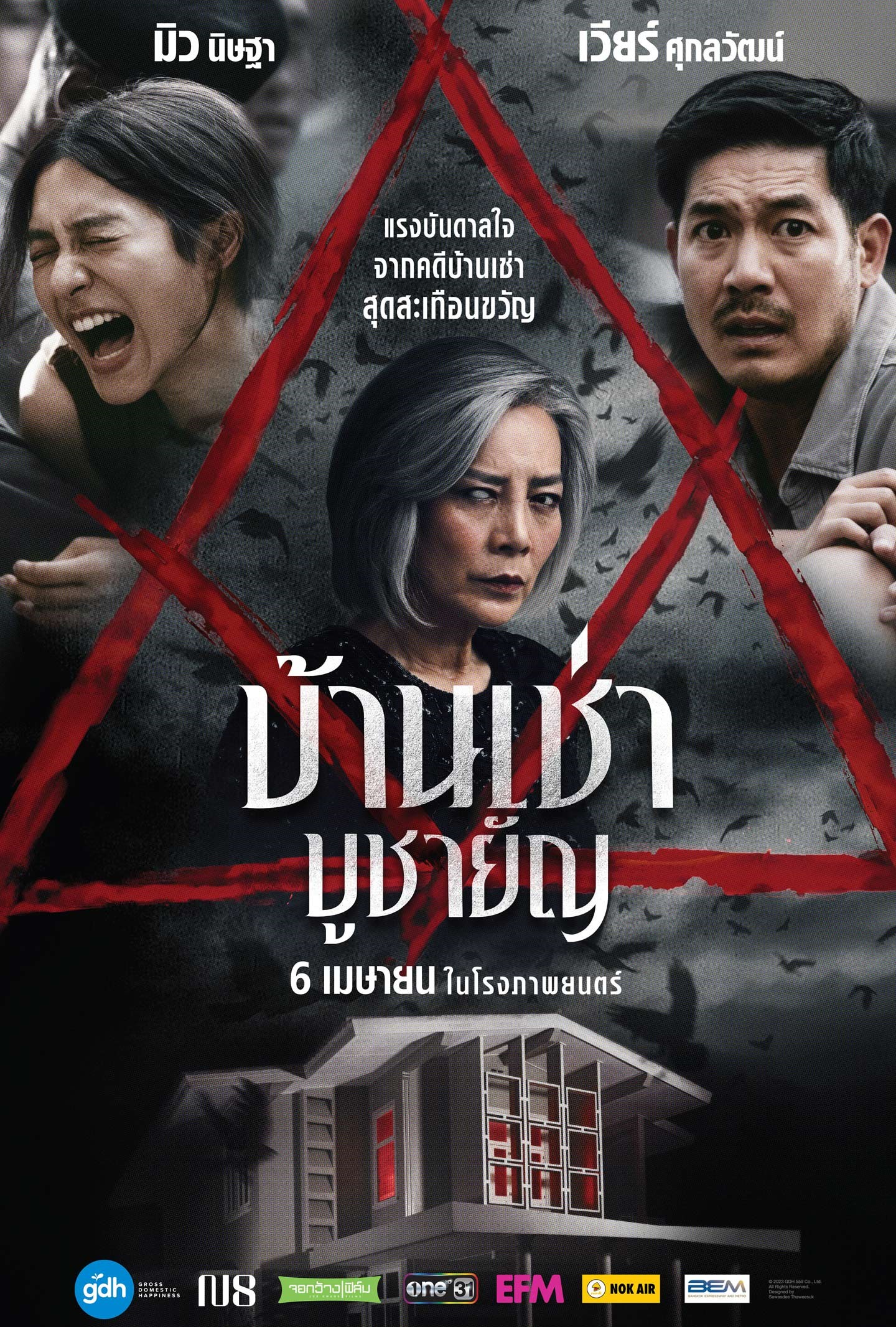
Home for Rent (บ้านเช่า..บูชายัญ, Sophon Sakdaphisit, 2023)

An inability to overcome the traumatic past leaves a family vulnerable to the dark machinations of a black magic cult in Sophon Sakdaphisit’s supernatural thriller, Home for Rent (บ้านเช่า..บูชายัญ). The film’s title is eventually revealed as a grim irony, the home in question a seat of the soul though like the director’s previous films it’s economic anxiety and social aspiration that open the door to damnation even if in this case there’s something more than fate in play.

All of Ning’s (Nittha Jirayungyurn) problems start when the flat she owns to let out is vandalised by a vacating talent. As she explains to the estate agent, Tom (Suphithak Chatsuriyawong), she can’t afford to refurbish it and the rent was covering the mortgage on the house she actually lives in which belongs to her husband, Kwin (Sukollawat Kanarot). Tom floats the idea of the family moving into the flat while they tidy it up and renting the house out instead, but Ning is worried Kwin won’t like the idea. She’s right, he doesn’t and suggests it would be easier to just sell the flat but Ning doesn’t want to do that either. The reasons for her attachment to it aren’t completely clear, but if she were keeping it as a safety net it might hint at a degree of insecurity in her marriage though as we later see she’s also job-hunting and not having much luck. Seeing the candidate next to her write down a much lower salary expectation she hastily changes hers too, fearing she’s pricing herself out of the market. 

As for Kwin’s reluctance to move, it may be a degree of snobbishness in not wanting to leave his large suburban house in a wealthy area for a small flat where he ends up sleeping on the sofa because the couple’s daughter Ing (Thanyaphat Mayuraleela) can’t seem to settle. As it turns out, Kwin has other reasons for remaining attached to the house and not wanting anyone else to live there but even as it stands it seems far too big for their small family and an obvious financial burden. Yet Kwin’s outward anxiety is to do with finding “high quality” tenants given what’s just happened with the flat. Ning is reassured by Tom’s confirmation that the prospective tenants are a retired doctor and her daughter though as Kwin points out, it’s mere snobbishness to assume a doctor will be a better tenant than anyone else. 

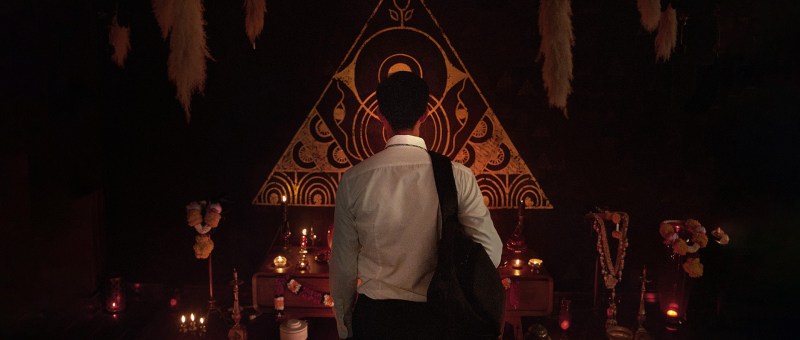
Nevertheless on meeting them, Kwin unexpectedly agrees only for Ning’s aunt and neighbour Phorn (Natniphaporm Ingamornrat) to report strange goings on at 4am such as ominous chanting and the sudden arrival of large numbers of crows. Strange things begin happening around Ning too, while Kwin’s behaviour has also become weird and irrational. Ning is however facing an uphill battle trying to get people to believe her that the couple renting her house are actually crazed cultists who may be targeting her daughter while others assume she’s going out of her mind because of the stress of maintaining it. 

The space that’s for rent in fact seems to be the human body as it becomes clear what kind of home is being sought. Aside from financial worries, the curse essentially stems from the inability to accept loss, or perhaps also the attempt to escape it by assuming new identities rather than deal with a painful past. Only Ning remains in the dark in this triangular series of relationships with pyramids an often repeated motif mimicking the dark symbol of the cult. Sophon Sakdaphisit conjures a genuine sense of eeriness within the genial suburban environment that hints at a largely invisible but pervasive evil that has Ning and her family firmly in its sights. But in other and perhaps slightly uncomfortable ways, it may be the family that eventually repairs itself in what amounts to the complete integration of the once buried traumatic past which may have destroyed what once was but has birthed something new in its place that at last seems to be free of the gloominess that once overhung the family home having relocated to a much warmer and down to earth environment in the absence of both financial and aspirational anxiety but simply content to have found a place to call home.


International trailer (English subtitles)
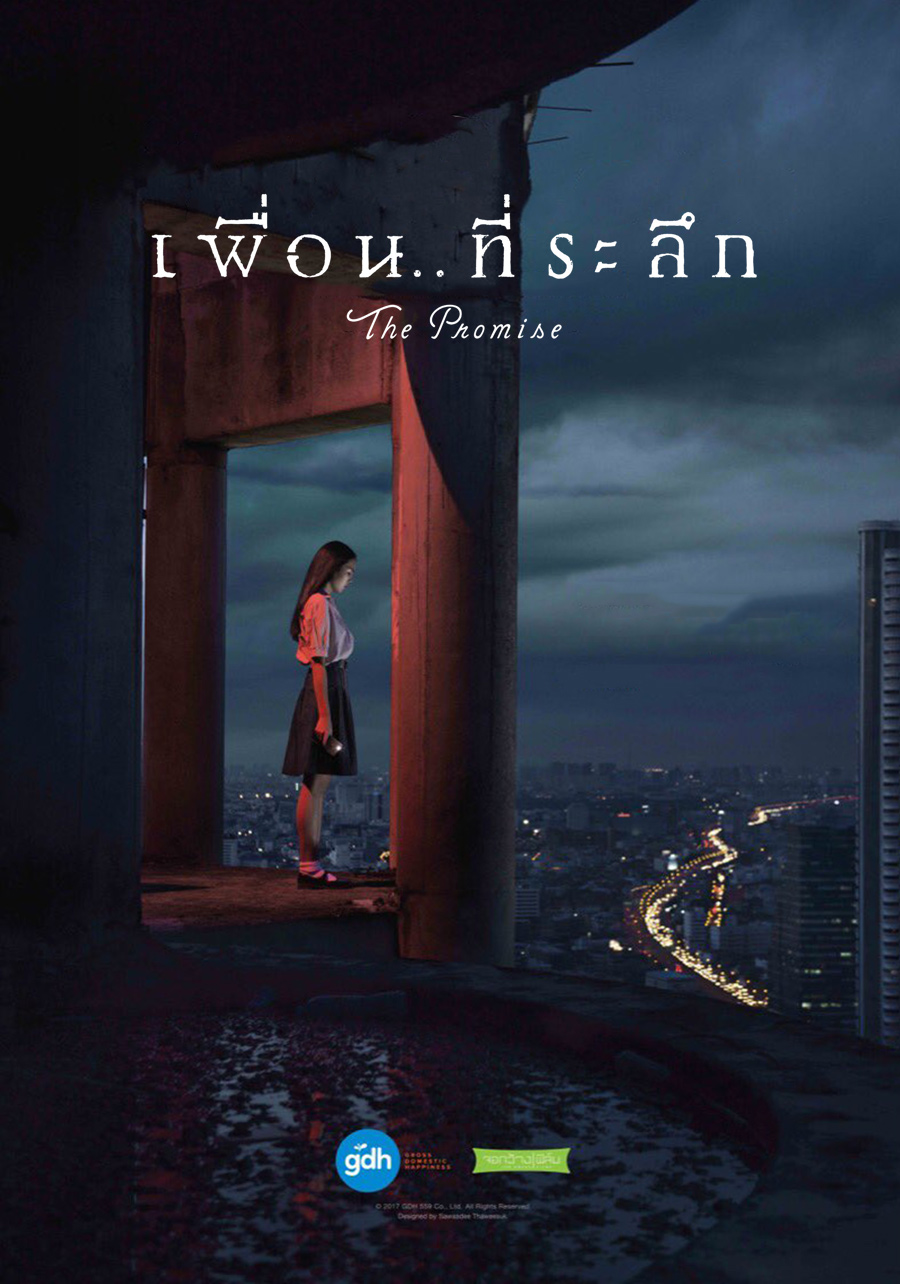
The Promise (เพื่อน..ที่ระลึก, Sophon Sakdaphisit, 2017)

The Promise Thai 2018 poster20 years on the Asian financial crisis continues to loom large over the region’s cinema, providing fertile ground for extreme acts of transgression born of desperation in the wake of such a speedy decline. Sophon Sakdaphisit’s ghost story The Promise (เพื่อน..ที่ระลึก, Puen Tee Raluek) places the financial crisis at its centre in its cyclical tales of betrayed youth who find themselves paying heavily for their parents’ mistakes through no fault of their own. Yet there is a fault involved in the betraying of a sacred promise between two vulnerable young people made half in jest in a fit of pique but provoking tragic consequences all the same. Sometimes lonely death chases the young too, trapping them in solitary limbo growing ever more resentful of their heinous betrayal.

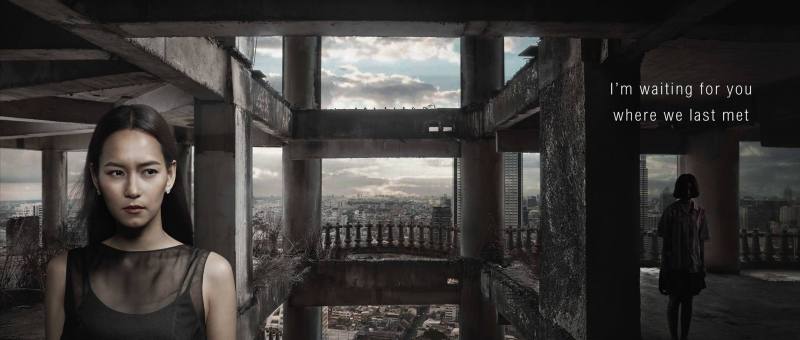
In 1997, Ib (Panisara Rikulsurakan) and Boum (Thunyaphat Pattarateerachaicharoen) are best friends. Daughters of wealthy industrialists making an ill fated move into real estate with the building of a luxury tower block destined never to be completed, Boum and Ib may have been separated by being sent to different schools, but they spend all of their free time together, often hiding out on the construction site fantasising about sharing an apartment there and listening to sad songs on Ib’s ever present Discman.

When the crisis hits and their fathers are ruined, the girls pay the price. Not only are they left feeling betrayed and humiliated in being so abruptly ejected from their privileged world of mansions and horse riding, but also suffer at the hands of the fathers they now despite – Ib more literally as she is physically beaten by her strung out, frustrated dad. Already depressed, Ib talks ominously about a gun her mother has hidden in fear her father may use it to kill himself. When Boum falls out with her mum, she gives the go ahead for a double suicide but can’t go through with it after watching the twitching body of her friend, lying in a pool of blood after firing a bullet up through her chin.

20 years later, Boum (Numthip Jongrachatawiboon) is a successful industrialist herself, apparently having taken over her father’s company and turned it around. The economy is, however, once again in a precarious position and Boum’s business is floundering thanks to a set back on a high profile project. The idea is floated to finish the tower left incomplete by the ’97 crisis to which Boum reluctantly agrees. Meanwhile, Boum’s daughter Bell (Apichaya Thongkham) is about to turn 15 – the same age as she was when she agreed to die with Ib, and has recently started sleepwalking in ominous fashion.

Sophon Sakdaphisit neatly compares and contrasts the teenagers of 20 years ago and those of today and finds them not altogether different. In 1997, Boum and Ib keep in touch with pagers and visit photo sticker booths in the mall, splitting earphones to listen to a Discman while they take solitary refuge at the top of a half completed tower. In 2017, Bell never sees her friend in person but keeps in touch via video messaging, posting photos on instagram, and sending each other songs over instant messenger. Yet Bell, in an ominous touch, still graffitis walls to make her presence felt just as her mother had done even if she fetishises the retro tech of her mother’s youth, picking up an abandoned pager just because it looks “cool”.

In 2017, the now widowed Boum appears to have no close friends though her relationship with her daughter is tight and loving. A “modern” woman, Boum dismisses the idea that a malevolent spirit could be behind her daughter’s increasingly strange behaviour but finds it hard to argue with the CCTV footage which seems almost filled with the invisible presence of something dark and angry. Realising that the circumstances have converged to bring her teenage trauma back to haunt her – Ib’s suicide, the tower, her daughter’s impending birthday, Boum is terrified that Ib has come back to claim what she was promised and plans to take her daughter in her place in revenge for her betrayal all those years ago.

Bell is made to pay the price for her mother’s mistakes, as she and Ib were made to pay for their fathers’. Motivated by intense maternal love, Boum nevertheless is quick to bring other people’s children into the chain of suffering when she forces a terrified little boy who has the ability to see ghosts to help her locate the frightening vision of her late friend as she darts all over the dank and spooky tower block, threatening the financial security of his family all of whom work for her company and are dependent on her for their livelihoods.

In order to move forward, Boum needs to address her longstanding feelings of guilt regarding her broken promise – the suicide was, after all, her idea even if she was never really serious and after witnessing her friend die in such a violent way, she simply ran away and left her there all alone and bleeding. Yet rather than attempting to keep her original promise Boum makes a new one with her imperilled daughter – that she will keep on living, no matter what. The slightly clumsy message being that commitment to forward motion is the only way to leave the past behind, accepting your feelings of guilt and regret but learning to let them go and the ghosts dissipate. Sophon Sakdaphisit makes use of the notorious, believed haunted Bangkok tower to create an eerie, supernaturally charged atmosphere of malevolence but the ghosts are in a sense very real, recalling the turbulence of two decades past in which fear and hysteria ruled and young lives were cut short by a nihilistic despair that even friendship could not ease.


Screened at the 20th Udine Far East Film Festival.

International trailer (English subtitles)