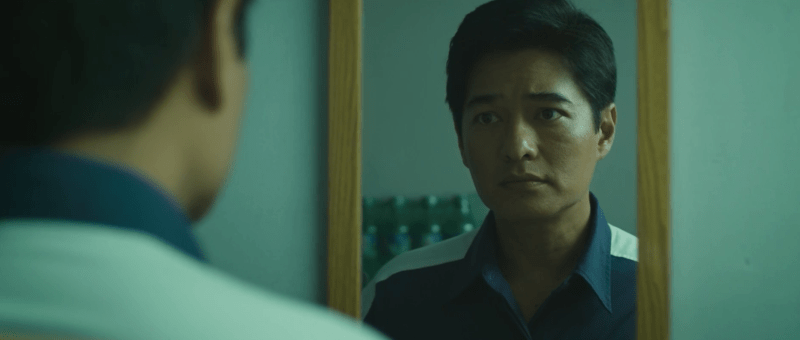
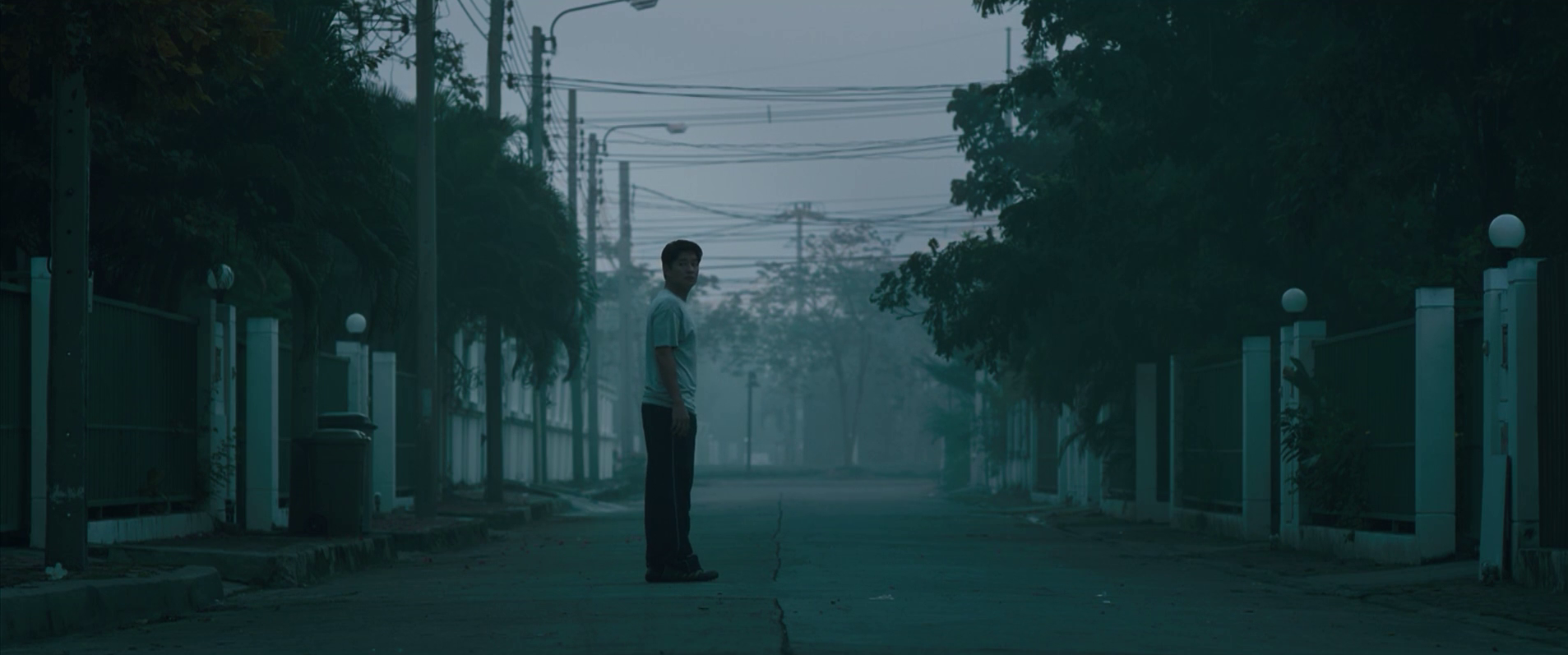
Laddaland (ลัดดาแลนด์) is a strangely haunted place. The people who live there are mainly ghosts, but also haunted by the spirits of financial anxiety and toxic masculinity amid the continual impossibility of an aspirational suburban existence and happy family life. In the opening scenes, a man patiently sets up the new home he’s bought for his family, painting a cherry blossom tree on his daughter’s wall and throwing a Ben 10 quit over his son’s bed. “I’m glad all four of us are finally together,” he sighs to an empty room while sitting alone at his dining table.
But there are already cracks in the foundations of this family which probably can’t be repaired by simply moving into another life. They had already been separated by financial anxiety with eldest daughter Nan (Sutatta Udomsilp) living largely with her grandmother who seems to come from a much wealthier, class-conscious background. Her father Thee’s (Saharat Sangkapreecha) desire to reunite his family breaks that Nan had formed with her grandmother, to whom she is constantly on the phone, and it is unsurprising that she isn’t happy about being forced to leave her friends in Bangkok to live in this suburban paradise. Yet her attitude towards her father is in part motivated by his failure to give her this life, repeatedly reminding him that he essentially abandoned her and is incapable of doing what is expected of a man in providing for his family.
It’s this sense of toxic masculinity that may have prompted Thee to embark on this grand venture. The house he’s bought on an aspirational housing estate in a recently gentrified area is a large family home and as his wife Parn (Piyathida Woramusik) reminds him, the mortgage is bit of a stretch. But Thee is so focused on his dream that he can’t think of anything else. He’s given up his steady job and gone in with a friend on what is very obviously a dodgy pyramid scheme. The foundations of his new middle-class life are built on shaky ground, while every attempt at rapprochement with Nan seems destined to fail as he becomes an increasingly authoritarian father and she a resentful and contemptuous teen.
But times are hard for everyone. The woman next door already lives like a ghost because her husband is violent and abusive. Parn tries to help her, but there isn’t much that can be done. We learn that the man is also, like Thee, under increasing strain from financial anxiety as his factory business flounders amid the turbulent Thai economy. He too is subject to the same sense of humiliation and insecurity as a man who is failing to live up to the codes of masculinity in being unable to provide his family with a comfortable life. Thee doesn’t exactly become violent, but he does later buy a gun after being burgled and fantasise about using it to free himself of his responsibility and the burden of this aspirational life that he can’t really afford.
In an odd way, the ultimate transgression may have been his attempt to hire a maid. A local Burmese woman, she is soon found dead in a house owned by a foreigner and thereafter becomes a more literal ghost haunting the local area and his family in particular due to their attempt to exploit her for cheap labour, perhaps hinting at Thailand’s relationship with Myanmar. Yet it’s also Thee who seems to have been possessed by a vengeful spirit, becoming increasingly cruel and irrational in his attempts to hold on to his home while simultaneously alienating Nan by refusing to listen to her or let her hang out with her new friends. Even Parn begins to turn against him, fed up with his financial fecklessness and pondering swallowing her pride and going back to her mother who loathes Thee for ruining Parn’s life by getting her pregnant in college. Parn suggests going back to work, but that doesn’t fit Thee’s old-fashioned vision of a patriarchal family while he also accuses her of having had an affair with her admittedly sleazy former boss and needles her about leaving him for someone with better financial means. Perhaps this the curse of Laddaland, a liminal space inhabited by hungry ghosts obsessed with fulfilling aspirational, if outdated, ideas of suburban bliss only to end up destroying the very house they were trying to build.
International trailer (English subtitles)
 Windows on Worlds