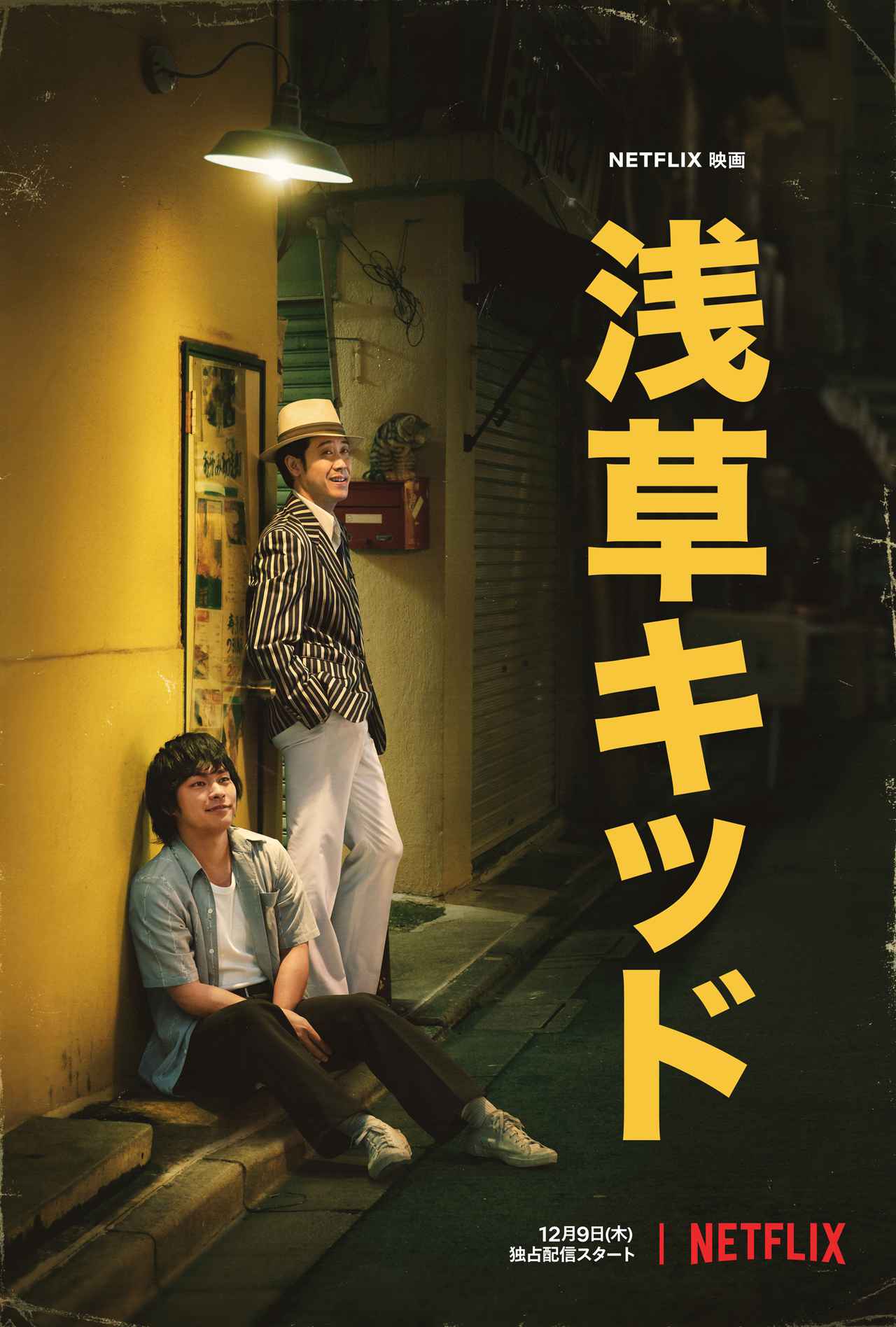
Asakusa Kid (浅草キッド, Gekidan Hitori, 2021)

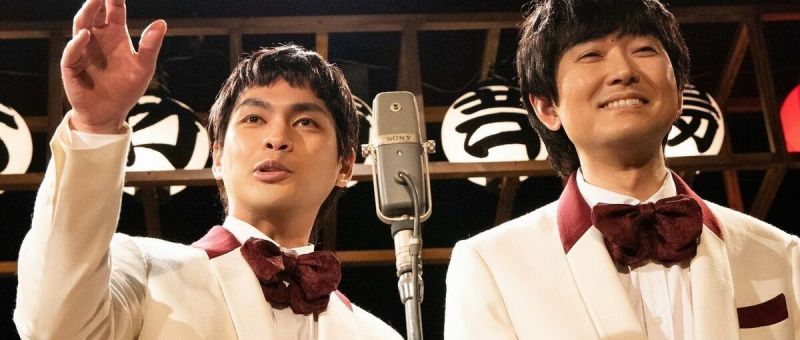
To international audiences, Takeshi Kitano has a very specific profile associated most closely with arthouse drama and violent gangster movies yet in Japan he’s best known as a comedian and TV personality. Inspired by Kitano’s memoir, Asakusa Kid (浅草キッド) charts his earliest days from entertainment district elevator boy to manzai star while lionising his earnest mentor Sozaburo Fukami (Yo Oizumi). Yet it’s also a nostalgic look back to a late Showa pre-bubble Japan as Kitano’s idol finds himself falling foul of a changing entertainment industry. 

As the film opens in 1974, “Take” (Yuya Yagira) is one half of a struggling manzai comedy double act touring the country in various variety and cabaret establishments fearing his career may die out on the road before beginning to edge towards success and a high profile TV gig. Two years earlier, however, he’s an awkward college dropout working as an elevator boy at France-za comedy bar burlesque theatre. A local boy, Take has chosen France-za because of his admiration for “Fukami of Asakusa”, longing to make his way into the entertainment world while captivated by Fukami’s cool style, even copying his trademark tap dancing. Fukami soon sees talent in Take and tries to nurture it, but as the pair of them are repeatedly reminded, this kind of comedy is already old-fashioned. Audience numbers at France-za continue to decline while as one of the other girls later reminds him the men who come to these shows are there to see women take their clothes off, not random skits or singing. 

This is brought home to Take when he tries to encourage one of the strippers, Chiharu (Mugi Kadowaki ), to chase her dreams of becoming a singer by convincing Fukami to allow her to fill a 15-minute spot. As Fukami had attempted to warn him, the men appear to enjoy her song and offer rapturous applause but think it’s part of her act and soon resort to catcalls expecting her to take her clothes off. Take’s well-meaning gesture backfires, convincing Chiharu her dreams of singing are over, while Take is also poked into action by the other stripper’s retort that the comedy is only really “filler” between the burlesque acts which is what the customers have come to see. 

Even so, there’s less drama than one might expect in Take’s eventual decision to betray his mentor by choosing manzai and its opportunities for TV success over his by then old-fashioned sketch comedy. The father/son relationship somewhat falls by the wayside as even as a triumphant Take later returns “home” to present Fukami with the prize money for a TV award like a child with a report card full of As, while he gracefully accepts it but is privately filled both with a sense of pride and personal disappointment in being forced to accept that the heyday of Asakusa is over and there is no future in his vaudeville-style comedy acts. Nevertheless, Take appears to attribute much of his success to things he learnt from Fukami from his tap-dancing to his uncompromising attitude. “Don’t be laughed at, make them laugh,” he recalls Fukami telling him, “don’t suck up to the audience, tell them what’s funny,” later refusing to soften his inappropriate jokes about ugly girls and suicide for a more conservative TV audience and finding his edgy comedy an irreverent hit. 

Then again, not everyone is able to achieve their dreams from Fukami who lost the fingers on one hand in the war and finds himself forced off the stage, to Chiharu apparently a regular housewife with showbiz regrets, and Fukami’s wife Mari (Honami Suzuki) exhausting herself trying to help him save his dream of Asakusa. As much as Take might have admired Fukami, others too describing him as a father of contemporary entertainment, he can’t get away from the fact the press is only interested in his funeral if Take attends it. Filled with the nostalgia, the ethereal one shot closing sequence in which the older Take returns to Asakusa and to the past surrounded by the friends of his youth is genuinely poignant in the sudden juxtaposition of a lost world with the contemporary present but perhaps elegises nothing so much as nostalgia in its lament for late Showa breeziness. 


Original trailer (English subtitles)
Ox-Head Village (牛首村, Takashi Shimizu, 2022)

“A story about nothing” is how one middle-aged man jokingly dismisses a local legend about an ox-headed woman. Are urban legends just one big dad joke? Everybody who hears this story dies, so they say, which is obviously true whichever way you look at it though if it really were a curse it would have to move quickly or there’d be no-one to pass it on. As the heroine of Takashi Shimizu’s summer adventure horror movie Ox-Head Village (牛首村, Ushikubi Mura) discovers, however, there may be something to it after all in uncovering the dark history behind the local folklore. 

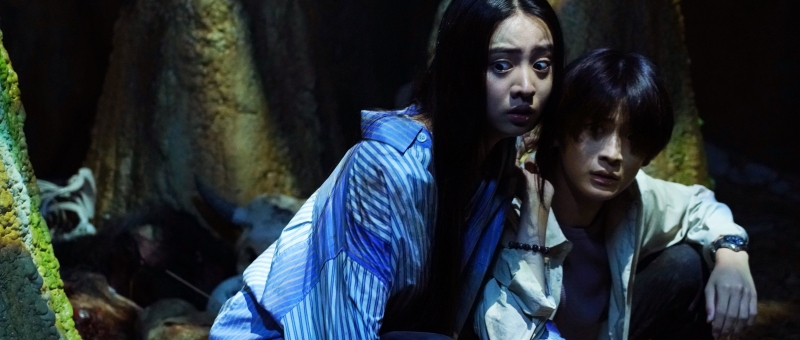
In her last year of high school, teenager Kanon (Koki) is beginning to experience strange events such as a series of mysterious scratches on her arm, odd bangs and noises at home, and her phone constantly playing a message about bad pennies and their tendency to keep turning up. Her friend Ren (Riku Hagiwara), who has a crush on her, shows her a viral video of some girls on paranormal live stream that goes wrong leading one, who looks exactly like her, to fall down a lift shaft and then mysteriously disappear. To find out what’s going on the pair head out into the country to the abandoned hotel where the shoot took place but end up battling supernatural malevolence born of the cruelty of previous eras. 

Like the previous two films in the “Village” trilogy, Ox-Head Village revolves around rural folkloric beliefs this time focussing on the suspicion cast against twins which in this village at least seems to have continued until the late 1960s. The root of the curse is the unnatural act of dividing something that should be one into two in attempting to separate pairs of twins leaving the one left behind, lonely, burdened with the residual stigma of being one of multiple births, and perhaps experiencing a little survivor’s guilt. In the film’s second sequence, bathed in yellow and shot with a 70s-style soft focus, two little girls kill a butterfly and bury it with its friends because it would just be lonely on its own. The resolution is that that which has been divided must be reunited in life or in death in order to end the curse, though as we later see that may not quite be the end of it. 

Meanwhile, though a supernatural horror film, Ox-Head Village is also part of a grand tradition of teen summer adventure movies. Kanon and Ren are about to embark on the last summer as high schoolers, the trip they take together as so many are is also about self-discovery as Kanon answers a few lingering questions about her past while searching for her doppelgänger. Her quest is also in its way about rescuing herself and laying to rest the sense of loneliness which has always plagued her. Along for the ride, Ren is perhaps more curious while obviously smitten hoping to cement his romance through a romantic road trip only to be blindsided by supernatural intrigue and country superstition. 

Nevertheless, there is something truly creepy about the innocent flowers the little girls draw along with the pre-modern superstition that informs life in the village. Though the sinister presence may in this case be firmly rooted in the past, they are able to mediate their curse through modern technology such as manipulating Kanon’s phone as a means of communication while using lift shafts to mimic the well which becomes the repository for the darkness of the village. As an old man puts it, a prejudice against twins might have been intellectually understandable in a time of famine, though morally indefensible and obviously absurd and out of place in the modern society. Even so, old beliefs have a way of persisting even if they are no longer clearly understood. 

Along with all the folk horror of ox-headed women, headless buddhist statues and “stories about nothing” there is the lingering dread of the lonely incompleteness visited on the little girls in yellow because of the outdated superstitions of an earlier era. Overcoming the curse requires both self-knowledge and self-sacrifice in order to heal the unnatural act of division which has been carried out but even this may not be enough to repair the damage of centuries of cruelty and prejudice. 


Ox-Head Village screens at Lincoln Center 19th July as part of this year’s New York Asian Film Festival.

Original trailer (English subtitles)

Images: © 2022 OX-HEAD VILLAGE Production Committee