A Weather Report (胴鳴り, Yu Kajino, 2024)

A successful television writer is confronted with the mistakes of his past when the teenage daughter he abandoned before birth suddenly tracks him down in Yu Kajino’s indie drama, A Weather Report (胴鳴り, Donari). The film does indeed feature several storms of the more literal kind, but dances around the fallout of the writer’s unexpected reconnection along with his ongoing inability understand himself or the nature of his relationships.

This is in a sense ironic, as Omori’s (Ryuta Furuya) big hit show Cliffs of Love is a poignant romantic drama about two people who are too shy to reveal their feelings openly and consequently can only behave in ways which seem bizarre. Omori later has a similar moment to the lovers from the show when he attempts to take his relationship with casual girlfriend Satsuki further only to find her on a completely different page and explaining to him that they are both people who don’t know how to love or be loved so they were never really destined to be together for the long term. 

Even so, the man we see now, if perhaps a bit of a sleaze, does not really seem like the “human shit” his former partner Mayumi describes him to be. It’s difficult to know what brought the relationship to an end with such apparent recrimination, though the reappearance of his daughter Hikari confronts him with the possibly questionable decision he made to stay out of her life having been told by Mayumi that she intended to raise the child alone and didn’t need his input. He abandoned her with a sense of relief born of parental anxiety, yet now begins to act like a father protecting and nurturing her after she comes all the way from Niigata on the train to find him having fallen out with her mother who has taken up with a smarmy business man, Numata. 

Hikari later ironically remarks that she was never really interested in her mother until they were separated and is getting to know other sides of her thanks to talking to others that knew her. In another way, it might have been the reverse with her father who was otherwise absent from her life leading her to create her own image of him which meeting threatens to shatter. Omori dreams of attending a theme park with his now teenage daughter who is clearly too old for such things, only to suddenly realise she wasn’t with him any more and feel unexpectedly anxious for her. 

It seems that Hikari was hoping he’d be able to do something to oppose her mother’s relationship with Numata though for obvious reasons he is reluctant to do so, politely listening to Numata’s conservative political ranting without saying a word. She sees them float up like ghosts in a hotel corridor and is somehow haunted by their presence though she says she doesn’t mind her mother dating only taking a personal dislike to Numata who was a frequent customer at the bar her mother ran. As for Mayumi herself she too seems to struggle with loving and being loved, still incredibly angry with Omori all these years later while otherwise drinking heavily and playing Momoe Yamaguchi’s Last Song For You on repeat.

In any case, though the unexpected reconnection with her father may strain the relationship she has with her mother it eventually seems to give her a new kind of strength and maturity even as she contends with a self-centred boyfriend who simply rides off on his bike when she challenges him about sleeping with her friend and tries to adjust to the ironic role reversal of her mum moving on by getting a boyfriend leaving her largely home alone. Omori continues to narrate his life while researching his next drama and getting suckered by the bizarre claims of a potential subject just as he begins to interrogate himself and the regret and failures of his life. Set in picturesque Niigata with the fabulous home in which Hikari and her mother live surrounded by the nature, the film has an elemental quality in which a change in the weather can signal calamity or liberation but also a sense of peace amid the serenity of unexpected reconnections.


A Weather Report screened as part of this year’s Osaka Asian Film Festival.

Original trailer (English subtitles)

Momoe Yamaguchi – Sayonara no Mukougawa (Last Song for You)
The Name (名前, Akihiro Toda, 2018)

b5_ol

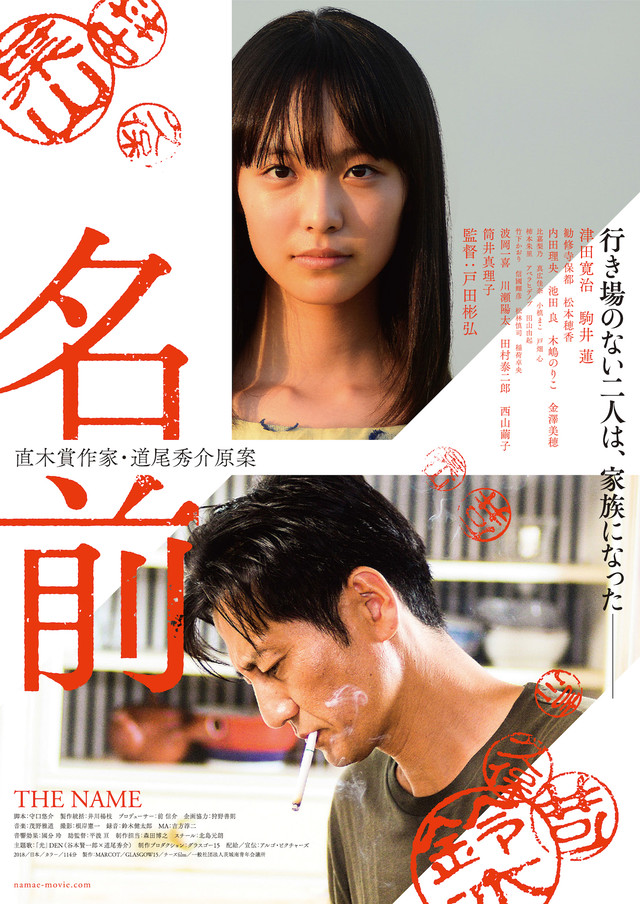
Names are a complicated business. Most people do not choose them for themselves, yet they come to define an identity or at least provide a substantial peg on which to hang one. If you give someone a fake name you are by definition shielding your essential self from view, refusing connection either in fear of discovery or intention to harm. The protagonist of Akihiro Toda’s The Name (名前, Namae) adopts several different titles as a part of his increasingly disordered everyday life in which he takes a hammer to his original identity in an ongoing act of guilt-ridden self harm. Meanwhile, his teenage would-be saviour, engages in a little role play of her own hoping to discover an essential truth about herself only to be disappointed, in one sense, and then perhaps find something better.

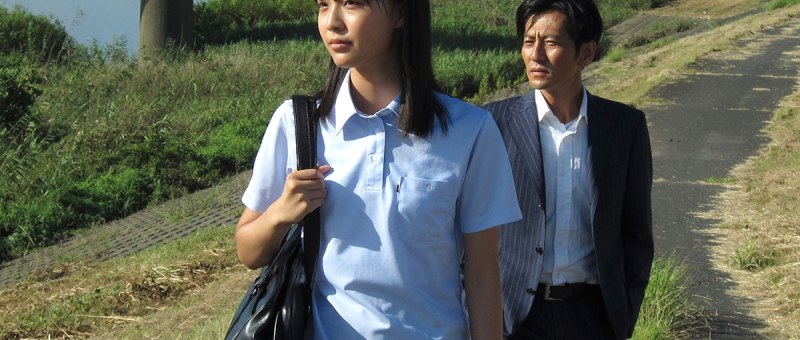
Masao Nakamura (Kanji Tsuda), if that is his real name, is not just leading a double life but is currently engaged in a number of iffy scams each compartmentalised under a different title and in which he plays an entirely different version of himself. Once a successful businessman, personal tragedy, marital breakdown, and bankruptcy have left him a floundering, cynical mess living in a rundown rural hovel with a pernickety neighbour and a decidedly lax approach to housekeeping. Masao’s main “job” appears to be working in a recycling plant where he’s managed to wangle a preferential contract by telling the higher-ups that his (non-existent) wife is seriously ill in hospital. Just as Masao’s scheme is about to be discovered, a mysterious teenage girl suddenly appears out of nowhere and plays along with Masao’s sob story, claiming to be his daughter come to remind him that he needs to leave earlier today because mum has been moved to a different hospital (which is why his boss’ contact had never heard of her).

Emiko Hayama (Ren Komai), as we later find out, is a more authentic soul but has decided on a brief flirtation with duplicity in observing the strange and cynical life of the morally bankrupt Masao. Facing similar issues but coming from the opposite direction, the pair meet in the middle – regretful middle-age and anxious youth each doing battle with themselves to define their own identities. Like Masao, Emiko is also living in less than ideal circumstances with her bar hostess single-mother, forced into adulthood ahead of schedule through the need to take care of herself, purchasing groceries, cooking, and keeping the place tidy. Thus her approach to Masao has, ironically enough, a slightly maternal component as she tries to get him back on his feet again – cleaning the place up and giving him something more productive to do than wasting his idle moments in bars and other unsavoury environments.

Masao’s current problems are perhaps more down to a feeling of failure rather than the failure itself. Once successful, happily married and excited about the future, he felt it all crash down around his ears through no real fault of his own. Nevertheless he blamed himself – his intensive work ethic placed a strain on his relationship with his wife and his all encompassing need for success blinded him to what it was that really mattered. By the time he realised it was already too late, and so it’s no surprise that he longs to escape himself through a series of cardboard cutout personalities, enacting a bizarre kind of wish fulfilment coupled with masochistic desire for atonement.

Now cynical and morally apathetic, Masao lets Emiko in on a secret about the grown-up world – it’s all lies. You have to put on disguise or two to get by; the world will not accept you for who you really are. Teenage girls might know this better than most, though Emiko is a slow learner. She might tell Masao that pretending to be other people is fun, but the one role she hasn’t yet conquered is that of Emiko Hayama – something which particularly irritates the demanding director of the theatre club she’s been cajoled into joining. Like Masao, Emiko’s life begins to fall apart through no fault of her own as she finds herself swallowed up by a typically teenage piece of friendship drama when her best friend’s boyfriend dumps her in order to pursue Emiko. Branded a scheming harlot and ejected from her group of friends, berated by the director of the theatre troupe, and having no-one to turn to at home, Emiko finds herself increasingly dependent on the surrogate father figure of Masao who is happy enough to play along with the ruse so long as it is just that.

Through their strange paternal bond, Emiko and Masao each reach a point of self identification, figuring out who it is they really are whilst facing the various things they had been afraid to face alone. Lamenting missed opportunities while celebrating second chances, The Name makes the case for authenticity as a path to happiness in a world which often demands its opposite. Melancholy but gently optimistic, Akihiro Toda’s peaceful drama is a heartwarming tale of the power of unexpected connection and the importance of accepting oneself in order to move into a more positive future.


Screened at the 20th Udine Far East Film Festival.