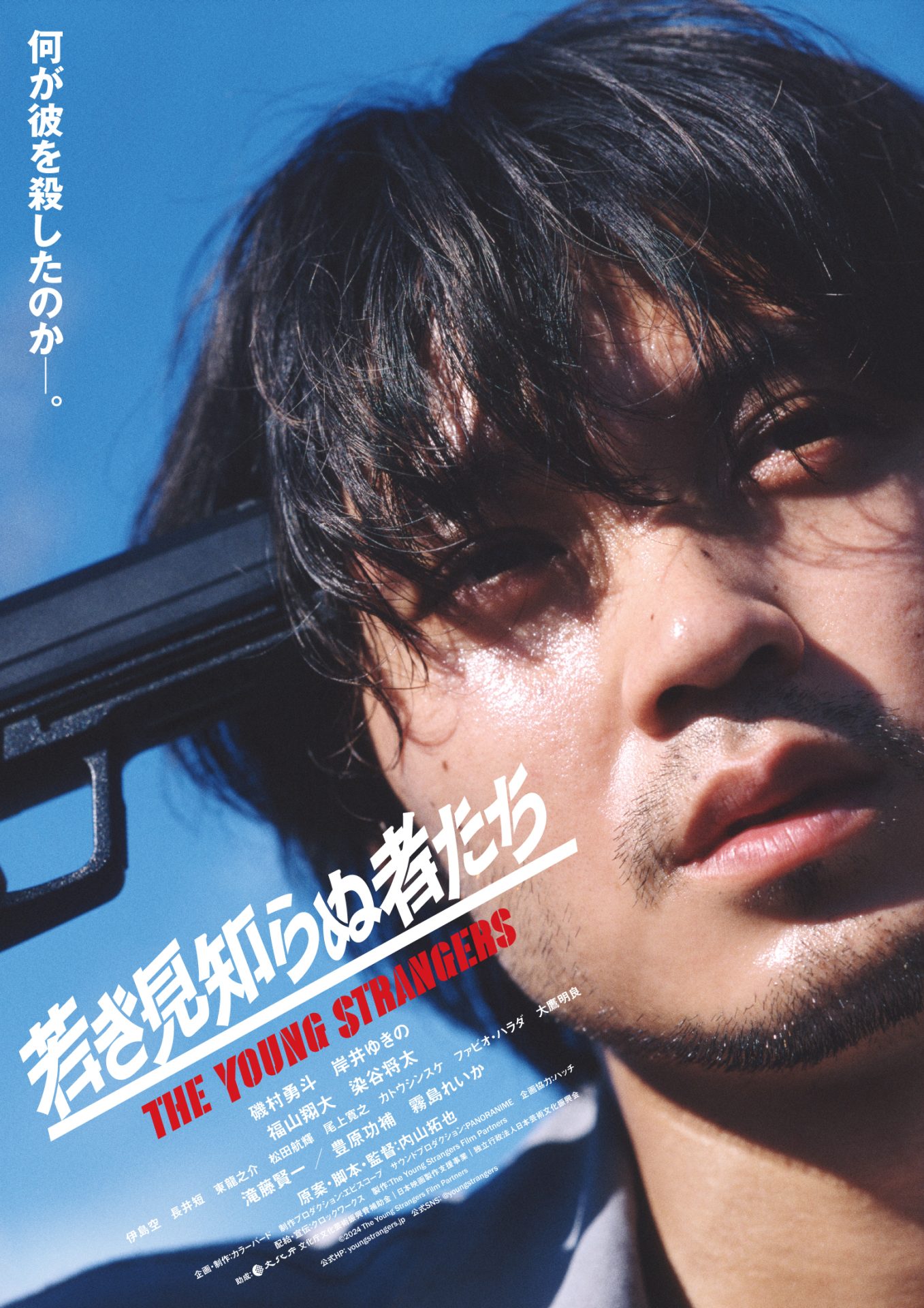
The Young Strangers (若き見知らぬ者たち, Takuya Uchiyama, 2024)

You have to protect your space from the violence of this world, a compromised father advises his sons, yet it’s something that neither he nor they are fully capable of doing. Billed as the “commercial debut” from the director of the equally emotionally devastating Sasaki in my Mind, Takuya Uchiyama, The Young Strangers (若き見知らぬ者たち, Wakaki Mishiranu Monotachi) paints a somewhat bleak portrait of contemporary Japan as place of desolation and abandonment, but at the same time is melancholy more than miserable in the earnestness with which they all dream of a better life somewhere beyond all of unfairness and injustice.

But Ayato (Hayato Isomura) seems to know that he’s burdened with some kind of karmic fate. His life oddly echoes that of his former policeman father and takes on an ironic symmetry even as he was unfairly left to pick up the pieces as a teenager adrift in the wake of parental betrayal. Now his late 20s, Ayato is a worn out and dejected figure who barely speaks after years of doing multiple jobs, in addition to running the snack bar his parents opened as a new start, to pay off the debts his father left behind. Now his mother has early onset dementia and her care is also something else he must manage as best he can with support from his girlfriend Hinata (Yukino Kishii), a nurse, and less so from his conflicted brother, Sohei (Shodai Fukuyama), who has a path out of here as an MMA champion if only he can stick to the plan and keep up with his training. 

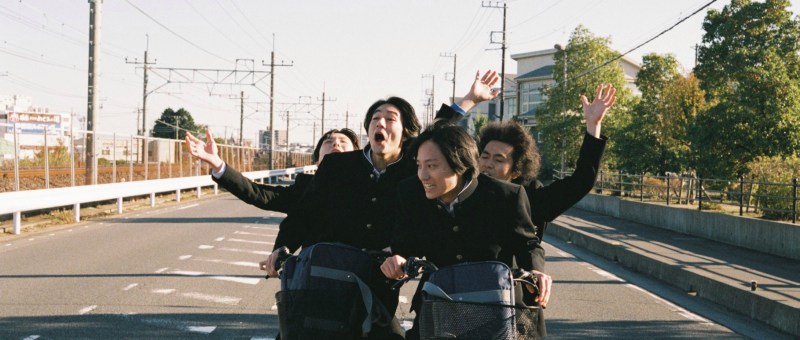
As his best friend Yamato (Shota Sometani) points out, he’s hung onto everything his father left him but is equally in danger of losing his future. He seems wary of his relationship with Hinata, afraid to drag her into his life of poverty and hardship, while he watches friends get married and start families. He once had a promising future too, as the star of the school football team, but like everything else that came to an abrupt end in the wake of family tragedy. There are hints of trouble with law in his younger years that may have made it even more difficult for him to earn a living wage, along with giving him an unfavourable view of authority figures. Seeing another young man hassled by the police, he steps in to inverse but ends up in trouble himself. The policemen, take against him and when he’s beaten up by thugs who drag him out of the bar, they arrest him instead and let the others go. Time and again, bad actors seem to prosper and get away with their crimes, while good people like Ayato continue to suffer. When Yamato tries to come to his defence and questions the police, they lie and tell him Ayato’s just a waster as if the world were better off without him.

The boys have this game they play where put two fingers up against the back of a friend’s head and shout “bang”. It’s like there’s a bullet that always coming for them, and Ayato too fantasises about shooting himself in the head to escape this misery. Sohei, meanwhile, makes violence his weapon in taking the martial arts his father left him to forge a new path for himself while vowing not to be intimidated by violence. But violence is all around them from the literal kinds to that of an uncaring and oppressive society, and as much as Ayato fights in his own way to protect his family he can’t keep them all together nor the darkness at bay. He badly needs Sohei’s help, but also knows he can’t ask him to give up his way out or take away his future while Sohei is already pulling away. He thinks it’s time to look into a more permanent solution for their mother, and that they should let the past go, but Ayato wants to hold on to all of it as a means of giving his life meaning. “It’s not your fault, but it will be if it carries on,” a sympathetic neighbour tells Ayato after finding his mother in his cabbage patch again and leaving him to one again clear up the mess. Haunted by images of the past that in Uchiyama’s masterful staging segue into and out of the present, Ayato desperately searches for a way out of his suffocating existence, but encounters only betrayal and injustice amid the constant violence of an indifferent society.


The Young Strangers screened as part of this year’s Camera Japan.

Trailer (no subtitles)
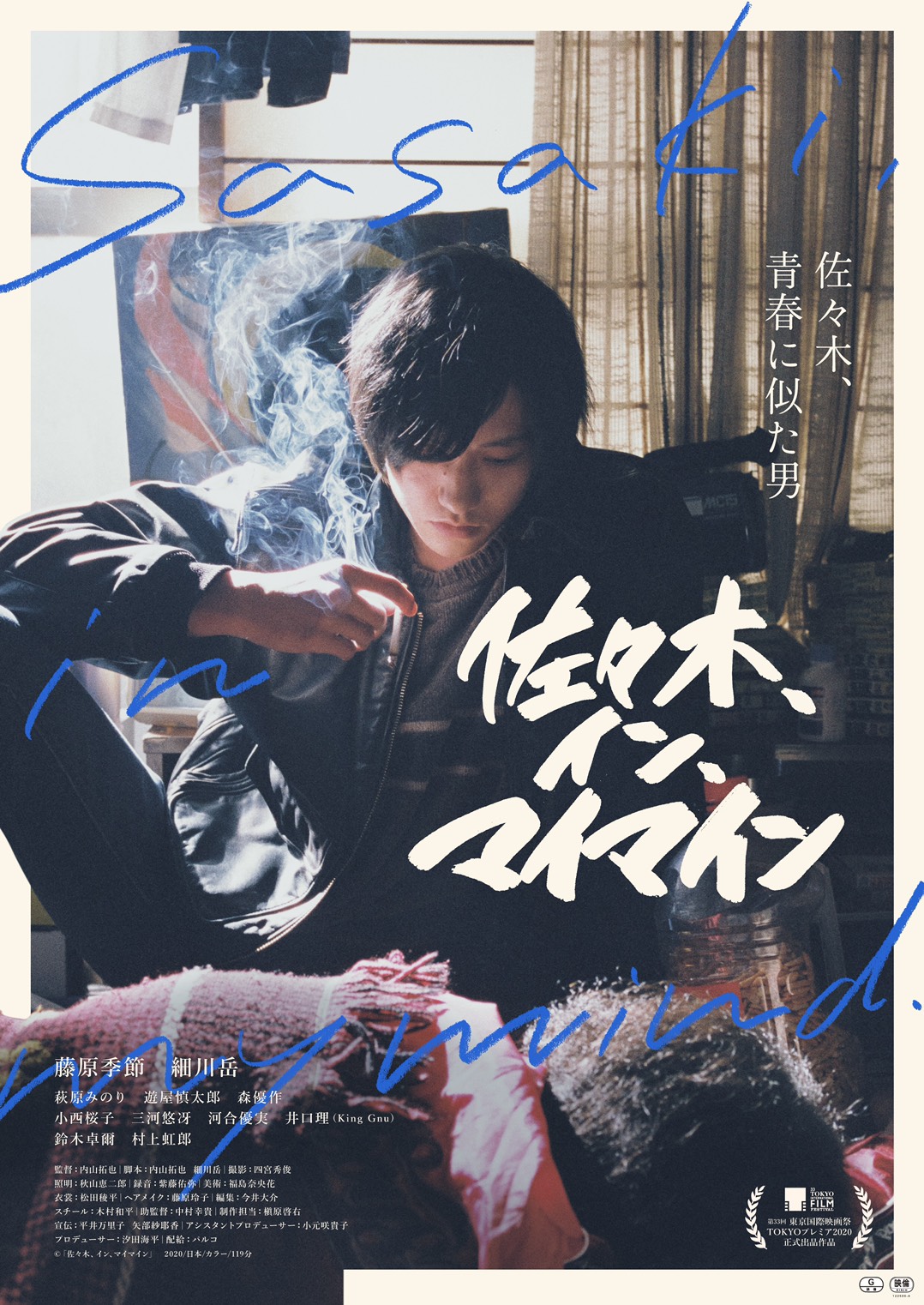
Sasaki in My Mind (佐々木、イン、マイマイン, Takuya Uchiyama, 2020)

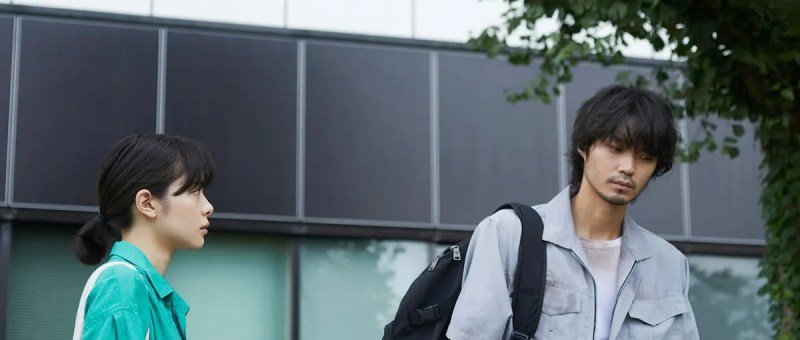
A young man is forced to confront his quarter life malaise when presented with unexpected tragedy in Takuya Uchiyama’s heartfelt youth movie, Sasaki in My Mind (佐々木、イン、マイマイン). A study in inertia, Uchiyama’s moody drama finds its melancholy hero defeated by life, looking back to more hopeful high school days and the larger than life friend he has, by his own admission, failed convinced by his own rather solipsistic sense of personal inadequacy that he lacked the capacity to save him. 

An aspiring actor, Yuji (Kisetsu Fujiwara) lives in a small apartment with his ex-girlfriend (Minori Hagiwara) and makes ends meet with a factory job he seems to be embarrassed by. Approached by an actor friend (Nijiro Murakami) apparently doing a little a better with a series of bit parts in TV shows and commercials, Yuji is reluctant to take him up on his offer of a part in a play, while an accidental meeting with an old high school friend, Tada (Yuya Shintaro), pushes him into a defensive mindset after he’s rightly called on his passivity. “Watching life go by in terror” as his character in the play eventually puts it, Yuji is so defeated by life that it has rendered him entirely listless. Ironically taking up boxing, he gets into a random fight with a customer from the the next table at an izakaya, insisting that he doesn’t want to lose but otherwise refusing to fight for anything even the girlfriend he apparently still loves whose refusal to move on perhaps hints at the desire to be given a reason not to. 

His meeting with Tada, now a moderately successful, married salaryman, reminds him of his high school friend, Sasaki (Gaku Hosokawa), a larger than life character who used to strip impromptu and dance in the nude when greeted by chants of his name. It was Sasaki who first convinced him to become an actor as they watched Kirk Douglas in Champion on TV, though after graduation and a move to Tokyo Yuji made no real effort to keep in touch with his friend seeing him only once and discovering he had become a lonely pachinko player equally consumed by a sense of personal hopelessness. As Sasaki once put it, elephants communicate with each other through low frequency sound imperceptible to humans, his own quiet distress call apparently missed by his old friends who perhaps tired of his outlandishness as they outgrew their teenage selves and became bogged down in their own lives leaving him behind as they strove forward alone. 

Left behind is something which Yuji cannot help but feel, further deepening his sense of personal failure in having achieved not much of anything in his Tokyo life. Sasaki aside, his high school friends, Tada and Kimura (Yusaku Mori), have each shifted into a conventional adulthood with regular salaryman jobs, homes, wives, and even children. He didn’t go to his last high school reunion, probably as Tada seems to have realised out of a sense of shame, for the same reason avoiding contact with his old friends while living in an awkward limbo with the ex who apparently grew bored with his lack of drive and continuing air of defeated ennui. Despite his own insecurity, Sasaki had encouraged him to live his life, assuring him that he’s got this, but when it came to it Yuji failed to do the same abandoning him in their old home town as a relic of the past he can’t quite accept. 

Admitting as much to his theatre director, Yuji is once again told to shine in his own spotlight and that lonely people aren’t necessarily lonely because they’re alone. Everyone keeps telling him to grow up, act like an adult, but Yuji doesn’t seem to know how hung up on high school immaturity and reflecting only too late that perhaps they never really understood their friend and in the end they simply left him behind. Only a confrontation with finality pushes him towards a break with his sense of inertia, acknowledging that what he feared was letting go and the eventual forgetting that comes with loss but the “world is rushing forward. We have to keep up”. Sasaki remains for him at least in his mind as he always was, the first of many goodbyes in an “empty elegy” that eventually becomes one’s own. A touching tale of quarter life crisis, Uchiyama’s moving drama eventually pushes its static hero towards an acceptance of his moral cowardice but finally gives him the courage to move forward taking his memories with him into a freer future. 


Sasaki in My Mind streamed as part of this year’s Nippon Connection.

Original trailer (no subtitles)