Chaos (カオス, Hideo Nakata, 2000)

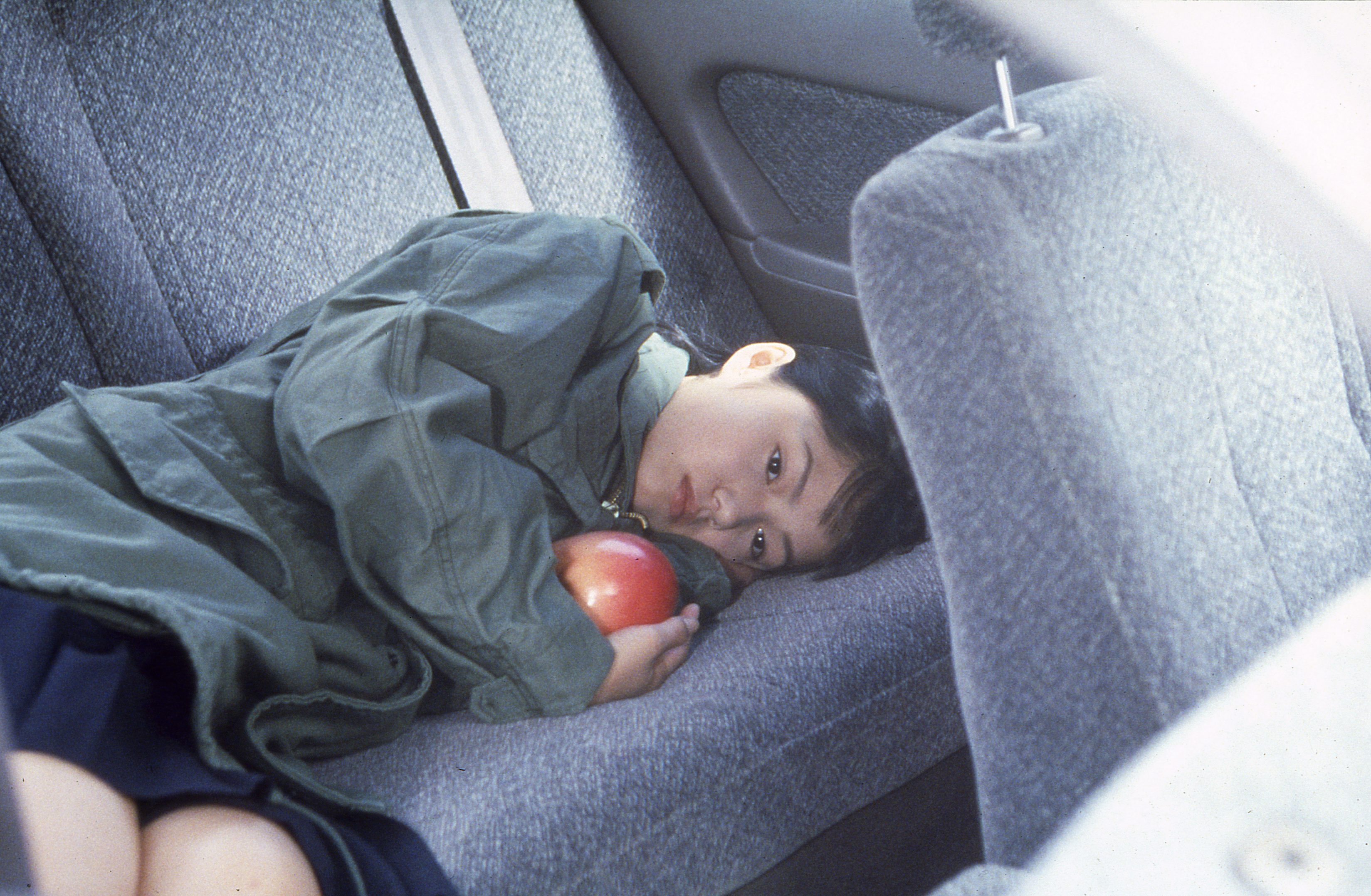
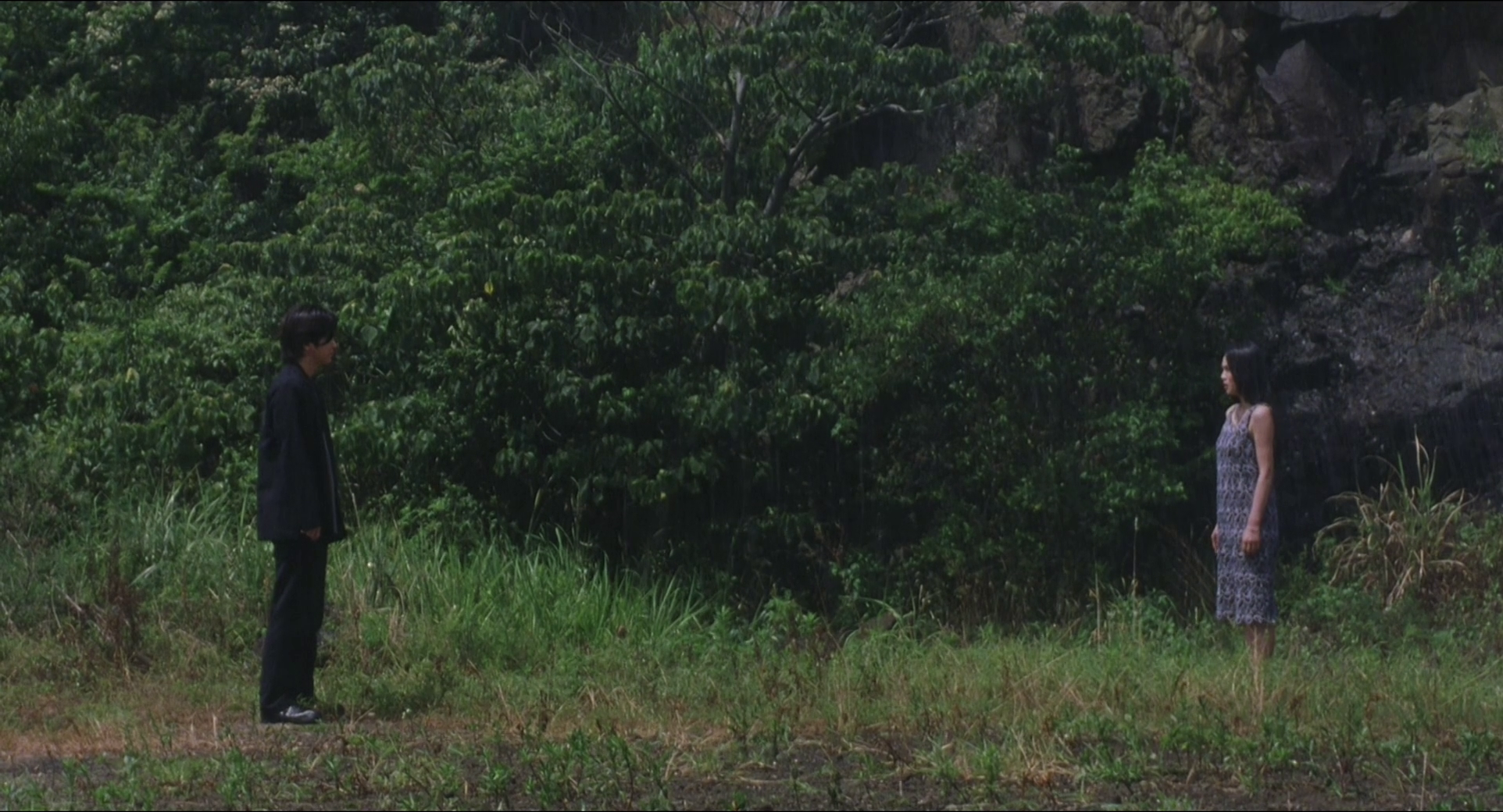
A down-on-his-luck handyman finds himself swept into intrigue when he agrees to a help a pretty young woman fake a kidnapping in Hideo Nakata’s noirish drama Chaos (カオス). Chaos is certainly what unfolds in the non-linear narrative as we try to piece together this fracturing tale of multiple betrayals and double crossings in which nothing and no one is quite as it seems and we can never really be sure just what game anyone is playing.

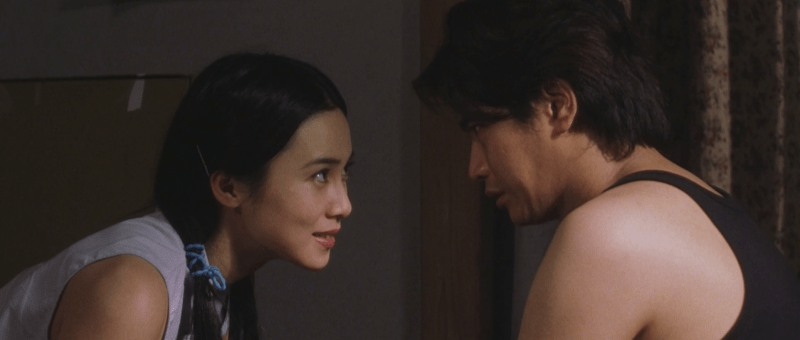
Goro (Masato Hagiwara), for instance, seems to be a bit of a sap. His ex-wife accuses him of being incapable of thinking of others, though his young son Noboru comes to him after having been bullied at school. He doesn’t seem to be very invested in his life of odd jobs which includes requests from lonely old men to play go as well as to visit the apartments of pretty women who’ve encountered some kind of plumbing disaster. Perhaps it’s no surprise he’s convinced to help Saori (Miki Nakatani) stage a kidnapping to test her husband’s affections seeing as she suspects he’s started an affair with a younger woman who is just nicer than she is, so she can’t compete.

What is surprising is that Goro turns out to be some sort of kidnapping expert. He explains to Saori that she should wear rope bindings for added authenticity when she’s released as well as refrain some taking showers. She should also not feed the tropical fish her friend asked her to, because if she’s been kidnapped then she’s not available, but then the fish will die, which means she’s sacrificing the life of living creatures just to prove a point. Though Goro treats her with tenderness, he frighteningly turns on after he’s helped her tie herself up, threatening rape. This is then revealed to be a ruse in order to get a real reaction of fear and terror for when he rings her husband Komiyama (Ken Mitsuishi) with the ransom request. 

This reversal makes clear to us that we don’t know who we’re dealing and anyone could suddenly change at a moment’s notice. We’ve just been told, for instance, that Saori tied the ropes so she could easily untie them by herself to go to the bathroom, which means that she could have done so anytime while she thought Goro was attacking her but didn’t. Obviously, she may have been too frightened to think of it, but then again perhaps she is also playing along with her own game too. When Goro extorts Koniyama’s sister, it looks like a cunning double bluff to lend authenticity to the original kidnapping plot while simultaneously pulling off a different scam, but maybe it’s also Goro going rogue and doubling his pay packet.

Despite his circumstances, however, Goro doesn’t seem to be in this for the money so much as white knighting for Saori even though he obviously knows she’s already married. On realising she may have betrayed him, Goro goes into a fairly convincing detective mode, posing as a policeman in order to investigate. He discovers that Komiyama’s mistress was a model who’d recently been cast aside by the agency because of a rumour she slept with a client while they also seem to have a repressive rule about dating. One of her colleagues says she hardly ever goes home to the flat her agency rents for her because she’s secretly living with a boyfriend. This is, perhaps, a world in which a woman can’t really be all of who she is because men are always trying to imprint their vision of idealised femininity on them. Womanhood is, after all, a kind of performance and one which Saori may be manipulating for her own ends. 

Yet it’s not clear where, if anywhere, the performances end and the authentic begins. Even having discovered at least a degree of the truth, Goro isn’t sure he can really trust Saori, while she may not really know either. What he resolves is that that might not matter, but what each of them is really looking for is a kind of escape from the constraints of their lives either through love or money only to discover that there is none, or else it lies only in death either literal or figural in a total reinvention of one’s persona. With shades of Vertigo, Nakata piles on the confusion and uncertainty to create an atmosphere of pure dread in which nothing, really, is quite as it’s assumed to be.


Trailer (English subtitles)
Harmful Insect (害虫, Akihiko Shiota, 2001)

“We’re only in seventh grade, why does Sachi have to suffer so much?” a well-meaning friend eventually asks as she comforts the heroine of Akihiko Shiota’s Harmful Insect (害虫, Gaichu), even as her mother turns away from her too fragile herself to be of much use. Sachiko (Aoi Miyazaki) does indeed suffer, continually victimised by the world in which she lives and having that victimisation used against her, rejected by her peers and almost blamed for the misfortunes which befall her as if she were the one at fault simply for existing. 

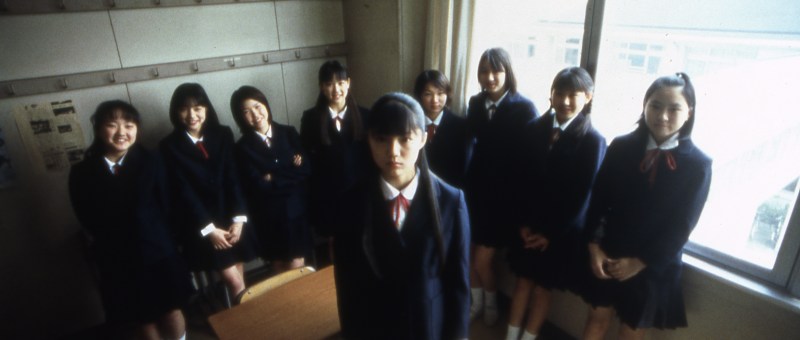
Shortly after the opening scene in which 13-year-old Sachiko’s mother (Ryo) attempts to take her own life, we see the girls at school gossiping about her while she’s still in earshot not entirely sympathetic as they remark on the fact her father left the family while implying that her mother is some kind of broken-hearted love fool driven to suicide over the loss of a man. Sachiko quickly becomes the woman of rumour, but in a motif which will be repeated the teens talk but never listen swapping stories between themselves and embellishing them as they go. It’s uncertain how much truth there is in the legend of Sachiko but it’s clear that they disapprove of her, adopting a puritanical moralising mindset in which they simply shun her for being something other. Only Natsuko (Yu Aoi) tries to stop them, reaching out to Sachiko even as Sachiko rejects her but is ultimately able to offer little help when even Sachiko’s mother is ill-equipped to protect her. 

The truth is that Sachiko is never safe anywhere. Everywhere she goes, she becomes a target for predatory men of all ages. A schoolboy on a bike harasses her by asking childish questions about her period, while sleazy salarymen repeatedly proposition her for sex, and even her mother’s new boyfriend in a doubly destructive act of betrayal cannot be trusted. She says little and keeps to herself, her silence and her isolation a kind of defiance and defence mechanism. After dropping out of school, she starts hanging around with a drop out 20-something (Tetsu Sawaki) and his homeless friend (Koji Ishikawa) who seems to have learning difficulties, discovering that they support themselves through staging accidents for compensation money. She considers doing the same thing, not for the money but craving the thrill of a near death experience only to find herself unable to go through with it. 

Meanwhile, she continues a letter-based correspondence with her former teacher with whom she is rumoured to have had an affair. Mr. Ogata (Seiichi Tanabe) later resigned for obvious reasons and now has a low-grade job at a nuclear plant. He answers her letters when he can, mostly offering paternalistic platitudes but like her absent parents is unable to provide her with the guidance she is seeking. What she seems to be looking for is the kind of parental input that would allow her to feel protected, safe, but no one is really there for her. She resents her mother’s emotional dependency and tendency to involve herself with unsuitable men, but worries she’s becoming the same striking out for an early independence but discovering only danger and futility. 

She asks herself if vice is the essence of human existence, then is goodness only the quality of not being entirely bad? Her view of the world already coloured with nihilistic despair. The men who misuse her feel they have no real need to justify their actions, but simultaneously blame her for tempting them though she does nothing other than exist remaining silent in order to avoid attracting attention. Then again even she doesn’t quite understand, asking her teacher why it is he can’t forgive himself simultaneously accepting that what happened between them, whatever that was, was wrong enough to warrant forgiveness but unable to grasp why he cannot let go of his guilt, continuing with this half-hearted correspondence unable to grant her the care that she is seeking. Wandering between flashbacks and brief vignettes of her life, Shiota captures Sachiko’s sense of total aloneness as even her sole source of sanctuary is taken from her leading to an explosive act of partially self-destructive violence that sends her forever on the run. The choice she makes at the film’s conclusion, be it in submission or defiance, is hers alone but in its own way a tragedy dragging her deeper into dangerous despair with escape an ever distant possibility.


Harmful Insect streams in the US until Dec. 23 as part of Japan Society New York’s Flash Forward series.

Original trailer (no subtitles)

Images: ©2002 NIKKATSU / TBS / SONY PCL