Tokyo Heaven (東京上空いらっしゃいませ, Shinji Somai, 1990)

title-752

In Japan, Shinji Somai is a well known and highly regarded director yet few of his films have ever made it overseas and he remains almost unknown in the West. Even by these standards, Tokyo Heaven (東京上空いらっしゃいませ, Tokyo Joukuu Irasshaimase) seems to be something of a forgotten episode in Somai’s career and is difficult to find even on unsubtitled DVD.

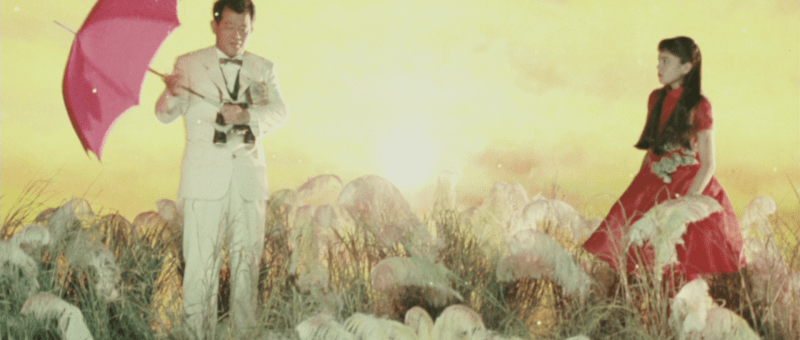
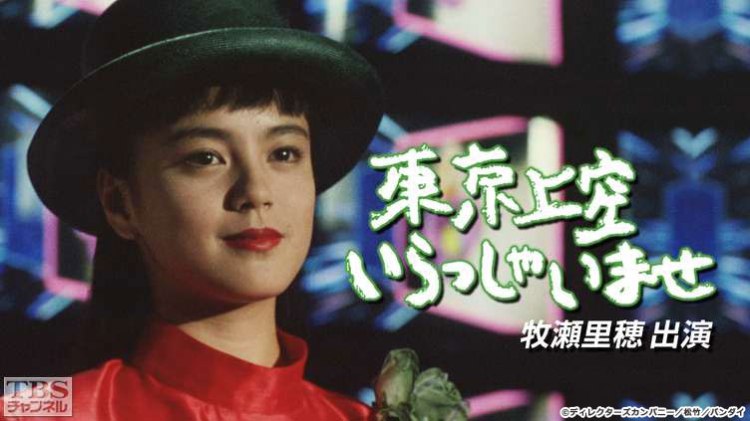
Set in 1990, the film begins with spoilt brat, up-and-coming idol star, and soon to be campaign girl Yu (Riho Makise) at a glitzy launch party. It’s time for 16-year-old Yu to be heading home, but sleazy producer Shirayuki (Tsurube Shofukutei) has other plans and instructs his underlings to set her up with him which they, guiltily, do. However, during the cab ride home Yu eventually escapes his molestations by jumping out into the middle of the road where she’s immediately mown down by an oncoming car. Waking up in a pastoral vision of heaven, Yu meets her guide, “Cricket”, who looks exactly like Shirayuki, the last face she had in her mind before she died. Given the opportunity to return to Earth but not as her old self, Yu tells Cricket to make her the girl on her campaign posters. Waking up in the room of one of the advertising executives working on her account, Fumio (Kiichi Nakai), she discovers resurrection isn’t all it’s cracked up to be.

Taking its queue from A Matter of Life and Death, Tokyo Heaven is first and foremost a fantasy romance (in the broadest sense) though leaning more towards bittersweet comedy than heartrending tragedy or profound human truths. Yu has returned to Earth but is unable to make contact with her family or let her presence be known to anyone other than Fumio. She no longer appears in photographs or mirrors and gradually comes to the realisation that her life really has ended and this small reprieve is only temporary. Many of Somai’s films focus on the emotions of younger people and the irony here is that Yu only grows up once she’s technically dead. Having had the chance to experience a “normal” adolescence with a part-time job at a fast food restaurant and a tentative romance Yu eventually feels ready to move on.

At only 16 years old, Yu was about to become a the face of a large scale advertising campaign. Her image haunts the streets of Tokyo and the loathsome Shirayuki is desperately trying to spin the tragic events into some kind of narrative that will both cover-up his entirely inappropriate behaviour with a school girl in the back of his chauffeur driven car and save some of the hard work already in place on the campaign itself. Hence, no one other than the girl’s parents is being told that Yu is dead and all previous commitments are being cancelled due to “poor health” or “taking a break” etc. Even after death, Yu’s image is being exploited and her soul ignored.

The conflicted trombone player, Fumio, comes to appreciate Yu for who she really is during their brief time together, resents Shirayuki’s treatment of her and wants the campaign to go ahead in an attempt to prolong her “presence” even if in image only. Through his contact with the increasingly vivacious Yu, Fumio who has previously been berated by his brother for not wanting to join their family bathroom fittings business and labeled as someone with an impenetrable shell who prefers his own company by his sometime girlfriend from downstairs, also comes to appreciate the joys of being alive a little more and reconsider some of his previous life choices.

Bearing Somai’s trademark long yet dynamic takes, Tokyo Heaven is a colourful tribute to Tokyo right before the bubble burst. Almost a prescient warning about the dangers of praising image over reality, the film becomes a poignant tale of learning to appreciate the sheer pleasure of being alive. Its slightly strange and perhaps abrupt ending has the potential to be misread, but the general message about the transience of life and the importance of living the way you want to live is one that cannot be overstated.


Screened from film as part of the London Japanese Embassy Filmshow programme on 19th November 2015.

There isn’t even a trailer available for this but if you can understand Japanese there’s a talkshow event with star and comedian Tsurube Shofukutei recorded at the recent Tokyo Filmex Somai retrospective in 2011.

And a musical scene from the film featuring Yosui Inoue’s Kaeranai Futari
http://www.youtube.com/watch?v=ardfYunlDRk

Tokyo Fist (東京フィスト, Shinya Tsukamoto, 1995)

tokyo-fist_still_7Following on from their excellent remastered Tetsuo set and the more recent Kotoko, Third Window Films have again brought us another classic film from the back catalogue of one of Japan’s most underrated auteurs – Shinya Tsukamoto.

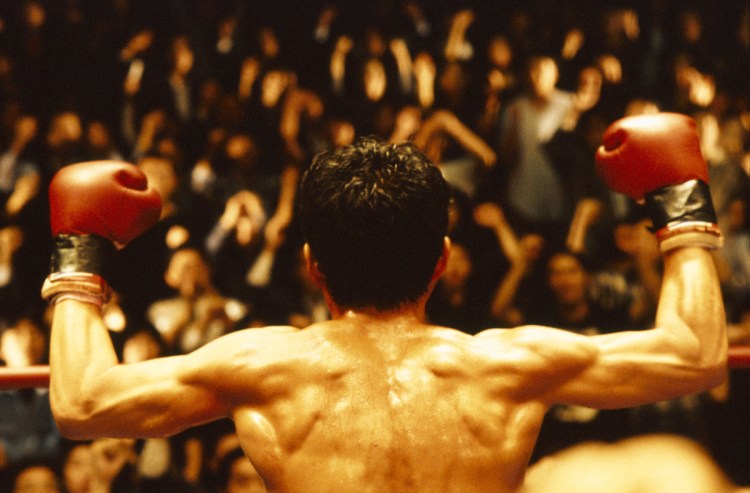
Tsuda (played by Shinya Tsukamoto himself) is a hard working insurance salesman in mid ‘90s Tokyo. He lives with a beautiful fiancée in a pretty nice flat and everything seems to be going pretty well for him except that he’s been so unbearably tired lately. Then, one fateful day a colleague asks him to deliver some money to a boxing club (which sounds kind of dodgy in itself) where he’s spotted by an old acquaintance, Kojima (played by Shinya Tsukamoto’s boxer brother Koji). Though it’s clear Tsuda doesn’t wish to resume a friendship with Kojima, somehow he still manages to worm his way into his life. This unwanted intrusion from the past begins to deeply unsettle the civilised life Tsuda and Hizaru had been living up to this point and sets them on a path of atavistic disintegration.

When you look at Tsuda at the beginning of the movie, it’s easy to think he’s ‘happy’ because the life he seems to be living is ‘normal’. He works hard, he lives with a woman he intends to marry and they seem settled and well matched. However, if you look more closely, you can see the cracks are all there even before Kojima turns up. His ‘tiredness’ is perhaps a symptom of the dissatisfaction he might not even realise he’s feeling with his boring, ordinary city life. When Hizaru, his girlfriend, asks him sensitively about his tiredness and suggests maybe he’s overworking and that she wouldn’t mind continuing to work even after they get married Tsuda’s reaction is quite telling. He doesn’t say anything particularly, he doesn’t argue, but it’s clear that he resents the suggestion and is clearly annoyed by it. This, and her subsequent comments to Kojima regarding Tsuda’s physique further undermine his masculinity and you can see that even before the catalyst of Kojima’s arrival, Tsuda’s mental state is quite fraught and his rage is already simmering quietly beneath thin layer of civility that is city life.

When Kojima finally does arrive, he does so like a pathogen infecting Tsuda first at the boxing club. Tsuda brings him home (inadvertently) to his girlfriend who is then also infected with a new strain of individualism. When Tsuda visits Kojima’s apartment to confront him about making a pass at Hizaru, what he finds is a lithe, glistening, insect-like physical force. His movements are uncanny, seemingly too fast for a human yet slightly jerky and lacking in grace. Despite the fact that everyone at the gym thinks Kojima is a terrible boxer (even when he actually wins a fight everyone seems bored) he possesses  the physical strength to knock Tsuda not only across the room but through a wall. The exaggerated, manga-like violence only further intensifies Kojima’s total dominance over Tsuda. Hizaru looks on with a curious expression which seems part way between wonder and disgust at Kojima’s increasingly bug-like appearance.

As a couple, Tsuda and Hizaru seem to have a fondness for watching old, subtitled European movies of an evening – Carol Reed’s The Third Man and Fritz Lang’s Metropolis. Both films, of course, that have something to say about ‘the city’. In The Third Man, Harry Lime’s crimes are only possible because of the unique situation of post-war Vienna. In Metropolis, famously, the city is an organism worked by an underclass of slave workers who are little more than cogs in the machine. The city assumes part of your own personality, strips you of your individuality and replaces it with a job title. It numbs you to the finer emotions and the only way left to re-assert your existence is to open yourself up to pain. In Tokyo Fist, the city is of course Tokyo, but really it could be any city any time. Living in such a codified way etches away at your humanity until barely a husk remains as you live out the day to day demands a city makes of its people. By the end of the film, the three central characters have been through an extended battle with this ‘city tax’ but whether the result is a death of the soul or a recovery is perhaps a matter for debate.

Tokyo Fist certainly a very rich film which repays repeat viewings and is open to a great number of interpretations. Like his earlier Tetsuo: The Iron Man, the film often works on a purely sensory level and needs to be experienced rather than considered but that isn’t to say it’s without plot or action. The fight scenes are intense and frenetic, captured in Tsukamoto’s trademark style, yet the boxing scenes do also have a very authentic ring to them. Tokyo Fist is a masterpiece of modern Japanese cinema that has long been underserved by sub quality releases. This remastered HD presentation from Third Window Films, supervised by Tsukamoto himself, finally restores the film to its rightful position with a truly outstanding blu-ray release. Tokyo Fist is a hugely intriguing and important film which richly deserves a place in any collection.


Available now on blu-ray in the UK from Third Window Films!

More Tsukamoto reviews:

First published on UK Anime Network in November 2013.

Funeral Parade of Roses


An inverted retelling of Sophocle’ Oedipus, Funeral Parade of Roses has become a landmark in Gay Japanese Cinema. Eddie (geddit?), a transvestite living in Tokyo makes her money at a gay bar and has begun an affair with this boss. This has created an awkward situation with the boss’s ‘wife’ who runs the club and has become increasingly jealous and antagonistic towards Eddie.  Something from Eddie’s past is also haunting her and will turn out to have major repercussions for herself and others.

Funeral Parade of Roses is notable for its explicit detailing of 1960s gay life in Tokyo. Eddie and her friends have wild parties where they take drugs and discuss avant-garde films from America whilst watching distorted pictures of the student riots on the TV. The films even breaks with its narrative to interview various people, including a couple of the the actors, about gay life.

This is just one of many of the post-modern techniques that Matsumoto employs, often breaking up the narrative with vox pop sessions, inserted signs etc. He often repeats scenes or sections of scenes and sometimes breaks them off only to return at exactly that point later on. The overall timeline of the plot only becomes clear near the end when you’re able to piece these scenes together into a coherent narrative. An important and influential film, Funeral Parade of Roses is a must for fans of Japanese Cinema.