December (赦し, Anshul Chauhan, 2022)

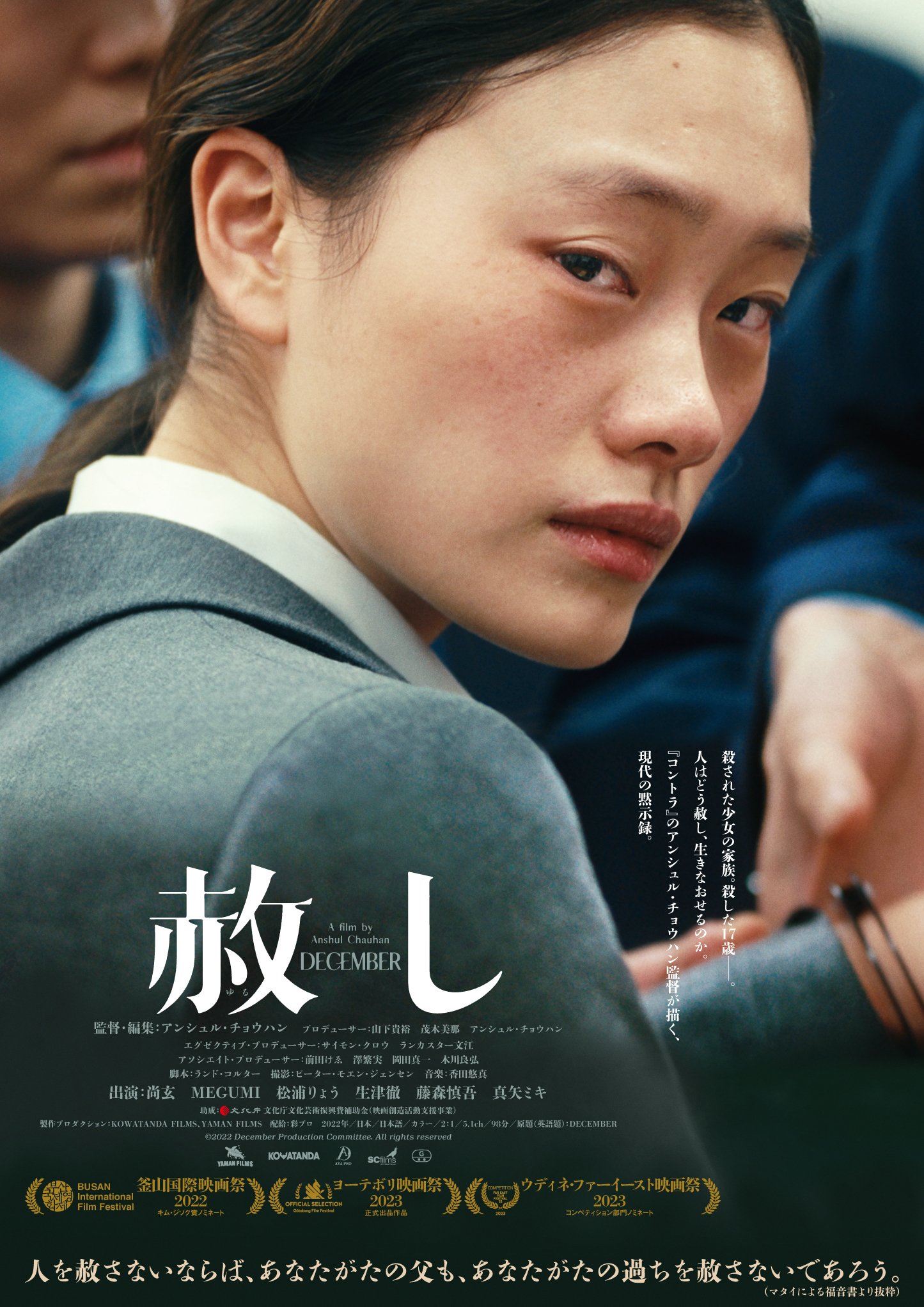
Where is the line between justice and vengeance? The grieving father at the centre of Anshul Chauhan’s December (赦し, Yurushi) is determined that the teenage girl who stabbed his daughter to death should never leave prison, but what he wants is a kind of equivalent exchange in that the person who stole his future along with his child’s should have no right to one herself. A more mainstream effort than either of his previous films Bad Poetry Tokyo and Kontora each of which dealt with similarly thorny themes, Chauhan’s unusually tense courtroom drama is the latest to put the legal system on trial while asking difficult questions about grief, guilt, and what exactly it is we mean when we talk about “justice”.

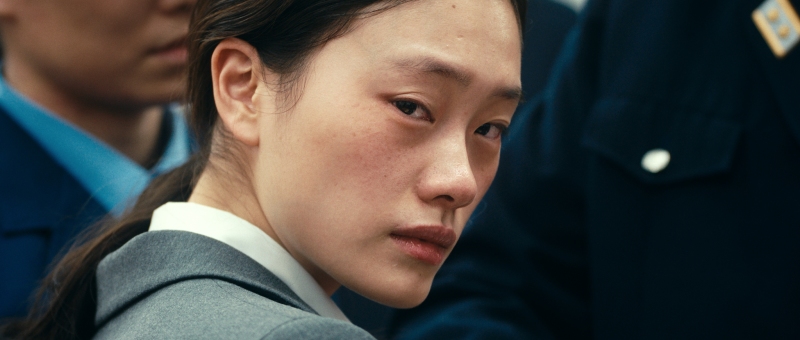
Seven years previously, 17-year-old Kana (Ryo Matsuura) stabbed her classmate Emi (Kanon Narumi) multiple times in a frenzied attack that resulted in her death. She was sentenced to 20 years in prison and has never attempted to deny her crime. It isn’t she who has asked for her sentence to be reviewed but an independent lawyer, Sato (Toru Kizu), who claims he’s doing it for “justice” though as Kana points out might have half an eye on compensation money she’d be able to claim for wrongful imprisonment if the case were successful. Sato seems to think it will be on the grounds that Kana was unfairly tried as an adult, mitigating circumstances were never brought to the defence’s attention, and the judge’s sentencing was swayed by personal feeling placing it outside of conventional guidelines that should be applied in cases like these.

For Emi’s parents, Katsu (Shogen) and Sumiko (Megumi), the appeal is a slap in the face. The couple have separated and while Sumiko has attempted to move on with her life, marrying a man she met in a support group for bereaved parents, Katsu has become a bitter alcoholic living a purgatorial existence of almost total inertia. Outraged, he is determined to make sure that Kana never leaves prison and is only sorry that she could not receive the death sentence because of her age, while Sumiko would rather not be involved at all, uncertain that she would be able to endure the emotionally draining process of another court case. They settle on presenting a united front, but discover that to do so is also to put themselves on trial while being confronted by a past neither has ever really faced.

The strain on Sumiko is evident as she walks along along a bridge at night and peers over the edge as if about to jump. She later learns that Kana had a mother too who did in fact take her own life after selling everything she owned to pay the compensation money that is used against them in court to imply that they’ve already been served “justice” in the form of monetary recompense from the defendant’s family which ought to declare the matter closed. Unlike Katsu, Sumiko had said her goal wasn’t vengeance but only to make sure that no other mother suffers as she has done, yet another mother already has for she lost a daughter too. Kana meanwhile has no one left to turn to even if she were released, she will have to make a new life for herself alone. Kana is herself victimised by an unforgiving society, the subtext suggesting that she was bullied for being the daughter of a single mother who was unable to fully care for her or provide the kind of material comfort children like Emi receive. The “happy family home” Katsu accuses her of destroying is also a symbol of everything Kana was denied but she did not kill out of jealousy or resentment only, ironically, to escape a kind of imprisonment and free herself of an oppressive bully.

Katsu says he’d kill her himself if he had the chance, but as Sumiko points out then he’d just end up in prison for the rest of his life with only his “righteousness” to comfort him. How could he claim to be any better? As Sato says, emotion has no place in a court of law. That’s why the law the exists and we mediate “justice” through a dispassionate third party to ensure the sentence is fair and not merely “vengeance”. Katsu certainly sees himself as a righteous man. In a repeated motif, Chauhan shows him taking the long way round by walking on the pathways of the grid-like forecourt leading to the courthouse while others hurriedly take the direct route crossing the squares at a diagonal angle. For him the answer is only ever black and white and he is very certain of his truths, but also blinded by his pain and unable to see that his desire for vengeance is more for himself than it is for Emi.

Only by accepting a painful truth can he begin to move past his grief, despite himself moved by Kana’s quiet dignity in which she admits her responsibility and suggests that she will never really be “free” even if she is released. What she offers, in her way, is peace allowing the bereaved parents to bring an end to their ordeal or least enter a new phase in their grief which allows them to move forward in memory rather than remaining trapped within the unresolved past. Perhaps in the end that’s what we mean by “justice”, a just peace with no more recrimination only sorrow and regret with renewed possibility for the future.


December screened as part of this year’s Osaka Asian Film Festival.

Original trailer (no subtitles)
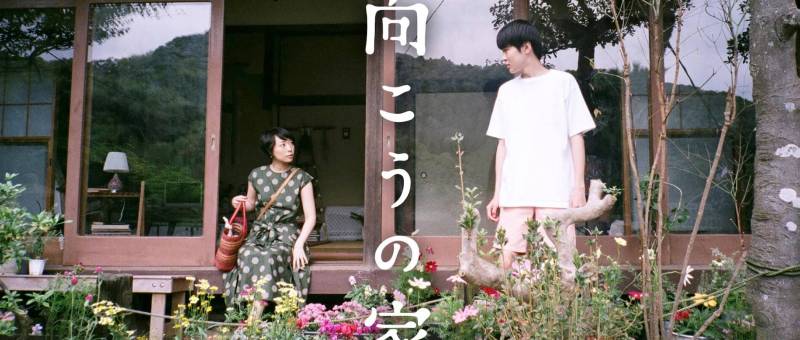
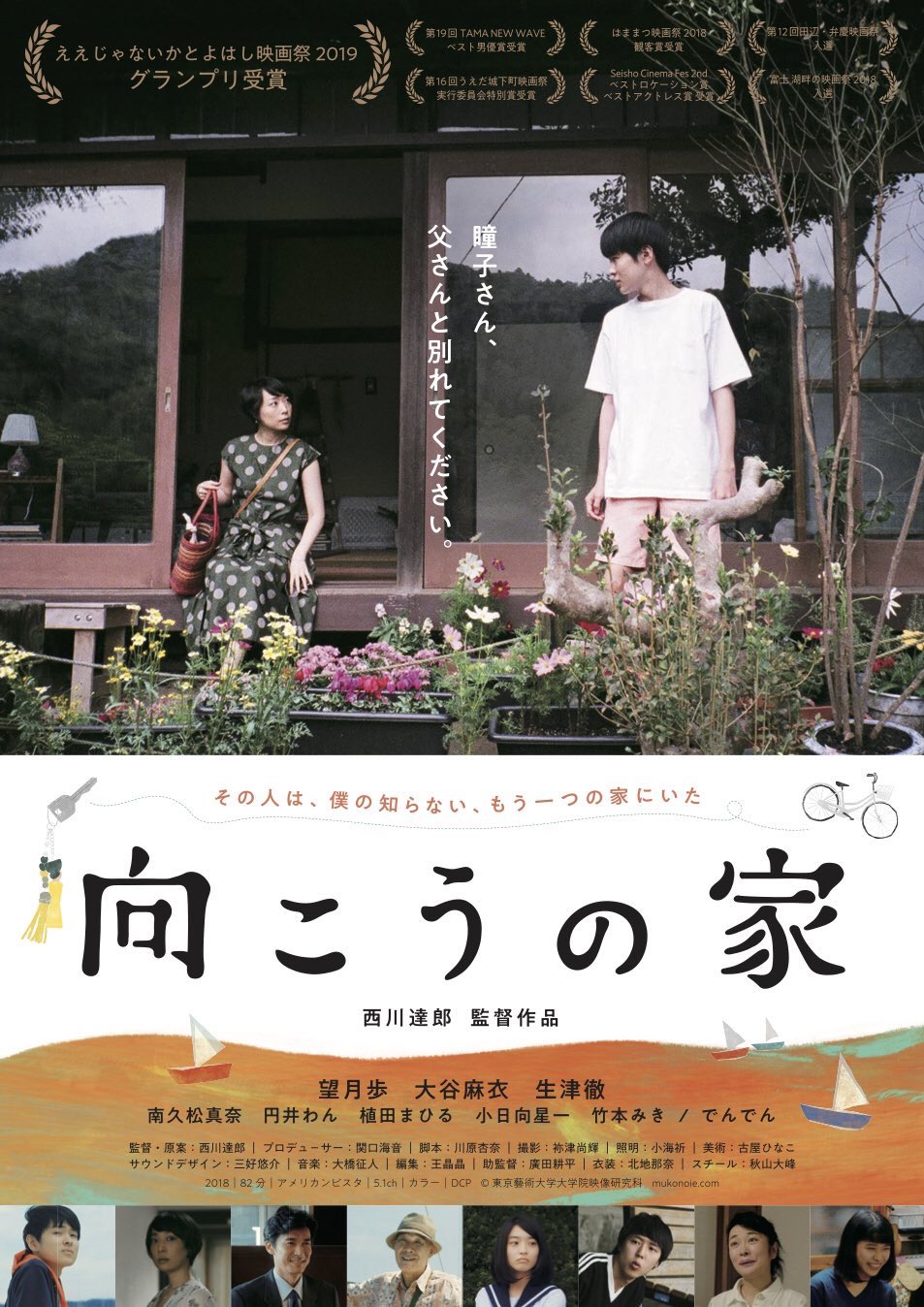
The Other Home (向こうの家, Tatsuro Nishikawa, 2018)

There comes a time in everyone’s life when they start to realise that things are not always as they appear and no matter how happy and settled your family life might seem, your parents aren’t perfect though they are probably doing their best. For Hagi (Ayumu Mochizuki), that moment comes at 16 when he gets fed up with school and takes some time off believing he might be able to learn more outside of the classroom than in. An unconventional coming-of-age tale, Tatsuro Nishikawa’s graduation project The Other Home (向こうの家, Mukou no Ie) is also a meditation on the modern family and the patriarchal order. 

Getting back to school after the summer break gets off to a rocky start when Hagi and his friend are told that the fishing club of which they are members is being shut down as the teacher who was in charge of it is scaling back her workload because she’s just got engaged and will eventually be leaving to get married. Hagi takes this in his stride, mostly at a loss over where to eat his lunch because his girlfriend, Naruse (Mahiru Ueta), for some reason thinks it’s embarrassing to eat alone in the classroom. In any case, Hagi reacts by deciding not to go to school at all. His parents don’t approve, but decide to give him some space to figure out what’s going on. Meanwhile, he’s beginning to wonder if it’s odd that his family never fight, his parents committed to talking things through peacefully rather than resentfully hiding their true feelings. 

Or, so he thought. There is something childishly naive in his conviction that because his parents never fight in front of him they never fight at all, though it’s true enough that he comes from a talking about things family in which his mother Naoko (Mana Minamihisamatsu), in particular, is keen that they share their thoughts and feelings honestly, looking forward to her husband Yoshiro (Toru Kizu) returning home each day after which they share a drink and make time to talk. It comes to something of a surprise to him then when his dad asks him to pick up a set of keys he’s forgotten and bring them to a cafe near where he works without letting his mother know. Hagi does as he’s told only to learn the keys are for a cheerful cottage by the sea which he’s been renting for his mistress, Toko (Mai Ohtani), with whom he now wants to break up preferably before the lease is due for renewal. Too cowardly to do it himself, Yoshiro enlists his teenage son’s help to break up with the woman he’s been cheating on his family with. 

Strangely, this revelation does not seem to sour him on his dad even if he realises the threat it poses to their happy family life. “Protecting the family peace. Men must uphold that promise” Yoshiro unironically tells his son, problematically implying that the way to do that is by covering up affairs rather than simply not having them. Dutifully Hagi heads over to “the other home”, only to be thrown out by Mr. Chiba (Denden), a friend of Toko’s who not unreasonably tells him that this is something his father should be dealing with himself rather than sending his teenage son to guilt his mistress into moving out of her house. Failing to engage with his father’s betrayal, Hagi nevertheless comes to sympathise with Toko who is about to be rendered homeless thanks to his father’s moral cowardice, staying with her in the cottage while lying to his mother that he’s doing an internship at his father’s company. 

Nevertheless, each of his parents is eventually found wanting as Toko teaches him the things they perhaps should have including how to ride a bike, an embarrassing oversight which had seen him deemed “uncool” by his exasperated girlfriend. The film has little time for Naoko’s talking about things philosophy, her husband merely lying to her while engaging in the same patriarchal double standards simultaneously insisting it’s a man’s duty to “protect family peace” while deliberately endangering it through an extramarital affair. Hagi too perhaps picks up these uncomfortably old fashioned ideas partly from his teacher who proudly shows off her engagement ring boasting that it cost her fiancé three months’ salary, the expense apparently proof that he intends to look after her well for the rest of her life as if she couldn’t do that herself. He begins to feel sorry for Toko as she outlines her life as a kept woman, a backroom full of unwanted presents from various men who too looked after her for a time, but in the end merely offers to look after her himself by quitting school to get a job so he can renew the lease to make up for his father’s moral cowardice.

The reason they were so happy, it seems, is that Yoshiro gave himself an escape valve. “Sometimes it’s hard for me to be dad” he admits, apologising for his inability to share his burdens honestly, his male failure neatly undercutting the tacit acceptance of the patriarchal authority which stands in contrast to Naoko’s ideal of a healthy relationship founded on emotional authenticity. Finally learning to ride a bike, Hagi finds himself entering a less innocent world as a young man now fully aware of the universe’s moral greyness if perhaps not quite so enlightened as he might feel himself to be.


The Other Home screened as part of Camera Japan 2020.

Original trailer (no subtitles)

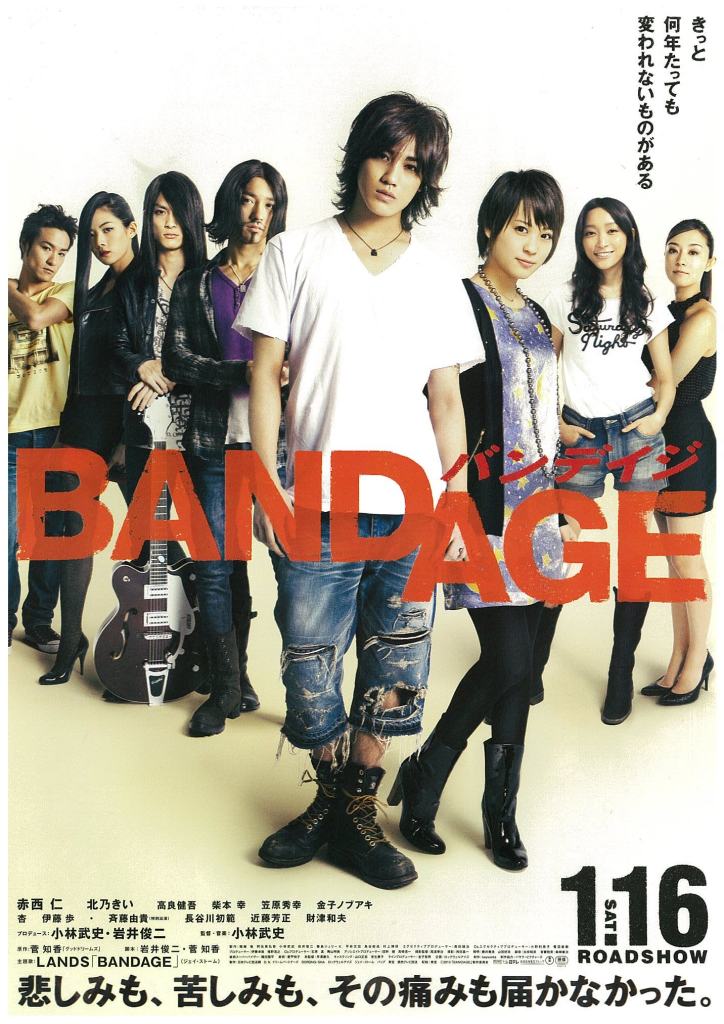
Bandage バンデイジ (Takeshi Kobayashi, 2010)

Japan was a strange place in the early ‘90s. The bubble burst and everything changed leaving nothing but confusion and uncertainty in its place. Tokyo, like many cities, however, also had a fairly active indie music scene in part driven by the stringency of the times and representing the last vestiges of an underground art world about to be eclipsed by the resurgence of studio driven idol pop. Bandage (Bandage バンデイジ) is the story of one ordinary girl and her journey of self discovery among the struggling artists and the corporate suits desperate to exploit them. One of the many projects scripted and produced by Shunji Iwai during his lengthy break from the director’s chair, Bandage is also the only film to date directed by well known musician and Iwai collaborator Takeshi Kobayashi who evidently draws inspiration from his mentor but adds his own particular touches to the material.

High school girl Asako (Kie Kitano) is best friends with Miharu (Anne Watanabe) who likes all the same cool indie bands she does and is therefore upset to learn that she is dropping out of school because her parents have money problems. Luckily the girls run in to each other at a record store where Miharu works and bond again over the new CD of a band Miharu had recommended and Asako had fallen in love with – LANDS. Miharu also manages to get tickets to a LANDS concert and even swipes a couple of backstage badges from some retreating suits.

The girls sneak backstage and are immediately clocked by the band’s wily manager, Yukari (Ayumi Ito), but their adventure is derailed after they literally run into a band member and Asako loses a contact lens. The band’s lead singer, Natsu (Jin Akanishi), places a bandana across Asako’s temporarily blinded eye and rechristens her “Black Jack” before inviting both the girls to the post-show drinking session. Leaving early, Asako ends up arranging to meet Natsu at another bar later, beginning her long journey with the difficult, damaged musician as they navigate the turbulent “indie” record scene with all of its various traps and temptations.

Though Natsu and Asako may not actually be so far apart in age, you have to admit there’s a something not quite right in his sudden desire to befriend a starstruck high school girl. He does indeed seem to be after the obvious but after she resolutely turns him down, he keeps chasing her right until the end of the film. Despite remaining a little distant and afraid of this somehow very intense yet completely chilled out diva of a frontman, Asako becomes something like his only friend yet her presence continues to provoke tension within the group, particularly after she leaves high school and gets a job as a manager working alongside Yukari.

What first drew Asako to the music of LANDS was an identification with their melancholy lyrics echoing the alienation and loneliness she herself felt as a diffident adolescent. Her feelings towards Natsu are also driven by this same identification with his angst ridden lyrics but the qualities which attract him to her are those which she loathes in herself. Natsu, a narcissistic would be rock god, treats the band like his personal little empire, but deep down he knows he’s not its MVP. That would be the striking long haired guitar player, Yukiya (Kengo Kora), who the suits have pegged as the most likely to succeed. Natsu can write and his songs are good, if sometimes “uncommercial”, but he doesn’t quite have “it” in the same was as Yukiya does. Yukiya, by contrast, is (mostly) content to follow Natsu’s lead yet comes to resent his close relationship with Asako, regarding her as a kind of “Yoko” disrupting the band’s carefully crafted unity.

Yukiya’s attempt to destroy Asako is a calculated and cold one, motivated by his belief that she has “destroyed LANDS”. Laying bear his own pain and loneliness, Yukiya uses his internal darkness as an odd kind of seduction technique only to leave Asako on a barren shore sure of nothing other than the fear and confusion inside her heart. A dangerously violent confrontation with a drunken Natsu is the final trigger for Asako’s own moment of self realisation as she sees herself reflected in Natsu’s self destructive meltdown. United in mutual self loathing, the pair cement a melancholy though ultimately unrealisable bond which puts an end to Asako’s musical adventures.

Asasko is given a second opportunity to pursue a musical dream but one which is more on her own terms and reminds her of the potential and possibilities of music as art rather than the market driven mindset her agency job had done its best to instil. Natsu, it seems, has also rediscovered his artistry and may be in a better place to create away from the pressures that come with fronting an up and coming indie band. Defiantly exclaiming that the pain can’t reach him, Natsu might have found the “bandage” he’d been looking for which is, in a sense, his music – the dressing which staunches the weeping wounds of his pain and suffering. Music, like a bandage, is both salve and barrier – its message indirect but none the less deeply felt even if its effects are for internal use only. Asako and Natsu seem destined to walk on parallel paths but each has, at least, begun to discover their true selves as they continue to pursue their artistic dreams if perhaps at the expense of the personal.


Short scene from the film (no subtitles)

https://www.youtube.com/watch?v=_evndqBv284