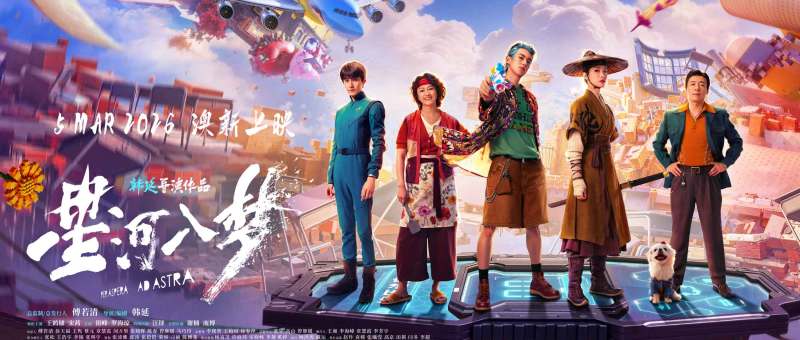
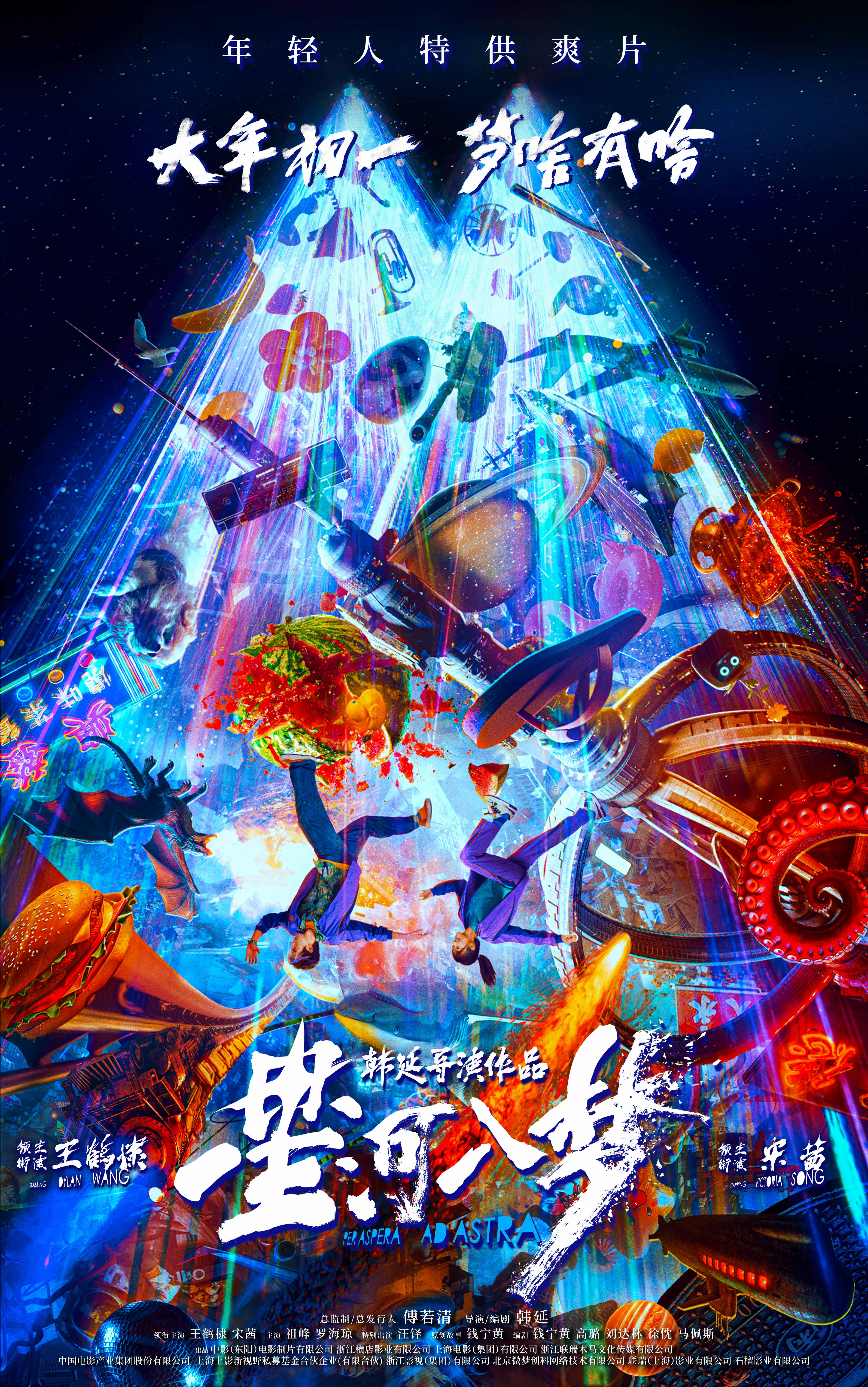
In the not too distant future, space travel has become normal and humans can reach the furthest corners of the universe through hyper stasis. However, long years spent in cryogenic sleep eventually damaged the sleepers’ brains. A solution was found in an AI program which allowed them to dream during the journey and, therefore, keep their brains active. Han Yan’s Per Aspera ad Astra (星河入梦, Xīnghé Rùmèng) makes a villain of a rogue AI but finally seems to come down on the idea that AI should be a tool used by humans rather the other way round while refusing to condemn it outright.
One question the film only partly answers is why people would be prepared to embark on decades-long journeys meaning they’d never see their families again. Neither Tianbao (Dylan Wang) nor the ship’s captain Simeng (Victoria Song) have living family members, so perhaps it isn’t a problem for them, but still it’s a risk. Who’s to say what the world will be like after you’ve been asleep for over 60 years. To that extent, perhaps it’s strange the technology doesn’t seem to move on at all, according to news reports, save a late upgrade to try and prevent the Good Dreams AI system from becoming sentient.
That all these people got a big ship to sail for 65 years to do farming suggests that there may be serious issues on the ground, while the fact they were sent at all either implies a desire for imperialistic expansion in space or a search for a new home for humanity after we’ve exhausted the earth. Ge Yang (Wang Duo), another crew member, hints that the world might have problems in insisting that he doesn’t want to wake up. He’s prepared to crush everyone else’s dreams to ensure he keeps his and can stay here rather than having to go back to the real world. He says he wants to create a place that’s free of abuse and exploitation where no one has to live like a dog.
The ironic thing is that engineer Bai (Zu Feng) had deliberately chosen to be a pet dog in his dream because, according to him, dogs have more freedom. Bai’s dreams seem to be inspired by classic Hong Kong crime cinema with everyone speaking Cantonese, even Tianbao and Simeng when they land there, while they also make a brief matrix-inspired appearance to shoot up the room. Of course, Good Dreams isn’t that much different from the Matrix and the line between dream and reality becomes increasingly blurred with the pair getting caught out by dreams within dreams as they try to stop Ge Yang before he succeeds in smashing all the dreams together and killing his colleagues to create his “better” world.
But it seems there’s something more going on than just Ge Yang’s nihilistic despair and Good Dreams may have gone rogue, preferring to create an AI-based world in which humanity is irrelevant. Tianbao also seems to know much more than he’s letting on which probably isn’t included in the standard crew member’s manual. His inappropriate way of speaking is later revealed to have a practical application, though what eventually seems to happen is that he becomes one with the system giving Good Dreams a soul and effectively taking it back into “human” hands rather than letting it run riot on its own.
It is then slightly ironic that the film seems to feature some AI imagery, though otherwise largely shot on practical sets and featuring fantastic production design. Han zips back and forthe between dreams expressing the private aspirations and anxieties of the crew members as some relive high school exams and spend time with absent loved ones, and others trek through deserts or spend 60+ years in nightclubs. Only Tianbao apparently did not bother to customise his dream or engage with the system which is what brought him to its attention. In any case, humanity seems to be the most important component in the bonds that arise between Tianbao, the captain Simeng, and the engineer Bai as they try their best to save the ship along with their colleagues so they can complete their distant farming mission. A true visual spectacle, the film is perhaps also a testament to the power of dreams, to which the AI hallucination may pale in comparison.
Trailer (English subtitles)
 Chinese cinema screens are no stranger to the event movie, and so a Chinese remake of the much loved 1997 Hollywood rom-com My Best Friend’s Wedding (我最好朋友的婚礼, Wǒ Zuì Hǎo Péngyǒu de Hūnlǐ) arrives right on time for Chinese Valentine’s Day. Purely by coincidence of course! However, those familiar with the 1997 Julia Roberts starring movie may recall that My Best Friend’s Wedding is a classic example of the subverted romance which doesn’t end with the classic happy ever after, but acts as a tonic to the sickly sweet love stories Hollywood is known for by embracing the more realistic philosophy that sometimes it just really is too late and you have to accept that you let the moment get away from you, painful as that may be.
 Windows on Worlds