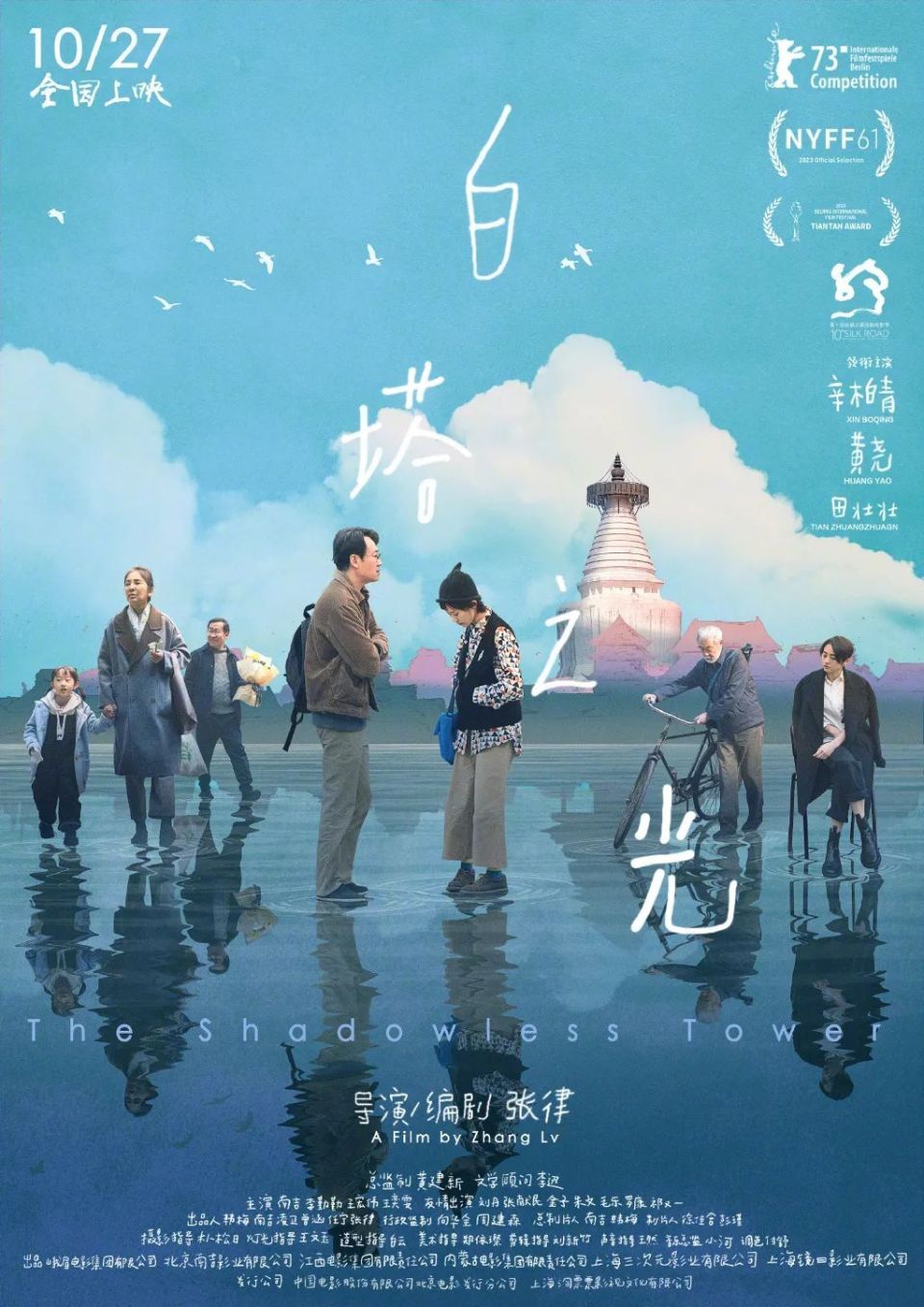
The Shadowless Tower (白塔之光, Zhang Lu, 2023)

A tale of middle-aged loneliness and regret, Zhang Lu’s Shadowless Tower (白塔之光, Bái Tǎ zhī Guāng) takes its name from a white pagoda in the centre of Beijing that is said to cast no shadow. Or at least, as the hero later suggests, its shadow may be far away in its old home town of Tibet. Most Zhang’s protagonists are somewhat displaced most particularly spiritually and existentially, cut adrift by corrupted paternity while uncertain how to progress towards the future. 

For Gu (Xin Baiqing), a former poet now a melancholy restaurant critic and divorcee with a small daughter, the problem is he’s beginning to feel more and more like the father he hasn’t seen since he was five when his mother kicked him out of the house after he was accused of groping a woman on a bus. In a meta-textual touch, Gu’s kite-flying father Yunlai is played by film director Tian Zhuangzhuang who once made a film called The Blue Kite that is also about failed fatherhood and was banned by the authorities on its release. In any case, Gu is only a part-time father to his little girl, Smiley (Wang Yiwen), who is living with his sister and her husband who has been secretly in touch with Yunlai and aware that he rides hundreds of miles by bicycle twice a year visit Beijing on the kids’ birthdays though he cannot meet them.

In many ways, it might seem to be the father, or at least the image of one, that is the shadowless tower that hangs over Gu’s life. He fantasies about interrogating him over the bus incident, wondering if what his mother did was right or if they unfairly rejected a good man because of a misunderstanding. His mother’s anger was apparently partly because Yunlai would not compromise and confess to the crime to get a lighter sentence, instead being sent to a labour camp which left her financially responsible for the children on her own. Gu’s sister Wenhai (Li Qinqin) reflects that if he had not been such a good father to begin with she could have forgiven him, but because he was his disgrace caused her to lose faith in the world. 

Gu seems not to have much faith in the world either, remarking that he separated from his wife owing to an excess of politeness, the same politeness that keeps him aloof from his surroundings and prevents him from making meaningful connections. Yet for all that, he embodies a kind of fatherhood, sitting down on the bed of his lodger and gently placing a hand on his back on hearing his crying through the wall. The young man later embraces him as a son to a father, while Gu finds himself dancing a melancholy waltz with Yunlai who is also an image of his future self. 

But even as a lifelong Beijinger, Gu remains rootless. Meeting up with old friends, all of whom might have been young in the late ‘80s, they drink and sing the song composed for the 2008 Olympics as if they were looking for a father in the city. Gu also reads from Bei Dao’s My Beijing which similarly rests on a sense of exile even while present. The only woman in the group laments that she never married and meditates on the ghost of lost love, while the only one of them who fled abroad eventually takes his own life in a foreign land.

Jolting him out of his inertia, Gu encounters free spirited photographer Wenhai (Huang Ya) who shares his sister’s name though she is also similarly displaced and struggling with a more literal orphanhood that leaves her caught between the North East and the Cantonese-speaking south where she was adopted. A gentle love story arises between them, Wenhai cutting through the wall of Gu’s politeness with refreshing frankness but also with troubles of her own and a worrying tendency to refer to him as her father which nevertheless has a kind of circularity to it. 

Crouching down by the pagoda, they can’t see their shadows either and wonder where they are. Then again, perhaps it’s not so much that tower casts no shadow, but the shadow it casts is so vast that covers everything below just as Gu’s searching for his father overshadows his life even as he is also searching for himself. Intensely moving, Zhang’s poetic drama waxes on middle-aged rootlessness but also the interconnectedness of all things, from kites to earthworms and the great dance of life in all its inescapable loneliness. 


The Shadowless Tower screened as part of this year’s London East Asia Film Festival.

Original trailer (Simplified Chinese / English subtitles)

Art College 1994 (艺术学院, Liu Jian, 2023)

In the opening title sequence of Liu Jian’s animated dramedy Art College 1994 (艺术学院, yìshùxuéyuàn), a beetle tries to climb a decaying wall but repeatedly fails until it falls on its back and flails wildly trying to right itself. It might in a way stand in for Liu’s protagonists, each of whom are floundering in various ways amid the contradictions of the rapid social changes of mid-90s China. A potent sense of place lends weight to what is obviously an autobiographically inspired tale of youth’s end coloured by rueful nostalgia. 

The rebellious Xiaojun clashes with his tutors who think he’s overly influenced by Western art movements and lacks the maturity to understand that there is also truth in traditionalism, while his best friend Rabbit begins to worry about more practical matters and their future in a changing society. The boys eventually develop a friendship with music students Lili and Hong who find themselves similarly at odds. Brash and brimming with false confidence, Hong dreams of becoming a famous opera singer and resents the patriarchal social mores of a still conservative China. “Sooner or later we all have to marry someone.” Lili sighs as if feeling the walls closing in on her, only for Hong to ask why no one ever realises they’re “someone” too. 

They have grand conversations about the nature of art, beauty, tradition and modernity, conservatism and social change, belying their naivety but still filled with a sense of freedom and curiosity that is only beginning to be coloured by a concurrent anxiety. “I thought I knew everything. The truth is I know nothing.” Hong finally concedes after a failed romance, arguing with Lili with whom she may always have been on a different page. Shy and bespectacled, Lili is a realist amid a group of dreamers. She nurses a nascent crush on Xiaojun but is courted by a condescending bore who comes with her mother’s approval. Perhaps she’s merely afraid of the risks involved when real feeling is in play, but for all her talk of “freedom” makes her choices intellectually and leans towards the pragmatic. Xiaojun is a penniless painter, but her suitor is a wealthy man who can take her to Paris to study. Amid the contradictions of mid-90s China, who could really blame her for making a “sensible” choice even it means the sacrifice of her emotional fulfilment? 

Xiaojun lets his chance slip away from him, failing to say anything meaningful before revealing he’s going away on a study trip for an extended period of time. But like Lili he meditates on art and the soul while romanticising a poverty he may never really have experienced. The boys hang out with eccentric drifter Youcai who repeatedly failed the entrance exams but hangs around on campus anyway soaking up the atmosphere while prone to sudden attacks of performance art. After a stint living in the artist community in Beijing he returns in the company of crooks and conmen, working as a sign painter to get by while lamenting his own lack of talent. He says he makes money in order to make art, while Xiaojun disapproves of his moral duplicity insisting that it’s right for an artist to be starving because suffering fosters art.

Youcai asks him how you can make art if you can’t eat while insisting that art is one big business, just like everything else it too is suspect because it is dependent on money. Xiaojun disagrees, claiming that that art is the only escape from reality that can bring people spiritual satisfaction. Ironically enough, he says this while sitting directly underneath a billboard advertising Michael Jackson’s Bad, while we’ve already seen him ride his bicycle past a conspicuous piece of graffiti featuring the characters for CocaCola in Chinese. When Lili’s suitor says he’ll buy them dinner, Liu ironically cuts to the two girls sitting outside a McDonald’s eating ice cream. This does seem to be a very dubious sense of “modernity”, mediated through Western consumerism that in contrast to the values Xiaojun places in “art” is spiritually empty. 

Even so his disapproving teacher reminds him that great art is born of sincerity, hinting at a degree of affectation in his insistence that art should change with the times when not all truths need to be revolutionary. In any case, each of the students learns a few hard lessons about life and disappointment as they too succumb to unavoidable realities and accustom themselves to an uncertain society. Liu ends the film with a series of title cards that feel very much like those often added to placate the censors, usually detailing that wrongdoers were caught and punished for their crimes but this time conjuring more wholesome futures for the students that undercut the sense of the frosty melancholy in the closing scenes which leave Xiaojun all alone as he takes up brush and ink. Yet in Liu’s achingly potent sense of place, there is both a poignant nostalgia and an inescapable sense of loss and regret for the missed opportunities of youth. 


Art College 1994 screened as part of this year’s Red Lotus Asian Film Festival.

Trailer (English subtitles)

Changfeng Town (长风镇, Wang Jing, 2019)

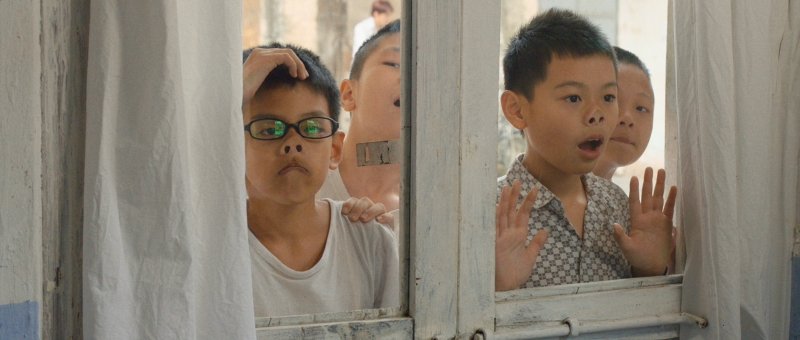
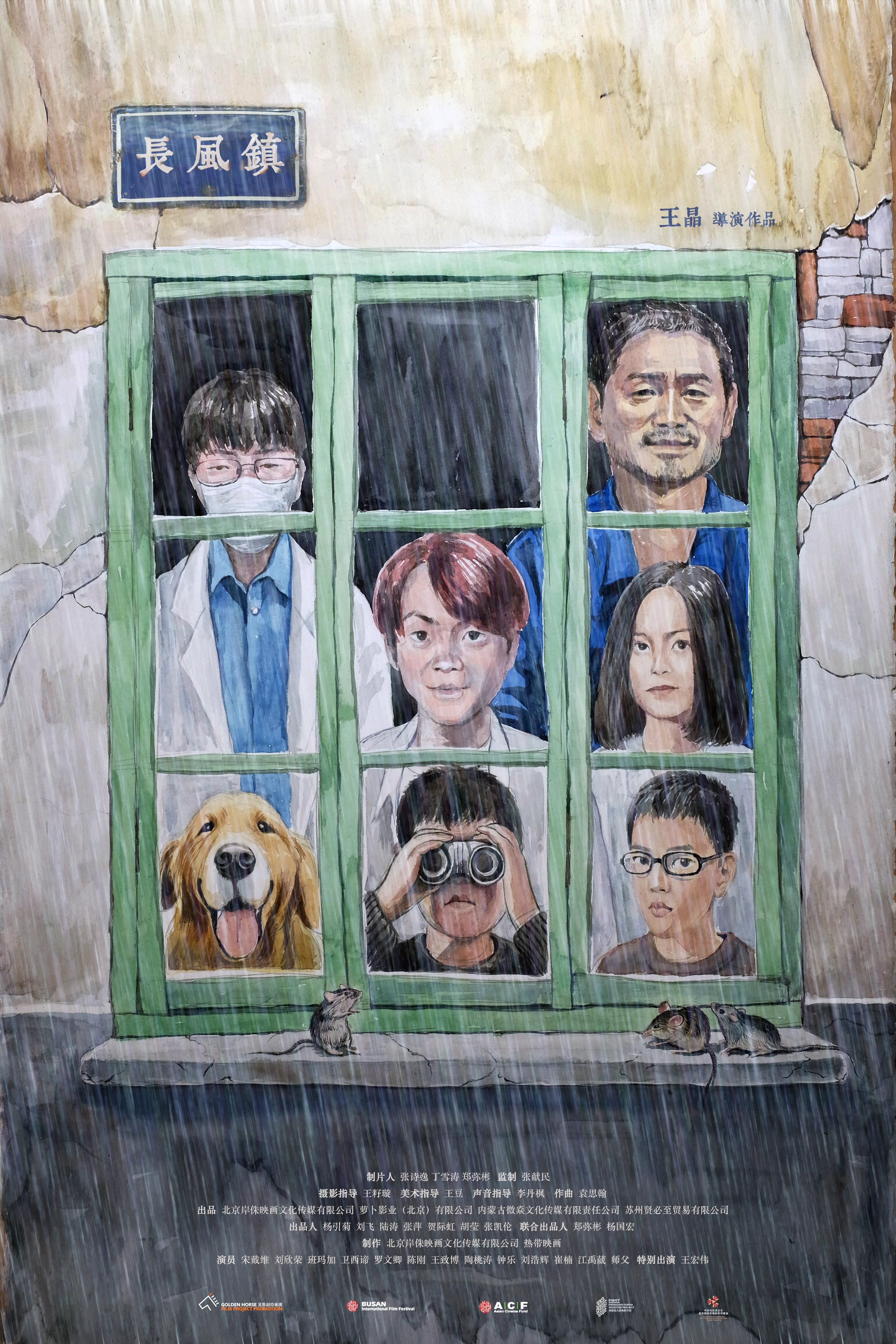
“One strange thing follows another in this town” according to a world weary saloon owner attempting to process the mysterious theft of a handful of billiard balls. Like a magical realist fable, the village at the centre of Wang Jing’s whimsical nostalgia fest Changfeng Town (长风镇, Chángfēng Zhèn) exists slightly out of time, located at the intersection of memory and longing filled both with a sense of existential ennui and the comforting aimlessness of childhood. Yet even here where time passes and doesn’t the ironies of small-town life pervade as the older hero reflects on the wilful secrets and everyday mysteries which exist even in those places where everyone knows everyone and gossip is the lifeblood of the community. 

Narrated by the young “Scabby” (Song Daiwei), so nicknamed because of a prominent scar on the back of his head, Changfeng Town weaves together several stories set across one theoretical summer as seen through the eyes of a group of small boys continually on their periphery. Set comfortably in a “nostalgic past”, the atmosphere of the town shifts from a restrained post-war, early ‘60s tainted innocence towards something perhaps closer to its more logical position somewhere in the early to mid 1980s which of course places it after the Cultural Revolution but before Tiananmen Square in a China filled with a sense of hope and possibility for a brighter future mirroring perhaps Scabby’s own sense of growing adolescent energy. 

Nevertheless, Changfeng Town is a strange place where strange things do indeed happen though less one after another than all at once. Missing billiard balls, a plague of mice, a purifying flood, arrivals and disappearances each changing the unchanging town in small but marked ways, it’s nevertheless a sense of loneliness that defines each of the intersecting tales most of which have to do with misplaced or unfulfilled love. Redhead (Pema Jyad), the teenage ringleader of the local kids nicknamed for his red rinse hairdo, pines for the most beautiful girl in the village, Cai-xia (Luo Wenqing), half-sister of Scabby’s friend Four Eyes (Liu Xinrong) and box office girl at the local picture house, yet she has taken a liking to lovelorn poet Guang (Tao Taotao) who has just had his heart broken by the local school teacher. Redhead’s widowed mother (Cui Nan), meanwhile, has been carrying on an affair with the married local dentist (Wei Xidi), apparently an open secret in the village, while beloved truck driver Xi-shan (Chen Gang) continues to carry a torch for her knowing his love is impossible because he was involved in the accident which killed her husband. 

Known only as The Mute (San Shugong), an old man travels to the station every day with his parrot presumably hoping to meet someone who never arrives. One of the boys says his mother told him that he does so because he mistakenly thinks he can travel to other places by watching the trains go by, but no one really knows because no one really bothers to try to communicate with him. Some attempt to leave the village, occasionally returning like the much changed Redhead now dressed like someone who’s been to the city bringing back with him gifts of modernity such as a remote control Transformer that provokes a falling out between Four Eyes and Scabby which adds to the narrator’s growing sense of disillusionment, but to return is in many ways to fail, to be consumed by nostalgia and unable to move forward. Changfeng Town is also a charming trap. Scabby will soon outgrow it as spring travels towards autumn, the bald spot on the back of his head which gives him his name fast disappearing rendering him Scabby no more. Yet it will always in a sense be there for him, its residents permanently happy even as people come and go. 

Mirroring the ending of The 400 Blows, one of several films playing in the local cinema which also include Spring in a Small Town, A Touch of Zen, Steamboat Bill, Jr, and Nights of Cabiria among others, Wang closes with a freeze frame leaving Scabby “running towards the unknown” abandoning nostalgia in search of the elusive happiness of those who remain behind. Shot with a wistful ethereality, Changfeng Town marries an earthy, small-town rurality with an ironic absurdism as the various stories of its melancholy protagonists weave in and out of each other while remaining strangely unknown in the ever constant, ever changing village of nostalgia.


Changfeng Town streams in the US March 24 – 28 as part of the 12th season of Asian Pop-Up Cinema.

Original trailer (English subtitles)

Crosscurrent (長江圖, Yang Chao, 2016)

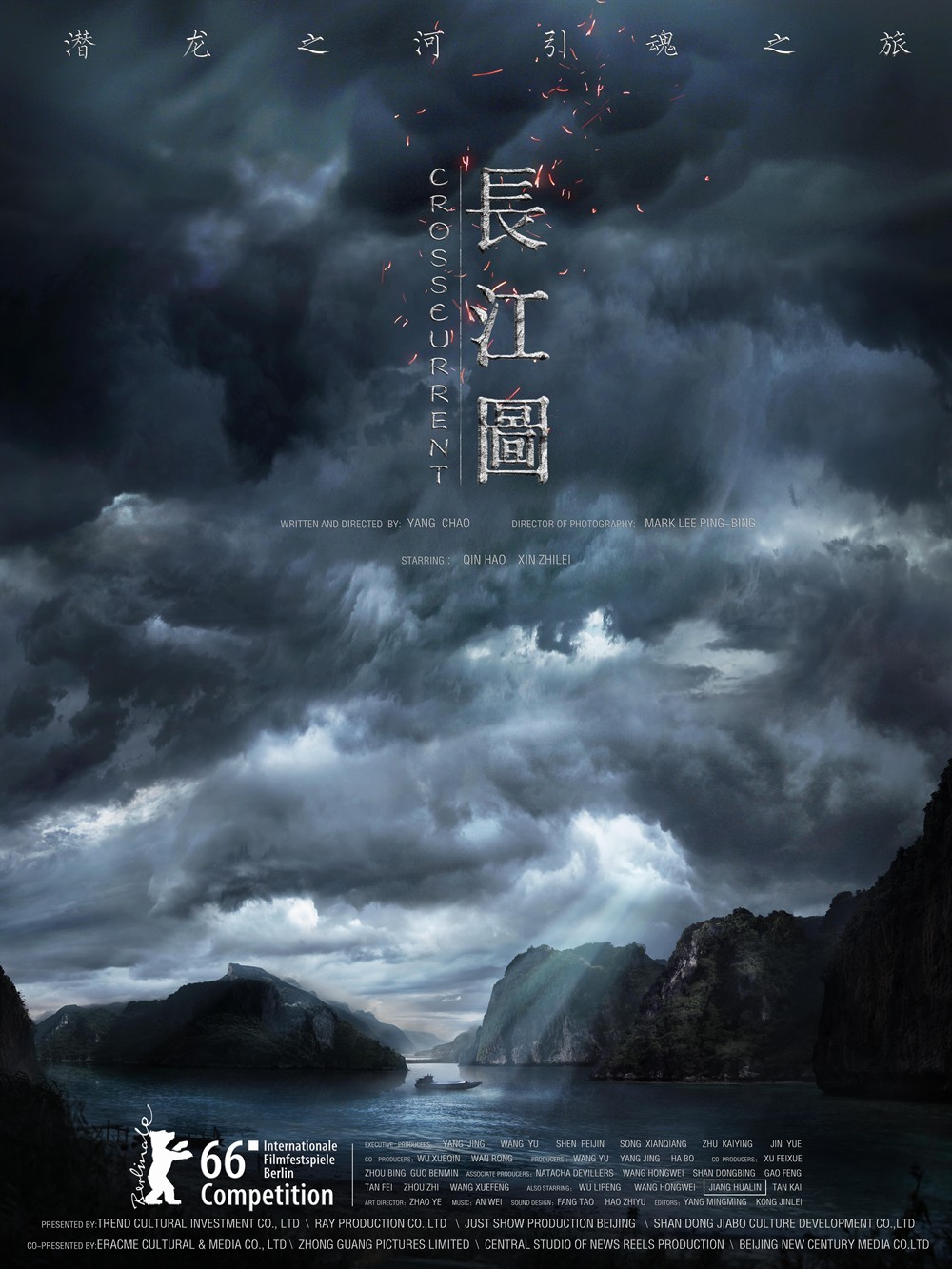
crosscurrent poster“Time, like a river, flows both day and night” as the narrator of Yang Chao’s poetical return to source Crosscurrent (長江圖,  Chang Jiang Tu) tells us early on. Like the crosscurrent of the title, ship’s captain Chun sails forth yet also in retrograde as he chases a love he can never truly embrace. Truth be told, the philosophical poetry of a lonely sailor condemned to sail a predetermined course at the mercy of the winds and tides is often obscure and confused, like the half mad ramblings of one who’s spent too much time all alone at sea. Yet his melancholy passage is more metaphor than reality, or several interconnected metaphors as water yearns for shore but is pulled towards the ocean, a man yearns to free himself of his father’s spirit, and mankind yearns for the land yet disrupts and destroys it in its quest for mastery. Often frustrating in its obscurity, Crosscurrent’s breathtaking visuals are the key to unlocking its meditative sadness as they paint the beautiful landscape in its own conflicting colours.

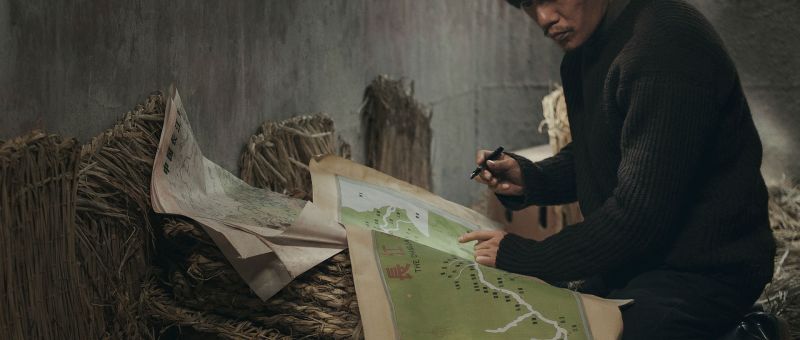
Gao Chun (Qin Hao), a melancholy young man, is mourning the death of his father in all the ways the river expects. Taking over his father’s cargo boat, Chun dutifully catches and keeps the blackfish that is the keeper of his father’s spirit, only once it starves to death will his spirit be free. Though the boat is a large one, Chun has only two other members of crew – his uncle, Xiang, and longstanding deckhand Wusheng. They have little business but Wusheng has managed to find them a new client who needs something or other transported on the hush hush. Once the mysterious cargo has been loaded, Chun manages to negotiate some extra hush money seeing as there’s obviously something not quite right here.

Part way through their journey up the Yangtze River, Chun finds a mysterious ledger hidden away on the boat which contains a number of poems each annotated with the name of a particular harbour. Linked to the book, Chun also encounters a mysterious woman, An Lu, and eventually strikes up a relationship with her during one of his infrequent returns to shore. Chun and An Lu are travelling in the same direction yet also through and past each other. Meeting and parting the pair re-encounter each other on land or make do with fleeting glances from sea to shore but An Lu (Xin Zhilei) is no ordinary woman, each time the same yet strikingly different as she too makes her way towards the origin of all things.

The name of the mysterious woman is “An Lu” – “safe land”. Chun, a sailor adrift on the wide river is always looking for safe harbour and generally finds it waiting for him, even occasionally put out at his lack of arrival. What or who she is remains obscure. An Lu is at once a harbour girl, prostitute, nun, hermit, and lover of all mankind who belongs to no man but refuses no one. Chun yearns for her, slowing the passage of his boat to look for her among the thick foliage of cliffside pathways. Yet there are reasons why they can only be together for short spaces of time. As the sea and the shore, theirs is a relationship of permanent though frustrated, ebbing connection.

As he follows An Lu, Chun reads his poetry like scripture and travels the river against the tide heading for its origin. The life giving river becomes a kind of metaphor as Chun witnesses how its gifts have been misused and subverted by man who wants to master it rather live with its obvious beauty. Passing through ruined villages, Chun eventually makes a gruelling two day passage through the Three Gorges Dam. This giant, manmade structure cleaves the land in two, leaving our two lovers forever separated as the past from the future. The river which flows both day and night, no longer flows at all.

Equal parts spiritual and geographical odyssey, Crosscurrent is a tale of man and landscape, of nationhood, history, and memory all condensed into a wide flowing river. Lyrical yet obscure, its truth is opaque and difficult to discern yet no less deeply felt. Shooting on 35mm and using mostly natural light in harsh conditions, Mark Lee Ping-bing’s cinematography is nothing short of extraordinary, capturing all of this infinite sadness with an eternal aesthetic beauty. China swims against the tide as Chun and An Lu draw closer only by pulling further apart but all there may be at the end of the journey is the anxious comfort of eternal waiting.


Crosscurrent was screened as part of the 7th Chinese Visual Festival.

Original trailer (English subtitles)