The Best is Yet to Come (不止不休, Wang Jing, 2020)

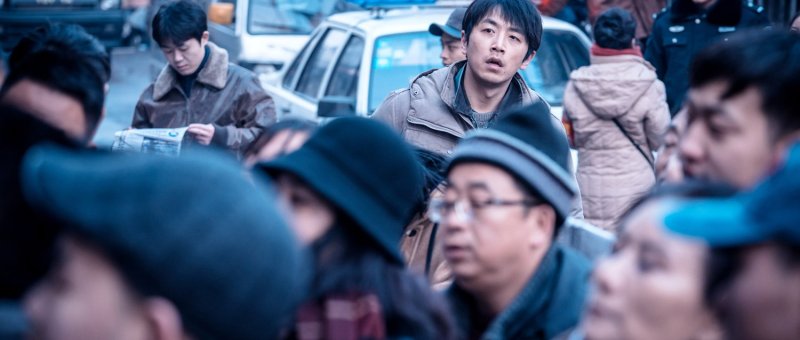
A man denied a fair chance in life because of his impoverished background comes to identify with the plight of those carrying the hepatitis B virus in Wang Jing’s true life drama, The Best is Yet to Come (不止不休, bùzhǐ bùxiū). Inspired by the story of Han Fudong, a journalist who exposed the societal prejudice against those with a previous diagnosis of the disease, the film’s Chinese title “no pause no rest” makes clear how tirelessly he strived to reveal the truth even at the potential cost of destroying his dream of becoming a professional reporter. 

Han Dong (Bai-Ke) came to Beijing in 2003 in the hope of landing a job at a paper, but just like everywhere else journalism is a largely closed profession almost impossible to break into without elite qualifications and connections. At a jobs fair, Han Dong tries to pass off his reluctance to hand over a CV as a recruitment tactic to get people to remember him, circulating copies of his portfolio instead though recruiters quickly lose interest on realising they are all self-published articles posted online. Once he admits that he only finished middle school, it’s game over no matter how talented a writer and investigator he may turn out to be. 

It’s this sense of unfairness, of being turned away on the grounds of a few words on a piece of paper that eventually leads him to sympathise with those carrying the hepatitis B virus after investigating a company that claims it buys blood, discovering that they provide a service helping people to forge health certificates for job and school applications. Vox pop-style interviews recreated in the manner of the time feature several people describing the various ways their lives have been ruined simply because they happen to carry the virus, many of them infected since birth or early childhood. One man has been trying to apply for jobs and graduate schools for several years but finds the offers are always withdrawn after the health screening, while another woman recounts that her fiancé cancelled their engagement because his family could not accept someone with hepatitis B. 

This is also in the immediate aftermath of the SARS epidemic which perhaps caused a preoccupation with infectious disease which may be largely unfounded in the relative difficulty of passing on the hepatitis B virus. After landing a golden opportunity of an unpaid internship compensated only with 50% article fees, Han Dong finds himself conflicted. He knows the forgery operation is illegal and a threat to public health, but also cannot blame the people who make use of it when their lives have been rendered so impossible that is difficult for them simply to live. An early assignment had seen him cover a mine collapse and witness a destraught mother bounced into accepting compensation for her son’s death while shouted at by the foreman (played by film director Jia Zhangke who also produced) for having the temerity to ask to see his body. Han Dong got a front-page byline as co-author with his mentor figure, Huang (Zhang Songwen), but wonders what the point is if nothing ever changes and the truth is not enough on its own. 

For obvious reasons, films about crusading journalists are rare in Chinese cinema given that whistleblowing is not regarded as a virtue and those who try to expose wrongdoing are often shouted down or hounded into silence as seen with the doctor who drew attention to the poor medical practices in rural blood clinics that caused an HIV epidemic in farming communities, and most recently with the physician who tried to raise awareness of the new respiratory illness that later developed into a global pandemic. Journalists who report problematic stories can also find themselves facing prosecution and imprisonment. Han Fudong’s writings did however lead to an eventual change in the law and the destigmatisation of hepatitis B while he himself overcame the educational elitism of the contemporary society to achieve his dreams of becoming a professional reporter. As such, Wang’s dramatisation of his life may be in a way subversive if subtly so in hinting at a greater role for a currently not so free press in the modern China while also embracing a central philosophy that one need not simply accept an unacceptable status quo but actively reject and challenge it and that by doing so something might actually change. 


The Best is Yet to Come screens in Chicago Sept. 30 as part of the 17th season of Asian Pop-Up Cinema 

International trailer (English subtitles)
Winter After Winter (冬去冬又来, Xing Jian, 2019)

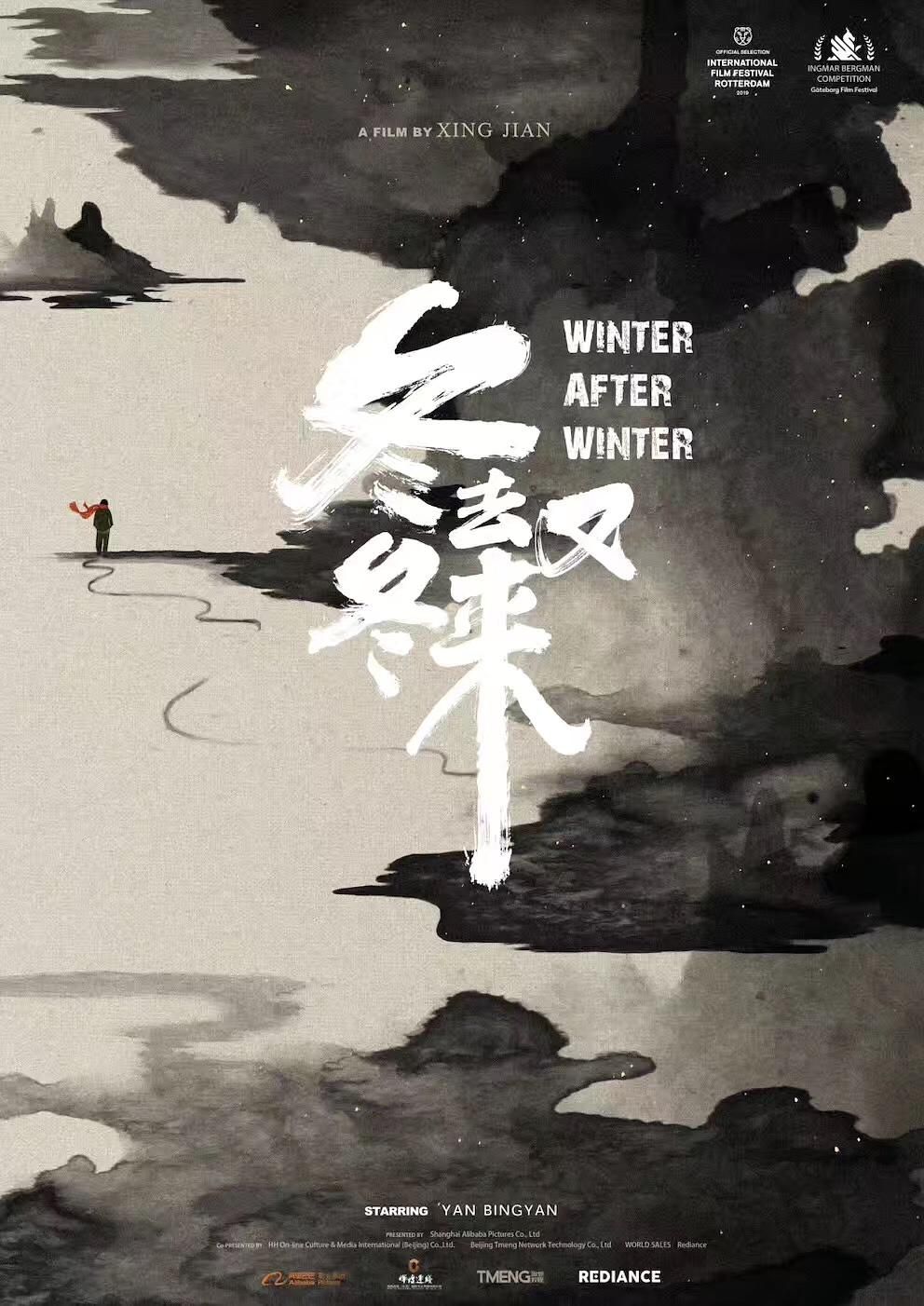
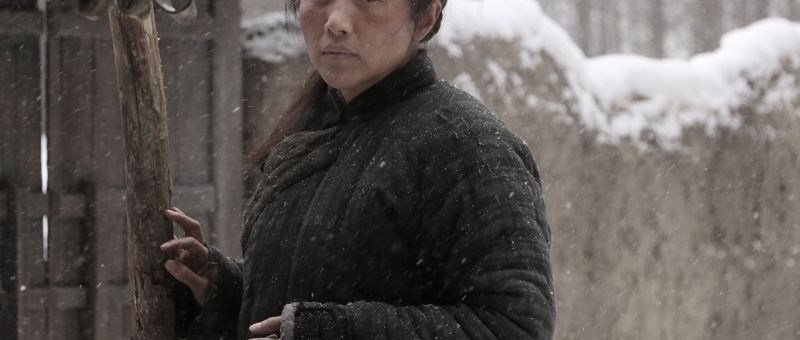
Winter After Winter posterEven in the midst of war, life goes on. How to ensure it keeps doing so becomes a major preoccupation for one peasant farmer, confused as to how he’s supposed to fulfil his obligation to his ancestors if the Japanese insist on taking his sons. Xing Jian’s Winter After Winter (冬去冬又来, Dōng Qù Dōng Yòu Lái) takes a more stoical view of life under the occupation than you’d usually find in Mainland wartime drama, but then its themes are perhaps a little grander as it adopts the perspective of its most oppressed protagonist – the silent Kun (Yan Bingyan) whose bodily destiny is dictated by the men around her while her mild resistance is offered only through small acts of humanistic kindness.

Set in 1944 in the puppet state of Manchuria, Winter After Winter situates itself largely within a single farmhouse where ageing peasant Lao Si (Gao Qiang) is trying to fob off the local Japanese commander (Hibino Akira) who has come for his three sons. Though Lao Si of course does not want his children to go, his concern is more that his oldest son (Dong Lianhai) is impotent and has been unable to impregnate his daughter-in-law Kun so if all the boys are taken now the family line will die. To stop this happening, he tries to force his other two sons to have sex with Kun while he keeps Nakamura busy in the kitchen. His middle son (Yuan Liguo) flees in disgust, running off to join the guerrillas fighting the Japanese while the youngest, shy and inarticulate, tries his best but doesn’t really know what he’s supposed to be doing and is eventually dragged away mid-act, bound for a Japanese forced labour camp.

In some ways, the atmosphere in Lao Si’s village is not as oppressive as one might expect. Now the men have gone, the other villagers are largely left alone with a minimal military presence in the town while they each figure out schemes for keeping the Japanese at bay. The main problem is that once winter sets in there is very little food and the Japanese are intent on keeping most of it for themselves while using their magnanimity as a bargaining chip. Regular searches are made of homes suspected of hoarding rice, while the residents are made to vomit to prove they’ve eaten nothing they weren’t supposed to. Nevertheless, the Japanese commander Nakamura is otherwise shown to be a fair and compassionate man if only largely when dealing with his countrymen – doting over his bedridden wife and little daughter, or making sure to ask a female assistant if she’s warm enough when they sit down to watch a film. Dealing with the Chinese, however, he remains rigid and unforgiving if not actually cruel or abusive. He presses Lao Si for the service owed to him by his absent sons, only reluctantly relenting when told that Kun is unable to work because she has become pregnant but expecting Lao Si to come up with a solution on his own.

Kun’s eventual pregnancy is a problem in itself. Unbeknownst to anyone, the youngest brother manages to escape and begins hiding in the family’s cellar where Kun finds him, keeping the secret and supplying him with food. The pair eventually bond and comfort each other through sex during which Kun conceives a child, but as no one can know of his return, Lao Si arranges to have her marry the “idiot” son (Young Fan) of the local teacher who he assumes is an innocent and will not bother his daughter-in-law with unwanted sexual contact (something that didn’t really bother him when he was keeping it all in the family).

Throughout it all Kun remains stoically silent, never complaining or resisting but simply existing as the right to decide is taken from her by the feckless menfolk who swap and share her with nary a word of kindness. Apparently “adopted” by Lao Si and brought up as a daughter until force married to the oldest son, Kun is made to feel beholden to her father-in-law who behaves as if she owes him her life. Lao Si, meanwhile, blames her for his misfortune – for not being attractive enough to enflame the desire of his oldest son and for sending the middle one running, denying him the heir he so longs for to fulfil his filial duties.

All Kun can do to resist is to rebel against the austerity of her surroundings with kindness. She fulfils her daughterly duties to Lao Si without complaint, tenderly looks after the boys, and finally even offers her own precious food to a Japanese soldier on the run only to pay dearly for it when he brutally betrays her. In the end, all Lao Si’s scheming comes to nothing, defeated by time and circumstance, but it’s Kun who finally makes a positive decision for the future as she perhaps finds him an “heir” even if not the kind he wanted in extending a hand to a crying child signalling an end to conflict and the advent of compassion in the willingness to move forward together without blame or rancour.


Winter After Winter screens on 5th July as part of the 2019 New York Asian Film Festival

Clip (English / simplified Chinese subtitles)