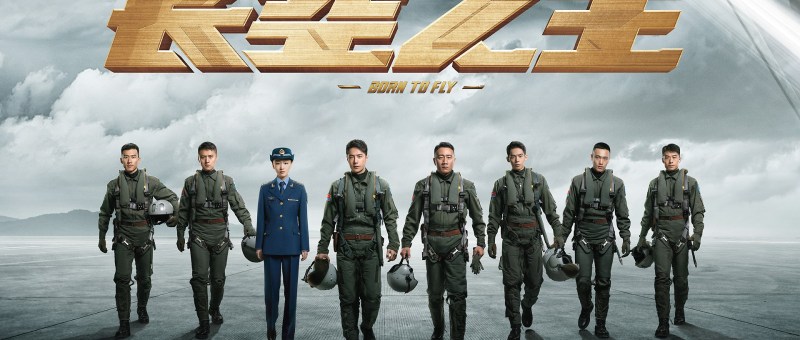
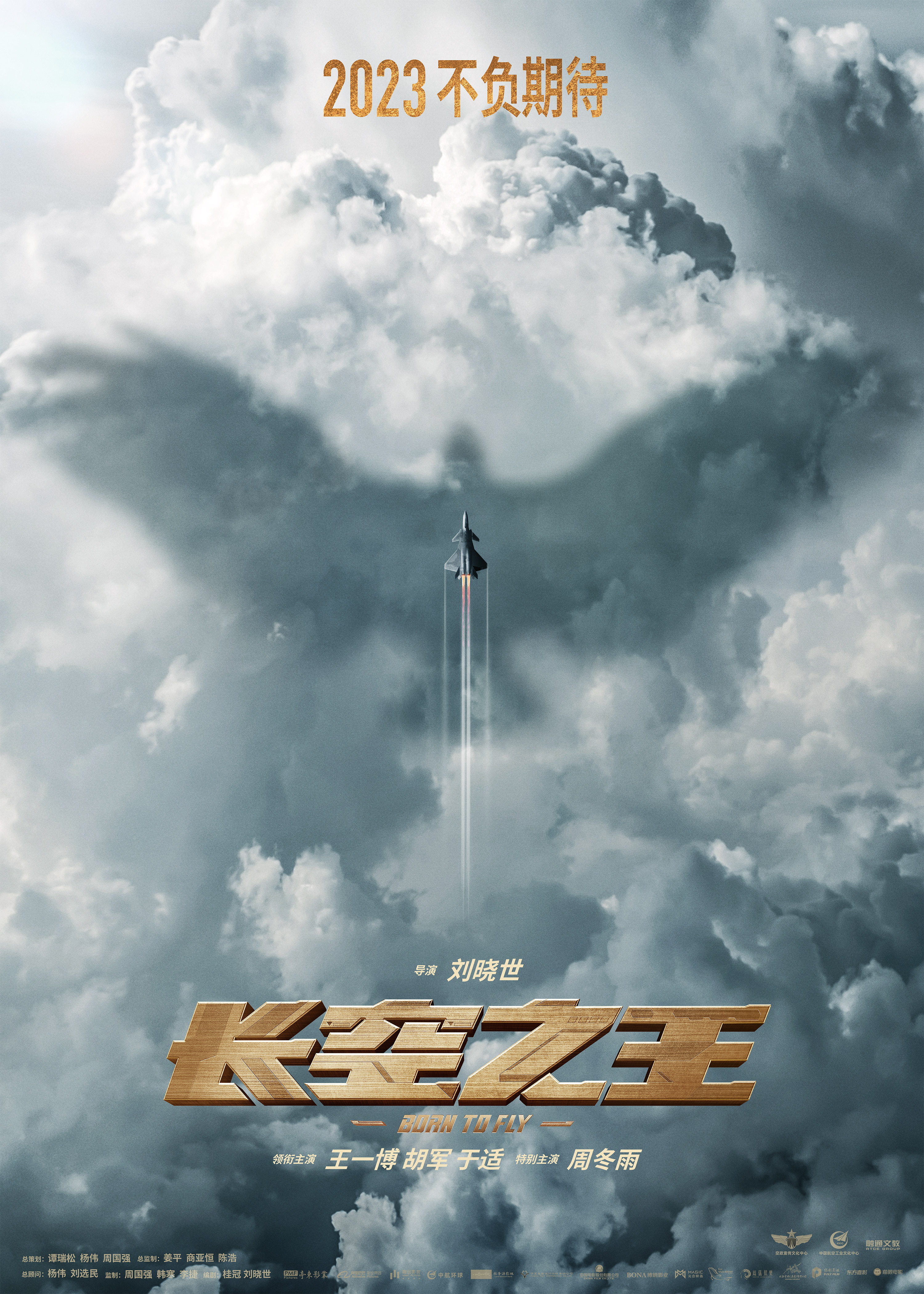
Born to Fly (长空之王, Liu Xiaoshi, 2023)

Elite test pilots set out to reclaim Chinese “dignity and security” through the development of a next generation stealth fighter in Liu Xiaoshi’s action drama, Born to Fly (长空之王, Chángkōng zhī Wáng). Clearly a riposte to Top Gun: Maverick (which was not approved for release in Mainland China), the film was originally scheduled as a National Day release and is another in a long line of “main melody” movies paying tribute to particular areas of military and civil service as evidenced by the use of actual voice recordings from downed pilots at the film’s conclusion and a lengthy pause on an aerial shot of the airmen’s cemetery praising those who gave their lives for the country. 

The main thrust is however that China is ready to defend itself. The film ends with a show of force much like that at the end of Operation Red Sea, though curiously for a propaganda film the implication is very much that China is lagging behind in terms of military technology and as the film begins lacks the necessary capability to hold its own against foreign aggression. The planes that stray into its airspace buzzing an oil rig and causing havoc with a sonic boom are never directly named as American but their pilots speak US-accented English while sticking one finger up and declaring “we can come and go wherever we want”.

To that extent, the central battle is as much between Western individualism and the collective spirit as it is a race for hegemony over the skies. Hot shot pilot Lei Yu (Wang Yibo) originally turns down the opportunity to join the elite test pilot squad because he wants to fight on the frontline and get personal revenge against the enemy planes. He also has a grudge against arch rival Deng Fang (Yu Shi) because he did not salute him after he beat him to a coveted Golden Helmet award and then accused him of cheating. What they have to set aside is, in contrast to the American Top Gun, the notion of “being the best” or engaging in an egoistic individual struggle to be named a winner. Instead, they must learn to work together for the common good so that China may be declared the winner as the planes they’ve risked their lives to perfect are in the best shape to protect frontline pilots and allow them to safeguard the Chinese people. 

Meanwhile, like other recent similarly themed main melody movies, the film is keen to sell the message that China stands alone and has been unfairly shunned by the international community. The leaders of the test pilot programme constantly complain that Western powers have refused to share technology with them or have attempted to limit their ability to innovate through embargoes and blackouts. They insist that China will have to create its own discoveries, but hint at an under-confidence in their ability to do so which is in some ways at odds with the usual propaganda messaging even if it spurs a sense of collective urgency that all hands are needed on deck to solve this particular problem before it’s too late. 

Lei’s unsupportive father even tells him point blank that he does not believe China can develop a stealth fighter and he is risking his life for nothing. Tellingly, Lei’s father had wanted to send him abroad and resents his decision to join the military. In order to serve his country, Lei must break a taboo by defying his father, while it’s later revealed that Deng’s father was a fighter pilot who was killed on the frontlines after winning an award while training in Russia. In another moment of surprising messaging, Deng wonders if his father might have survived if he’d been given a better plane to fly which is why he’s committed to the test pilot programme and the reason he’s eventually able to give up his ego and agree to assist Lei in testing his bright new idea for the stealth fighter rather than chasing glory for himself as the lead pilot. 

All of that aside, Lei is allowed the mild distraction of an extremely subtle romance with an airforce doctor played by Zhou Dongyu in a “special appearance” who decides to give up her transfer back to the south to commit herself to the test pilot programme after being touched by Lei’s grumpy heroism. In any case, the message is very much about pushing the limits as far as they will go while striving together for the common good. Jingoistic it may be but Liu manages to sell the aerial spectacle and sense of danger as his elite pilots risk all in the name of patriotism.


Trailer (Simplified Chinese / English subtitles)
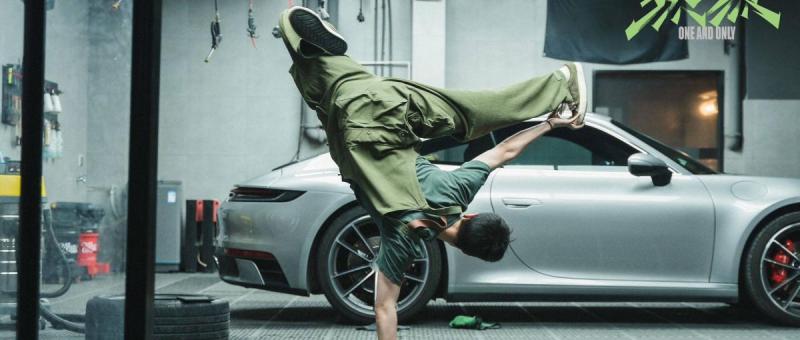
One and Only (热烈, Dong Chengpeng, 2023)

An aspiring street dancer from an impoverished background just can’t seem to catch a break no matter how hard he works in Dong Chengpeng’s inspiring dramedy One and Only (热烈, rèliè). A mild rebuke against a rising fuerdai generation of obnoxious narcissists who don’t think twice about using their money to game the system, the film not only emphasises the virtues of hard work and perseverance but the importance of camaraderie and fellow feeling over an individualistic drive to succeed. 

The conflict is encapsulated in the opening sequence in which hotshot dancer Kevin starts a fight with one of his own team members in the middle of dance competition over a move that didn’t go as planned. The problem is that Kevin is an obnoxious rich kid whose US-based father has been bankrolling the team. He plans to sack most of the other dancers and replace them with foreign ringers, only manager Ding (Huang Bo), who dared to suggest the problem was he doesn’t practice enough with his teammates, isn’t so sure. In an effort to appease him, he hires a ringer of his own in Shou (Wang Yibo), an aspiring dancer who auditioned for the team but didn’t get through, booking him to stand in for Kevin during rehearsals with the caveat that he won’t actually get to perform in any of their concerts or competitions. 

Kevin is not untalented, but his path has been easy wheareas Shou is doing a series of part-time jobs in addition to helping out in his mother’s restaurant while burdened by debts as a result of his late father’s illness. Yet he never gave up on his street dancing dream, working with his uncle doing a series of humiliating gigs at shopping malls and birthday parties never complaining but grateful for the opportunity to dance. The offer from Ding is the answer to all his prayers, but also a cruel joke in that he’s only there to sub in for rich kid Kevin until such time as he feels like showing up again. 

Ding is aware of the choice he faces even as he forms a paternal relationship with Shou whose father was also a breakdancer. To redeem himself and achieve his dreams of national championship glory, Ding thinks he has to choose Kevin and his unlimited resources but is also drawn to Shou’s raw passion and pure-hearted love of dance if also mindful of the “realities” of contemporary China where money and connections are everything and boys like Shou don’t really stand a chance because socialist work ethics are now hopelessly outdated. Ding may be outdated too, even his old friends who got temporarily rich during an entrepreneurial boom have seen their dreams implode in middle age and are currently supplementing their incomes as substitute drivers for partying youngsters. 

Tellingly, after Kevin has them kicked out of the gym he paid for, the team start training in an abandoned factory theatre from the pre-reform days where Shou’s parents used to perform, quite literally resetting their value systems after jettisoning Kevin to focus on team work and unity. Then again in a mild paradox, Ding realises that he shouldn’t lead the team by dominating It but support from within which results in a kind of democracy as he holds a secret ballot to decide whether they should stick with Kevin and a certain, easy victory, or reinstate Shou and take their chances the old-fashioned way. 

Of course, the team choose hard work and perseverance, never giving up even when it seems impossible, leaving the obnoxious Kevin to his self-centred narcissism. Kevin only really wanted backing dancers which is why he couldn’t gel with the team, whereas when challenged one on one Shou does each of his teammates signature moves proving that he’s mastered a series of diverse dance styles along with his own high impact headspring move. Heartfelt and earnest, the film shines a light on a number of issues from middle-aged disappointment and the moral compromises involved in chasing a dream but in the end reinforces the message that there are no shortcuts to success which can never be bought with money but only through sweat and tears along with teamwork and the determination to master one’s craft.


Original trailer (Simplified Chinese / English subtitles)
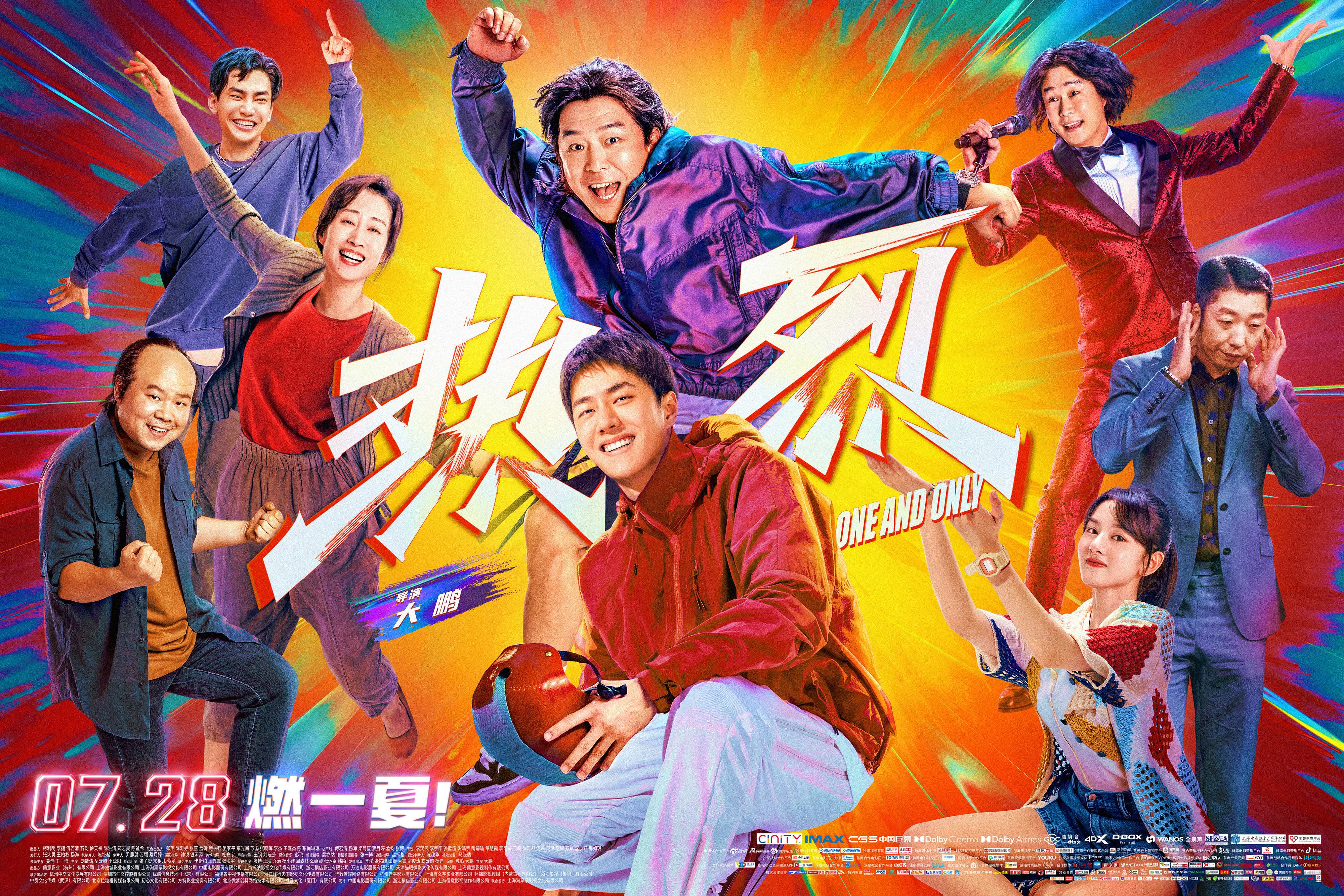
Hidden Blade (无名, Cheng Er, 2023)

In a moment of calm in Chang Er’s Hidden Blade (无名, Wúmíng), a man is served drunken shrimp and watches the poor creatures flail as they’re cooked alive in a bloody soup before placing them in his mouth still kicking, the red liquid dripping from his lips. The heroes are to some extent much the same, plunged into the dangerous waters of the Sino-Japanese war and drowning among its myriad confusions no longer even certain of their own identity let alone that of others. 

It’s at this that the Chinese title, Anonymous, hints for in this world of constant duplicity names are rarely exchanged or on occasion given only posthumously. That is aside from Mr. He (Tony Leung Chiu-wai) who introduces himself promptly after giving a secret knock to enter a hotel room marked with a Japanese character to meet a Mr. Liang who, it seems, intends to betray the Communist cause and instead serve the Wang Jingwei Regime which has sided with Japan in the puppet state of Manchuria, though we can in no way be sure if either of these men are telling the full truth or are who they claim to be. 

Chang replays this scene later with additional content as he will with several scenes throughout the film adding new context as he goes. Like Lou Ye’s Purple Buttlerfly, the fractured narrative hints at the chaos of an age in which nothing is quite as it seems and the truth is always obscured if at times irrelevant. Spanning the second Sino-Japanese war and its immediate aftermath, the film suggests that the motivations underpinning Japanese imperialism are anti-Communist and that Manchuria is a key asset for them as a bulwark against Soviet incursion. Collaborating with the Japanese, the Wang Jingwei Regime is the third point in a triangle lodged between Chiang Kai-shek’s Nationalists and the Communist Party with the implication that it essentially needs to drop out lowering the barriers for a confrontation between the two and the eventual victory of the Communists which occurs three years after the end of the film in 1949.

Technically the third part in the “China Victory Trilogy” which was conceived as “a gift to the Communist Party for its centenary” the film may make some bold claims as to the role of Communist spies in the 1930s but nevertheless neatly aligns the covert resistance movement with the Party’s eventual triumph if subversively ending on a note of loss and melancholy which leaves the survivors in lonely exile, ideologically victorious but emotionally ruined. Both Liang and the ambivalent Japanese soldier Watanabe (Hiroyuki Mori) talk of wanting a quiet life retiring to ancestral land as ordinary farmers freed from the murky world of politics but are each frustrated while He and Watanabe’s young goon Ye (Wang Yibo) wrestle with the romantic costs of their political choices. Yet the most dignified performance is reserved for an impossibly beautiful KMT assassin caught before she was able to take out a government minister while posing as his mistress “He used to write poems, now he writes execution orders,” Watanabe laments of the Minister (Da Peng) who later it seems pays a heavy price for his ruthless opportunism. At least his would-be-assassin remained true to her ideals and accepted her fate with dignity. Indeed, she may be the only one who is certain of herself and her identity even in her impeccable elegance which is a something of a mixed message given her political affiliation. 

In the end, it may be the self-denial that slowly erodes their souls while forced to conceal their true intentions even to those close to them. Then again, it’s impossible to know what’s for real and what’s for show. An intensely emotional exchange could in fact be intended for someone else’s ears or merely a cruel tragedy of misrepresentation. The real hidden blade is the self-repression living in an atmosphere of oppressive suspicion requires rather than the communist sleeper agents who in this version of the tale beat the Japanese into retreat. Featuring top notch production design and costuming, Chang’s oscillating venture through an abyss of cruelty and betrayal finds its heroes victorious but no so much anonymous as robbed of both name and country, lonely exiles of a war not quite won. 


Hidden Blade is available digitally in the US courtesy of Well Go USA.

US trailer (dialogue free)