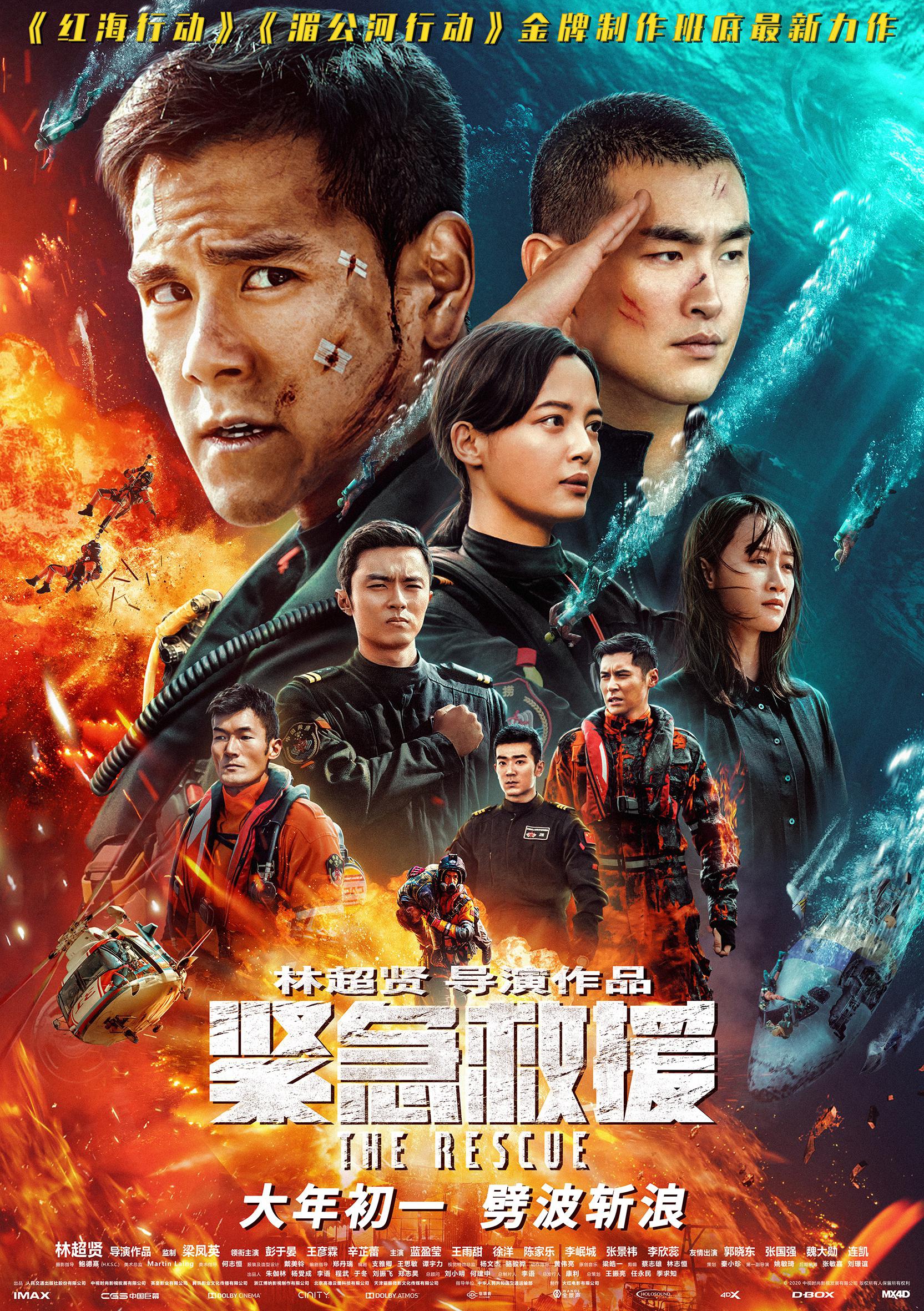
Forever Young (栀子花开, He Jiong, 2015)

“As long as you don’t give up, it’s never too late to follow your dream” according to a sympathetic teacher perhaps incongruously advising a conflicted student who might in one sense be facing an ending but also has his whole life in front of him. Apparently inspired by a song from 2004, Gardenia in Blossom, Forever Young (栀子花开, Zhīzihuā Kāi) ironically concerns itself with the lives of a collection of youngsters facing their first roadblock as they approach the end of university while their dreams seem further away than ever. 

Popular girl Yanxi (Zhang Huiwen) has her heart set on joining the Paris Opera Ballet along with her three roommates with whom she dances the Dance of the Four Swans. Yanxi’s boyfriend Xunuo (Li Yifeng), meanwhile, dreams of making it as a rockstar with his three bandmates. The combined group of friends, cheerful and excited about celebrating Yanxi’s upcoming 21st birthday, are upbeat about the future and looking forward to their graduation concert “Dream Night” at which they hope to catch the eye of influential people. When tragedy strikes however and it seems the girls will not be able to perform, Xunuo makes a surprising decision, roping his bandmates in to take their place and dance the Dance of the Four Swans in their stead. 

Mirrors of each other, Yanxi and Xunuo can each be blinkered and self-centred. Yanxi takes it for granted that the group all want the same thing and are determined to go to Paris with her but apparently hasn’t noticed that her friends have their own problems and at least one may not be able to afford to go abroad because she’s already subsidising her brother’s education. Stubborn and unsympathetic, Yanxi later comes to regret having been so unforgiving as she faces the prospect of continuing alone only to encounter yet another setback. Xunuo meanwhile does something similar in convincing his bandmates to join him in the Four Swans project at the expense of their own dream in taking time away from their band practice while forcing them to don tutus and possibly make fools of themselves in front of all their friends. 

Asked why she chose ballet, Yanxi replies that standing on tiptoes allowed her to see further, but now she worries she’s been suffering with a particular kind of myopia in having seen nothing at all while still clinging on to a vain hope for her Paris dream. The idealised relationship between the pair is marred only by Xunuo’s petulant decision not to get on the bus with everyone else after their night out when Yanxi reminded him she was bound overseas, and her later despondency as they’re temporarily forced apart by Xunuo’s secret plan even while his strange rivalry with a former friend with whom he wrote a plaintive love song takes on an overtly homoerotic quality.  

Nevertheless, there’s something of an incongruity in such young people being constantly reminded that as long as you don’t give up there’s always time to achieve your dreams though it’s true enough that they’re each at a crisis point, about to lose the student safety net and faced with the choice of whether to keep trying to make it or go for the “safe” option of heading into the workforce. Xunuo declares that he just wants “all the sadness and troubles to go away”, only for his teacher to point out that if you’ve nothing to overcome then you’ll never grow. The presence of tragedy never seems to touch them as deeply as one would think, though at least through Xunuo’s vicarious dancing dream the guys are able to renew their friendships, acknowledging their own strengths and weaknesses as they work together in memory of absent friends and perhaps their own fading youth. 

A strangely cheerful campus drama despite its darkness and the foreboding of the title, Forever Young allows its heroes to be just that as they promise themselves that as long as they refuse to give up it’s never too late for their dreams to come true while also subtly hinting at a new ideal of masculinity in the infinitely sensitive Xunuo who is selfless and kind and just wants everyone to be happy. An overly idealised conclusion perhaps as the youngsters bid goodbye to their adolescent lives for the stormy seas of adulthood, but also a reassuring one as they emerge from their respective traumas and hardships with renewed hope for the future.


Forever Young streams in the US Feb. 12 to 18 as part of Asian Pop-Up Cinema’s “Happy Lunar New Year!”

Original trailer (English subtitles)
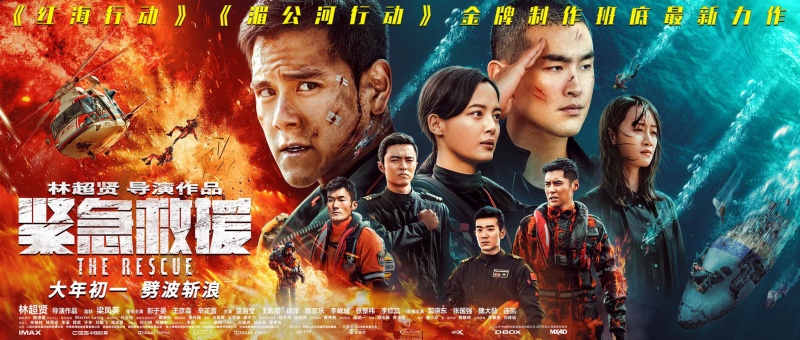
The Rescue (紧急救援, Dante Lam, 2020)

The rescue poster 3

It’s tempting to see Dante Lam’s latest foray into big budget mainland action as a continuation of his previous hits Operation Mekong and Operation Red Sea which paid tribute to the police and navy respectively, but it is also the latest in a series of films featuring China’s finest bravely battling against the odds to save the day. Like Tony Chan’s The Bravest which celebrated the selfless heroism of China’s firemen as they risked their lives to stop a potentially catastrophic fire in an oil refinery, The Rescue (紧急救援, Jǐn Jyuán) pays tribute to another undersung arm of the emergency services – China’s Coast Guard.

Our hero, Captain Gao Qian (Eddie Peng Yu-yen) of China Rescue And Salvage, is a devil-may-care hero who throws himself into danger without a second thought where lives are at stake. The motto of China Rescue And Salvage is “we risk our lives to give others hope”, but some feel that Gao Qian is too reckless with his and fear that he’s forgotten that you can’t save anyone if you get yourself killed playing at heroics. That’s something that’s temporarily brought home to him when the pilot of his helicopter is badly injured during a rescue on an oil rig engulfed by flames, leaving the inexperienced co-pilot to fill-in on his behalf. Gao Qian works his magic in the nick of time, but both of the pilots quit the team immediately afterwards, the pilot struck by the proximity of death and the co-pilot by his sense of inadequacy in feeling as if he failed to live up to the job.

Luckily the team soon get a new pilot – a lady, Yuling (Xin Zhilei), who clashes with Gao Qian in true disaster movie fashion in her desire for rational action and the kind of heroics that are strictly by the book. Against the odds, however, they make a good team, eventually bonding in mutual admiration for their complementary skills. Meanwhile, Gao Qian is also dealing with some home drama in that he’s just brought his young son Congcong (Zhang Jingyi), who had been staying with his grandmother, to live with him. Congcong seems to be suffering with some kind of illness, but is otherwise cheerful enough and hoping that his dad will get him a new mum, like, for example, the beautiful Yuling.

The death of his wife, his son’s illness, and the loss of colleagues he was forced to leave behind, haunt Gao Qian like a cosmic joke, as if he’s being “punished” for snatching so many other lives from the jaws of death. No matter how hard he tries, there are lives which cannot be saved – no helicopter can rescue you from terminal illness or debilitating disease. Nevertheless, he continues to do his best no matter the personal costs. “Everyone has their own battleground, mine is rescue” he tells a superior with determination after his priorities are questioned. In training, the coach reminds the rescuers that their enemy is nature. They push their bodies as far as they can go, willingly risking all to let others know that someone is always looking out for them and will come in their time of need. Faced with certain death, Gao Qian enters an eerily beautiful existential space born of liminality in which he is perhaps able to feel everything that is to be alive while his son, fighting his own battle, does something much the same.

The strangely poetic quality of life in extremis is directly contrasted with the hokey comedy of Gao Qian’s home life and the brotherly comradeship of the base which are both much more of the typical “New Year Movie” mould. Lam fares much better than Chan in heading off the obvious melodrama, though he too resorts to the obvious foreshadowing of a young man daring to get wedding photos taken while planning to risk his life for the greater good, while the quirky production design and wholesome warmth of Gao Qian’s home life as he attempts to make the world safe for his son offer a much needed escape from the anxiety of his disaster-fuelled existence. Unlike that of Red Sea, the world of The Rescue is a more open and hopeful one in which Gao Qian does his best to save everyone who needs saving no matter their nationality, feted far and wide as a hero even if he awkwardly embodies a magnanimous China as a world protector as he does so. Nevertheless, Lam once again manages to elevate his material beyond its propagandist aims, edging towards a more ambivalent contemplation of selfless nobility and the costs of courageous endurance.


In UK cinemas from 25th January courtesy of CMC Pictures. Unfortunately, the release of The Rescue has been postponed because of the Coronavirus outbreak in China. We will update you as soon as we hear of new release date!

Original trailer (English subtitles)