Yaksha: Ruthless Operations (야차, Na Hyeon, 2022)

“Justice is preserved by being just” according to the idealistic hero at the centre of Na Hyeon’s Yaksha: Ruthless Operations (야차, Yacha) , though he’ll eventually come round to his sometime mentor’s belief that “Justice must be preserved by any means necessary”. Any means necessary is indeed the motto of the titular hero named for the unpredictable Buddhist deity and regarded by his superiors as a dangerous maverick though as it turns out he does indeed have justice in mind even if his idea of justice might not fully align with those whom he is intended to serve. 

The failure of the regular justice system is signalled in the film’s opening as idealistic prosecutor Ji-hoon (Park Hae-soo) finds his case against a corrupt CEO falling apart because of procedural mistakes by his own rookie team. Humiliated on the courthouse steps, Ji-hoon is given a punitive transfer to the NIS where he is kept out of trouble, told to draw a salary but given very little work. He and his jaded colleague who was once known as the “bulldozer of justice” but has been ruined by this bizarre form of punishment and no longer has the will do to anything much at all mostly spend their time doing jigsaw puzzles stave off boredom. When his colleague admits there’s no more hope for him and turns down an offer of reinstatement, Ji-hoon agrees to travel to Shengyang, a hotbed of international spies in China, to find out what’s going on with a series of false reports from their agents on the ground led by maverick black ops officer Yakska. 

What he soon discovers is that he’s been dragged into some murky geopolitical shenanigans between North Korean spies, his target’s possibly corrupt team, and the Japanese who are once again up to no good trying to prevent a possible alliance between North and South believing such a union would present too much of a threat to their economic position in North East Asia. His problem is that Yaksha’s field craft does not measure up to what he regards as appropriate conduct. He engages in firefights and commits what seem to be summary executions while later threatening to torture a hostage to force her to reveal the location of their missing asset, a North Korean financial kingpin, Moon (Nam Kyung-eup), who had been acting as a double agent for the Japanese but had become disillusioned with their imperialist outlook and decided to defect to the South bringing valuable information with him. 

It has to be said that however uncountable it may be to see a Japanese spy who behaves like a gangster committing acts of torture in a well appointed lab on a Chinese woman in China, Yaksha cannot exactly claim the moral high ground having attempted to do something similar only in his filthy hideout in an abandoned mine. Ji-hoon’s dilemma is that he doesn’t know whose side, if any, Yaksha is on or if he’s after the North Korean trillions Moon had been managing rather than a hugely beneficial national asset. Exposed to this morally grey world, however, Ji-hoon’s idealist edges begin to soften as shifts towards Yaksa’s “by any means possible” philosophy while trying to stop evil Japanese spy turned lobbyist from recovering the valuable data Moon had to sell and going on to do even more nefarious deeds undermining the possibilities for reunification along with the Koreas’ economic potential. 

Somewhat uncomfortably, the film does then more or less condone torture, betrayal, and summary execution if conducted in the pursuit of “justice” even while simultaneously approving of Ji-hoon’s idealistic pursuit of the rich and powerful who continue to misuse their position and cause pain to ordinary people. It comes to something when the safest ally is a gang of human organ traffickers with whom Yaksha seems to be suspiciously familiar. Nevertheless, what Yaksha eventually asks Ji-hoon to do is to “clean things up” hinting at the duo’s complementary qualities as they pursue “justice” in both the legal and more immediate senses. Filled with some quite literally explosive action sequences along with some admittedly broad comic book antics as the guys face off against Hideki Ikeuchi’s Japanese arch villain Yaksha is certainly a good looking film if one with a dark heart beating at its centre. 


Original trailer (English subtitles)
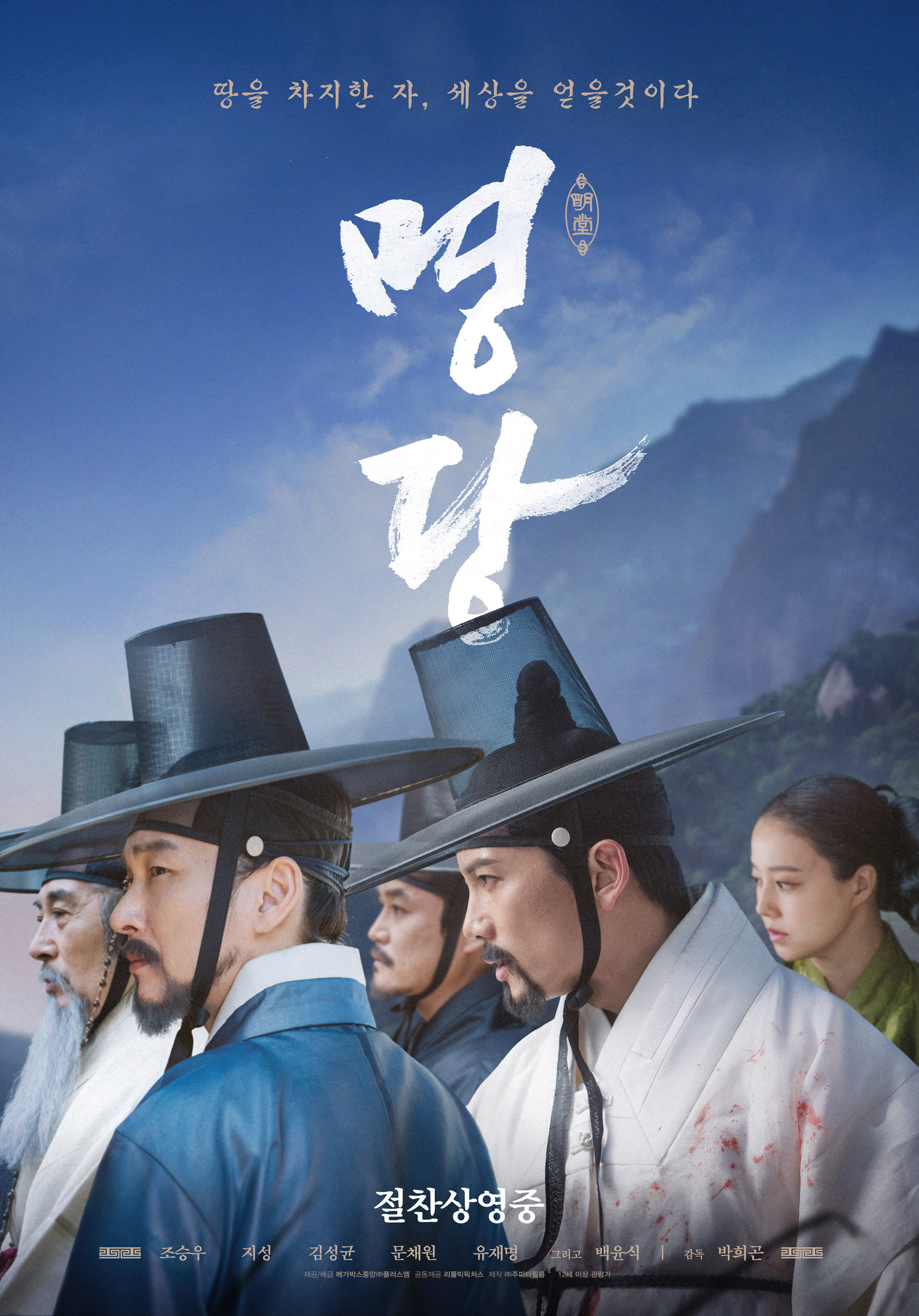
Fengshui (명당, Park Hee-gon, 2018)

FengShui poster 1A would-be-dynast gets overly involved with a weird spiritualist and almost (?) ruins the nation. Does that sound a little familiar? As metaphors go, it might be a stretch but then so much of Park Hee-gon’s Fengshui (명당, Myeong-dang) is just that. Set in the late 19th century, Park’s film is the third in a loose trilogy themed around Korean fortune telling traditions (following The Face Reader, and The Princess and the Matchmaker), but rather than questioning the efficacy of its art asks a series of questions about its application and the internecine lengths those who lust for power or otherwise feel themselves unfairly oppressed will go to to reclaim their rightful position.

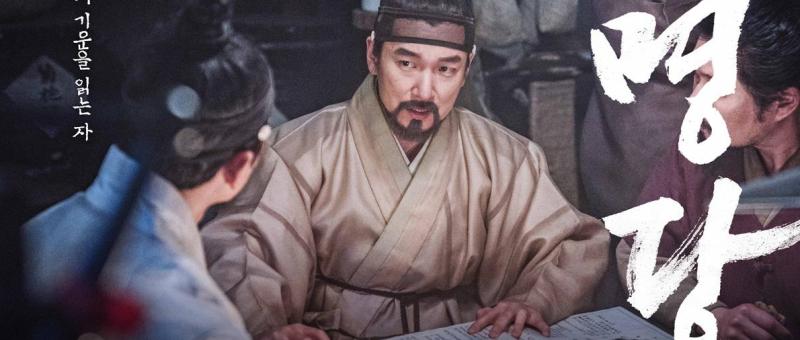
Our hero, unwisely honest fengshui master Jae-sang (Cho Seung-woo), is the only one brave enough to point out that the site chosen for the burial of the late king is cursed, but inevitably he is ignored. He is of course right, which means he must be eliminated which is why a troop of soldiers working for the nefarious Kim clan show up and burn his house down, executing his wife and child by the sword when they manage to escape. 13 years later, he finds his expertise called on again when the weak and inexperienced king begins to suspect the Kim clan is plotting against him and that their shenanigans over his father’s grave may have something to do with it.

Like any typical Korean period drama, Fengshui is chiefly concerned with palace intrigue, only this intrigue is stranger than most in its bizarre obsession with the possibilities of manipulating spiritual power through acquiring “auspicious” land for whichever purpose one might wish from conceiving an heir to making sure your line holds power. The Kims are convinced they can win the throne (if by proxy) through digging up their ancestors and replanting them in more advantageous places only to discover that the grass is (literally) always greener. Still, they will stop at nothing from outright murder to psychological game playing in order to manipulate the teenage king into acting as their puppet.

One might ask themselves what the point is, what’s so great about being king anyway? The actual king might say not much, as he discovers himself a humiliated, hollow figure who wields no real power seeing as his soldiers seem set to side with Kim. Heungseon (Ji Sung), however, his “cheerful” uncle might feel differently after experiencing a lifetime of just the same. Forced to prance about doing party tricks for the Kims, barking and eating scraps from the floor like a mangy dog, he might say that being king is the only way to reclaim your self-respect and ensure you will never be at the mercy of ruthless men ever again.

The real key, however, is presented at the end when Jae-sang and his money loving friend Yong-shik (Yoo Jae-myung) are visited some years later by two men in suits who want to know the best place to start a military school to train Independence fighters. Jae-sang, having vowed to stop looking for places to bury people so he can find one to save them, is only too happy to oblige and even comes up with the name “Shinheung Military Academy” (a real school which is also, quite bizarrely, the subject of a smash hit musical). The point is further brought home with Kim’s descendent standing next to a family grave and lamenting that it can’t have been auspicious enough because they’ve lost all their power since the Japanese arrived. The subtext seems to be that feudal corruption and a subversion of traditional values such as ancestor worship and filial piety contributed to the gradual weakening of the Korean state which was plagued by insecure kings and political finagling until finally “sold” to foreign powers in the early 20th century.

Indeed, the ambitious usurpers eventually burn the soul of Korea in order to ensure their own, or rather their children’s, futures even at the expense of their nation’s. Literally fighting over a grave, the elites waste their time on pointless, internecine dynastic squabbling while ordinary people continue to suffer. Jae-sang, having given up on his own petty quest for revenge, comes to the conclusion that all this looking back is a waste of time when what they should be thinking about is the future – not burying things, but planting them. It is a good lesson, but, Park seems to suggest, perhaps one that has not yet been fully learned.


Screened as the latest teaser for the upcoming London Korean Film Festival. The next teaser screening, Zhang Lu’s Ode to the Goose, takes place on 19th August at Picturehouse Central.

International trailer (English subtitles)