Hey! Our Dear Don-chan (おーい!どんちゃん, Shuichi Okita, 2022)

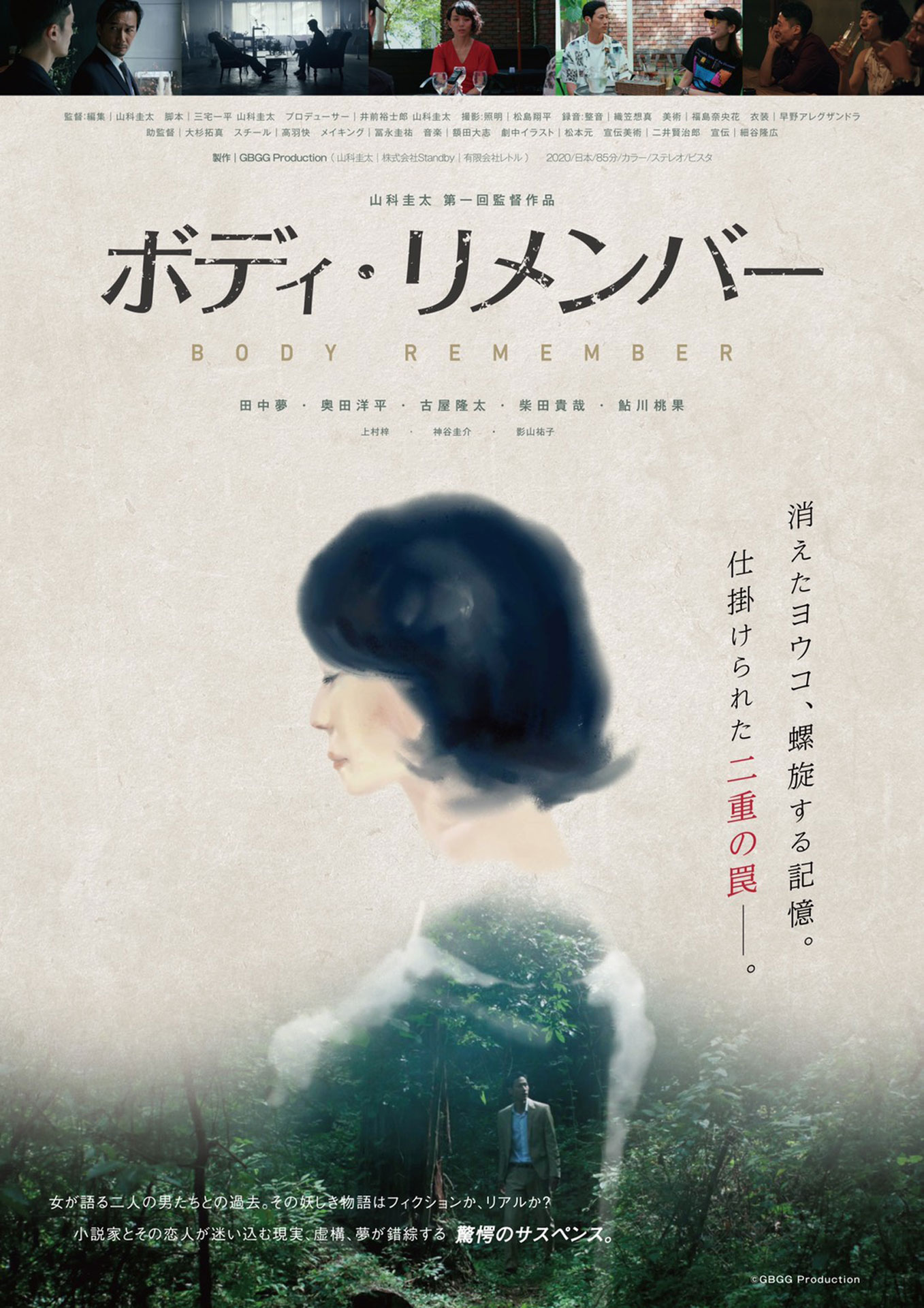
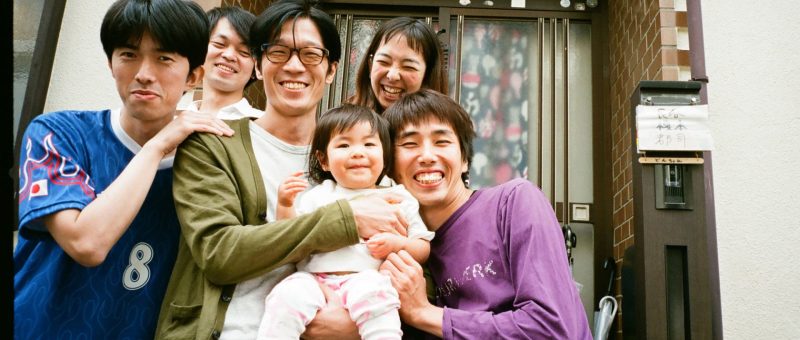
A trio of actors undergo a coming-of-age tale of their own when a baby is suddenly abandoned on their doorstep in Shuichi Okita’s charming slice of life dramedy, Our Dear Don-chan (おーい!どんちゃん, Oi! Don-chan). A take on Three Men and a Baby, the film stars the director’s own daughter and follows her over a period of three years as the actors attempt to adjust to fatherhood and the new kind of family that has arisen between them. 

As the film opens, Michio (Tappei Sakaguchi), Ken (Hirota Otsuka), and Gunji (Ryuta Endo) are struggling actors working in slightly different media but having about the same amount of luck and continually dejected about their lack of career success. Ironically while playing the game of life, Ken has a baby girl in the game but is surprised to hear one crying for real on the street below. On reading a note in her pushchair, Ken realises that the baby has been left by a previous girlfriend, Kaori, with the instruction that he raise it. 

Of course, the situation gives rise to a degree of panic, Ken wondering not only if he is the father but if he can be while supported by the other two guys, along with former houseman Sakamoto and his girlfriend Akari, taking care of more practical matter likes getting nappies and baby food. Then again, some of the practical details are already overcome by virtue of their occupations which allow them to be home during the day taking shifts to watch the baby they christen “Don-chan” on account of not knowing her real name. 

As they struggle with the demands of fatherhood, the three men each commit themselves to Don-chan’s well being, mindful of the memories she’ll make in the future and wanting to make her present as happy as possible. At one point they decide to take a camping trip in order to show her that they can be “manly dads”, but otherwise entertain her at home or take her on trips to the aquarium acting as a trio even if Ken is technically the primary dad forming a new kind of family that makes it easier to care for a small child than it might otherwise have been. If Ken had been on his own, he may not have been able to raise her. Michio and Gunji both complain at the precarious state of childcare facilities, lamenting that you can’t get a place unless you work full-time but you can’t work full-time if you can’t get childcare for when you’re at work. 

Meanwhile, they continue to struggle in their professional lives. A humiliating audition for a TV commercial causes Ken to rethink his career plans, stopping off to buy new toys for Don-chan on the way home lamenting that he “danced like an idiot for no reason.” Michio continues to go full method over researching all his roles for seconds of screen time in TV and movies, while Gunji’s stage career is disrupted when the manager of his troupe decides to admit himself to a psychiatric facility for long term care. Through their interactions with Don-chan, however, they all begin to grow up gaining further life experience which enhances their performance ability and gives them a greater goal to work towards aside from mere career success. 

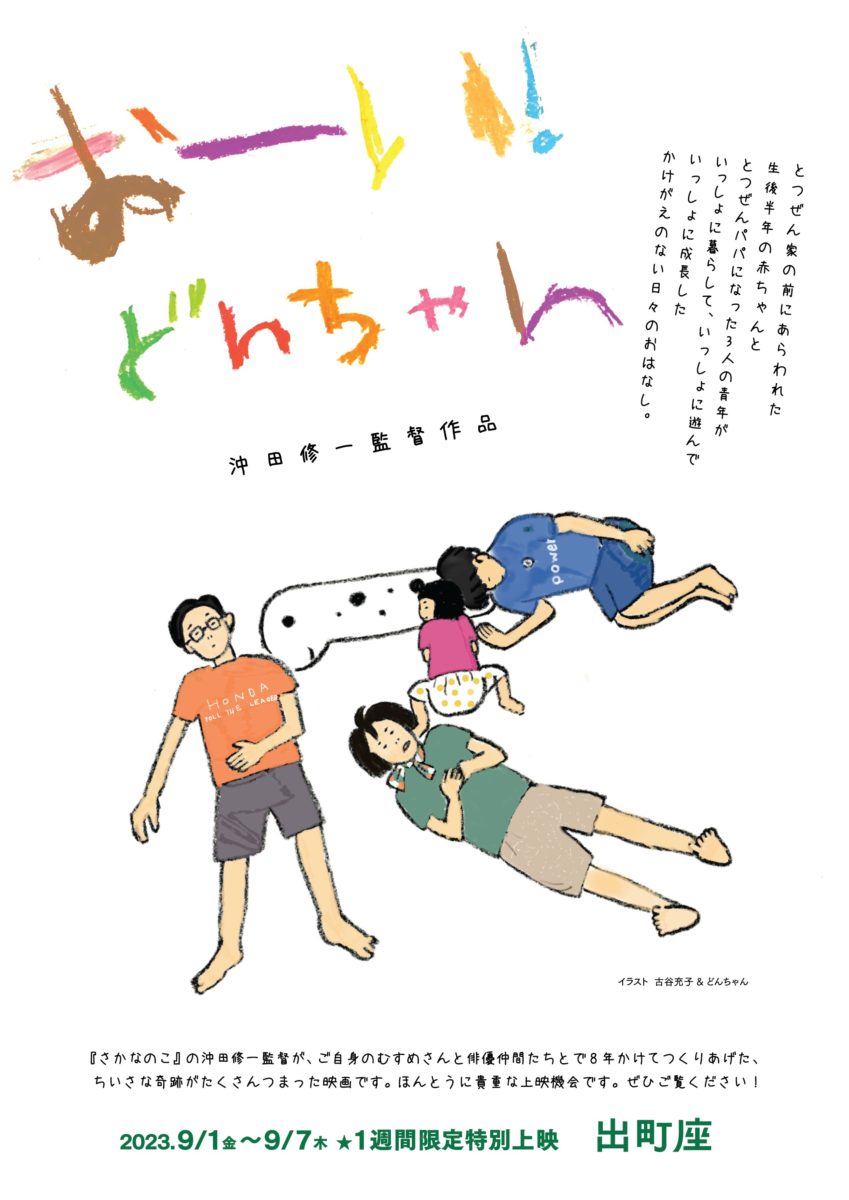
A heartwarming familial drama, the film doesn’t gloss over how difficult it can be to raise a child in contemporary Japan especially as a single-parent but rather embraces a larger idea of the word family which centres platonic friendship and community while simultaneously understanding of Kaori’s position in the knowledge that none of this is easy and she may not have had access to the kind of support that made it possible for Ken to care for Don-chan with so much love and attention. In any case, little Don-chan is certainly lucky to have so many people around her all invested in her happiness and future whose lives she has also enriched just by her existence. A truly happy film, Okita adds small doses of absurdity to the already surreal events along with a nostalgic sense of childhood comfort right down to the childish font of the film’s titles complete with corrections and crossings out that are, much like life, evidence of joyful trial and error. 


Trailer (English subtitles)
Body Remember (ボディ・リメンバー, Keita Yamashina, 2021)

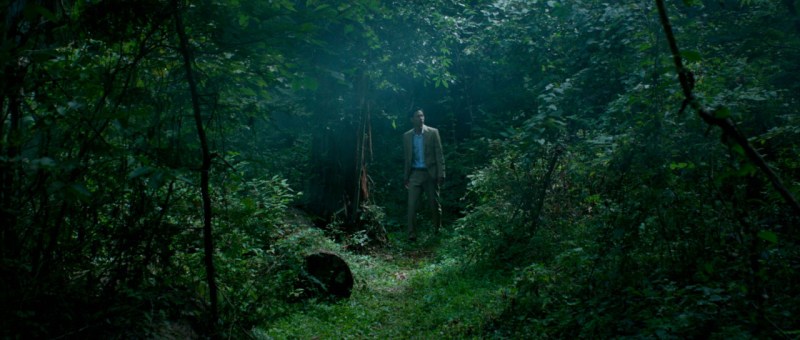
“It’s hard to tell what’s true and what’s not.” according to the hero of Keita Yamashina’s twisty take on meta noir, Body Remember (ボディ・リメンバー). For him, the superficial, literal truth is perhaps less important than that which it conceals, hoping to expose the buried reality hidden between the lines in the novel he is attempting to write inspired by a story narrated by his infinitely unreliable femme fatale cousin Yoko (Yume Tanaka). Shifting between an apparently concrete “reality” that is perhaps exposed as anything but by the final scene, dreams, memories, and the act of creation, Yamashina hints at collective fantasies and the essential truth of sensation as his artist hero attempts to turn an enigma into art. 

An unsettling presence, Yoko strides into a cafe dressed in a vibrant red and proceeds to explain to novelist Haruhiko (Takaya Shibata) and his artist girlfriend Ririko (Momoka Ayukawa) that she has long found it difficult to distinguish reality from dream, believing in a sense that the “truth” is irrelevant. Her story seems to be a rather ordinary if tawdry one of finding herself at the centre of a love triangle but also feeling like a third wheel as if she were a puzzle piece hovering over empty spaces unsure where to land while the men are comfortably installed in their rightful places. When lawyer Jiro (Ryuta Furuya) turns up at the bar she has been running with husband Akira (Yohei Okuda) and mournfully explains he suspects his wife is having an affair, the trio reassume an intimacy from their uni days which is later broken by a passionate embrace between Jiro and Yoko accidentally witnessed by the betrayed Akira. 

Playing with images of sex and death, Yoko also recounts that seeing Jiro loosen his tie provoked in her a powerful urge to strangle him with it. Yoko apologises for scaring Haruhiko, but on the contrary he seems to find it arousing later openly telling Ririko that he too is captivated by Yoko while she complains that Jiro and Akira, now (or perhaps always) characters in a novel, are underwritten foils who exist only for Yoko. Haruhiko in a sense agrees, but also pulls focus and makes his potential story, in fact the story we have been watching, about the two men, foreseeing a conclusion which is all manliness and honour tinged with a frisson of homoeroticism that joins them both in the inevitable death foreshadowed in the opening scene. 

Yet Ririko wants to know the truth of it, investigating the bar where Yoko claimed to work and discovering that no such establishment ever existed though the location was recently used by a shady cult. Perhaps jealous, she dreams of an intimate encounter between the smitten Haruhiko and his “sexy” cousin, yet later reflects on her own tendency to run away from reality in flights of fancy. Her revelations perhaps provoke a deeper intimacy with her conflicted boyfriend who finds himself attempting to construct an “authentic” narrative from unreliable testimony, but then again we can’t be sure everything we see is real as the couple engage in a surreal game of beach volleyball with two men resembling Akira and Jiro whose behaviour is strange and childlike if displaying a similar intimacy to that which they appear to share in Haruhiko’s nascent “novel”. 

Challenged by Ririko, Haruhiko merely disappears his heroine, avowing that in the end she was never important in his story about the ambiguous relationship between two men turning her into a mythical femme fatale while Ririko continues to sketch her rival in an attempt to figure her out. Yoko herself tells us that she sees no real distinction between dream and reality that one is no more true or important than the other while insisting that while her mind may forget the facts, the sensation is recorded in her body which will always “remember” if indistinctly. 

Using a cast of mostly theatre actors, Yamashina crafts an unsettling atmosphere founded on tactile sensuality that belies the frequent unreliability of verbal communication while the jazz score and shadowy photography contribute to the sense of noirish dread complete with wafting cigarette smoke and a fatalistic, morally ambivalent conclusion. Further disrupting our sense of reality with a final self cameo, Body Remembers nevertheless reminds us that the truth is less important than our perception of it just as it returns us to where we started even less certain than before. 


Original trailer (English subtitles)