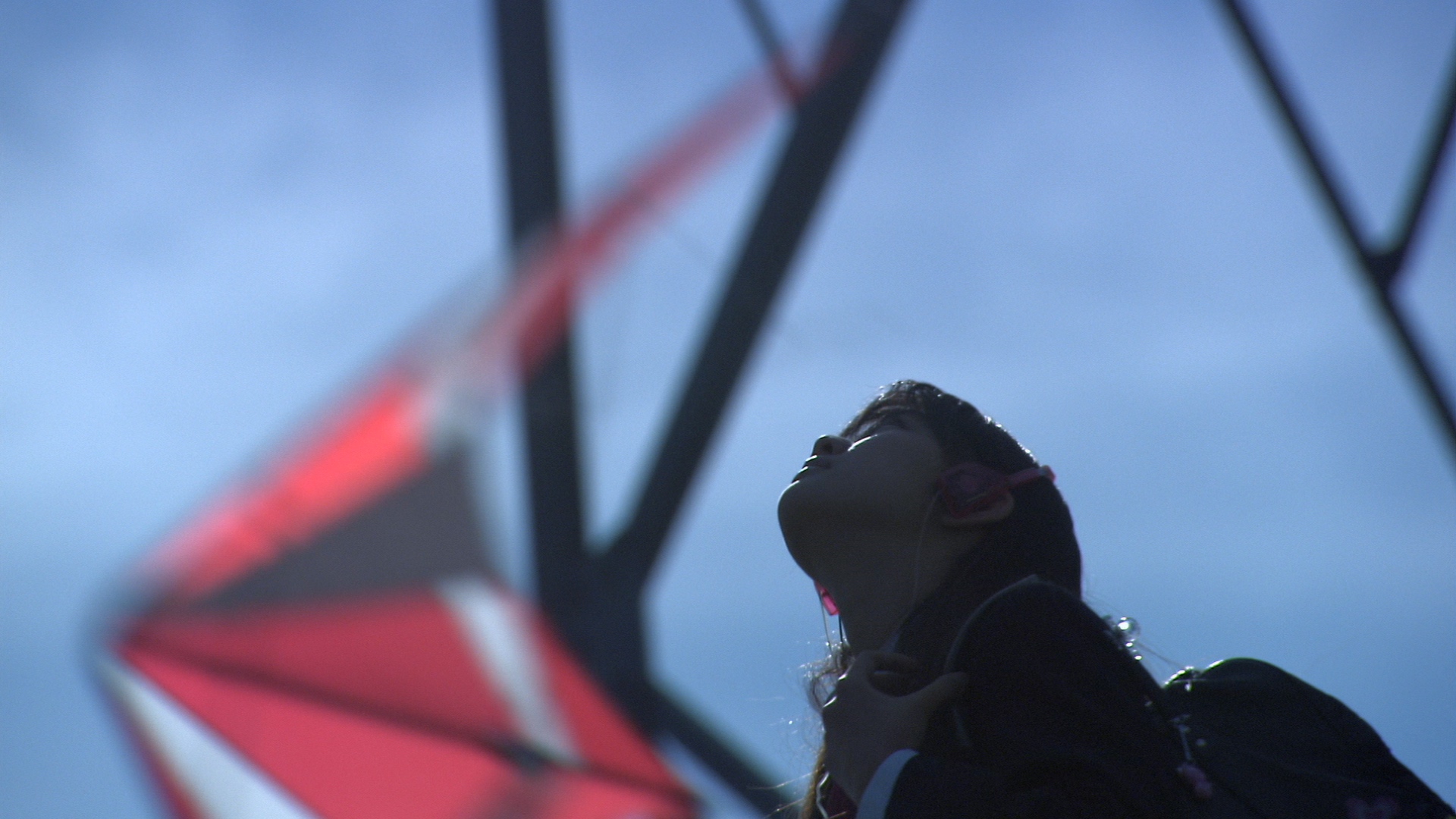
Tea Friends (茶飲友達, Bunji Sotoyama, 2023)

Japan’s rapidly ageing society has provoked an epidemic of loneliness but also perhaps new business opportunities in Bunji Sotoyama’s empathetic social drama Tea Friends (茶飲友達, Chanomi Tomodachi). The phrase may sound innocuous enough, but given some potentially outdated cultural connotations the men who spot the advert cunningly placed in a newspaper to catch the eyes of older readers may have reason to assume that it’s more than just tea and chat on offer. Though as it turns out, it’s not just the old who are lonely as a younger generation in turn often in conflict with their parents also attempt to seek security and comfort in found family.

That said, there’s something a little cult-like about the way that Mana (Rei Okamoto), a former sex worker, talks about her organisation which aims to cure late life loneliness through what others might describe as an elderly sex ring. Employing a collection of older women, she accompanies them to meet new clients where they silently slide viagra over the table. The gentleman caller subscribes to a plan to purchase “tea” and anything that happens inside the hotel room they subsequently go to is just “free love” rather than “prostitution”. Mana sees herself as running a “community safety net” and helping elderly people who might otherwise have become isolated and depressed keep active as part of one big happy family along with the other members of staff who have, like her, become estranged from their parents and relatives. 

For Yoshiki, one of the men who escorts the ladies around, it’s that he views his father as a failure for leaving a well-paid corporate job to open a bakery which subsequently went bankrupt and has led to him living in his car. He thinks that in the end it’s better not to try at all than be left with the humiliation of things not working out. But then for Mana herself it’s more a sense of parental rejection. After a difficult childhood, her now terminally ill mother continues to reject her on the grounds of her history of sex work while she continues to crave the unconditional love of a family. Like a mother hen, she nestles those around her into the Tea Friends organisation which operates out of her own home and strives to create a place where everyone can feel they belong. 

Which is all to say she’s the loneliest one of all, but as someone else later cautions her you can’t cure your own loneliness with the loneliness of others. What she sees as a social enterprise others may see as a deliberate attempt to take advantage of vulnerable people who have admittedly been let down by an indifferent society and are in need of the money even more so than comfort or validation. At the other end of the spectrum, a young woman working at Tea Friends discovers that she is pregnant but her boyfriend immediately rejects her, insisting that he refuses to take responsibility and revealing that he is already married. Chika wants to have her baby, but everyone seems to be telling her that she shouldn’t. The doctors seem to look down on her after realising she isn’t married and the father most likely not in the picture, while an attempt to inquire about benefits at the town hall leads only to judgement as the clerk pithily tells her that they’re there for when you need them but she shouldn’t “depend” on them too much virtually calling her a scrounger and implying she’s been irresponsible in becoming a single mother. 

As another of the older women admits, being used was better than being ignored and at least being part of Tea Friends gave her a sense of purpose and acceptance if only for a time. In any case, Mana’s attempt to find unconditional love from her new “family” largely flounders as even those she’d come to believe herself close to desert her when the threat of legal proceedings enters the picture leaving her to face the music alone while she continues to protect them insisting that they’ve done nothing wrong even if it it was technically against the law. An old man’s devastation on picking up the phone and getting no answer suggests that Mana might have had a point when she said it was a social service seeing as no one else seems keen to tackle the problem of late life loneliness even if she did go about it in a problematic way. As Mana often says, righteousness does not equal happiness and it is often outdated social brainwashing that keeps people unhappy and not least herself as she struggles to find the unconditional love lacking in her life that would enable her to cure her own loneliness even in the prime of her youth.


Tea Friends screened as part of this year’s Camera Japan.

Original trailer (English subtitles)
All About Lily Chou-Chou (リリイ・シュシュのすべて, Shunji Iwai, 2001)

“For us the natural world is a playground. But for the things that live in it, it might be hell on earth.” a middle-aged stranger explains to a confused teenage boy elaborating on a metaphor about a strangler tree that wraps itself around its brethren and suffocates them to death. The contemporary society is indeed a hell on earth to the alienated turn of the century teens in Shunji Iwai’s plaintive youth drama All About Lily Chou-Chou (リリイ・シュシュのすべて, Lily Chou-Chou no Subete) who have found solace in “The Ether”, “a place of eternal peace” as discovered in the music of a zeitgeisty pop singer inspired by the ethereality of Mandopop star Faye Wong. 

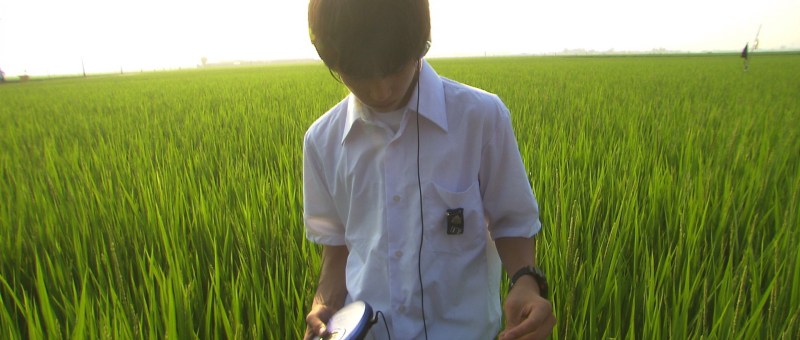
Filled with millennial anxiety, The Ether as mediated through message board chat is the only place the teens can be their authentic selves. “For me only the Ether is proof that I’m alive” one messenger types using an otherwise anonymous online handle unconnected with their real life identity. Iwai often cuts to the teens standing alone listening to music on their Discmans while surrounded by verdant green and wide open space with a bluer than blue sky above, but also at times finding that same space barren and discoloured, drained of life in, as Yuichi (Hayato Ichihara) puts it, an age of grey much like a field in winter. For Yuichi the world ended on the first day of school in September 1999 when his torment began at the hands of a previously bullied boy who decided to turn the tables after, of all things, getting hit in the head by a flying fish in Okinawa and almost drowning.  

Purchased with money stolen from some other bullies who had just stolen it from a well-off middle-aged man they were harassing in a carpark, the trip to Okinawa captured in grainy ‘90s holiday video style later subverted by the same use of contemporary technology to film a gang rape of a fellow student, is the event that finally reduces Yuichi’s world to ashes. Like the other teens he is also carrying a sense of alienation as his mother prepares to remarry while carrying his soon-to-be stepfather’s child which also dictates that Yuichi will have to change his surname lending a further degree of instability to his already shaky sense of identity. For Hoshino (Shugo Oshinari), his sometime friend, the instability seems to run a little deeper. “Nobody understands me” he tells Yuichi with broody intensity, irritated by the image others have of him as a top swat chosen to give a speech at the school’s opening ceremony and widely believed to have placed first in the exams. In truth he only placed seventh and is most annoyed that whoever really did come top probably thinks he pathetically lied about it for clout. 

We can see that Hoshino’s family appears to be wealthy, at least much more than Yuichi’s, though as we also discover they once owned a factory which has since gone bust amid the economic malaise of the ‘90s leading to the disintegration of his family unit. Like Yuichi he feels himself adrift, evidently bullied in middle school for being studious and introverted while rejected by the girls in his class who again attack him because of his model student image. Hoshino seems to have a crush on a girl who is herself bullied, Kuno (Ayumi Ito), apparently resented by the popular set for being popular with boys. “It’s amazing how women can ostracise someone like that” band leader Sasaki (Takahito Hosoyamada) reflects, one of the few willing to call her treatment what it is but finding no support from their indifferent teacher Miss Osanai (Mayuko Yoshioka), while entirely oblivious to the fact that the boys are just the same in Hoshino’s eventual reign of terror as a nihilistic bully drunk on his own illusionary power. 

Shiori (Yu Aoi), blackmailed into having sex with middle-aged men for money, questions why she and Yuichi essentially allow themselves to be manipulated by Hoshino and are unable to stand up to him even when they know they are being asked to do things that they find morally repugnant such as Yuichi’s complicity when tasked with setting Kuno up for gang rape by Hoshino’s minions with a view to videoing it for blackmail purposes. Whether or not he did in fact have a romantic crush on her, Hoshino’s orchestration of the rape signals his total transformation, forever killing the last vestiges of his humanity and innocence but for Yuichi, who can only stand by and cry, it signals the failure of his resistance that if he went along with this there is no line beyond which he will not go if Hoshino asks it. Yuichi asks Shiori why she didn’t agree to date the kindhearted Sasaki who would have been able to shield her from Hoshino but she knows it’s too late for that while suggesting Yuichi is in a sense protecting her though his inability to do so only further erodes his wounded sense of masculinity. 

Only online can the teens find the elusive Ether they dream of, ironically connected via a message board that Yuichi runs under the name Philia where the only rule is that you have to love Lily yet unknown to each other thanks to the alienating effect of their online handles. Someone has a point when they suggest all this talk of polluting the Ether sounds a bit like a cult, but does at least give the teens their safe space where they can share their pain free of judgement and find solidarity in adolescent angst. In any case all of this shame, repression, and loneliness is later channeled into nihilistic violence and cruelty provoked by millennial despair. The only way Yuichi can free himself is by killing the part of himself that hurts in an effort to quell the “noise” in his head. Broken by title cards accompanied by the reverberating sound of typing in emptiness, Iwai’s characteristic soft focus lends a trace of nostalgic melancholy to this often harrowing tale but also neatly encapsulates turn of the century teenage angst with the infinite sympathies of age. 


All About Lily Chou-Chou screens at Japan Society New York on Dec. 10 as part of Love Letters: Four Films by Shunji Iwai

Original trailer (English subtitles)

Daughters (ドーターズ, Hajime Tsuda, 2020)

What does it mean to be a woman in the modern society? Two 20-somethings are confronted by just that question when one of them suddenly reveals that she is expecting a baby and plans to raise it alone but would be very grateful for the other’s support. Hajime Tsuda’s Daughters (ドーターズ) is the latest in a long line to ask a few questions about the nature of the modern family but does so through the eyes of these typical young women who find themselves perhaps a little more old-fashioned than they’d assumed as they determine to flout patriarchal norms and raise a child together as a platonic unit. 

High school friends Koharu (Ayaka Miyoshi) and Ayano (Junko Abe) have been living together in a tastefully decorated Tokyo flat for the past few years. Ayano works at a fashion magazine, and Koharu in events planning and installations. They have an active social life and enjoy the benefits of living in a big, vibrant city. All of that must necessarily change, however, when Ayano discovers she is pregnant after a meaningless one night stand with an old friend (Yuki Ito) who is about to accept a transfer abroad and had just been joking about reluctantly having to marry his girlfriend who wants to come with him. After thinking it over, Ayano decides she wants to have the baby without saying anything to the father but her decision comes as a shock to Koharu who is at once stunned by her friend’s sudden transition into adulthood. 

These really are just gals being pals, but there is perhaps something of repressed desire in Koharu’s lingering looks whether it’s actually Ayano that she wants or merely lamenting the imminent end of their lives as young women on the town not to mention a closeness she now fears will be diluted rather than perhaps deepened with the introduction of a third party in their relationship. For her this sudden end to the Tokyo high life may have arrived earlier than she expected, but it would have arrived soon enough in any case. Wanting to support her friend she remains conflicted and mildly resentful, partly it seems of the unnamed father but also despite herself carrying outdated ideas of social propriety firstly trying to dissuade Ayano from having the baby believing that raising it as a single-mother will be impossible. 

Ayano is told something similar by her father (Shingo Tsurumi) on a visit home, though he later comes round after a few stern words from her cheerful grandmother (Hisako Okata) who couldn’t be happier, insisting that children are a blessing however they arrive. At work, however, despite being surrounded by other women, she faces a series of similar discouragements, reminded that she can’t expect to return to the same position after giving birth because her priorities will have changed. She can no longer give “everything” to the company, she will need additional time off if her childcare falls through or her child is ill. She may need to leave early or come in late for the school run. Her boss does not intend this as a criticism but an acceptance of what it means to be a mother and an insistence a choice is being made, leaning into patriarchal, capitalist ideas of the employment contract which values an employee most for their availability rather their productivity or talent.  

Both women, meanwhile, harbour a lingering sense of social stigma when it comes to the subject of unmarried mothers. Koharu angrily fires the English phrase at her friend as if to discredit her decision, while Ayano finds herself earnestly asking her doctor (who appears to have seen through her ruse of introducing Koharu as her “sister”) if she sees a lot of women like her, the compassionate, supportive medical practitioner assuring her that 25% of women giving birth in Tokyo are single and though she has no idea what happened to them afterwards as a woman who has never has a child she is herself envious. Having agreed to raise the child together, Koharu still has her doubts that such an arrangement can really work, unsure of herself until heading off on a sulky solo holiday to the island paradise of Okinawa where she meets a woman (Tomoka Kurotani) who moved halfway across the country to raise her son alone. She seems happy and her son seems to have turned out just fine. 

As in Ayano’s rural hometown with its wide-open vistas, the relaxed Okinawan attitude perhaps bears out the maxim that Tokyo is often more conservative than provincial Japan, Ayano even slightly worried that having a caesarean section doesn’t really count and she’d be failing at motherhood before even really starting. In a symbolic act of transition the two women mirror the construction of a bunkbed on their moving in with the completion of the baby’s cot, built together with “faith in the future in this ephemeral city”. Stylistically innovative, filled with poetic monologues, and moving to the rhythm of a zeitgeisty pop score, Tsuda ends with the deceptively traditional as the two women find themselves confronted with a local festival but find in it strength and an acceptance that it is really OK as they embark on a new phase of their life as a family as entitled to the name as any other. 


International trailer (English subtitles)

Abacus and Sword (武士の家計簿, Yoshimitsu Morita, 2010)

•Žm‚̉ƌv•ë•The stories of samurai whose soul is placed not in the sword but in another tool are quickly becoming a genre all of their own. Coming from the same screen writer as A Tale of Samurai Cooking: A True Love Story, Abacus and Sword is a similarly structured tale of penny pinching samurai accountants and a pean to the undersung heroes of the admin department without whom everything would fall apart.

Abacus and Sword (武士の家計簿, Bushi no Kakeibo) could almost be titled “a story of my father” as it begins with a voice over by the youngest adult generation seen in the film, Nariyuki Inoyama, who is at the time of speaking a naval accountant in the new post restoration world. As good an account as he is (and he must be, given his position), he feels he pales in comparison to his father, Naoyuki, whose skills with the abacus were somewhat legendary even if his people skills were often not on the same level.

Dubbed an abacus fanatic by his colleagues, Naoyuki’s top maths abilities get him into trouble right away when he notices an extreme discrepancy in the accounts details for the imperial rice dole. Around this time there are riots from farmers who are being squeezed to deliver more grain to the authorities during a time of famine but not seeing enough returned to them as well as starving people petitioning for food in the streets, so when Naoyuki asks why around a third of the rice is disappearing from the accounts or listed as “reserved” his superiors start getting nervous. As a mini underling, Naoyuki is not in a position to stop his bosses from exploiting their authority in the most devious of ways – creating a food panic and then profiting on the side through black market trading, and is simply instructed to “ensure the final accounts balance”. Unwilling to falsify his precious calculations, Naoyuki finds himself facing the possibility of exile from the imperial centre but eventually finds his persistence rewarded when the scam is finally uncovered by a higher level.

Accountants are often not respected in this era of samurai warriors who place an almost religious faith in the power of the sword. Their pay is low, hours long and taxing, and they have little prospects of advancement. After hearing the story of Naoyuki’s career Nariyuki returns to the subject of himself a little more as the conflict between austere father and wayward son takes centre stage. Naoyuki is a pragmatic man, he sees their family debts are unsustainable and embarks of prolonged plan of austerity in which he forces the entire extended family to sell all their non essential possessions and live as cheaply as possible until the debts reach a more manageable level so they can at least keep the social position their larger family home affords them rather than being moved to something less prestigious. This is an unusual move in status driven samurai circles and proves embarrassing for the rest of the family such as in one episode where Naoyuki can’t afford to buy fish for his son’s coming of age ceremony so simply puts a painting of a fish at each place setting. Creative accounting at its finest!

Nariyuki, however, can’t quite give up on the idea of the sword and goes off to fight in the various civil wars which erupt during the Meiji Restoration causing great worry to his parents, wife and children. He too becomes an accountant and is at first disappointed that it’s his skills with an abacus that can best serve the country rather than those needed on the frontlines but later comes to understand the tactical importance of maintaining the smooth financial functioning of an army.

A late career effort from the prolific Yoshimitsu Morita, Abacus and Sword is an uneven experience which is more or less devoid of the director’s usual attempts at experimentation pushing for a more general, sometimes even televisual approach to storytelling. At heart the film praises the virtues of living a thrifty, honest, and balanced life in which hard work is always fairly rewarded in the end and even when not provides its own set of rewards. However, virtuous as it is to live honestly and simply in tune with the clack of an abacus, it can prove fairly dull which is unfortunately also true of Abacus and Sword which despite brief episodes of light humour never quite engages with its twin dynamics of father son conflict which echoes that of the changing world as it emerges into the new Meiji era, and of shining a light on the forgotten admin workers who keep the world turning when everything else is falling apart. Morita’s anti-consumerist, transparency in government sympathies come to the fore and are once again timely, but like Naoyuki he fails to make his complaints sufficiently engaging to ensure his messages are received by those with the ability to take action.


English subtitled trailer: