Samurai Hustle Returns (超高速!参勤交代 リターンズ, Katsuhide Motoki, 2016)

At the conclusion of 2014’s Samurai Hustle, it seemed that samurai corruption had been beaten back. Corrupt lord Nobutoki had got his comeuppance and the sympathetic “backwoods samurai” Naito was on his way home having found love along the way. Of course, nothing had really changed when it comes to the samurai order, but Naito was at least carving out a little corner of egalitarianism for himself in his rural domain. 

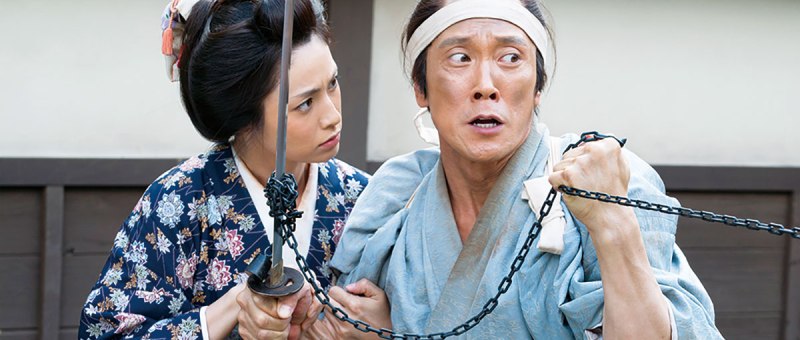
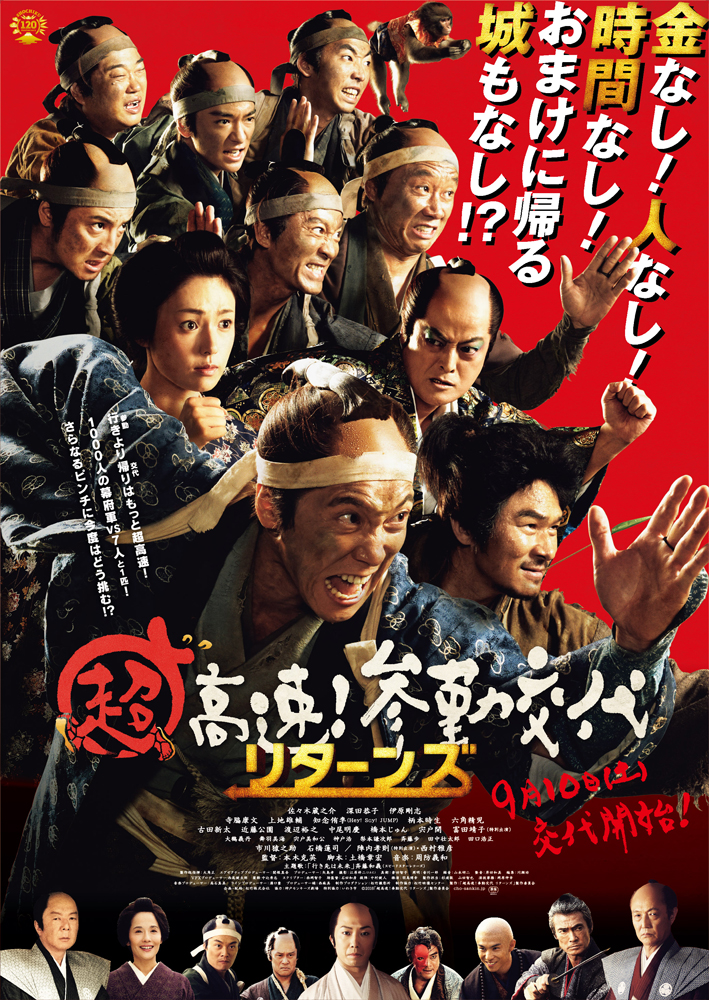
The aptly named Samurai Hustle Returns (超高速!参勤交代 リターンズ, Cho kosoku! Sankin kotai returns) picks up a month later with Naito (Kuranosuke Sasaki) taking a rather leisurely journey home in preparation for his marriage to Osaki (Kyoko Fukada) only to receive news that there has been a “rebellion” in Yunagaya. Predictably, this turns out to have been orchestrated by none other than Nobutoki who has been released early from his house arrest thanks to his close connections with the shogun but has been humiliated at court and is otherwise out for revenge with a slice of treasonous ambition tacked on for good measure. Just as in the first film, but in reverse, Naito and his retainers must try to rush home to get there before the imperial inspector arrives or else risk their clan being disbanded. 

Meanwhile, the shogun is absent at the wheel after having decided to resurrect an old tradition abandoned because of its expense and inconvenience to make a pilgrimage to Nikko. In an interesting parallel, the farmers are uncharacteristically upset with Naito, blaming him for the destruction of their fields because he wasn’t there to protect them. Naito also feels an additional burden of guilt given that, having run flat out all the way to Edo, he took his time coming back leaving his lands vulnerable to attack while he now risks losing the castle. Nobutoki wastes no time at all looking for various schemes to undermine him while secretly plotting to overthrow the shogun and usurp his position for himself. 

As in the first film, the battle is between samurai entitlement and the genial egalitarianism of Naito’s philosophy. “The real lords of Yunagaya are people like you who are one with the soil,” he tells the farmers, while Nobutoki sneers that “lineage rules supreme in this world, inherited wealth breeds more”. It doesn’t take a genius to read Nobutoki’s machinations as a reflection of his insecurity, that he invests so much in his rights of birth because he has no confidence in his individual talents. Naito counters that it’s the people around him that matter most, “people are priceless. Friends are priceless,” but Nobutoki rather sadly replies that people will always betray you in the end. Even the shogun eventually agrees that “anger brings enemies, forbearance brings lasting peace” but treats Nobutoki with a degree of compassion that may only embolden him in his schemes.

“Nepotism has endangered the shogunate,” the shogun ironically sighs apparently lacking in self-awareness even if beginning to see the problems inherent in the samurai society but presumably intending to do little about them. “No government should torment its people,” Naito had insisted on boldly deciding to retake his castle but even if this particular shogun is not all that bad, it’s difficult to deny that his rule is torment if perhaps more for petty lords like Naito than for ordinary people or higher-ranking samurai. Naito struggles to convince Osaki that she is worthy of his world and only finally succeeds in showing her that she has nothing prove and love knows nothing of class. The people of Yunagaya are impoverished but happy, satisfied with the simple charms of pickled daikon unlike the greedy Nobutoki whose internalised sense of inadequacy has turned dark and self-destructive. 

Then again, Naito is still a lord. He obeys the system out of love for his clan and a genuine desire to protect those around him but otherwise has little desire to change it actively even if his quiet acts of transgression in his closeness with the villagers and professions of egalitarianism are in their own way a kind of revolution in a minor rejection of the shogun’s authority to the extent that the time allows. Nevertheless, with his return journey he once again proves the ingenuity of a backwoods samurai getting by on his wits as he and his men race home to save their small haven of freedom from samurai oppression from the embodiment of societal corruption.


Trailer (no subtitles)
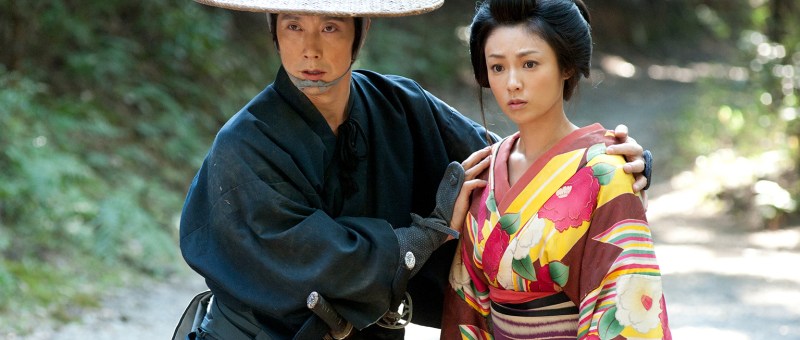
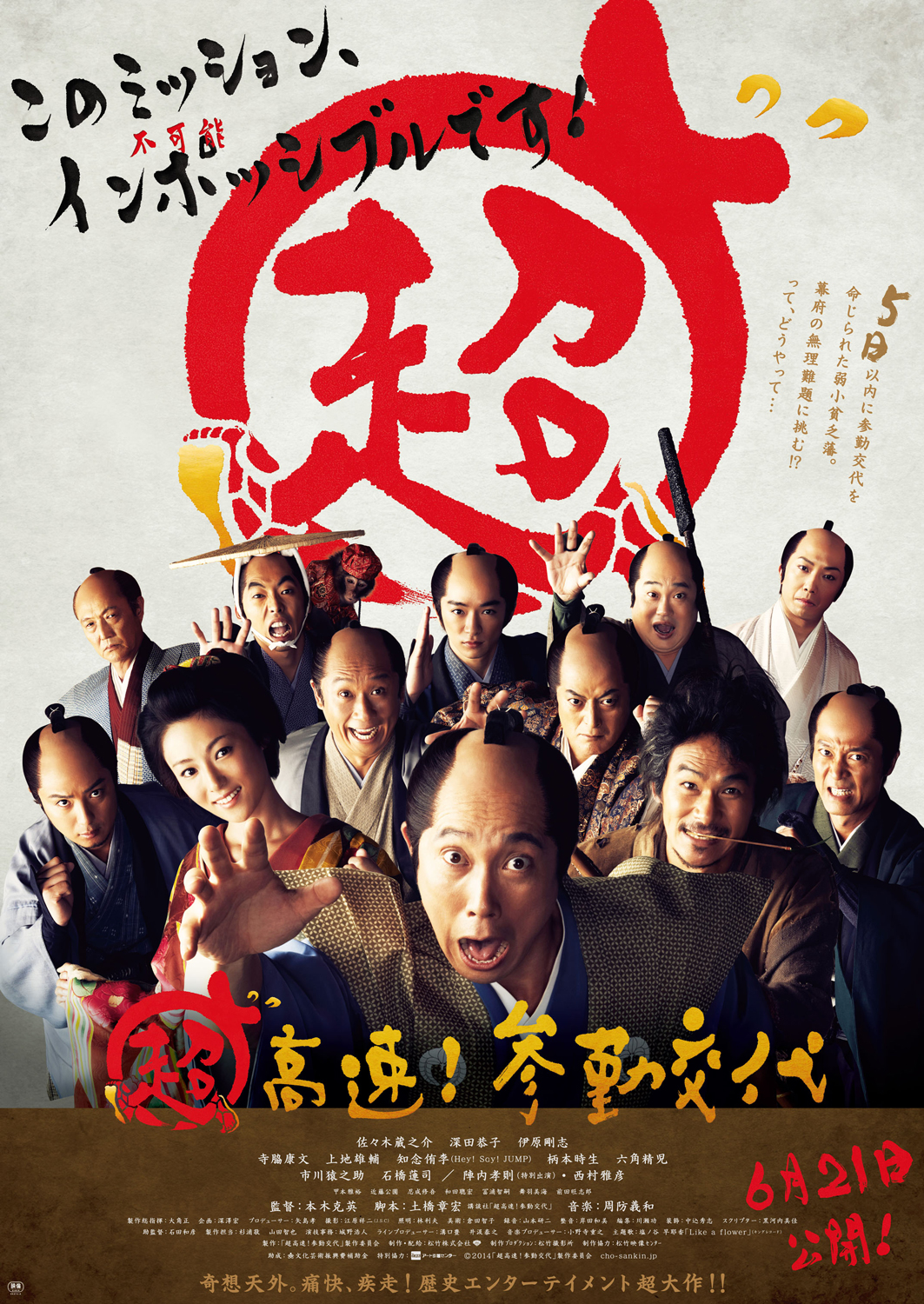
Samurai Hustle (超高速!参勤交代, Katsuhide Motoki, 2014)

A kindhearted lord finds himself in deep trouble when he’s suddenly called back to Edo despite having just returned from his biennial service in Katsuhide Motoki’s jidaigeki comedy Samurai Hustle (超高速!参勤交代, Chokosoku! Sankin Kotai). Set in 1735, the film is in some senses unusual in pointing the various class biases even with the hierarchal samurai society as the tiny rural clan at the film’s centre are swept into intrigue by the machinations of an ambitious courtier who thinks they lied about their goldmine being extinct and plans to get his hands on it by dobbing them in to the Shogun.

The problem is that they really weren’t lying. The Yunagaya clan is dirt poor, especially after having spent a small fortune travelling to Edo and back. In this era, even distant lords were called to Edo every two years to serve at court. They were expected to parade to the capital in style, showing off their wealth and status as they go which is of course inordinately expensive. The expense was the point. Practices like these along with forcing clans to move domains on a whim were designed to weaken their resources so they’d have no recourse to rebellion even if they were even more annoyed about being forced to travel back and fore for no real reason. 

It took Lord Naito (Kuranosuke Sasaki) and his retinue 10 days to walk home, which is why it’s even more of a shock to get a letter telling them to high-tail it back in five or risk being dissolved by the shogun. Evil retainer Nobutoki (Takanori Jinnai) knows it’s impossible for them to arrive on time which is how he plans to get his hands on the gold. What he didn’t count on, however, is the unexpected scrappiness of a “backwoods samurai” who’s used to having to find ingenious solutions to difficult problems because he doesn’t have the money to solve them. Nobutoki is essentially a snob who looks down on country folk and thinks Naito does not befit the rank of a samurai anyway, sneering at his humble gift for the Shogun of some locally sourced daikon pickles. 

The homeliness of the daikon signals Naito’s down to earth nature as a fairly egalitarian samurai who doesn’t really care about hierarchy and status even if he knows he has to play the game. What he cares about is the safety and happiness of his people, which is one reason he’s going to bust his arse to get back to Edo and clear his name. Aside from his humanitarian principles, also giving away some of their rice stocks to neighbouring clans suffering during a time of famine, Naito is also thought of as an eccentric because of his severe claustrophobia which makes it impossible for him to close the door when using the bathroom, let alone travel in a palanquin, though he’s found an ingenious solution for that one too. 

In an odd kind of paradox, he becomes a defender to proper samurai values in his opposition to Nobutoki who plays fast and dirty, sending out ninja assassins on the road to try to ensure he won’t make it to Edo before the deadline. Meanwhile, he bonds with a feisty sex worker who, like him, is dealing with childhood trauma and is sick of entitled noblemen who look down on the poor despite being a fellow human who as she puts it poops and screws just like everyone else. In a way she frees him from the confines of his hierarchal existence by helping him overcome his claustrophobia, at least while she’s at his side, while he saves her from her oppression by transgressing class boundaries and bringing her into the samurai world if only as a concubine.

Nevertheless, as he warns her, being poor is hard even when you’re a samurai, and ironically his circumstances aren’t much better than hers even if he has a superficial level of comfort and security tempered by his genuine ability to appreciate the simple charms of daikon over fancy Edo cuisine. After all, sometimes samurai become peasants or peasants become samurai and for an impoverished lord like Naito the distinction is fairly thin, though he evidently does his best to protect those around him from both sides of the class divide while remaining unafraid to tell the Shogun exactly what he thinks of him. After all, you’ve got to roll with the times, especially if you’re a backwoods samurai at the mercy of a harsh and arbitrary system but also far enough away from the mechanisms of power to begin to ignore them. 


Trailer (no subtitles)

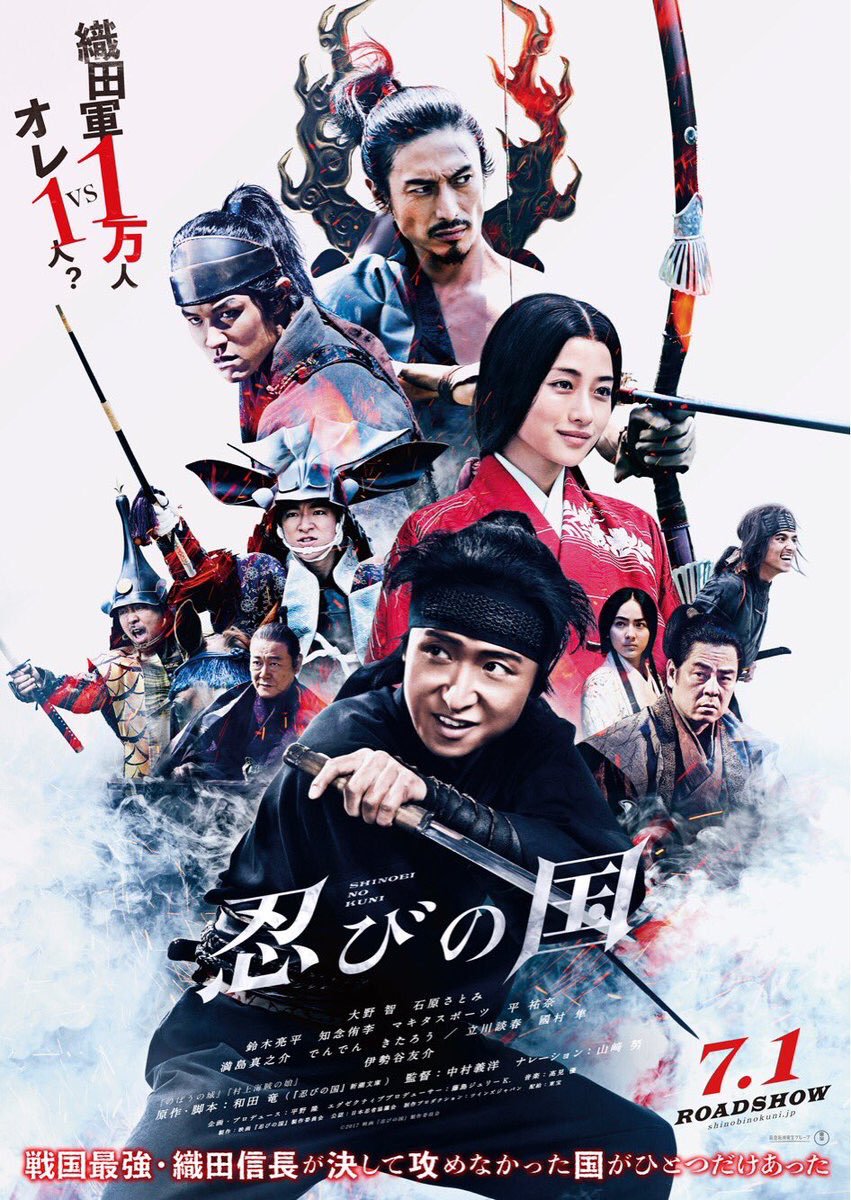
Mumon: The Land of Stealth (忍びの国, Yoshihiro Nakamura, 2017)

MumonJapan prides itself on its harmonious society, but just like the Spartans of Ancient Greece, there have always been those who choose to do things differently. In the late 16th century, Japan was divided into a number of warring states but one visionary general, Oda Nobunaga, had begun a campaign of conquest which he intended to extend across the nation creating peace through unification under a single ruler. One tiny province held out – Iga, home to the ninja and renowned for the petty heartlessness of its mercenary men.

In the September of 1579, two rival ninja clans are engaging in a little practice fighting to the death during which Mumon (Satoshi Ohno), “the greatest ninja in Iga”, takes a commission to assassinate the younger son (Shinnosuke Mitsushima) of the opposing general, which he does with characteristic style and efficiency. The dead man’s older brother, Heibei (Ryohei Suzuki), is heartbroken not only by his brother’s death but by the relative lack of reaction it provokes in his father (Denden) who remarks that the loss of a younger son is no different to that of a foot soldier, and foot soldiers die all the time.

Ironically enough for a man nicknamed “no doors” because no doors can bar him, Mumon is currently locked out of his own house because his wife is upset about his meagre salary. When he stole her away from her noble home, Mumon exaggerated slightly in his tales of his great wealth and social standing and now Okuni (Satomi Ishihara) has decided he can’t come home ’til she gets what she was promised.

The death of Heibei’s brother sets in motion a chain of politically significant events which are set to change not only the course of history but the outlook of at least two men in the “land of stealth”. In Iga, the men are known are known for their beastliness and lack of common human decency. Skilled in stealth warfare, they have no allegiance to any but those with the biggest wallets and live by the doctrine of strength. The weak die alone, and that’s a good thing because it means the tribe is strong.

Later a retainer (Makita Sports) to the son of Oda Nobunaga, Nobukatsu (Yuri Chinen), says something similar – that only might can unite, the weak must either follow or be destroyed. He regards Iga as weak because it is small and alone, but Iga thinks it is strong for exactly the same reasons. The Nobunaga contingent have no idea just how beastly and petty minded the Igans can be when comes to defending their independence, little suspecting that they are embroiled in a well planned conspiracy.

Heibei, disillusioned with the inhumanity of his fellow ninja defects, offering his services to the new regime with the advice that they invade and wipe out the heartless warriors like the beasts they are. Mumon, sold to the Iga as a child, has known nothing but the Iga way of life and is as greedy and self-centred as any other ninja save being able to command a higher price thanks to his fame and abilities. He now has a problem on his hands in the form of Okuni who manages to dominate him fully with her insistence on replicating the way of life she was originally promised. Mumon cares deeply for his stolen bride and does not want to lose her, but she objects to his natural indifference to the cruelty of his people, opening his eyes to the harshness he had always regarded as normality.

When greed is the only accepted virtue, there can be no honour and without honour no unity. This Mumon eventually comes to understand. Far from the famed independence of the Iga, he, Heibei, and a host of others have been well and truly played by a corrupt and secretive tyranny. Daizen (Yusuke Iseya), an honourable samurai forced to betray his own code in killing his former lord, has a point when he says that the ninja spirit has not been destroyed but merely scattered and will endure through the ages – a chilling thought which results in an echo of the modern world and the horrors wrought by intensive individualism. Rather than embrace the traditional genre tropes of the jidaigeki, Nakamura opts for a post-modern style filled with punk and jazz while the ninjas perform their death defying stunts and Mumon pauses to wink at the camera. The result is an anarchic foray in a historical folly in which triumph is followed quickly by defeat and always by the futility of life without compassion.


Mumon: The Land of Stealth (忍びの国, Shinobi no Kuni) was screened as part of the Japan Foundation Touring Film Programme 2018.

Also screening at:

  • QUAD – 10 February 2018
  • Phoenix Leicester- 11 February 2018
  • Showroom Cinema – 13 March 2018
  • Eden Court – 15 March 2018
  • Broadway – 17 March 2018
  • Firstsite – 25 March 2018

Original trailer (English subtitles)