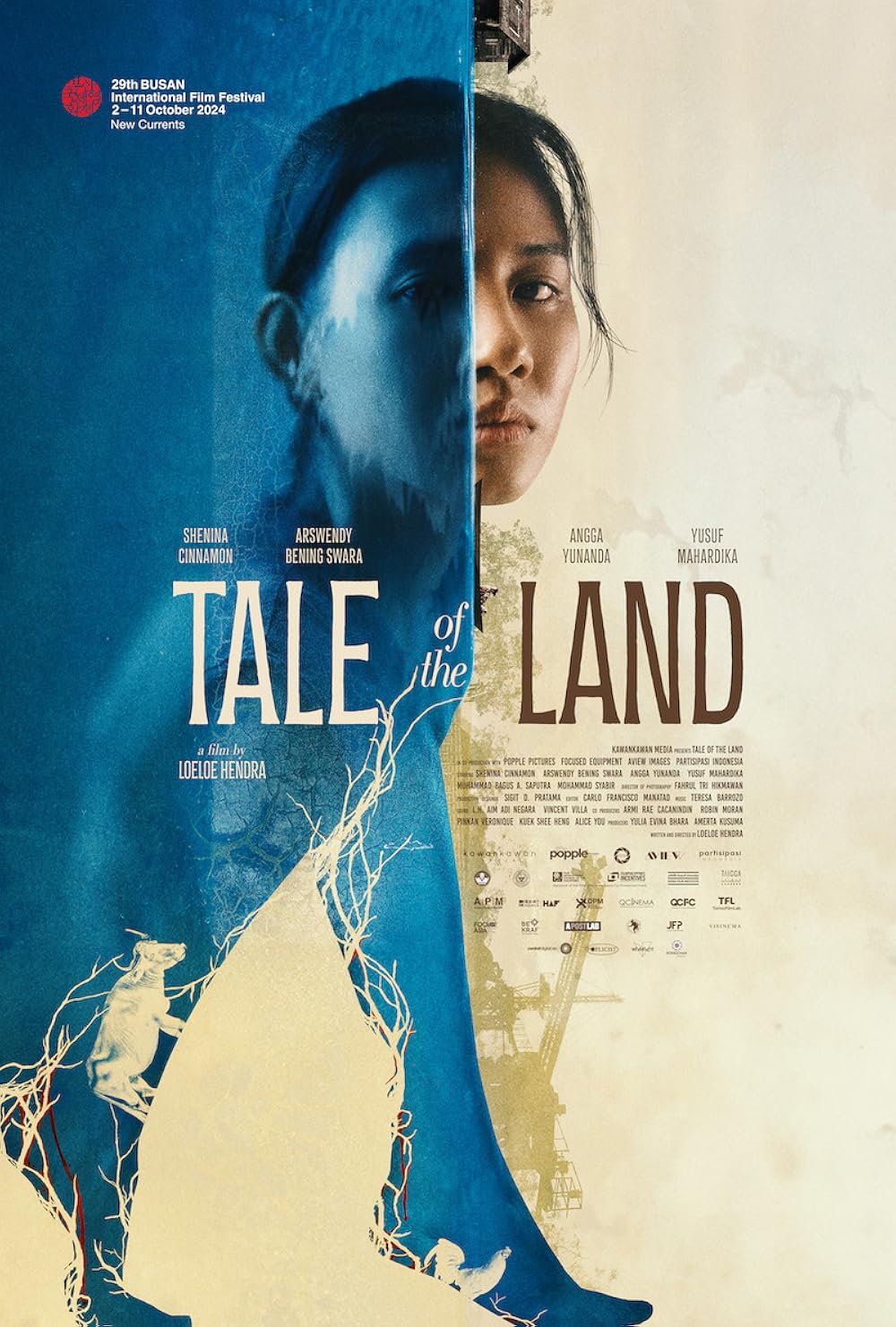
Tale of the Land (Loeloe Hendra, 2024)

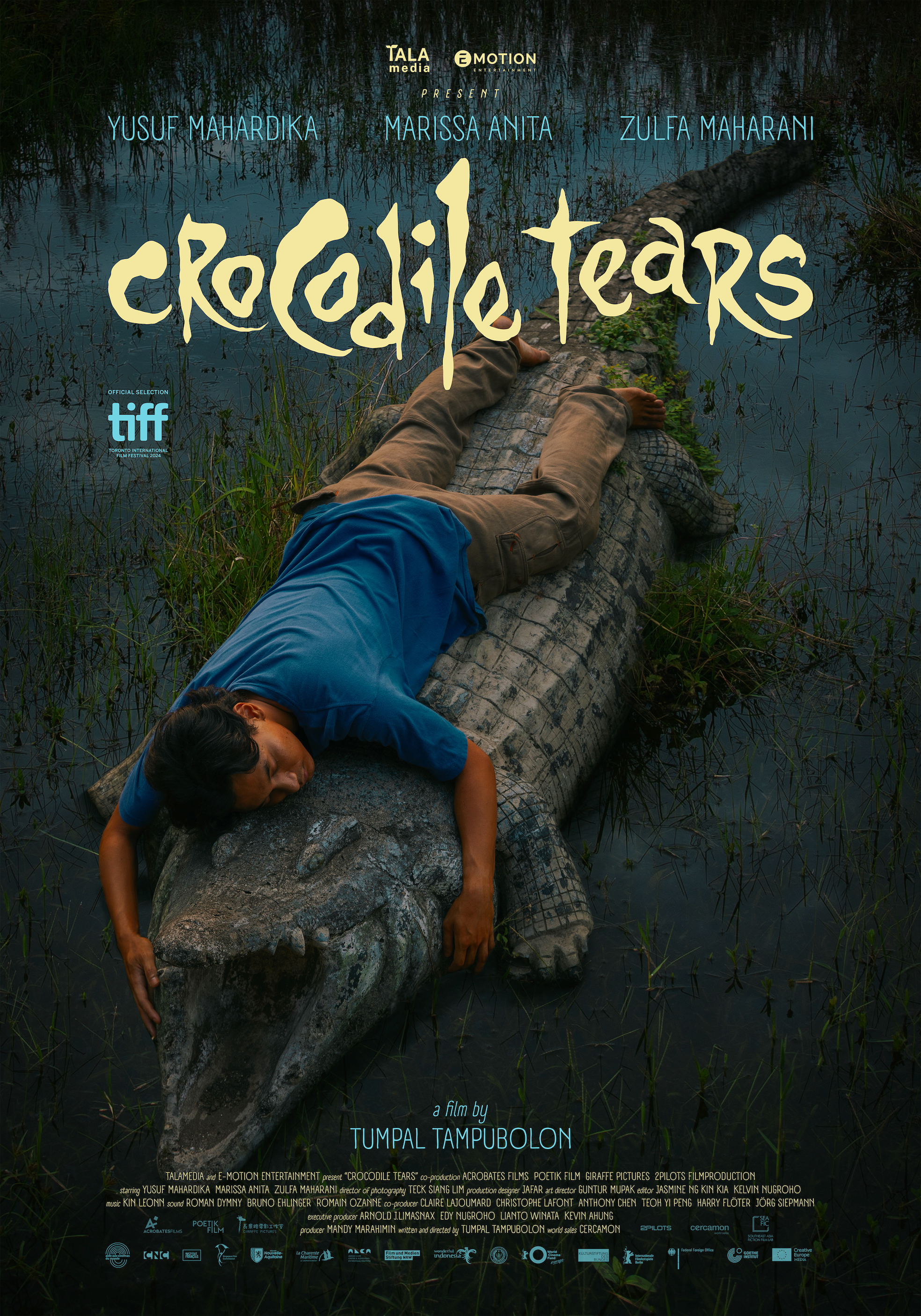
After witnessing her parents’ murder, a young woman is forced into an isolated way of life in Loeloe Hendra’s indie drama, Tale of the Land. Land is, at least according to grandfather Tuha, a place where nothing good happens which might be why he insists on keeping May on the boat. Or then again, perhaps as May is beginning to suspect, he is willingly constraining her and ensuring that she will remain at sea though she now wants a little more out of life.

On one of his ventures out, Tuha is passed by a huge and impressive coal liner while plagued by visions of the house sinking. May asks him if the house will last, but he replies that it surely will for the ancestors will protect them. Yet this is why land has become such a contentious issue to Tuha. The family was forced off their ancestral land by the arrival of the mine. Tuha isn’t lying when he tells May that the land is dangerous because the mine appears of have acquired the consent of the villagers through threat and violence. He no longer speaks to his surviving son because he views him as a traitor for having given in and thrown his lot in with the miners.

But May isn’t sure she believes her grandfather anymore. Perhaps he’s only saying that because he fears being alone and means to trap her with him. Tuha told her that she’s the victim of an incurable curse and is in effect allergic to the land. Every time she touches ground, she collapses. Her fate is echoed in the wounded buffalo she sees on the shore, longing for freedom yet tethered and caught between two worlds. The buffalo turns out to belong to Lawa, a local soldier who seems to have taken a liking to May but a sworn enemy of Tuha in representing the modern nation  mired in authoritarianism and destructive capitalism. 

Thus May is caught between the two men, the grandfather with his certain faith in the power of the ancestors, and the modern man who swears he’ll cure her and also take her to the site of her parents’ graves. Tuha tells her that this is the only place left to them and they must accept it, that she should give up any thought of returning to the land and learn to be happy with the self-sufficient life they’ve built at sea. The film is then a kind of parable for the fate of the Dayak people who have been displaced from their ancestral lands by the incursion of modernity in the form of violent corporatism as manifested in the destructive mining industry which ruins the environment. Whether May’s condition really is a “curse”, or a trauma response to witnessing the deaths of her parents, the land is a dangerous place and most particularly for people like her. Yet the sea isn’t really safe either and offers her little prospect of safety or happiness.

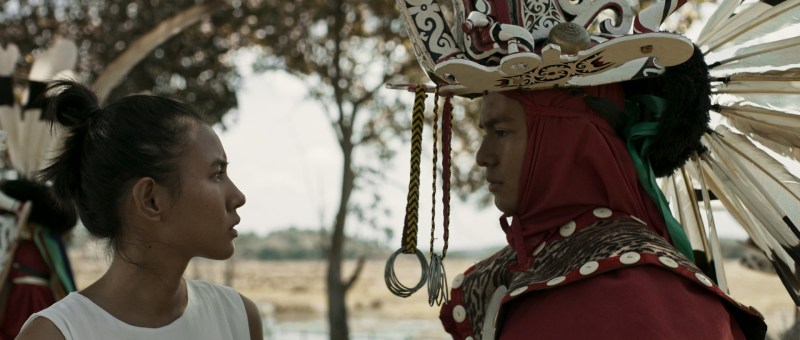
She tries to fight her curse with modernity by simply wearing shoes so that the soles of her feet don’t touch the earth, but discovers that it isn’t really that simple. Dreams and reality become indistinct, May performing a traditional folk dance on the house on the water and also taking part in a folk ritual with Lawa on land. She experiences echoes of the life that’s been taken from her, but finds little in its place already fed up with the monotony of life on the sea but torn between her grandfather’s warnings and Lawa’s promises. Tuha constantly berates her for doing the wrong thing, claiming it’s her fault they’ve no fish because she upset the ancestors by forcing him to kill a chicken in order to appease her curse but she can’t be sure he’s wrong, or that his stubbornness isn’t justified. He was right when they said they had nowhere else to go because their people have been exiled from their own lands and can no longer wander freely but are trapped within a liminal space literally floating in the ocean between the land and the horizon while unable to travel in either direction. May may be on the move and trying to reclaim what is hers by right, stepping ashore onto an uncertain land little knowing whether it will accept her or she it.


Tale of the Land screens as part of this year’s Cinema at Sea.

Trailer (English subtitles)
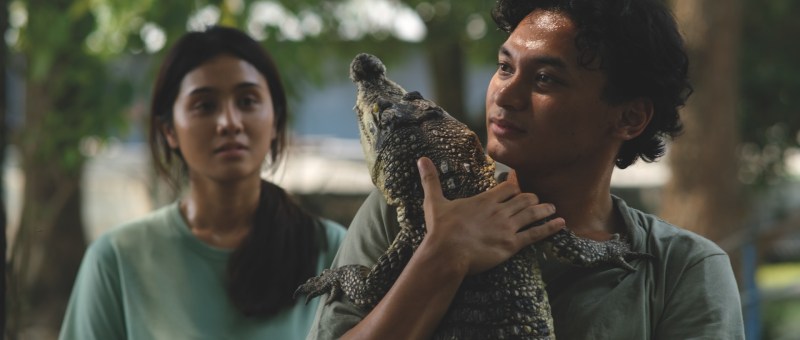
Crocodile Tears (Air Mata Buaya, Tumpal Tampubolon, 2024)

What happens when the baby wants to break out of the egg? The hero of Tumpal Tampubolon’s Crocodile Tears (Air Mata Buaya) isn’t a baby, he’s a 20-year-old man, but the crocodile zoo where he lives with his mother is also a kind of extended womb in which she keeps him constrained. The film’s title is apparently inspired by the fact that crocodiles protect their young by holding them in their jaws, the same jaws they use to snap at the live chickens Johan (Yusuf Mahardika) and his mother (Marissa Anita) throw over the fences. 

Mama is evidently aware her little boy’s growing up. In the first shot of the film he’s furtively masturbating until he’s interrupted by her screaming for him outside. She scrubs his pants and seems to notice that they’re soiled, taking care to remind him that he should keep himself clean now he’s a grown man, but Johan doesn’t seem to understand telling her that he showers every day. Perhaps he’s smarting a little at her comments having overheard two women complaining about a bad smell while sitting next to him at a restaurant and wondering if he carries the stench of the crocodile park even when in the outside world. Later he takes to wearing some of the perfume he picked up for his mother’s birthday and had also given to his girlfriend Arumi (Zulfa Maharani).

Arumi is a direct threat to Mama who knows that another woman will inevitably replace her. She and Johan still sleep in the same bed. The irony is that her loneliness becomes that of Johan who is terrified of ending up all alone in the crocodile park prevented from having anything like a normal life by his mother’s possessive neediness. He loses his virginity to Arumi, a more worldly woman working in the local karaoke box and on the fringes of the sex trade, and she becomes pregnant though unsure whether or not Johan is the father. He realises he likely isn’t, but like his mother is so lonely that he doesn’t care only begging Arumi not to leave him because he can’t bear the idea of being on his own. 

But despite the obvious conflict and rivalry between them, the past is essentially repeating with each woman oppressed by Indonesia’s oppressively conservative and patriarchal social norms. Mama had Johan at 19 and seemingly unmarried. Though she resented the baby in her womb, when he was born she gave all of herself to him and he became her entire world. There are rumours that Mama may have murdered her husband and fed him to the crocodiles though Johan says he never knew his father. He was told both that he had died before he was born and that his father is the zoo’s white crocodile whom his mother refers to as “Papa” and claims to have a special connection to “mentally”. Now Arumi looks her in the eye and says she will do for her child as she did for Johan, but she too has been railroaded into a marriage through lack of other options. Aside from the stigma attached to unwed motherhood, she is fired from the karaoke bar for shoving a customer who was harassing her with the boss apparently thinking it’s all part of her job and she should have known better than to upset a paying client. 

The two women become almost like crocodiles in a cage snapping in defence of their territory as if knowing only one of them can stay. Plagued by strange visions, as is Arumi later, it seems the choice is really Johan’s of whether to bust out of his shell and symbolically break free of his mother’s womb or abandon the idea of starting his own family with Arumi to stay in there forever. Tumpal Tampubolon cracks up the sense of dread and eeriness  beginning merely with discomfort in this quasi-incestuous relationship and heading into the realms of folk horror with its strange and surreal hallucinations that confront Johan with his Oedipal dilemma as he tries to crawl free only waiting to see if Mama’s jaw will finally snap.


Crocodile Tears screened as part of this year’s BFI London Film Festival

Original trailer (English subtitles)

Autobiography (Makbul Mubarak, 2022)

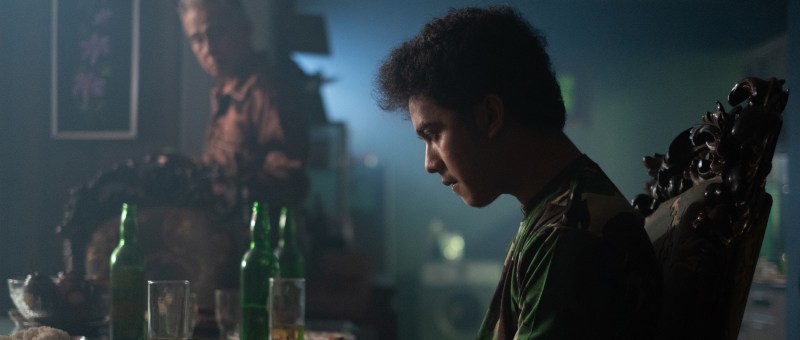
“It’s 2017. Forget about hierarchies. We are friends” a former general disingenuously reassures from the other side of the bars in Makbul Mubarak’s pointed exploration of the mediation of power in contemporary Indonesia, Autobiography. A young man with few prospects for the future is drawn towards authoritarianism by a charismatic father figure but is soon confronted by the realities of his quasi-fascist posturing only to discover that there may be no real escape from the violent world of toxic masculinity that he has unwittingly entered. 

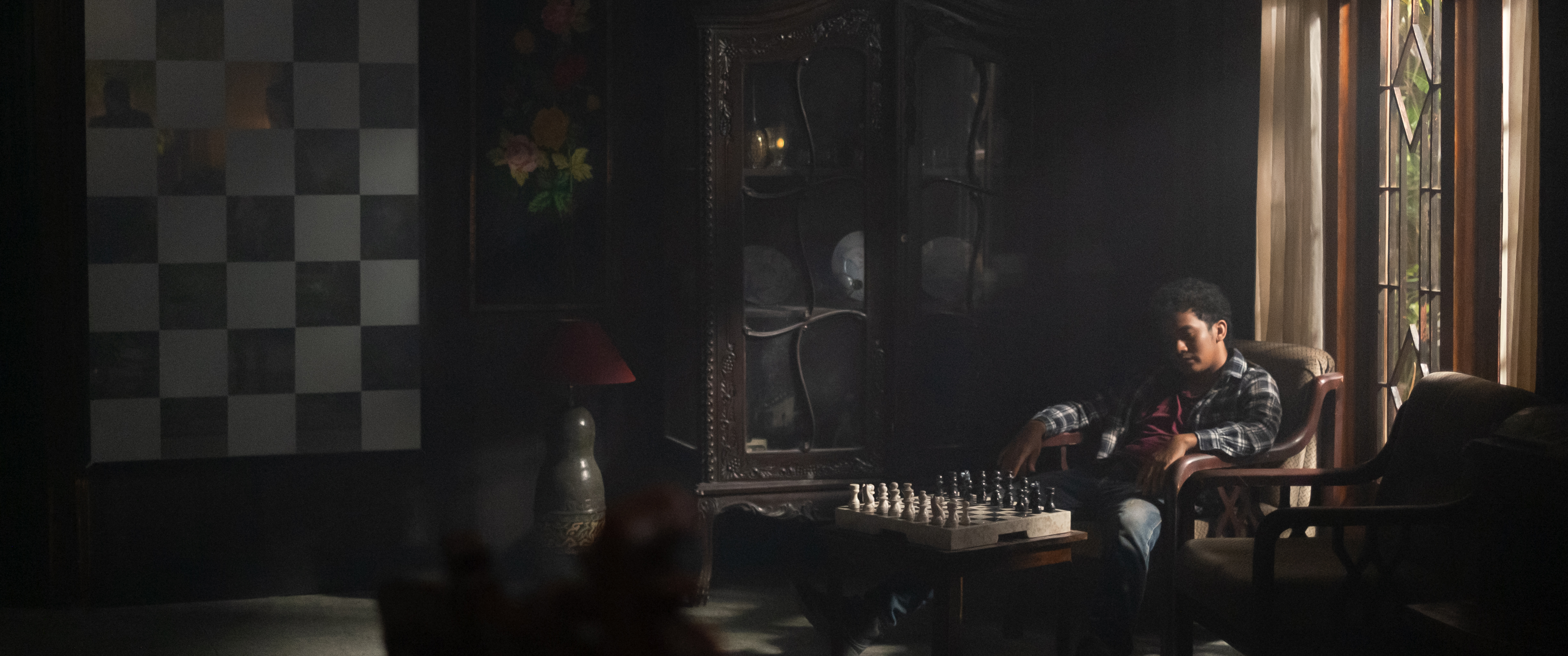
19-year-old Kib (Kevin Ardilova) lives alone in a vast mansion, the country home of a former general, Parna (Arswendy Bening Swara), who soon arrives unexpectedly with the intention of beginning his political career. Kib is quite obviously awestruck by the figure of the General, gazing at him like some long lost saviour drunk on the sense of power he exudes from every pore. On silently collecting the old man’s laundry, he stops to stare at a large portrait of him in uniform on the bedroom wall as if somehow thinking he too could one day be a fine general wielding such infinite power for himself. 

Such a thought might in a sense be transgressive. Kib is a servant in this house and as his father Amir, currently in prison for standing up to developers who were trying to steal his land, points out, their ancestors have always served the ancestors of Purna. Purna may tell him that no one cares about class anymore, but it obviously isn’t true or these two men wouldn’t be on opposite sides of the bars, or perhaps they would but their positions might be reversed. “Be careful who you trust” Amir tries to warn his son, but it’s already too late. Kib is ambitious. There’s something that bristles in him when Purna asks after his brother and wonders how well he can be doing as a migrant worker in Singapore with thinly concealed disdain in his voice. When Purna gives Kib an army shirt and says he looks just like him when he was young, a resemblance soon noticed by others, it flatters him to think he may be the General’s son rather than that of a mere servant turned convict. 

The more time he spends with Purna the more like him becomes, walking around with a swagger, exuding power and intimidation as if he really were a soldier not just a boy in a green shirt. Tragically he doesn’t even quite understand how this power mechanism works or what it’s implications are. When he accidentally bumps into a mosque while attempting a tight three point turn, local men surround the car demanding compensation. Purna gets out and puts on a show of authority. On realising what they’re dealing with the men instantly back down. Purna has a sheepish Kib apologise, and the men apologise to him, before explaining that sorry is a powerful word that can turn rage into blessing. What Kib fails to realise is that Purna is talking not about humility but intimidation, a mistake he learns to his cost in bringing a boy only a little younger than himself to Purna to “apologise” for disrespecting him expecting the General to pull the same trick again but shocked when events take a much darker turn than he’d anticipated. 

The boy he brought in, Argus, was the son of a woman whose coffee plantation would have to go if Purna got his hydroelectric plant approved. Purna sells the plant as a way of dealing with the problems caused by inefficient infrastructure but hides the corruption at its centre, forcing families off their land for the developers’ benefit through violence and intimidation. Argus is just as angry Kib, only he’s not falling for Purna’s sales patter. Kib watches the General shift the blame onto the developers, whom he backs and back him, while claiming to be a man of the people and giving a glib speech at the funeral of a boy he killed in nothing other than pettiness. 

Yet Purna is ageing and his grip on power may not be as firm as it once was while his seeming sentimentality in his attachment to Kib as a surrogate son is also a weakness. Kib may be deciding that being a migrant worker’s not as bad as becoming the heir of a man like Purna, but once you’re in it’s hard to get out as the ambivalent closing scene implies catching him dumbstruck once again only now like a general overseeing his troops and in one way or another a prisoner of his father’s house, a servant inheriting the mansion whether he wants it or not. In many ways a tale of seduction, Autobiography paints a fairly bleak picture of the contemporary society ruled by violent masculinity and fragile authority figures who quite literally visit their sins on their sons. 


Autobiography screens 15th/16th October as part of this year’s BFI London Film Festival.

Original trailer (English subtitles)