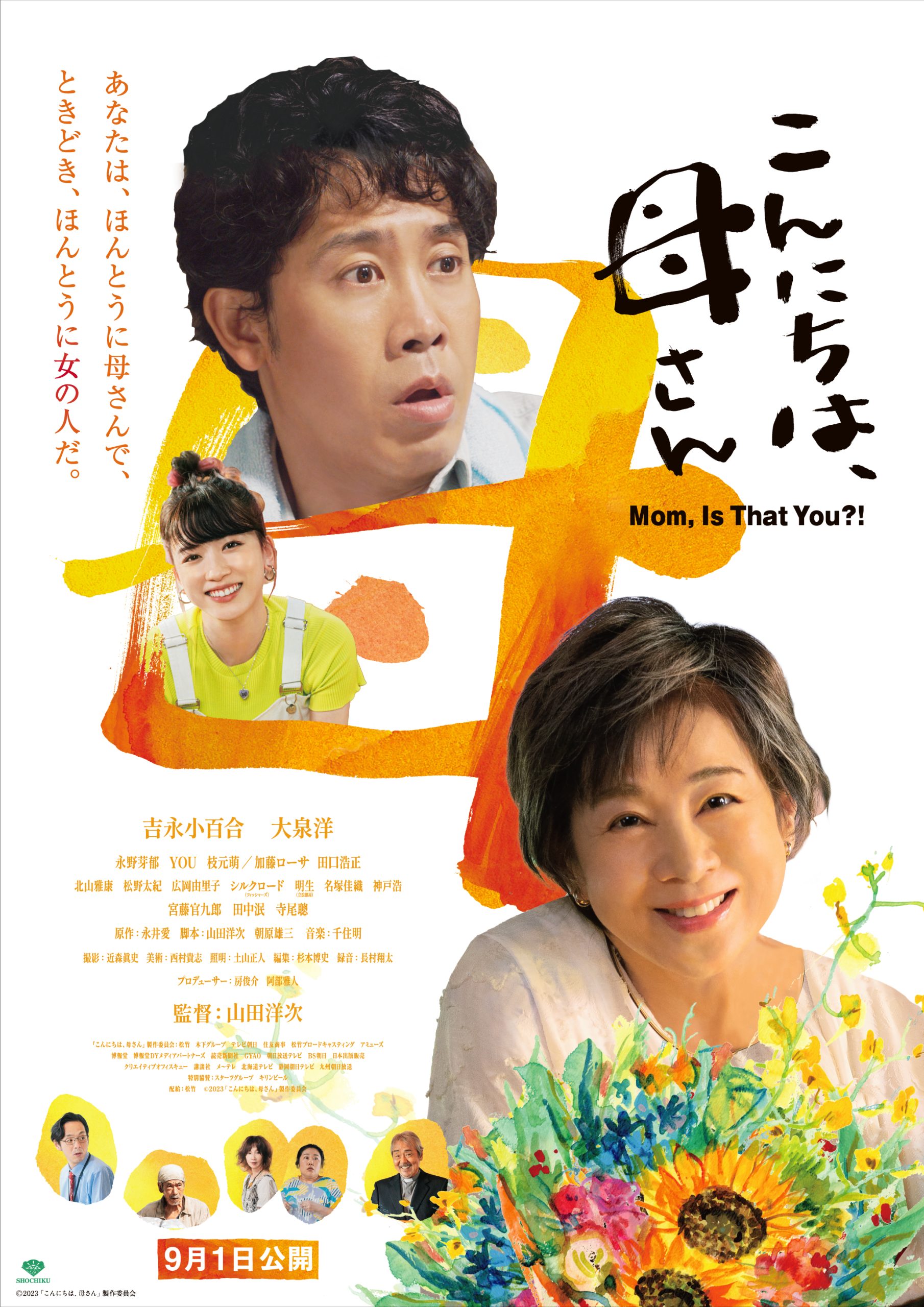
Mom, Is That You?! (こんにちは、母さん, Yoji Yamada, 2023)

“People of my generation can’t throw anything away,” an older woman admits on her hearing her daughter-in-law has just been featured in a TV series about decluttering. Inspired by Ai Nagai’s 2001 play, the latest from veteran director Yoji Yamada Mom, Is that You? (こんにちは、母さん, Konichiwa, Okasan) seems to hint at a series of circular generational divides while suggesting that the children of the Bubble-era in particular are too quick to get rid of things they don’t think they don’t need anymore.

That’s the irony of soon-to-be 50-year-old Akio’s (Yo Oizumi) salaryman job in HR. It’s his job to cut dead wood from the company and this current round of polite requests to employees of a certain level to take early retirement includes his uni friend Kibe (Kankuro Kudo) who doesn’t take kindly to what he sees as a personal betrayal. Unlike Akio who is beginning to tire of the salaryman dream, Kibe fiercely fights for his position and identity as an executive at a big company even when faced with banishment room treatment and disciplinary dismissal after an altercation with the boss.

But what Kibe doesn’t know is that Akio is already facing a series of crises. His marriage has collapsed and his university student daughter Mai (Mei Nagano) is having a crisis of her own. Fresh from her tidying success, her mother has told her that all she can do is get good grades followed by a boring salaryman job like her dad’s which doesn’t seem to be what she wants which is why she’s run off to stay with her grandmother Fukue (Sayuri Yoshinaga) who runs a traditional shop selling tabi socks near the Sumida River. Fukue has a kindly, laid-back attitude remiscent of the shitamachi spirit found in other Yamada films in contrast to the stressed out uptightness of Akio who hasn’t told her about his impending divorce nor work troubles but finds himself paying a visit home in an attempt to sort himself out only to find Fukue keeping herself busy with a local charity group and nascent relationship with a church pastor. 

Fukue’s charity work is emblematic of a waste not want not philosophy that has otherwise disappeared from the modern society as they pick up the things other people don’t want and donate them to the needy even if it sometimes seems a little simplistic or patronising. Biting into some reject crackers from the local rice cracker shop, Akio reflects that they’re something that’s made to console people and it’s work that has meaning unlike his soulless corporate job that gives him nothing other than stress and money. At the time the play was written, the fallacy of the salaryman dream was clear for all to see in the post-Bubble society but to a man like Akio getting a company job was a big deal and his success is still the talk of his mother’s friends even he starts to wonder if he still has time to start again and discover a more meaningful way of living.

Some of these ideas, and the timescales involved, make much more sense for the play’s millennial setting rather than the film’s apparent present day given the references to the firebombing of Tokyo which would require the older protagonists to be their late 80s to even remember. Akio dismisses his mother’s charity work and insists that the homeless are only those who opted out of the competitive society he too has come to doubt or else were excluded from it, while he’s resentful of her attachment to the pastor in contrast to Mai who is excited by the prospect of her grandmother’s love affair and enduring possibilities of age while Fukue is beginning to fear not death but dependency if her health should suddenly decline. 

It’s in the midst of her heartbreak that the film affords Fukue a new beginning if in coming full circle, Akio choosing to make a clean break with the unhappiness in his life and Mai embracing her youth while falling for the old world charms of her grandmother’s tabi sock shop almost exclusively catering to sumo wrestlers, who as someone points out never waste anything, and people trying ceremony for the first time at 60. Like most of Yamada’s work, the film has a gentle humanity and melancholy poignancy but also a sense of hope and continuity that run contrary to an overly corporatised society in which young and old are already losing faith.


Mom, Is That You?! screened as part of this year’s Toronto Japanese Film Festival.

Original trailer (No subitles)
A Tale of Samurai Cooking – A True Love Story (武士の献立, Yuzo Asahara, 2013)

A-Tale-of-Samurai-Cooking-teaser

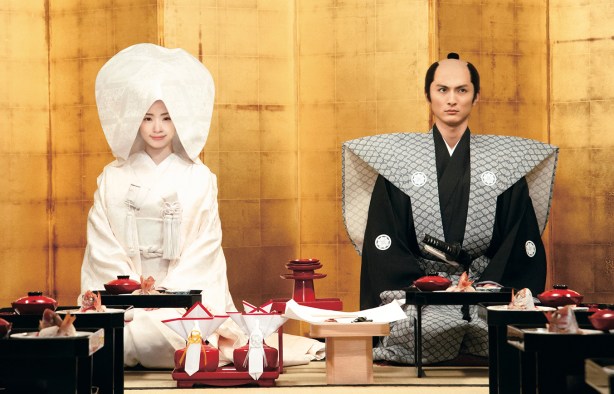
I kind of love this photo because he already looks so annoyed 🙂

Review of period romantic comedy/drama with a side serving of culinary delight A Tale of Samurai Cooking – A True Love Story up at UK Anime Network.


It’s a little known fact but though all samurai carry swords, some of them hang them up when they get to work and serve their lords with meat cleavers and skewers in the relative safety of the kitchen rather than the noisy chaos of a battlefield. Of course, a retainer’s job is to serve the lord in whatever capacity is expected of him, though some maybe happier with their dictated fates than others. In A Tale of Samurai Cooking – A True Love Story (武士の献立, Bushi no Kondate), it’s not only a conventional romantic tale between two initially mismatched people that the title alludes to, but also how one may fall in love with a path in life that was once deeply resented.

Back in feudal Japan, Haru (Aya Ueto) is an orphaned maid servant to a prominent samurai house. She was briefly married, but embarrassingly enough was “sent back” because her new husband and his family found her far too headstrong for their household. The daughter of a pair of restaurateurs, Haru has a keen sense of cooking of her own which sees her catch the attention of a visiting famous cook, Dennai Funaki (Toshiyuki Nishida), when she is the only person able to guess the real ingredients in his “mock crane” dish. Instantly smitten, Dennai makes her a proposal – albeit one for his son who is set to take over the family business but has no real aptitude for cooking. Yasunobu (Kengo Kora) is his second child whose fate was sealed on the death of his elder brother and though he would rather be a more conventional kind of samurai, he is the only heir to this kitchen empire. Can Haru’s cooking skills raise a fire in Yasunobu’s heart for his unwanted destiny or will they both be subjected to a lifetime of cold dinners?

A Tale of Samurai Cooking is definitely much more “period drama” than “samurai movie” though it does share a little of the historical intrigue of your typical “jidaigeki”. Set in the Edo period of feudal Japan, there are plenty of sudden reversals of fate where one house jumps ahead of another which then falls out of favour, sometimes with tragic consequences. However, though those these events inform the drama they are really just the backdrop to the true story of the very grown up (though extremely chaste and innocent – this is a U rated movie!) slow burning love story between Haru and Yasunobu. Though it’s a very charming and old fashioned sort of romance, it’s also true that Kengo Kora and Aya Ueto don’t have a tremendous amount of chemistry and their love story is pretty subtle and one sided until very late into the film. Of course, the audience knows how this sort of film has to end, but the film does rather rely on this fact.

Yasunobu is at heart a kind man undergoing very difficult circumstances. Having had to let go of the life he wanted that was so nearly his following the death of his older brother, it isn’t a surprise that he’s generally sullen and extremely resentful that his father has arranged this marriage for him with a slightly older woman who’s already been married once before, not to mention the fact that it’s all because she’s better than he is at this thing he’s now supposed to do for the rest of his life. Yasunobu doesn’t even like cooking, he thinks it’s “woman’s work” and had devoted his life to the art of the sword. Luckily, Haru’s perspicacity extends beyond her palate and she’s quickly figured out what’s going on with Yasunobu so she can turn him into the ace cook his father needs him to be. Haru’s influence opens up his wilfully closed eyes to the rewards of both good women and good cookery which is part way to saying that food cooked with love can heal a broken heart, but it’s equal parts changing times and a young man growing up.

As films about food go, A Tale of Samurai Cooking certainly has a fair few mouth watering dishes on display but perhaps lacks the hearty fare of something like the comparatively more sensual, though equally comic, Tampopo. In truth, its overwhelming quality is a kind of inoffensive niceness and perhaps for some tastes could have done with a little more spice though like the best Japanese cuisine offers its own rewards precisely because of its subtlety. It’s a perfectly nice light meal, but you’ll probably wishing you’d gone for something more substantial come bed time.


I went a bit overboard with the food metaphors, which is maybe what you get when you spend your food budget on movie tickets. I regret nothing.

Anyway this is showing at the Curzon in Mayfair until tomorrow, though they did say it may extend if there’s enough interest. It’s also going to be screened at the Genesis Cinema in Mile End and the Everyman and apparently will open in Ireland from 9th January. Yume Pictures will then release it on DVD in 2015 if you aren’t near a cinema that’s showing it, or you can even watch it on Curzon Home Cinema right now.