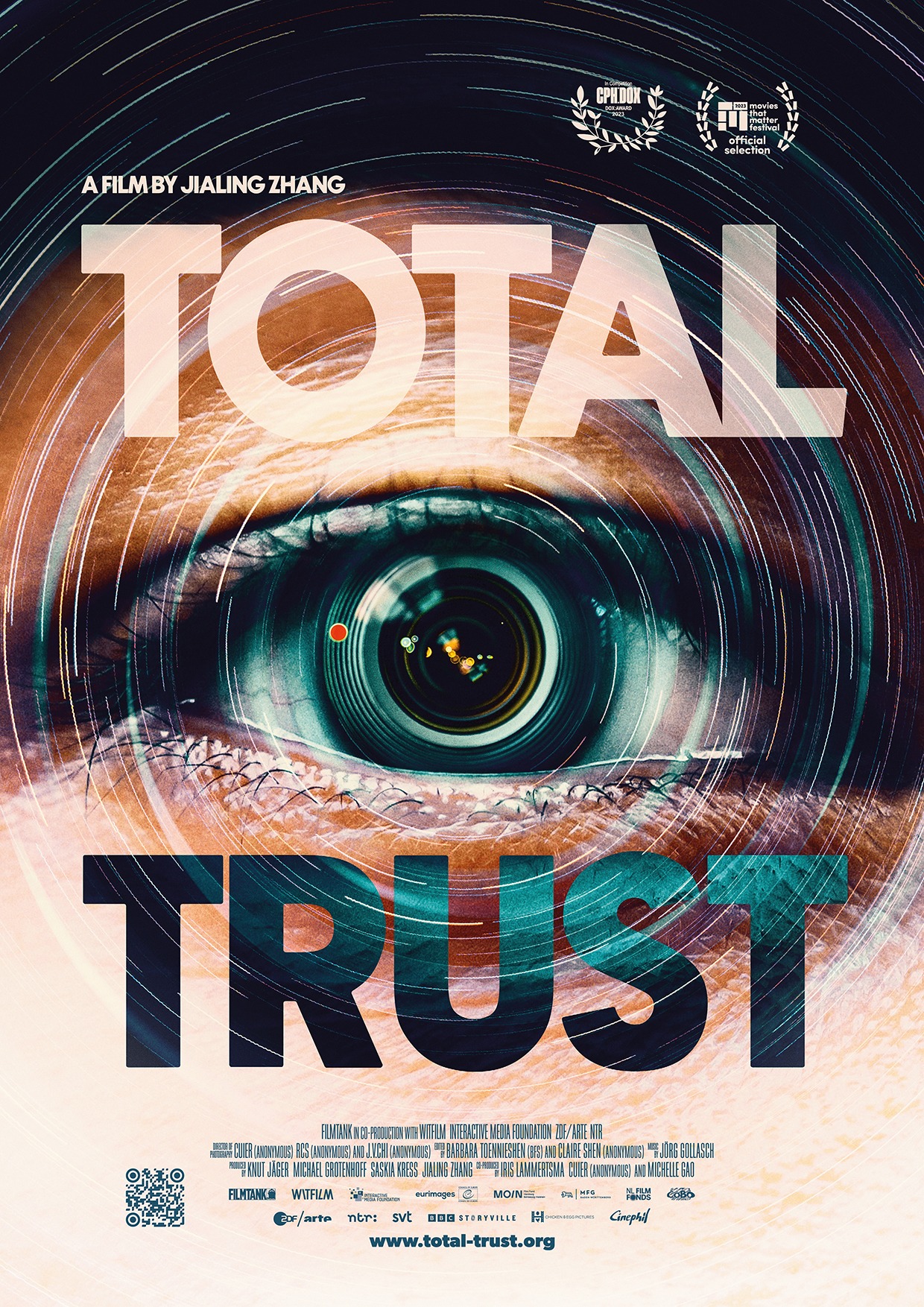
“The government strives to provide a stable society, fair legal system, and quality services to ensure the fulfilment, happiness, and security of its people,” according to a news reader at the beginning of Zhang Jialing’s documentary exploring the contemporary surveillance state of the modern China, Total Trust. In recent mainstream narrative cinema, there has a been a clear message that the Chinese citizen is safe nowhere other than at home, but here other voices tell us that threat comes not only from abroad but from within and the co-operation of all citizens is necessary to ensure the nation’s security.
Early scenes see what others may regard as busybodies enforcing public order by picking up rubbish or monitoring minor parking infractions, but it’s precisely this sense of oppressive community pressure that “social management” systems are designed to create. Utilising cutting edge technology, the authorities harvest big data to assess the “trustworthiness” of the ordinary citizen and accord them a rank which then affects all aspects of their lives from their ability to gain or maintain employment to the right to use public transport. Social responsibility is rewarded with points for the above mentioned activities but also for keeping an eye on your neighbours and ensuring they aren’t planning to do anything “subversive” while your neighbours also watch you.
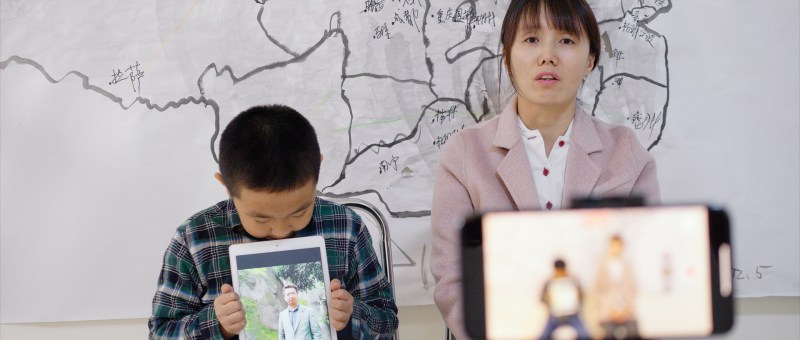
But this trustworthiness is not so much towards the society as it is towards the Party. Many of Zhang’s protagonists are lawyers and their families who were targeted during a recent crackdown and charged with subverting state power because they defended those who claimed they’d been falsely convicted of crimes which is problematic because the Party cannot be wrong and it doesn’t make mistakes. Chang Weiping was arrested in 2020 and sent back to his hometown for house arrest leaving him separated from his wife and son. He recounts frequent torture which caused him permanent physical damage while his wife has also found herself targeted by the surveillance state after protesting his imprisonment.
Other families report similar harassment. Wenzu Li’s husband Quanzhang Wang was imprisoned because of his championing of human rights and though he’s since been released the couple have effectively been banned from social media with any photos featuring their faces automatically removed by AI technology and the accounts that posted them limited. They are constantly watched while the police have also motivated their neighbours to monitor and shun them. After being invited to speak at an international conference, their door is blocked by mysterious mask-wearing neighbours who physically prevent them from leaving (they later appear at the conference via Zoom). Their son has also had to change schools almost every term because of the persistent harassment and their own low social credit ranking.
As another persecuted journalist, Sophia, points out after generations of censorship, a degree of censure has become internalised and in general people tend to self-censor without necessarily regarding it as an infringement on their freedom. Many people welcome this kind of oppressive “security” because it makes them feel safe while others are too afraid of the potential consequences to resist. Weiping’s wife takes his father to task for giving up on the campaign against his imprisonment as he remains reluctant to challenge the Party of which he has been a lifelong member, while he agrees that he is simply old and frightened and doesn’t want to be subjected to state harassment himself.
Weiping’s wife eventually decides to emigrate to the US believing there is no future for her son in China while Weiping himself remains imprisoned. The journalist makes plans to study abroad in the UK, which might in itself be ironic given the increasing authoritarianism of the British government. The UK is already one of the most surveilled places in the world and similar kinds of AI-based facial recognition technology are already being employed in law enforcement. In any case, she is arrested at the airport and prevented from the leaving the country before being detained and charged with the same “subverting government power” line as the lawyers. According to the closing titles, she remains in prison. Emergency powers introduced during the pandemic have only enabled a wider authoritarian power grab with authorities now able to manipulate “health ratings” to silent protest or otherwise make lives unliveable by simply switching the reading to red meaning that the target can be arrested simply for leaving their home. Citizens may need to reevaluate the “trustworthiness” of the government but are of course prevented from doing so in a society in which their every movement is already closely controlled.
Total Trust screened as part of this year’s DOC NYC.
Trailer (English subtitles)
 Windows on Worlds