Lost Lotus (未见莲华, Liu Shu, 2019)

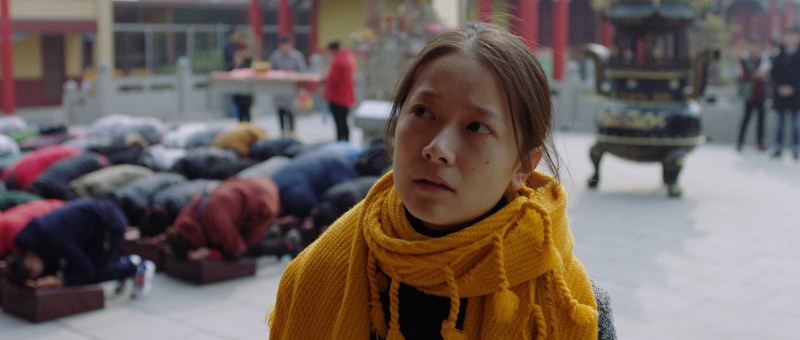
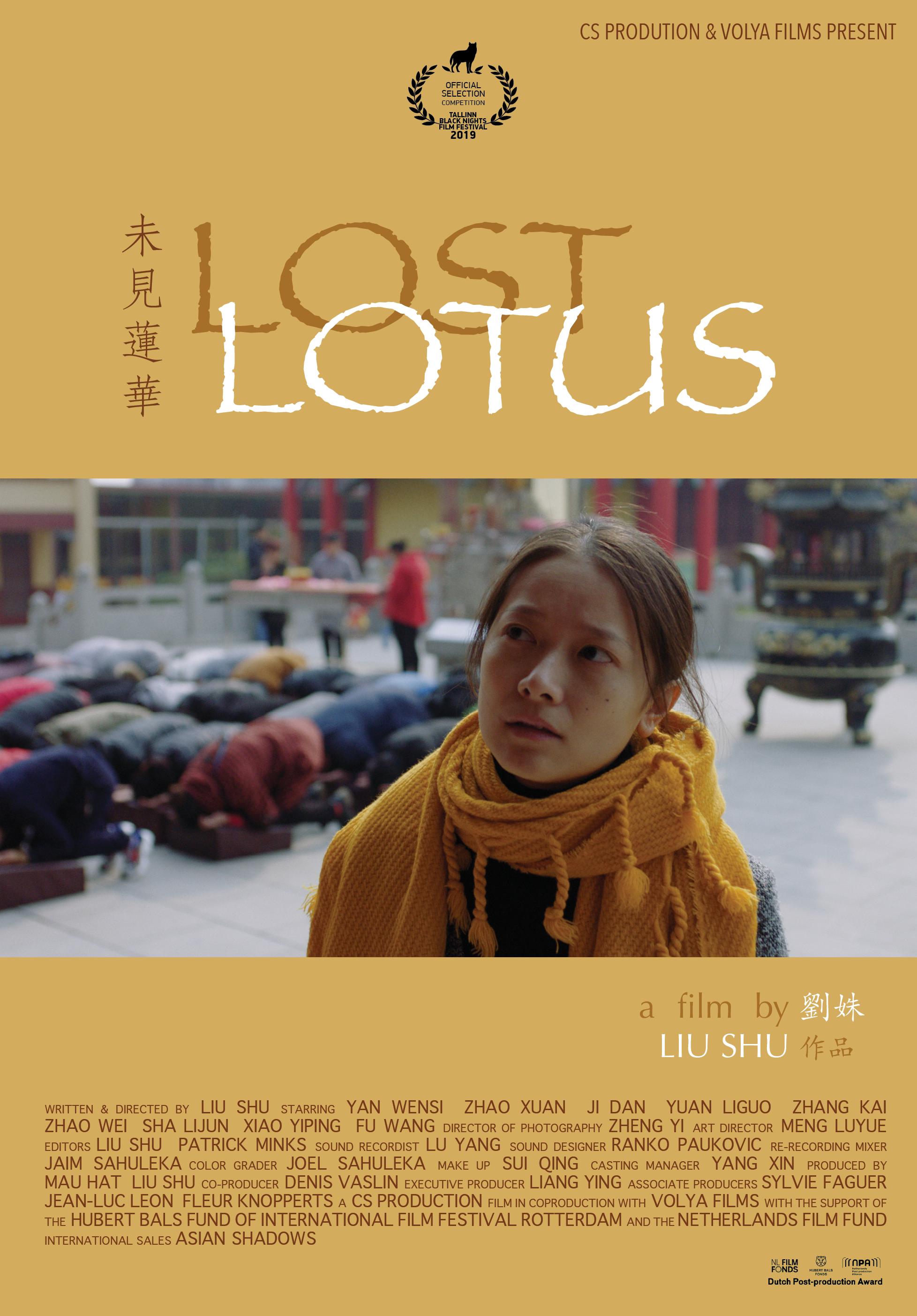
A grieving woman finds herself caught between the tenets of Buddhist thought and the contradictions of the modern China in Liu Shu’s emotionally complex drama, Lost Lotus (未见莲华, wèi jiàn lián huá). The paradoxes of Buddhism are, in a sense, a mirror for those of the contemporary society which has become mercilessly consumerist, obsessed with the material in direct rejection of the spiritual, yet even those who outwardly profess Buddhist values of compassion, goodness, and forgiveness are not perhaps free of the consumerist mindset in which everything has a price and for every transgression there is simply a fine to be paid in the next life rather than this. 

An intellectual teacher, Wu Yu (Yan Wensi) describes herself as irritated by her mother’s (Zhao Wei) devotion to Buddhism, viewing it in a sense as slightly backward and superstitious. Nevertheless when her mother is suddenly killed in a late night hit and run, she finds herself agreeing to hold a traditional Buddhist funeral guided by her mother’s friends at the temple despite having been warned by the police that going ahead with the cremation will obviously make it much more difficult to find the killer. While immersing herself in Buddhist thought helps her reconnect with her mother and deal with her grief, she continues to search for the driver determined to get some kind of Earthly justice in addition to the karmic. 

Increasingly worried and frustrated by Yu’s growing religious mania, her husband (Zhao Xuan) concentrates on finding those responsible in the hope of bringing closure so that they can try to move on with their lives as a couple. A kind and compassionate, modern man (he evidently does all the cooking), Yu’s husband does his best to support his wife in the depths of her grief but is himself conflicted particularly when he discovers that the man driving the car is a member of a rich and powerful elite who believes himself to be above the laws of men. 

Yu’s newfound Buddhism begins to change her outlook, though she struggles to orient herself in a world which is so at odds with its twin contradictory philosophies. Running parallel to her own quest for justice, she finds herself drawn into the struggles of one of her pupils who wanted to quit school because he has to look after his father who was badly beaten by thugs working for developers angry that he had refused relocation. Yu is originally quite unsympathetic, she and her husband blaming the boy’s father for valuing money over his life, cynically believing he must have been angling for a bigger compensation pay out though of course it is probably not so simple. While Yu and her husband are a two-income, professional household, the boy’s family are living in poverty having been evicted from their home, the father bedridden because of his injuries and therefore unable to work. Yu’s quest for justice strains her relationship with her husband and may later have economic consequences as his career prospects are used as a tool to convince them to back off, but her need for retribution affects only herself. The boy’s mother, however, feels terribly guilty knowing her obsessive quest to have the thugs held accountable is endangering her son’s future, but knowing also that she cannot simply give up and let them win. 

This is exactly the dilemma that preoccupies Yu as she weighs up how much of her anger is personal and how much societal. The driver, Chen (Xiao Yiping), offers them sizeable compensation which her husband is minded to accept, not for its monetary value but because taking the money means it’s over. But Yu wants “justice”, she resents the idea that there was a price on her mother’s life or that the culprit can simply pay a fine to assuage his guilt. Even justice, it seems, has been commodified. Yet Chen is also a Buddhist, subverting his beliefs to absolve himself in emphasising that all is fated and Yu’s mother’s death is a result of her karma from a previous life. His sin now pay later philosophy grates with Yu, undermining her new found faith in the Buddhist principles of compassion and goodness as the supposed devotee directly refuses to apologise for his role in the death of her mother. 

As her husband asks her, however, what sort of justice is she looking for? Does she want an apology, a jail sentence, to kill him with her own hands? Yu doesn’t know, lost in a fog of grief and spiritual confusion attempting to parse the contradictions of her mother’s faith and a society that has become selfish and consumerist, founded on elitist inequality which allows the rich and powerful to escape the constraints of conventional morality let alone the laws of men. In the end the only justice she can find is a retributive act of violence that perhaps forces Chen to feel something at least of her pain, paving the way for a kind of catharsis though not perhaps healing. An embittered portrait of the modern China, Lost Lotus suggests there can be no justice in an unjust society and only an eternal purgatory for those who cannot abandon their desire to find it. 


Lost Lotus streamed as part of this year’s San Diego Asian Film Festival.

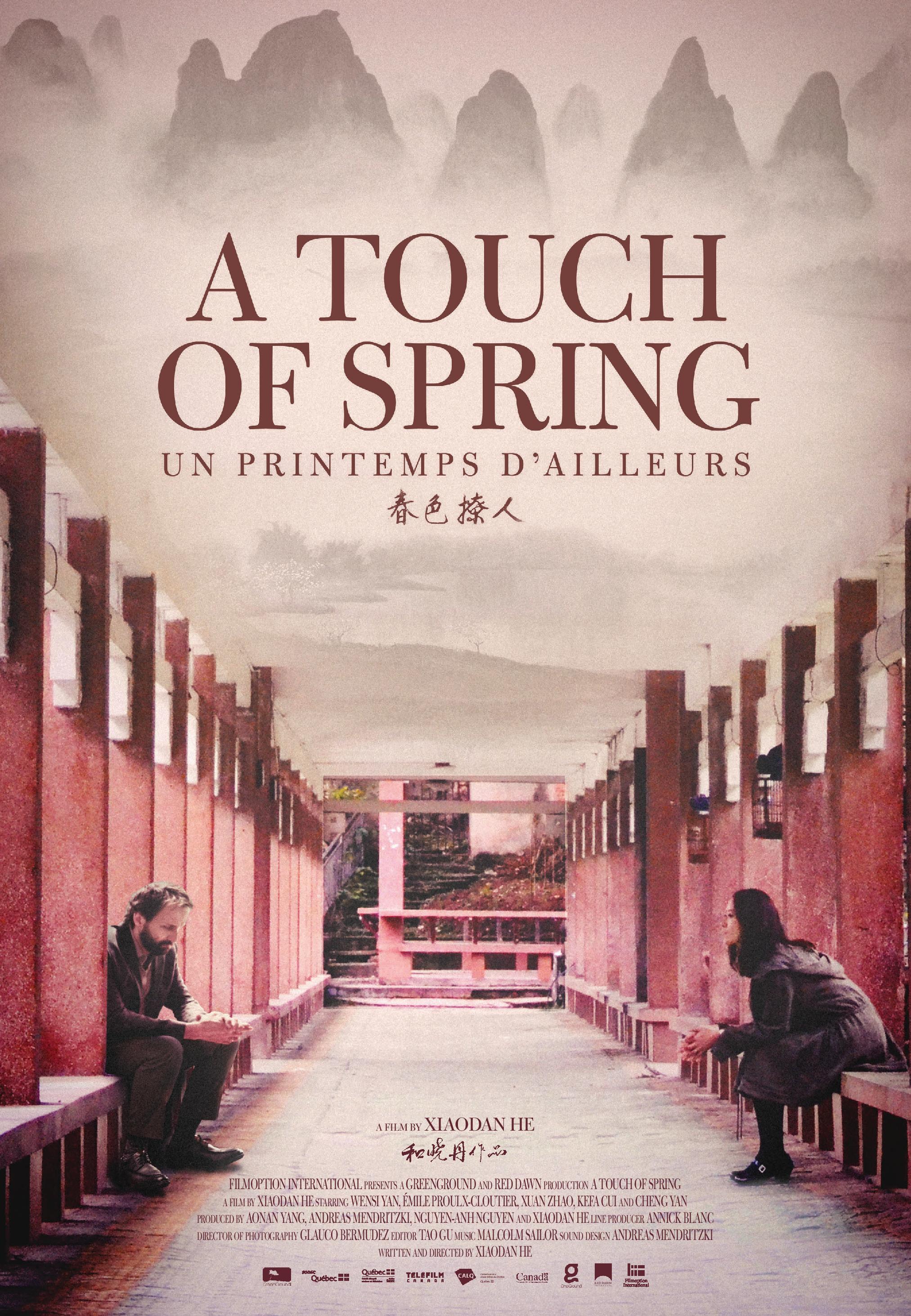
A Touch of Spring (Un printemps d’ailleurs / 春色撩人, He Xiao-Dan, 2017)

When you don’t know what to do, you go home, but what if home doesn’t quite exist for you anymore or trying to go back there only reminds you of all the reasons you chose to leave? Then again, perhaps “home” exists for just that purpose, a place you’re supposed to go to think things through before you ago back out into the world again. The heroine of He Xiao-Dan’s Chinese-Canadian co-production A Touch of Spring (Un printemps d’ailleurs / 春色撩人, Chūnsè Liáorén) is waiting for the thaw, trying to come to terms with the failure of her marriage and the unexpected directions her life may be about to take with or without her consent. 

Fang (Yan Wen-si) has been living in Montreal for the past 10 years, having married a French-Canadian man, Eric (Émile Proulx Cloutier). Her marriage, however, has become distant and she suspects Eric may be having an affair while a considerable strain has also been placed on the relationship because of their inability to conceive a child. When an attempt to confront Eric about his infidelity turns violent and counselling proves no help, it becomes obvious that the only option is divorce. Fang travels back to her hometown in Dazu which she hasn’t visited in the decade since she left and tries to figure things out while staying with her rather gruff grandfather (Cui Kefa). 

Immediately on her arrival, a taxi driver mistakes Fang for a tourist, but even on being told she’s a local quickly realises she’s been away a long time. Her home is not quite her home anymore. Fang’s grandmother has passed away and her grandfather has got married again to a cheerful, warmhearted woman who seems completely odds with the rest of Fang’s sad and grumpy family. The biggest issue is that Fang has not disclosed why she’s come back to China and so everyone is keen to ask about Eric, the lack of children, and her fancy ex-pat life in Canada. 

In fact, Fang is frequently described as the family’s most successful member precisely because she has moved abroad where she owns her own home and, they assume, lives a much higher standard of life. Meaning well, Fang’s new grandmother puts her foot right in it when she tells Fang that the highest success for a woman lies in marrying a good man. More in tune with modern Western values, Fang objects in part to the obvious sexism of her grandparents’ worldview, but it of course also touches a nerve as she finds herself trying to process the failure of her marriage while being too ashamed to admit that her “perfect” life in Canada wasn’t quite so perfect after all. Having separated from Eric, she’s determined to prove that she can make it on her own and doesn’t need a man to get by but is also lonely and feeling lost. Grandma provides some unexpected wisdom when she reveals that she lost her first husband in the Cultural Revolution and came to the same conclusion as Fang resolving never to rely on a man ever again, but is grateful to have met Fang’s grandfather who, despite his gruff appearance, is gentle and caring and has always looked after her. 

Meanwhile, in the therapist’s office, Eric struggled to come up with something good about his relationship with Fang other than that she loved him, supported his work, and took care of their relationship. Eric doesn’t seem to have been a very good husband, self-involved in the extreme, but the therapist is quick to ask somewhat insensitively if it wasn’t Fang’s inability to have children that has destroyed the marriage, a claim Fang rejects because she hasn’t yet accepted that she may be infertile. Despite her rejection of her grandmother’s patriarchal sexism, Fang craves motherhood, bonding with the lonely little girl of her cousin who has “abandoned” her with her parents to work alone in Chongqing. Fang has ambivalent feelings towards Hong who apparently “fell” into a life of drugs and backstreet gambling after a traumatic street attack and the rejection that followed it from her policeman father too embarrassed to report that his own daughter had been the victim of a crime. Something in Fang admires Hong’s subversive independence and wants to help her, especially if it helps her quit gambling, but she also resents that she has given up the thing Fang most wants in deciding not to raise her daughter but leave her with her parents. 

Reconnecting with an old friend who’s become a Buddhist and learned to respect simplicity in life begins to shift her perspective. “How can I stop this endless suffering?” she screams into a ravine. He tells her Buddha has a plan for that, but she might not like it. She repllies that she only believes in the reality right before her eyes. According to grandpa, young people suffer because they think relationships are all romance when the reality is “tolerance”. Grandma, by contrast, tells her that the secret of life is learning to see the beauty in every thing. “It’s good to be alive”, she sighs, “It’s a pity life is so short”. Spring finally comes to Fang’s life as she begins to clear up the literal mess of her failed relationship, no longer feeling like a powerless passenger on the great train of life but finally in charge of its direction. 


A Touch of Spring streams in the US Sept. 29 – Oct. 3 as part of the 11th season of Asian Pop-Up Cinema.

Original trailer (English subtitles)