 Written by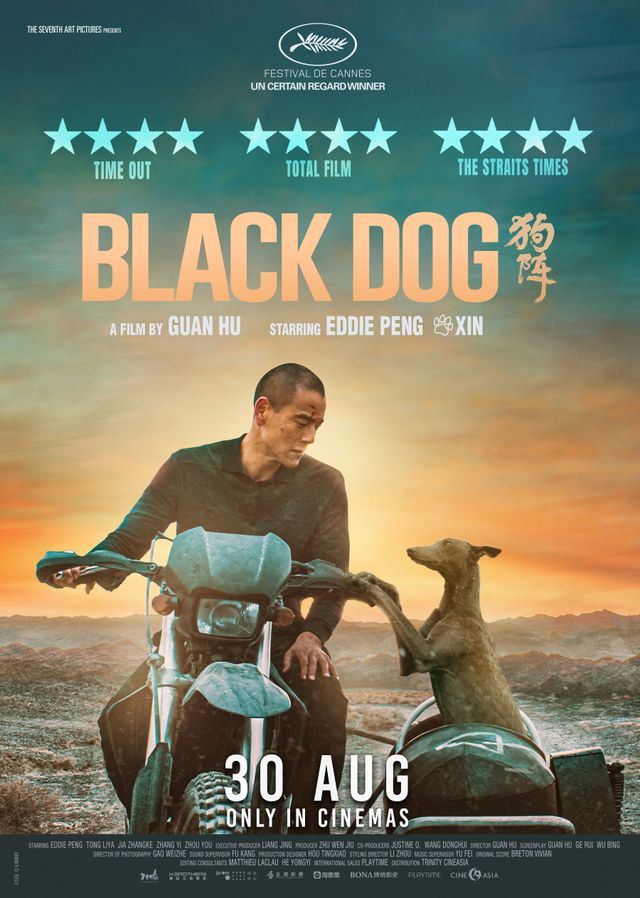
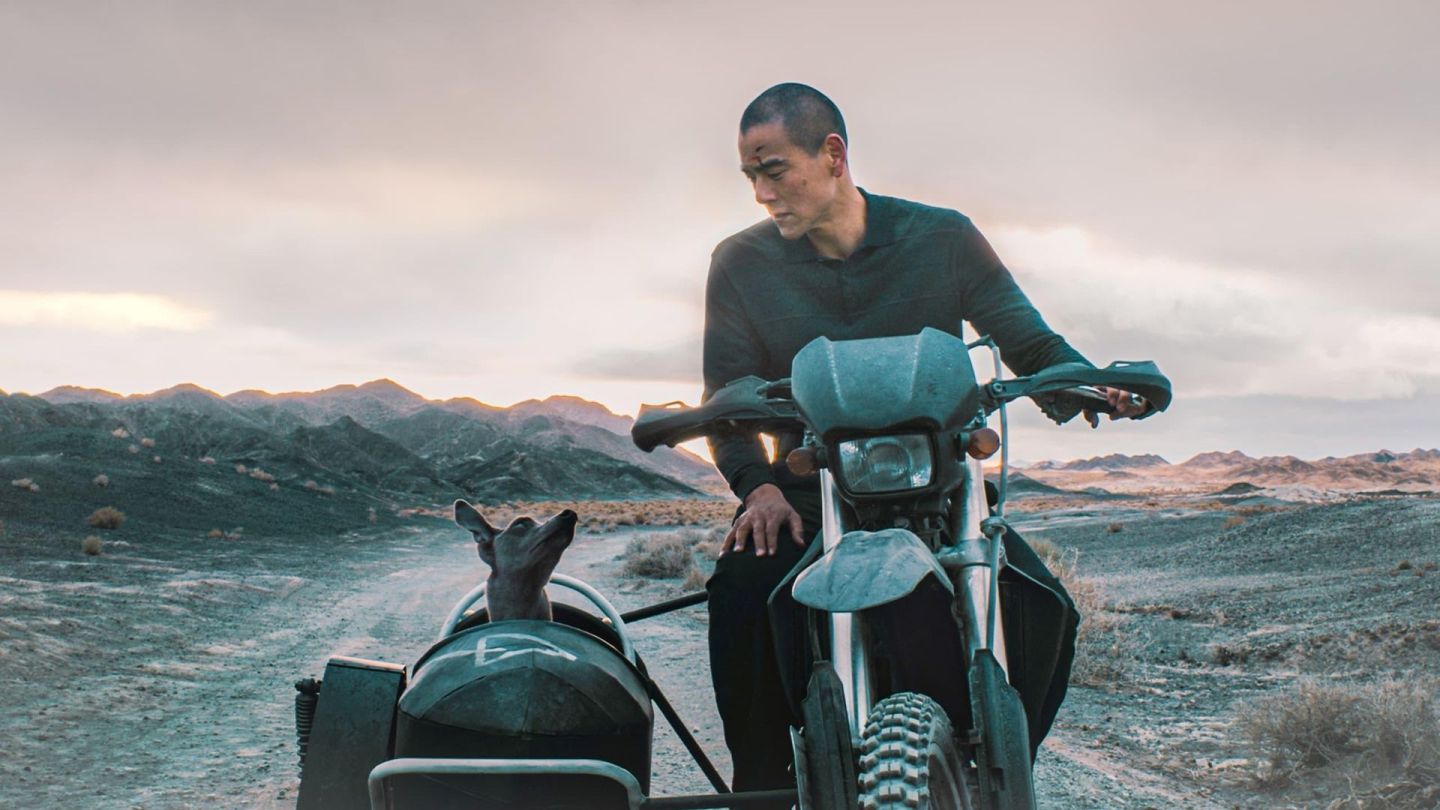
When a dusty sign pops up in Guan Hu’s Black Dog (狗阵, gǒu zhèn) advertising the upcoming 2008 Beijing Olympics, you’d be forgiven for thinking it’s a relic of a long forgotten past. On the edge of the Gobi desert, Chixa has a post-apocalyptic aesthetic, a kind of reverse frontier town for a society in retreat. It takes on an almost purgatorial quality for prodigal son Lang (Edward Peng Yu-Yan) who returns after spending nearly a decade in prison for an incident that seems like may not have been entirely his fault but for which he continues to face enmity and a petty vendetta from a local gangster/snake farmer Butcher Hu.
Lang himself is aligned with the stray dogs who have begun to reclaim the town which has long since been abandoned by industry. The moribund zoo where his father has taken to living is testament to the prosperity the area may once have had though now it’s a ghost town of China’s industrialising past strewn with the disused factories of Socialist era dealt a deathblow by the economic reforms of the ‘90s. Yet we’re also told that the reason the stray dogs must be expelled is so the town can be redeveloped and new factories take the place of the old which does not seem to hold the kind of promise for the townspeople one might expect.
Constant references to the Olympics and its slogan “Live the Dream” only emphasise the irony. Geographically distant from Beijing, Chixa exists in an entirely different space from the Chinese capital and appears as if it were about to collapse in on itself. Half the town is plastered with demolition signs and in the end it’s the people who are displaced as much the dogs. Guan often rests on ominous visions of the strays standing on a small hilltop and then recalls the image in the film’s closing scenes as the dogs are replaced by townspeople watching a once in a generation total eclipse on the eve of the opening of the games.
With nothing much else to do, Lang, a former rockstar and motorcycle stuntman in the town’s more prosperous days which themselves even seem to echo the 1950s more than the late ‘90s, joins the campaign to beat the canines into retreat at the behest of local gangster Yao (played by director Jia Zhangke) but begins to identify and sympathise with them especially once it becomes obvious that the new regulations are exploiting dog owners by forcing them to pay to have their animals registered. Those who can’t or won’t have their pets confiscated, Lang silently rescuing one girl’s little’s pet pooch while her grandmother tries to argue with the dog catchers before they take them all to what is effectively a concentration camp for dogs. The film’s Chinese title is in fact “Dog Camp,” and it becomes clear that it’s Lang who’s stuck there, trapped by his past and the dismal realities of the socioeconomic conditions of late 2000s China.
Hoping to earn a little extra cash he decides to try catching a wanted fugitive, the Black Dog of the title who is mistakenly believed to have rabies only to end up bonding and identifying with it. At several points, Lang echoes the movements of the dog such as placing his head on the chest of his dying father as the crowd below his hospital room prepare to welcome the opening the Olympics via a large screen in the town square. His relationship with the dog begins to restore his sense of compassion and humanity while a tentative connection with a young woman equally trapped by her transient existence and toxic relationship with a fellow circus performer opens his eyes to new possibilities of a life of freedom on the open road no longer bound by the constraints of a society in flux. Elegantly lensed grainy photography and the occasional use of synth scores lend the film an elegiac, retro quality that recalls the cinema of the fifth generation while casting a subversive eye over the compromises of the modern China itself trapped by its past and trading on former glory from which stray dogs like Lang can find escape only by running from the pack.
Black Dog is in UK cinemas from 30th August courtesy of CineAsia.
UK trailer (English subtitles)
 Windows on Worlds