 Written by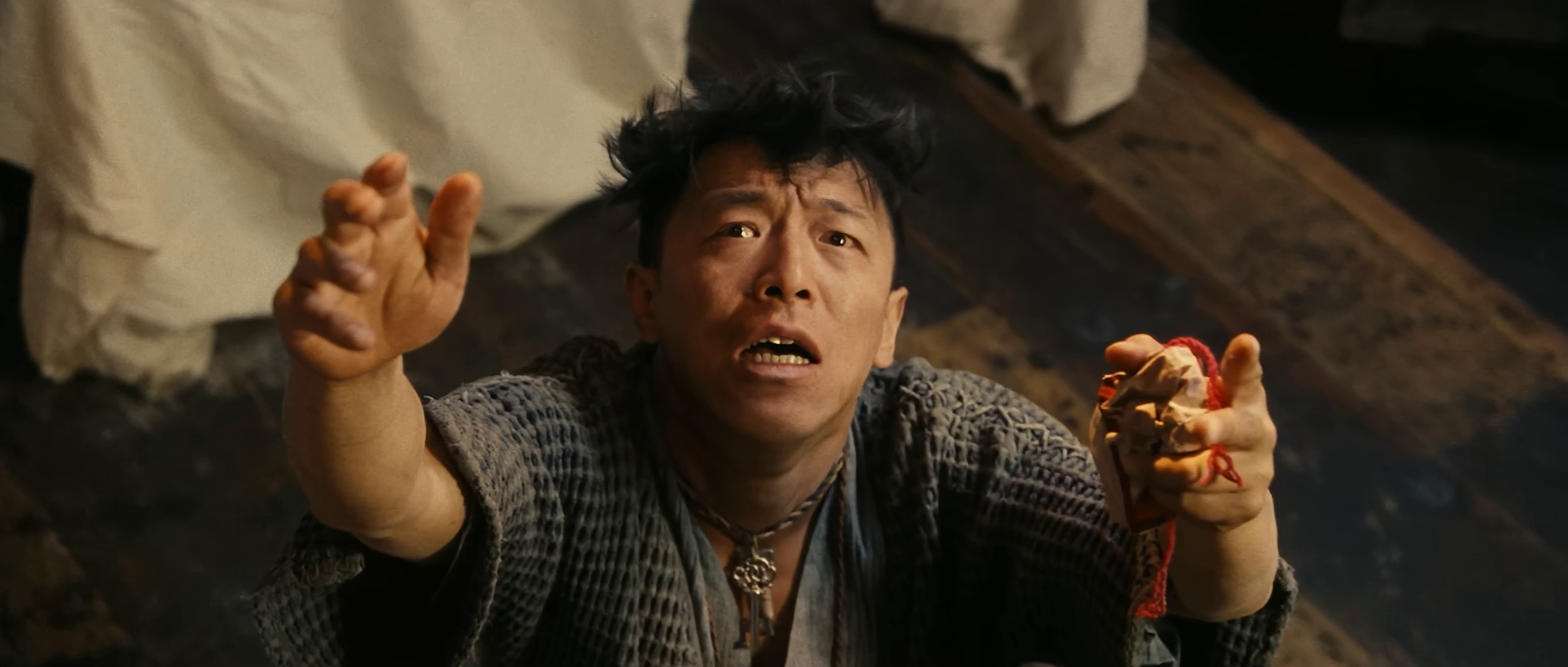
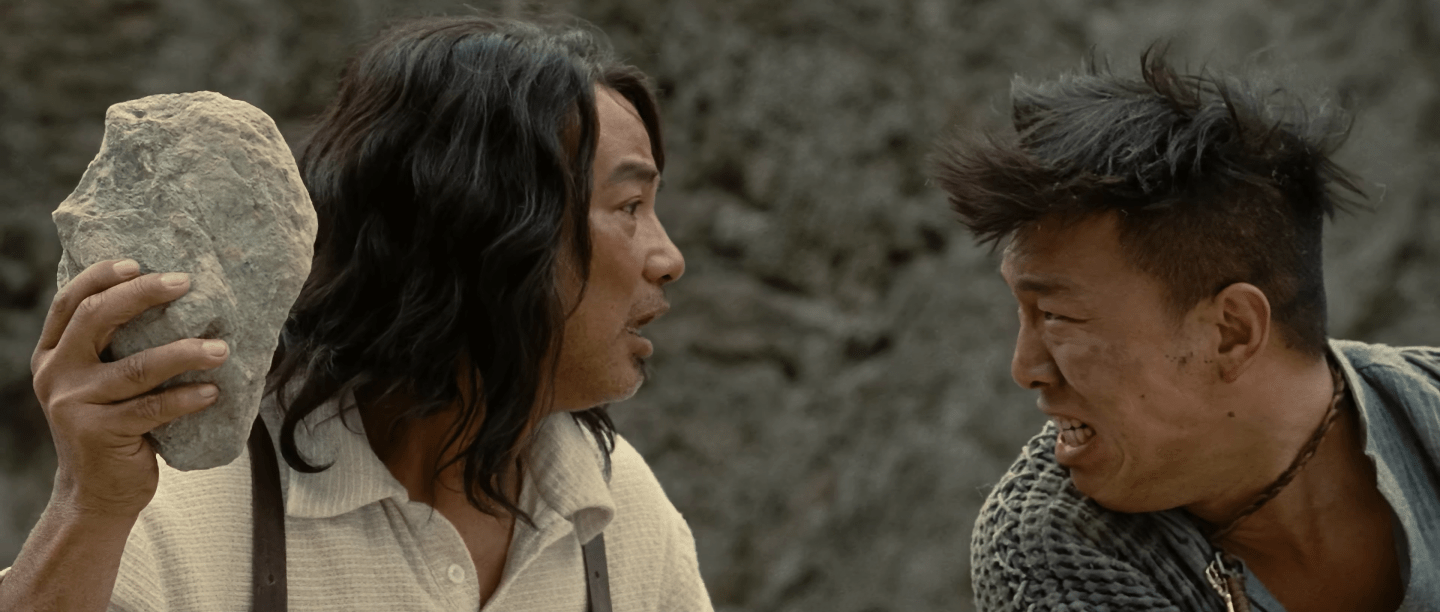
A doctor (Simon Yam Tat-wah) dispatched to put an end to a “mysterious disease” finds himself embroiled in mystery after discovering the barely breathing body of an unpopular villager in Guan Hu’s darkly comic drama, Design of Death (杀生, Shāshēng). Adapted from a 1998 novella by Chen Tiejun, the film’s Chinese title translates as “to kill a living thing”, the first act forbidden under Buddhism. Yet this particular village has decided it has no other choice if it is to maintain order along with its famed “longevity”.
The son of an itinerant pedlar reluctantly taken in by the village’s ruling Niu clan, Niu Jieshi (Huang Bo) is a general nuisance and agent of chaos. For the first part of the film, we see him act in ways which are rude and vulgar, cruel, violent, and morally repugnant. In short, we can well understand why pretty much everyone wanted him dead and any one of them might have killed him. Yet as the film goes on, we come to sympathise with Jieshi. We see him more as a loveable rogue who was never fully accepted by the village because he was not of it by birth. His foreignness is the reason to which the other villagers attribute to his inability to conform with their rules and traditions, and though, in retrospect, most of his pranks are just silly, his presence destabilises the sense of order which has enabled this place to earn the name Long Life Village. In any case, living past 120 might not be much fun when you’re constrained by so many rules and social mores while many are concerned more with the village’s reputation than the lives or happiness of the villagers.
But the village’s reputation does seem to be important to the powers that be, which is why the doctor is eventually sent there. They want him to find out the cause of this “mysterious disease” and stop it spreading so the Long Life Village doesn’t lose its USP. When he arrives, however, it seems like the “mysterious disease” is actually cancer, which obviously doesn’t spread from person to person. The only other symptom is a minor eye infection, though the real disease running through the village is enmity with the determination to put a stop to Jieshi’s chaotic antics. Jieshi proves oddly unkillable, resurrecting himself after his first encounter with the doctor having been thrown off a cliff in a sack. His defiance only spurs on the villager elders, who then bring back another doctor, Niu (Alec Su You-peng), who had been away studying Western medicine in the cities after being kicked out of the village for another infraction some years previously.
There’s something disconcertingly modern about Niu that makes his presence in the village somehow threatening, as if he were the harbinger of a more authoritarian era. Despite being a doctor, he is cold-hearted and rational and is determined not only to kill Jieshi but his unborn child. The unnamed doctor is, by contrast, a master of Chinese medicine though also educated in the Western style and suspicious of Niu. All he wants to is to understand why Jieshi died, which is also in its way to cure the sickness in the village to which Niu is an obstacle. What he gradually realises is that most of the other people in the village are pretty awful and what they succeeded in doing was creating the circumstances for Jieshi’s death by making the village uninhabitable for him.
But it may also be true that there’s something cosmically dangerous about killing such an elemental spirit and that the village cannot in fact survive in the absence of chaos. Jieshi is then the individual hammered into submission by implacable authoritarianism while the village is a microcosm of a corrupt authoritarian society ruled over by a petty elite obsessed with rules and tradition. That the doctor dresses in modern style and uses a mix of traditional and modern equipment suggests, as does the pregnant finale, that in all things there must be balance. The ultramodernism of Niu with its fascist undertones won’t work, nor will the hardline traditionalism of the village. Had they only made more of an attempt to understand and accept Jieshi rather than forcing him into submission, they too might have survived and evolved but in fact were only ever headed towards destruction in their obsession with a long life lived in misery.
 Windows on Worlds