See You Tomorrow (ほなまた明日, Saki Michimoto, 2024)

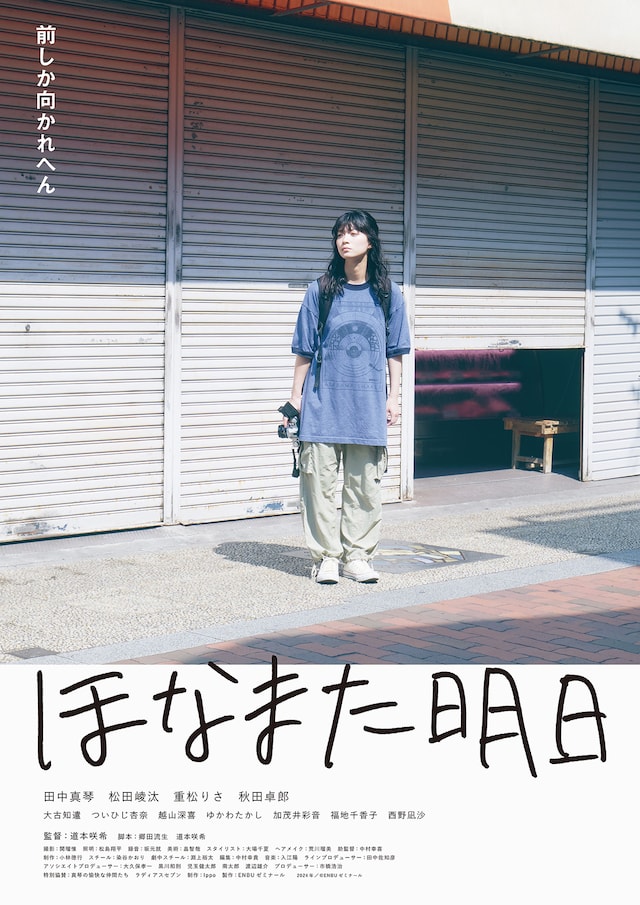
On witnessing her take photos in the street, a shopkeeper remarks that Nao (Makoto Tanaka) must be happy, but Nao doesn’t seem so sure and suddenly there’s a kind of gloom that descends over her. Something similar happens later when she asks a pair of women in town on holiday to pose for her photos, but looks on sadly while the women begin to feel uncomfortable. Eventually they leave, complaining that Nao was too weird it was it was creeping them out.

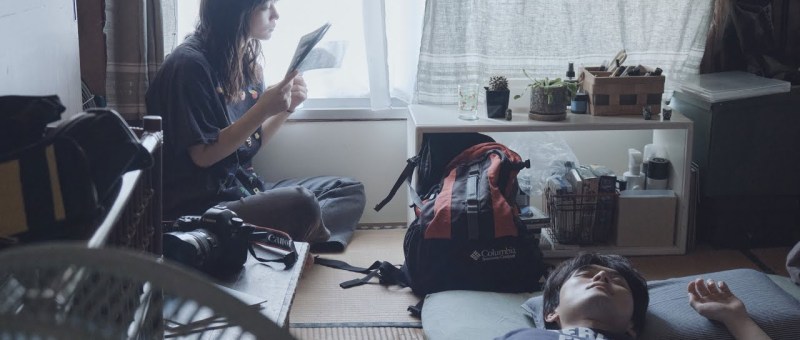
Saki Michimoto’ Saki’s See You Tomorrow (ほなまた明日, Hona Mata Ashita) is in part about Nao’s isolation, but it’s an isolation born of being different by virtue of her talent and the bright future that exists ahead her. Her small group of friends have no such certainty and in Nao’s shadow are only increasingly sure that they don’t really have what it takes to become star photographers. On some level, they may resent her, but not seriously and are mostly supportive of her success. Nao, meanwhile, is a displaced soul. She seems to have become estranged from her mother who does not answer the door when she visits leading her to get a friend to ring the bell instead, and has been continually couch surfing among her friends before settling on Yamada (Ryota Matsuda) as a more permanent point of refuge. Nao asks him out, but when he asks if she loves him only replies that she has some affection for him.

In some ways, this speaks to Nao’s headstrong nature. She speaks the truth and forges ahead chasing what she wants without really giving that much thought to those around her.  The others have all lined up positions working with professional photographers for when they graduate, but Nao honestly tells them that she’s not cut out to be someone’s assistant and has no choice but to become a pro photographer right away. One of the other girls says that she finds Nao “scary,” while even Yamada describers her as “merciless” if in a more positive way that it sounds. For her, photographs are a martial art and in setting her sights on art school in Berlin she plans to use her camera to take down the opposition,

Yet there’s a part of her that wants to stay part of the group and remain close to her friends even while knowing that her talent sets her apart from them. Sayo (Risa Shigematsu), whose apartment Nao had described as to tidy to feel comfortable in, seems to be the most conflicted even if as others remark she rarely expresses anger and keeps her feelings to herself. She is painfully aware that her talent isn’t on the same level, while frustrated by the cryptic comments of their teacher, Kitano, and additionally irritated by Nao’s treatment of Yamada whom she may also have a secret crush on herself. Cowed by Nao’s abilities, Yamada ulmitaly decides to give up taking photos altogether and look for work in a more supportive role such as an assistant or an editor. 

When the others reunite in Tokyo four years later, Yamada has dropped out of touch and perhaps out of life while mired in feelings of loneliness and inadequacy. One of the cryptic notes Nao had got on her work had been that she should walk more, which confused her because all she ever does is walk and take photos though mostly alone and often wandering off losing sight of everyone else while carried along by the rhythms of the city. But on reuniting, the gang resolve to keep walking and see where it leads them, much as Nao always has but this time together as they move towards the city. They’ve all changed, grown, drifted apart to an extent and come back together with a little nostalgia and melancholy disappointment, but in other ways settled and more at home with themselves save perhaps for Yamada who seems to be in hiding from the world while Nao still seems to have nebulous feelings for him along with unfinished business. Delicate and gentle, Saki’s etherial camera captures the fragile bonds between them and the steeliness that underlines Nao’s independence but also sets her adrift, a perpetual outsider living life through a lens snatching momentary connections with strangers in the street while continually on her own, solitary, path.


See You Tomorrow screens in New York 15th July as part of this year’s JAPAN CUTS.

Trailer (no subtitles)
The Real You (本心, Yuya Ishii, 2024)

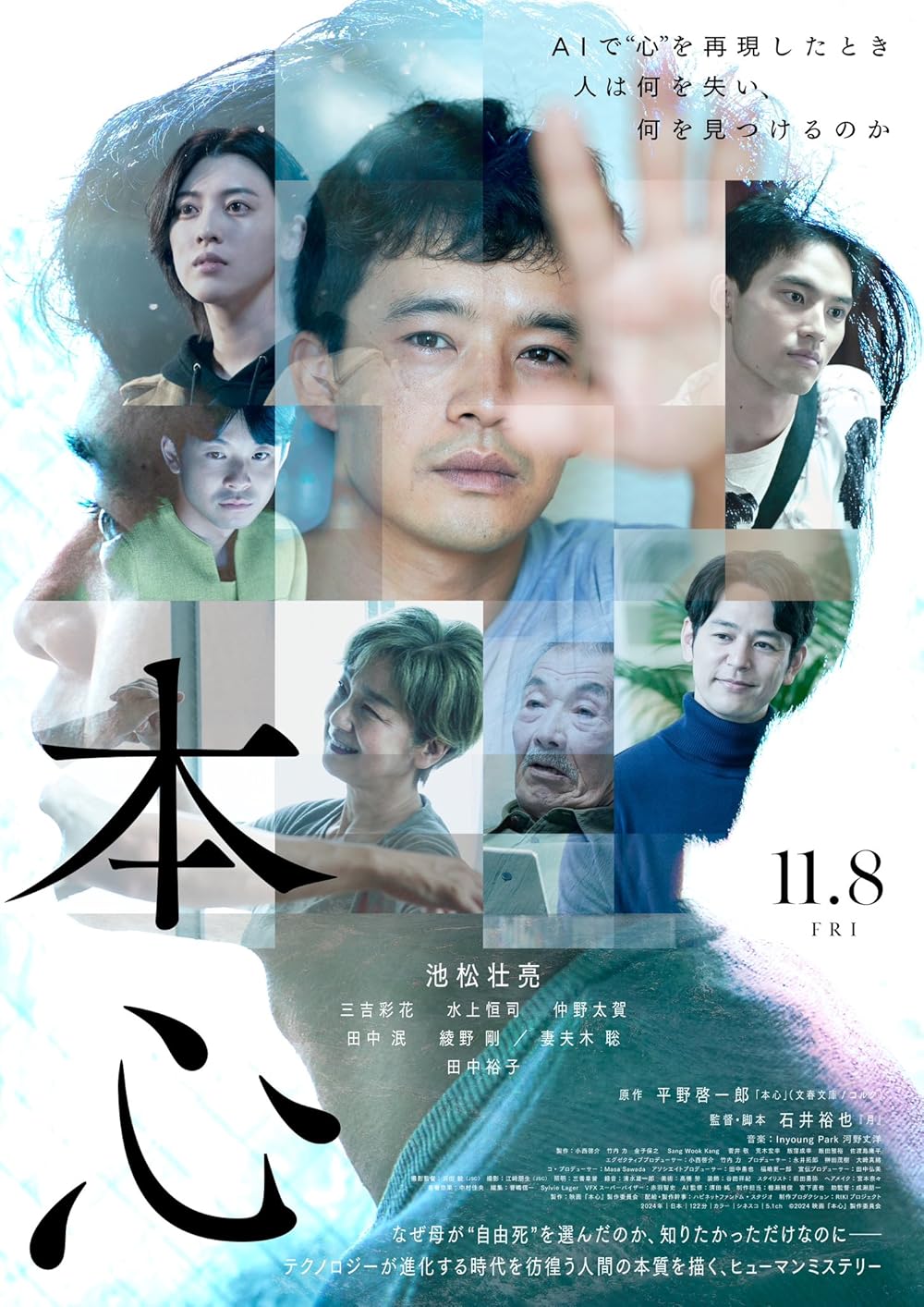
“Putting it into words makes it sound like a lie,” according to a young woman struggling to “be real” and express a truth without any of the awkwardness that interferes with emotional intimacy, but there are ways in which lies can be true and truth can be lies. Based on a novel by Keiichiro Hirano, author of A Man which also deals with similar themes, Yuya Ishii’s The Real You (本心, Honshin) probes at the nature of the human soul and asks if there really is such a thing as the “real” you or if authenticity is really possible in human interaction. 

Both Ayaka (Ayaka Miyoshi) and the avatar of his mother Akiko (Yuko Tanaka) describe Sakuya (Sosuke Ikematsu) as being too pure for this world and to an extent they’re right even if many of his present problems are directly linked to having committed a “crime” in his youth. As the film opens in the summer of 2025, Sakuya is a factory worker watching helplessly as robots take over his work. After all, they don’t care about the heat, or being able to breathe under a heavy welding mask, nor do they get tired and they can get this job done much faster than he can. In any case, he ignores an ominous phone call from his mother, who appears to be showing signs of dementia, despite her telling him that she has something thing important to say and stays out with a friend after work only to spot her by the river in a storm on his way home. When she abruptly disappears, he assumes she entered the water and jumps in to save her but is injured himself and wakes up in hospital about a year later.

Of course, we don’t really know that he wakes up at all and it’s possible that all of this is really just a dream or an attempt to make contact with his authentic self through his relationships with two women, his mother and a young woman who also disappeared abruptly back in high school. Even though it’s only been a year, the AI revolution has marched on a pace and the entire world is now run by robots and avatars. Sakuya’s factory is no more, and the only job he can get is that of “Real Avatar” in which he rents out his physical body on behalf of clients who for whatever reason are unable to complete an action in person. Many of his early customers are elderly people who have opted for “elective death” and are trying to relive a precious memory vicariously through the VR headset before they go.

“Elective death” is one of the things that most bothers Sakuya in that he’s told it’s what his mother had chosen and that he’s getting a tax break and sizeable condolence payment so he can continue living in the family home. This eerie proposition that elderly people are being encouraged to decide that “this is enough” frightens Sakuya and hints at the eugenicist aims of an AI society in which those who are judged to be “weak” or cannot “contribute” in the way expected of them are forced to end their lives as if they didn’t deserve to live. He can’t understand why his mother would have chosen to die, but moreover, why she would have done it without even telling him. He can’t decide if the important thing she wanted to say was just about the elective death or if there was some greater truth he’ll now never know because he ignored her when she tried to tell him.

That’s one reason that he decides to use all his savings plus the condolence money to have an AI Avatar of his mother made in hope discovering what she wanted to say. Later he says that he wanted to know “Akiko Ishikawa,” rather just his mother, but is put off at first when confronted by the gap between the image of the mother he remembered and the objective reality. The creator, Nozaki, suggests incorporating memories from a young woman who was apparently his mother’s only real friend to get a fuller picture, but Sakuya resists insisting that he and his mother had no secrets from each other so she had no “hidden side”. Nozaki (Satoshi Tsumabuki) merely smirks and tells him that everyone has different sides to themselves that they don’t share with others, which Sakuya ought to know because there are things he’s not exactly hiding but doesn’t really want to talk about either.

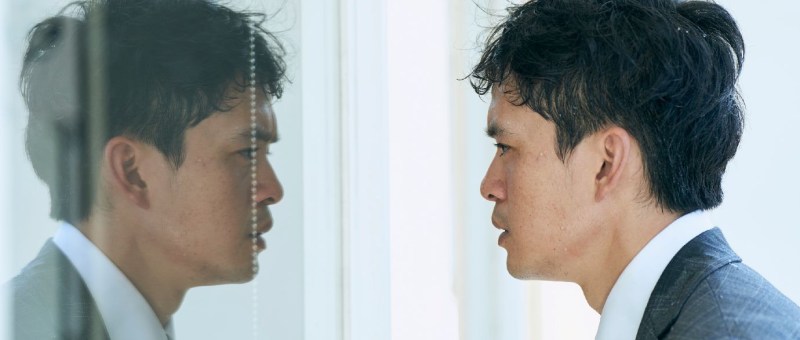
His friend, Kishitani (Koshi Mizukami), wonders if there isn’t something a little incestuous about Sakuya’s desire to build a VF of his mother rather than his first love as he’d assumed he would, and he might be right in a way. Ayaka Miyoshi, played by the actress of the same name, shares a striking resemblance with the high school girl who exited the young Sakuya’s life, Yuki, and has a similar life story, though it’s not clear if they are actually the same person or not even if the AI version of his mother tells Sakuya that they are. Yet Ayaka is his only way of verifying that what the VF Akiko says is actually “true’ rather than some random hallucination cooked up by the machine based on the incomplete information it’s been fed. Through the VF he finds out things about his mother’s past that shock him, not that he necessarily disapproves, just that they conflict so strongly with the image of his mother he’d always had. Additionally, there’s a degree of hurt that though he believed he and his mother shared everything, she kept this actually quite significant part of herself secret from him in much the same way he admits he didn’t tell Ayaka about his “crime” because he feared she might pull away from him if she did.

Ayaka also avoids talking about her past as a sex worker which has left her with PTSD and fear of being touched for much the same reason even if she suspects that Sakuya already knows and that his mother may have told him before she died. There’s an obvious parallel being drawn between them when Ayako insists that she made a clear choice to do sex work out of economic necessity and refuses to apologise for it, while Sakuya has also been selling his body as a Real Avatar. While some of his clients merely need help accomplishing things physically, others hire him for amusement. They send him on pointless errands running all over the city and then give him a bad review for smelling of sweat, or deliberately make him do degrading tasks. They also ask for things that are clearly illegal, such as another RA’s client requesting to see a man die. But Sakuya continues to wilfully degrade himself carrying out each of the tasks faithfully despite the pitying looks of those around him. When he’s unexpectedly employed by a wealthy avatar designer (Taiga Nakano) who uses a wheelchair, Sakuya again sheds his own identity and finds himself playing reverse Cyrano forced to make Ifi’s declaration of love on his behalf only to the consternation of Ayaka who isn’t sure who it’s coming from and is disappointed in both men for the obvious cruelty of the situation.

Thus this new technology becomes just another means of class-based oppression in which the wealthy use their riches to abuse those without economic means who have no choice but to submit themselves or rebel through criminality while the rich look on with amusement. Sakuya says he isn’t in love with Ayaka, but it’s unclear if he says it because he thinks she’s better off living in material comfort with Ifi, if he really means it, or he’s realised that he was more in love with the image of the girl who disappeared and the missing side of his mother than he really was with her. It seems that Sakuya is really looking for the hidden half of himself through refracted images of the way others see him, while essentially engaging in an internalised dialogue with his own thoughts and memories. He can’t really be sure of the truth behind anything the VF says, a fact brought home by the implication that the great truth he was seeking is a banal platitude and what he undoubtedly wanted to hear yet knew all along. Nevertheless, it’s not until hearing it that he can regain his real self, let go of the past, and be in a position to connect with Ayaka which is also a kind of waking up. Disquieting in its implications for a new AI-based society in which the line between the real and virtual has all but disappeared, there is nevertheless something quite poignant in Sakuya’s gradual path towards saying goodbye but also hello to a new life of greater self-awareness and independence.


The Real You screens in New York July 11 as part of this year’s Japan Cuts.

International trailer (English subtitles)