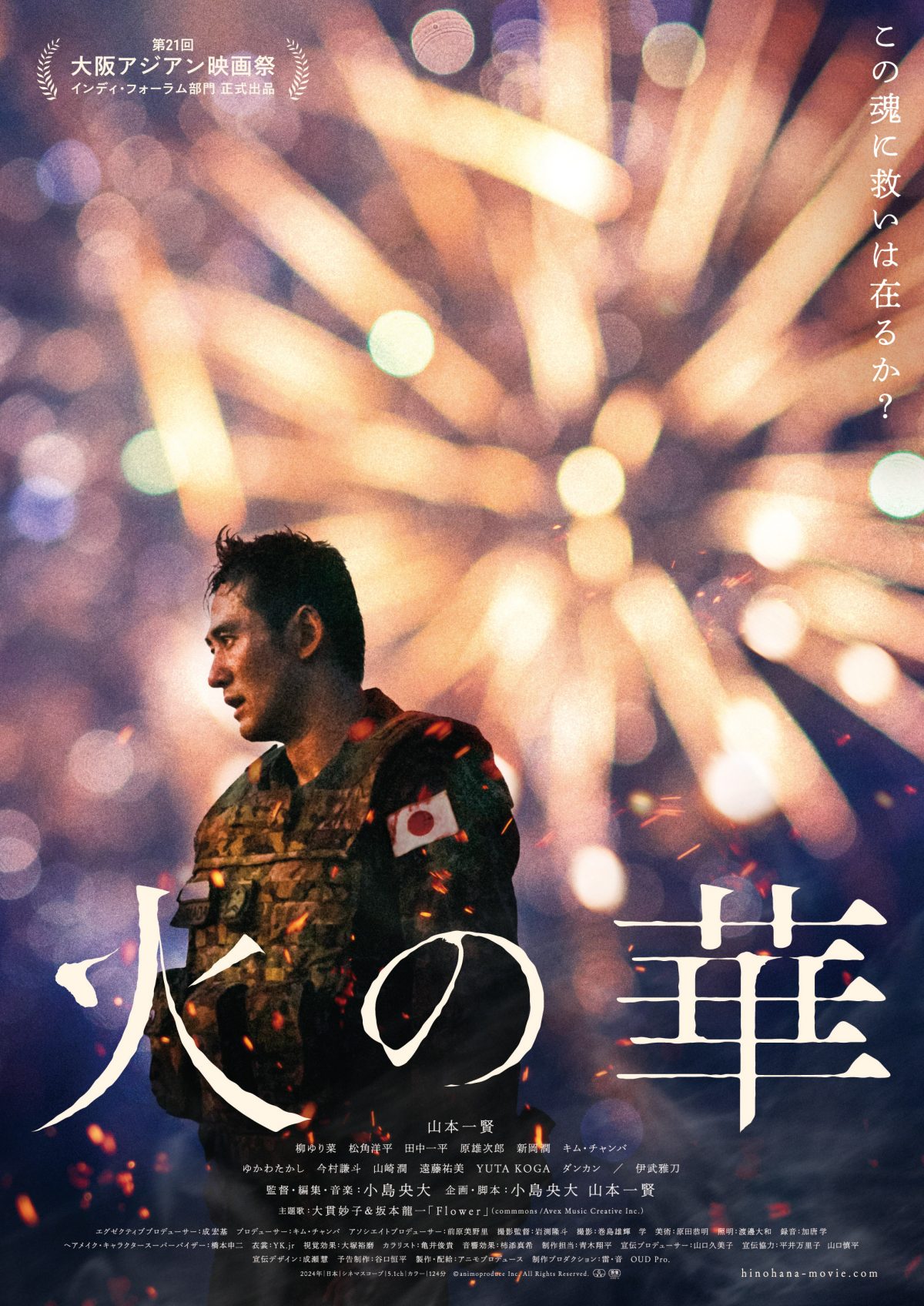
A former soldier finds it difficult to adjust to civilian life after becoming involved in a fire fight in which a close friend died while on a peace-keeping mission in South Sudan in Oudai Kojima’s politically-inflected drama, Flames of a Flower (火の華, Hi no Hana). The film takes its title from the literal meaning of the Japanese word for fireworks, but its hero is also in some senses closely aligned with a flower, both as a kind of sacrificial object burned after outliving its usefulness, and in also slowly growing in the nurturing environment of a family-run fireworks factory until finally coming into bloom.
Shimada’s (Ikken Yamamoto) growth is only, however, one side of the story as the film draws inspiration from a real-life incident of a Japanese soldier dying in a combat situation in Sudan which was covered up by the authorities as, under the pacifist constitution, Self Defence Force troops are not supposed to be deployed in combat areas while on peace-keeping missions. While serving in South Sudan, Shimada’s troop is ambushed and he is forced to shoot a child soldier when his comrade and close friend is killed after having put his gun down in an attempt to defuse the situation. While he and fellow soldier Tanaka (Ippei Tanaka) attempt to get Furukawa to a hospital, Captain Ito (Yohei Matsukado) is left behind and thereafter presumed to have been killed. On his return, Shimada is forced to sign confidentiality documents that prevent him from talking about what really happened on the grounds of national security, while the authorities report that Furukawa and Ito died as a result of a traffic accident.
It’s this inability to speak the truth that informs Shimada’s trauma as much as it is the physical stressors of the battlefield or his guilt over having to kill the child soldier. Two years after the incident, he’s working as a welder in a small factory but experiences a flashback which causes him to assault a colleague. Though his boss is sympathetic, he has no other option than to let Shimada go, but introduces him to a friend, Fujii (Masato Ibu), who runs a fireworks factory and seems to have a track record with rehabilitating those with difficult backgrounds. Working in a fireworks factory might not seem the best option given Shimada’s condition, but at the same time it gives him the opportunity to do something more constructive with the same material that caused so much destruction while he was a soldier. The film plays on this dichotomy, Shimada later visiting Sudan again to teach the children about fireworks as a means of explaining to them that they have a choice between using gunpowder for fear and killing or making something beautiful, but at the same time it ignores the third option which is obviously just not to have anything to do with gunpowder in the first place.
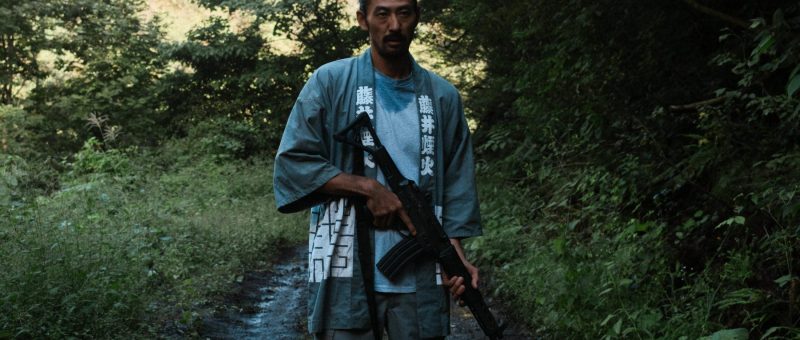
Showing the children the fireworks plays into the idea that children are cruelly robbed of their dreams by egotistical adults, hinting both at the children who are forced to become soldiers, and Fujii’s own regret that he would not let his daughter Akiko (Yurina Yanagi) become a fireworks technician. She has since become a florist working with a literal kind of flowers and also helping Shimada with his recovery. His former comrades, however, have largely become consumed with anger and rage against the government for its lack of transparency. Ito, having survived, has formed a militia after meeting a former member of the Japanese Red Army and is planning some kind of revolutionary action to change the society.
Exactly how they mean to change it isn’t altogether clear aside from a clear desire for transparency and also an end to Japan’s dependence on the US for defence which they argue drags them into situations they don’t belong in because of American foreign policy they might not necessarily agree with. They don’t quite state if that means having a standing army that could go to war if necessary, or if they still believe in pacfism but want the Americans out. In any case, they plan to expose the fact that the government prioritises its diplomatic arrangements over the lives of ordinary citizens while keeping from them that this puts Japanese troops in danger overseas.
A subsequent plot by a government official working with a Chinese gangster (Kim Chang-bak) who Shimada meets after ironically becoming involved with trading illegal weapons, further muddies the waters, though the film is at its best in exploring the ways in which Shimada is able to come to accommodation with himself while being supported by those at the fireworks factory who become a kind of surrogate family. This sense of community is, the film suggests, what prevents him from jumping off the deep end like his former comrades who have become dangerously fixated on revenge. Though at times its politics may seem muddled or obscure, the film is at least at pains to stress that war and violence are choices that are often made by those who won’t have to suffer the consequences, when it is much easier to channel those same resources into something beautiful that can bring hope and enrich lives rather than destroying them.
Flames of a Flower screened as part of this year’s Camera Japan.
Trailer (no subtitles)