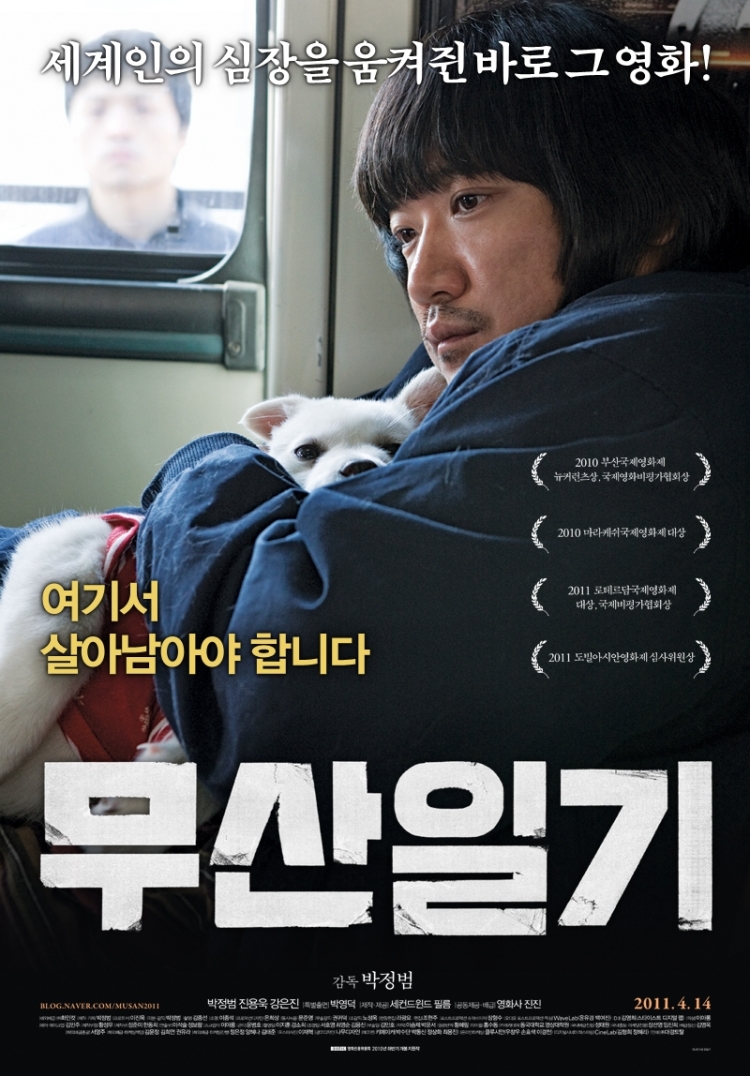
The Journals of Musan (무산일기, Park Jung-bum, 2011)

Journals of Musan posterIf you’ve made it out of North Korea, travelled all the way through China, and finally arrived in the promised land of the South, you might expect to find yourself in a kind of paradise free of violence, fear, and oppression, where opportunity and freedom rule. The reality, however, is rarely so pleasant. Those arriving from the North do so with little support, face constant stigma and the threat of exploitation, and may end up just as hungry and alone as before. The hero of Park Jung-bum’s Journals of Musan (무산일기, Musanilgi) is one such lonely soul who finds himself tested and betrayed until cheated even out of his own innocence.

After months in a resettlement centre, Seung-chul (Park Jung-bum) is living with a friend in a rundown flat next to a village knocked down to pave the way for yet another batch of swanky middle-class homes on the periphery of an ever expanding city. Assisted by a friendly policeman who urges him not to tell his prospective employers that he’s come from the North, only that he’ll work hard, Seung-chul looks for honest work but finds it difficult to come by, not only thanks to the mild stigma attached to being a defector but his relative lack of equivalent qualifications, and restrictions on his movements. Meanwhile his roommate, Kyung-chul (Jin Yong-ok), has decided the best buck’s a fast buck and started an individual enterprise “assisting” his fellow North Koreans sending money home via his uncle in China for a “small fee”. The only job Seung-chul can get is pasting up fliers for clubs and bars often over those for other establishments at the behest of an exploitative gang leader who rarely pays him and threatens to take the work away altogether if Seung-chul continues to refuse the less legal jobs he’s often “offered”.

Seung-chul is an innocent, godly soul who truly believes it should be possible to live honestly and with kindness in a land of freedom. His only refuge is the local church of which he is a devout member, but even here he is an invisible outsider who sits and eats alone only just brave enough to venture in in the first place. Developing a fondness for a pretty woman in the choir gives Seung-chul another reason to attend, and eventually a hope of a job too when he silently follows her to the karaoke bar she works in where they happen to be in need of another pair of hands.

The church, however, is just one of the many institutions to renege on their promises, offering relatively little in terms of real support to suffering men like Seung-chul who are granted only superficial welcome. Sook-young (Kang Eun-jin), the young woman Seung-chul idolises, is ashamed of her job in the karaoke bar which she feels to be immoral and in conflict with her otherwise intense religiosity, taking against Seung-chul on spotting him at church in fear that he will spill the beans and out her as an impure woman among her flock. Seung-chul would never do such a thing, though as he points out he doesn’t have any friends there to spill the beans to anyway.

In any case he continues to admire her from afar while she remains oblivious though slightly irritated to think he may have formed an attachment to a “helper” girl after he gets into a fight with a drunken patron who was touching her inappropriately. “Why do you care about people like that?” she asks him, tellingly, exposing her religiosity as the puritanical kind all about rules and oppression and not at all about compassion or kindness. Sook-young looks down on the helper girls as fallen women, advising Seung-chul that a godly man like himself has no business falling for “that sort of girl” before firing him when she catches him singing hymns in the karaoke booth, convinced that his excuse of not knowing any other songs must be a lie.

Sook-young seems to have no idea Seung-chul is from the North. True enough he speaks little but no one picks up on his accent and he’s been trained not to volunteer the information for fear of rejection. Once she finds out, Sook-young is full of remorse, actively inducting Seung-chul into the church and making him her good deed for the day. It’s not only the social stigma that plagues Seung-chul, but a kind of exoticisation. Kyung-chul’s other sideline is earning money through lectures to anti-communist organisations to whom he parrots the accepted line on North Korea – the violence, the oppression, the famine, though stopping short of the full horror. Seung-chul, unwillingly dragged to a church support group, reveals the full extent of what it cost him to survive and discovers no one quite wanted that level of honesty or is willing to help him in the depths of his despair. All anyone wants of a defector is to say what it is they want to hear, any deviation from the accepted line will not be tolerated in an eerie echo of all they’ve escaped.

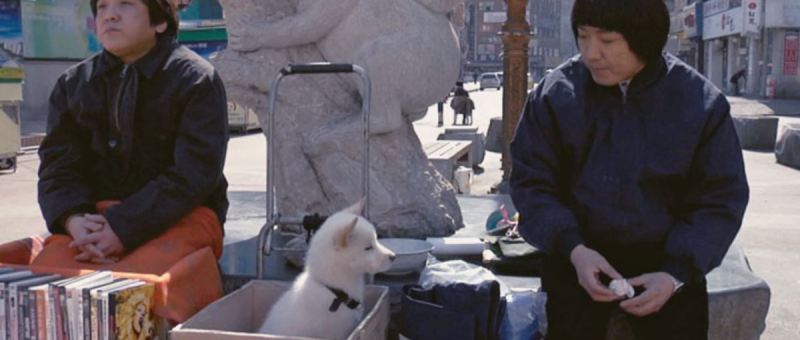
Gazing at an expensive tailored suit, Seung-chul chases dreams of success but finds only exploitation and abandonment. His only real attachment is to a little dog brought in off the street to whom he shows the tenderness no one has yet shown him but even this small comfort is not enough to sustain him in the fiercely capitalist environment of modern day Seoul. Seung-chul is presented with a choice, one which strains the fragile innocence he’d been careful to preserve for his new life, and finds himself no better than the world which surrounds him. North or South, survival has a price but you can damn yourself by paying it even in the knowledge that those around you sold out long ago.


The Journals of Musan was screened as part of the 2018 London Korean Film Festival.

International trailer (English subtitles)
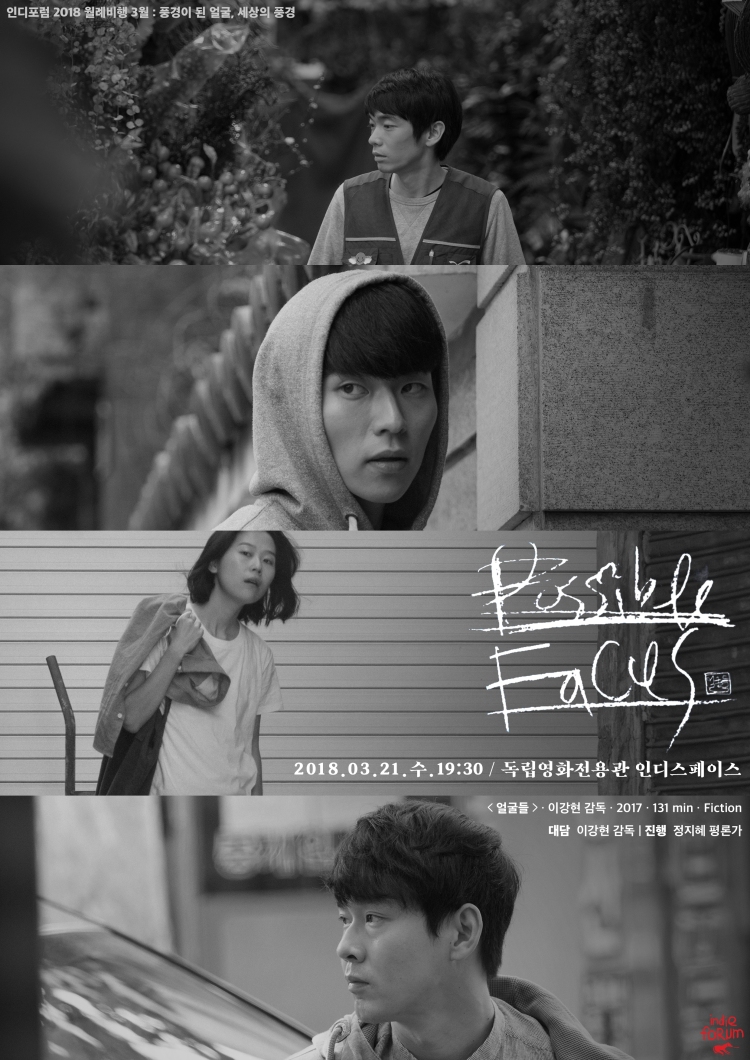
Possible Faces (얼굴들, Lee Kang-hyun, 2017)

possible faces posterLee Kang-hyun becomes the latest Korean director to question the nature of reality in a rapidly modernising society in the oblique, deliberately confusing Possible Faces (얼굴들, Eolguldeul). Ironically enough, the film’s original Korean title is simply “Faces” and in a nod to the 1968 Cassavetes classic with which it shares its name, takes the breakdown of a relationship as its starting point to examine the parallel lives of former lovers. Circular logic predominates as the simulacrum begins to chew away at the authentic, but even if anyone notices the teeth marks at the edges of reality they may no longer care.

Dejected high school administrator Kisun (Park Jonghwan) has been kicked out of his girlfriend Hyejin’s (Kim Saebyeok) house after three years of cohabitation. It’s really not his area, but handed an incomplete scholarship application form from a soccer team member who routinely dodges classes, he finds himself becoming increasingly invested in the boy’s life. Meanwhile, Hyejin has resigned from her corporate office job to take over her mother’s cheap eats restaurant which she hopes to renovate and turn into a cute little boutique diner. The pair are accidentally connected by the circular motion of Hyunsu, a freelance delivery driver with a romantic heart.

Nothing is quite as it seems. One of Hyun-su’s early deliveries is collecting artificial flowers from a nearby garden centre for a magazine shoot. The regular guy has been moved on, so Hyunsu is the new contact but, as he points out to the saleswoman, though he may be wearing a uniform he is not technically speaking an “employee”. Hyunsu further reinforces his point by asking why none of the other stalls are open – they belong to wholesalers of “real” flowers so they keep specific hours. Sellers of artificial flowers, by contrast, can open 24/7, because their flowers require no maintenance and will never wither, eternally unchanging while the real thing fades. Meanwhile, museums stage reenactments of martial arts performances for tourists, display “replica” artefacts, and boast of the restorations on their “ancient” walls.

The world becomes increasingly “faceless”, as if time is beginning to wear away the surface of reality. Kisun, stuck in a depressive rut, laments that he could stick with his boring admin job for the next 20 years during which time nothing would change except the faces of the kids, as indistinct as they already seem to be. Hyejin walks past the Google Mapping van with a giddy sort of glee as if she’s just spotted a celebrity of whom she is a big fan, calling her friend to share her amazement but lamenting that they will probably blur her face and thereby neuter her newfound immortality. That may not be an altogether bad thing, as Hyunsu learns on reading a mysterious diary in which a woman makes cheerful fun of her husband for mildly resembling a wanted poster on the way out of the park.

The more things change, the more we want them to stay the same, only “better”. Hyejin quits her job to take over the family restaurant despite her mother’s misgivings, but she remakes it in her own image, giving it an upscale makeover in the process. She walks through run down shopping arcades and becomes a tourist in her own city, admiring the old world charm of narrow winding streets untouched by the neon lights of chain stores and comes home to plug in a dull LED lamp to write in her notebook with an old-fashioned fountain pen as if by candlelight.

Hyejin is moving backwards to move forwards, but Kisun is struggling to move at all. He jacks in his boring admin job to join a magazine dedicated to selling the charms of everyday life repackaged as marketable luxuries, complete with Kisun’s own poetic copy gracing the front cover. He finds himself on a kafkaesque quest chasing Schrödinger’s executive who always seems to be away from his desk before eventually tracking him down to a strange cultural event only to realise it isn’t him at all only after he’s been given the portentous advice to ditch his special issue feature for one on the soccer kid from the beginning, Jinsu. While Kisun meanders, Jinsu seems to have made something of himself. Years seem to have passed, but according to Hyejin’s diary it’s only been a few months – months of industry for some perhaps, if only slow months of drudgery for others. The world of Lee’s Possible Faces is one spiralling away from itself in which the nature of reality, identity, and objective truth has become indistinct, to the degree that it has become a mere simulacrum of itself in which the uncanniness of the real provokes only discomfort in its natural imperfections.


Possible Faces was screened as part of the 2018 London Korean Film Festival.

Interview with director Lee Kang-hyun from the 2017 Busan Film Festival.

Love+Sling (레슬러, Kim Dae-woong, 2018)

Love+Sling poster“Free yourself!” cries the oblivious father at the centre of Kim Dae-woong’s wrestling themed family comedy, Love+Sling (레슬러, Lesseulleo). In truth, this is wrestling of the emotional rather than the physical kind as the closeness of a father and son comes under pressure not only from advancing maturity but the unexpected intervention of the girl next door. Vicarious dreams, generational resentments, unusual sensitivity, unaddressed trauma, and self-imposed limitations all come into play when age and youth lock horns, each hoping to come out on top but eventually being knocked back to a healthier place of personal equality born of mutual understanding.

Cheerful widower Gui-bo (Yoo Hae-jin) and his son Sung-woong (Kim Min-jae) have an extremely close relationship seeing as it’s just been the two of them since Gui-bo’s wife passed away from illness when Sung-woong was small. By way of support, they are also extremely friendly with their upstairs neighbours whom they think of as extended family. In his youth, Gui-bo was a champion wrestler with Olympic dreams which he gave up to become a family man but has now passed on to Sung-woong whom he is training to become a national athlete. Meanwhile, Sung-woong is nursing a small crush on girl next door Ga-young (Lee Sung-kyung) but his plans of confessing his love after winning the big contest are dashed when she makes a big confession of her own. She’s long been carrying a torch for Gui-bo and wants Sung-woong to help her win him over.

Ga-young’s awkward confession sets off a series of uncomfortable reactions in Sung-woong. First of all he’s understandably shocked, jealous, and resentful yet also forced to realise that Ga-young’s having a crush on him is not really his father’s fault. The extremely close relationship they’d always enjoyed becomes strained for reasons that Gui-bo is unable to understand, believing that his son is just at a difficult age and under a lot of pressure thanks to his training. Gui-bo still thinks of Ga-young as the little girl from next door and is in no way romantically interested in her though when he finally learns of her intentions, he tries to do his best not to hurt her feelings, letting her down gently in the knowledge that this kind of misplaced love is just a part of growing up that she will someday likely be very embarrassed about.

Nevertheless, Sung-woong does not enjoy thinking of his own father as a romantic rival and is forced is to reassess the rest of their relationship in the face of this disturbing fact. Sung-woong can’t remember if he wrestles because he likes it, or he only did it to make his dad happy. Gui-bo insists he only encouraged his son to wrestle because he enjoyed it, but there is an unavoidable implication that he’s forced his own failed dreams onto the shoulders of his son who risks disappointing him if he is unable to achieve them. Sung-woong can’t help but resent the unfair parental expectations he’s lived under his all life, not least because they leave him uncertain, never really knowing if he has a dream of his own or has been prevented from forming one in having lived such a blinkered existence.

The burden of parental expectation is not one that can be easily shaken off. Middle-aged father Gui-bo is still under constant pressure from his own mother to remarry despite his frequent protestations. In a painful conversation after an argument with Sung-woong, Gui-bo turns to his mother to muse on the difficulties of raising a child only for her turn his words back on him in another veiled criticism of his refusal to conform to her vision of a successful future. Lamenting that his mother never listens, Gui-bo attempts to talk to his son but makes exactly the same mistake and gets his own words thrown back at him, finally realising he is no better and is incapable of allowing Sung-woong a safe space to voice his concerns without launching into a mini lecture of self-centred and unsolicited life advice.

Sung-woong’s increasing resentment threatens to tank not only his relationship with his father but also Ga-young’s with her family and the easiness that had existed between the two houses. Father and son had been all too close, locked in a mutually dependent cycle of filial responsibilities that threatened to prevent either of them ever moving forward. Like a wrestler trapped on the mat, each man has to free himself by accepting his own individual identity while allowing others to do the same. Only by a literal grappling can each man find the strength to release the other so that they might both regain the freedom to become the most authentic versions of themselves. A gentle, empathetic take on family mores and the pains of growing up no matter what age you are, Love+Sling finds space for the changing nature of a paternal bond which does not so much break as bend under the weight of mutual recognition.


Love+Sling was screened as part of the 2018 London Korean Film Festival.

International trailer (English subtitles)
Hotel by the River (강변 호텔, Hong Sang-soo, 2018)

Hotel by the river posterTaking an extended sojourn in the melancholy world of European gothic, Hong Sang-soo takes Death to task in the Bergmanesque Hotel by the River (강변 호텔, Gangbyun Hotel). Shifting away from formal experimentation to something much more straightforward, even traditional, Hong maintains his love of dualities and unexpected symmetry as he places an elderly poet in the grip of his own mortality side by side with a young woman dealing with the emotional fallout of having been involved with a man whose heart had frozen. Beautiful but barren, the snowbound landscape points to an inner winter where hope of an invincible summer has long since passed, leaving only regret and futility in its place.

Our hero, Younghwan (Ki Joo-bong), is about to do “something foolish” once again. Feeling the icy fingers of Death on his shoulders, he’s invited his two estranged adult sons to visit him in a small hotel where he has been staying at the grace of the management. Meanwhile, he spends his days composing a last poem and gazing idly at the snow-covered vista below which is where he catches sight of a beautiful young woman with a visible wound on her hand. Like Younghwan, the young woman, Sanghee (Kim Min-hee), is here in retreat though hers is of a more immediate kind. Broken hearted over lost love, she’s invited a close friend, Yeonju (Song Seon-mi), to help her through, making a sad vacation of a trying time.

Feeling his mortality, Younghwan’s desire to see his sons is born more of a poetic sensibility and a need to put his affairs in order than it is of any great paternal affection. “Men are incapable of grasping love”, Yeonju intones from two tables over after she and Sanghee accidentally become the only other diners in a quiet eatery not far enough from the depressing hotel. Meanwhile, Younghwan is trying to excuse his decision to walk out on his family when his sons were small through love as a life philosophy, that real love must be pursued at all costs even if it fails. He claims he left the boys’ mother because it would be wrong to stay out of a sense of “guilt” alone, but his lack of remorse for the hurt his individualised actions have wrought makes his justifications hollow.

Hurt is where we find Sanghee whose internalised suffering is neatly externalised in her wounded hand. Literally “burned” in love, she is one woman among many misused by a weak willed and insensitive man much like Younghwan himself. Yet where Younghwan wallows, superficially rejects his responsibility, and frostily tries to reconnect with his sons, Sanghee heals herself with the warmth of friendship, hibernating her way towards wholeness as if waiting for the winter sun. Younghwan sees beauty in the inviolability of snow, but Sanghee sees life even here and she values it. If the magpies can make a nest even in the depths of winter, there must be hope for her too.

Younghwan has no hope, for he knows his days are over. An aesthete, he is captivated by the beauty of the two young women, repeatedly complimenting them on their attractiveness and eventually deciding to dedicate his final poem only to them after doubling back on his distant sons to return for more drinks with softer companionship. The poem is harsh and self lacerating, a confession of sorts but one made to a neutral audience and lamenting the oppressive forces of futility he subconsciously blames for an inability to pursue emotional authenticity.

Even Younghwan’s sons are mere echoes of himself – Byungsoo (Yu Jun-sang), the melancholy artist too afraid to pursue female companionship, and Kyungsoo (Kwon Hae-hyo), a dejected middle-aged salaryman too ashamed to tell his father that his marriage has failed. In a piece of parting advice, Younghwa expounds on the meaning behind Byungsoo’s name – “byung” as in “side by side”, intended not only as a literal hope that the brothers would always be close (something which does not seem to have come to pass), but also to echo Younghwa’s two minds life philosophy. One mind capable of conceiving of heaven, and the other to walk the ground. One mind will try to conquer the other but, Younghwan counsels, you mustn’t let it. His advocacy for balance in all things only further reinforces his failure to achieve it. Younghwan’s former wife describes him as an “absolute monster with no redeeming human features” which seems like a stretch given the broken, lonely old man before us but might well have been true in his youth full of a poet’s fire untempered by age’s regret.

The ironically named “Heimat” hotel is of course a temporary refuge, existing almost out of time with its old fashioned decor and atmosphere of faded grandeur. Younghwan is staying here for free on the invitation of a fan whose ardor eventually fades. A guest who’s outstayed his welcome, Younghwan is resolved to the coming end of his world, anticipating release if not redemption but lingering on until his day is done filled only with regret for life’s futility and its many disappointments. Hotel by the River finds Hong at his most poetic, but also at his most melancholy in a fatalistic reckoning which finds no escape from its eerie snowbound beauty.


Hotel by the River was screened as part of the 2018 London Korean Film Festival.

Festival trailer (English subtitles)

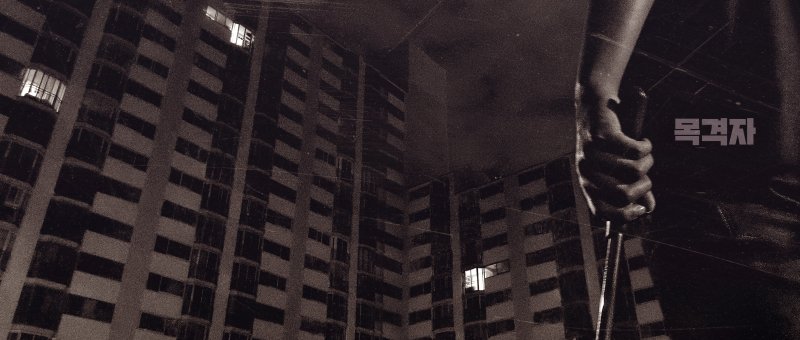
The Witness (목격자, Cho Kyu-jang, 2018)

The Witness poster 2The murder of a young woman outside of her New York apartment block in 1964 became a psychology text book standard thanks to the fact no one had raised the alarm or come to help her. Later investigations more or less debunked the so called “bystander effect”, at least in this instance, but it remains broadly true that those who find themselves witnessing a distressing incident fully expect that “someone” will be dealing with it, conveniently forgetting that they too are “someone”. The hero of Cho Kyu-jang’s The Witness (목격자, Mokgyeokja) is only one of many to temporarily distance himself from his community when he fears he has locked eyes with a killer and inadvertently made his family a target for retribution.

Sang-hoon (Lee Sung-min), a middle-class lawyer, is riding high after buying a new apartment (with a hefty mortgage) for his wife and daughter. Rolling home drunk after an evening drinking with colleagues, he opens yet another beer and gazes out over the balcony of his new apartment musing on how great his life is only to be confronted with a screaming woman being chased by a violent man in the courtyard. She falls and the man strikes her. Sang-hoon struggles for his phone but drops it in drunken shock. His wife emerges from the bedroom and alerts the killer to their presence by turning the lights on. Sang-hoon snaps them off and goes back to the balcony where he is convinced the killer has seen him. Paranoid, he forgets all about the poor woman bleeding on the concrete below and spends the night in his hallway clutching a baseball bat just in case.

He doesn’t know it yet, but Sang-hoon has indeed made himself a target for a marauding “random” killer. Afraid and ashamed, he decides to keep quiet. It would be easy enough to read Sang-hoon’s unwillingness to get “involved” in other people’s business as a hangover from an upbringing in an authoritarian regime in which keeping your head down and your nose clean might be essential tools for survival, but it’s also fair to say that his attitude is defined as much by notions of middle-class respectability as it is by cowardice and selfishness. An old busybody in the apartment block is constantly banging on about the house prices, getting the residents to sign a legal waver promising not to cooperate with the police or the media to avoid the name of the community becoming linked with violent crime. Sang-hoon says he wants to protect not only his wife and daughter, but their home too. His hopes and dreams are bound up with conventional homeownership. This is the way he intended to fulfil his male obligations to protect his family, but now it’s being threatened in a way he never expected and he finds himself tested.

Despite himself, Sang-hoon does feel he ought to help those in need. He bristles when his wife wants him to help out a friend whose child was injured in a car accident that the police didn’t bother to investigate properly, because he knows it’s a lost cause and she’s better to settle. He feels sorry for her, but not enough to rock the boat. Being a lawyer he perhaps knows what a risk it can be when the wrong people know where you live, but he’s at constant battle with himself knowing that the killer is still out there and will likely kill again. If he’d only called an ambulance instead of cowering by the front door, the poor woman might have survived – her death is on his hands as much as the killer’s because he chose to do nothing. The body count will only rise all while Sang-hoon tries to hedge his bets, calculating whether he’s better off keeping quiet and hoping the killer appreciates his complicity or surrendering himself to the police in the hope that they can protect him by taking the killer out of the picture.

Sang-hoon’s desire not to get involved has left him very involved indeed. He hoped it would all go away if he turned a blind eye and kept himself out of it, but like it or not he is a member of a community and he has a responsibility which cannot be abnegated. It turns out the best way to protect your family is protecting other people’s, maintaining a herd immunity to the threat of violent crime. There is, however, a reason they tell you to shout “fire” and not “help” – people are selfish and if they hear fire they know they are in danger too so it’s in their interest to come running, if it’s only you in danger they may not put themselves out. Sang-hoon’s brush with the embodiment of random threat does at least release him from the ingrained isolationism of the aspirant middle-classes in which any kind of fellow feeling is distinctly frowned upon, allowing him free rein to embrace his natural tendency towards altruism safe in the knowledge that his desire to help is not a weakness but a strength that will keep his family safe through the interconnectedness of a compassionate community.


The Witness was screened as part of the 2018 London Korean Film Festival.

International trailer (English subtitles)

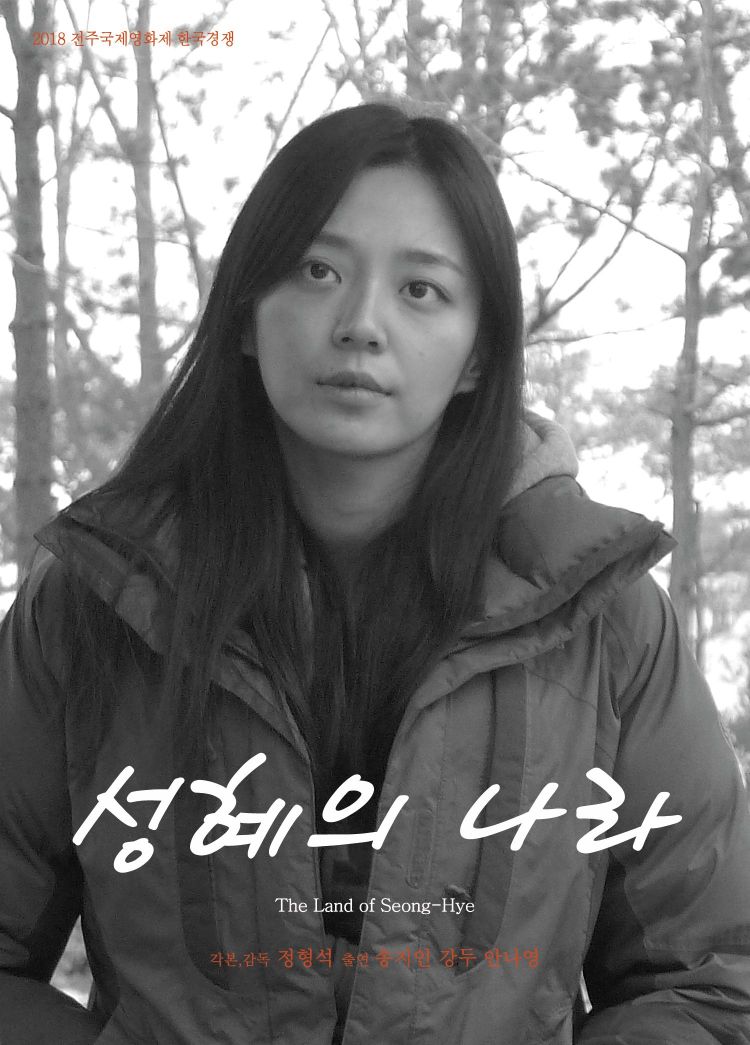
The Land of Seonghye (성혜의 나라, Jung Hyung-suk, 2018)

Land of Seonghye posterA rapidly developing economy dangles the promise of social mobility, but like a hamster turning endlessly inside an empty wheel, the prize is often unattainable. The young men and women at the centre of Jung Hyung-suk’s The Land of Seonghye (성혜의 나라, Seonghyeui Nara) are caught in an endless struggle of bureaucratic trials, perpetually stepping over each other trying to get one more foot on the ladder to corporate success only for something to catch them by the ankles and pull them back down again. For the unlucky youth of modern Korean society, there may be no way out of its relentless demands other than to retire from the game entirely.

29-year-old Seonghye (Song Ji-in) lives a hand to mouth existence working two part-time jobs – one in a convenience store and the other delivering newspapers. Too tired to sleep, she knocks herself out with tranquillisers and mostly subsists on expired produce from her convenience store job. Meanwhile, she’s taking classes at cram school, trying to improve her TOEIC score, and chasing interviews at corporations in the hope of scoring a permanent position. A health scare underlines the fact that things can’t go on as they are, but there are only two other choices open to Seonghye – give up and go home to work in her parents’ restaurant, or marry her similarly troubled boyfriend Sanghwan (Kang Doo) which necessarily means he gives up on his civil service dreams and gets a regular job somewhere else.

When we first meet Seonghye, she’s sitting alone in a park watching the surreal action of the other visitors rocking back and forth on the exercise swings. Motion without direction seems to accurately sum up Seonghye’s way of life. At 29, she’s facing the facing the prospect that it’s already too late. On the old side for an entry level position, she’s been struggling to secure key interviews but she thinks there’s another reason she isn’t being selected. Some years previously, she’d achieved her dreams with an internship at a major company but she quit before it ended. The reason she left was familiar enough – sexual harassment at the hands of the boss. She reported it. It was ignored. She went to the police and they did nothing. None of the other women backed her up and the working environment became so uncomfortable that she was forced to resign. Working in the convenience store, Songhye runs into an old colleague who reveals that her lecherous boss got a big promotion and is well on the way to mainstream success. Such is life.

Seonghye’s former colleague seems happy enough with her corporate existence, perhaps a little self absorbed and insensitive, not spotting just how uncomfortable Seonghye is with being exposed at her “humiliating” part-time job. Seonghye lies out of embarrassment and tells her former officemate that this is her family’s store and she’s just helping out while she prepares to study abroad. She tells the doctor that she’s a graduate student, too ashamed to admit she’s drowning in the seas of “hell Joseon” all while her solicitous parents remind her she can always come home though doing so feels like accepting defeat from which she might never recover.

Seonghye is far from alone in her troubles. Many of her university friends are in a similar situation, mostly unemployed or in continuous cycles of unpaid “opportunities” which never pay off. Suicide hovers on the horizon as a prideful solution to the impossibility of their lives while others embrace the cruel individualism of the capitalist society, accepting that you will need to betray your friends if you’re going to get ahead. Seonghye doesn’t want that. She doesn’t want to get ahead by throwing bodies to the wolves but the world keeps conspiring against her and soon not even this sort of no life existence will be viable.

Later, Seonghye gets an unexpected windfall for the most terrible of reasons. She has no idea what to do with the money – it is a significant amount, it might be enough to live on frugally (and alone) for a number of years. Should she invest her money wisely and live simply for the rest of her days or keep on running herself into the ground trying to attain corporate success and the social status that goes with it? Seonghye makes her decision. Suddenly her motion has direction once again. She smiles for the first time in a long while, shrugging off the burdens of an oppressive society and embracing her own freedom in the face of its relentless drive.


The Land of Seonghye was screened as part of the 2018 London Korean Film Festival.

Original trailer (English subtitles)

The Princess and the Matchmaker (궁합, Hong Chang-pyo, 2018)

Princess and the Matchmaker posterLove – is it an act of fate or of free will? For the women of 18th century Korea, romance is a girlish affectation which must be outgrown in order to fulfil one’s proper obligations to a new family and the old by becoming the ideal wife to a man not of one’s own choosing. Love, in this world, would be more than an inconvenience. It would be a threat to the social order. In Hong Chang-pyo’s The Princess and the Matchmaker (궁합, Gunghab), each and every decision is dictated by birth, but as our soothsayer reminds us, serendipitous meetings can change all that’s gone before.

A severe drought is plaguing the subjects of Joseon, and their eyes are on their king to sort it out. For complicated reasons, many assume the pause in the rains is down to the gods’ wrath over the aborted wedding of problematic princess Songhwa (Shim Eun-kyung) some three years previously. Even before her failed marriage made her a flawed woman, Songhwa had always been tainted with an aura of ill fortune seeing as her mother died in childbirth. A reading of her astrological charts implied her presence was bad for the king (Kim Sang-kyung) and so she was sent away only to be called back when another reading revealed her presence may be essential to the king’s recovery from illness. She’s been at the court ever since but the taboo of her supposed bad luck has never left her. The king determines he’ll have to marry Songhwa off to improve the public mood but with her reputation who will they be able to find for a husband? With names thin on the ground, the king decides on a series of open auditions with the royal astrologer announcing the “winner” after a thorough examination of their birth charts.

It goes without saying that no one is especially interested in Songhwa’s opinion. Still naive and innocent, Songhwa is quite looking forward to finally getting married though a frank conversation with a recently hitched friend perhaps helps to lower her expectations. Still, she’d at least like to see the face of the man she’ll be spending the rest of her life with and so she sneaks out of the palace and goes investigating. Her first ventures outside of the walls which have protected her all her life are marked by a sense of magical freedom, though what she sees there later shocks her. Her subjects starve, and blame her for their starving. Lamenting the poor nobleman who will be taking one for the team in marrying the notoriously ugly and difficult Princess Songhwa, they pray for her wedding day and the rain they fully expect to fall.

Given all of this ill feeling towards the princess, it doesn’t take much to guess what sort of men are prepared to toss their hats into the ring. The suitors may look attractive on the surface, as Songhwa discovers, but each has faults not visible in his stars. One is a child, another a womanising playboy. It comes to something when the worst possible match isn’t the murderous psycho posing a philanthropist but the ambitious social climber who will stop at nothing to advance his cause.

Some might say the sacred art of divination is a bulwark against court intrigue, but this like anything else is open to manipulation. The king’s old astronomer has been taking bribes for years – something brought to light by ace investigator with a talent for divination Seo Do-yoon (Lee Seung-gi) with help from shady street corner soothsayer Gae-shi (Jo Bok-rae). Appointed to the position himself, Seo unwittingly holds the keys to Songhwa’s future though that isn’t something he’d given particular consideration to. His job was just to read the charts before everything started getting needlessly complicated. When his list of candidates goes missing he has no choice but to start visiting the ones he can remember in person which is how he ends up repeatedly running into Songhwa in disguise and, despite himself, beginning to fall in love with her.

Songhwa, trapped in a golden cage, longs to live a life of her own free from the patriarchal demands of a hierarchical society. She bucks palace authority by sneaking out on her own, but never seriously attempts to avoid her miserable fate or resist the tyranny of an arranged marriage, only to be allowed foreknowledge of the kind of life for which she has been destined. Nevertheless, determining her own future later becomes something within her grasp once the corruption has been uncovered and the art of prophecy exposed for what it is. Destiny is more malleable than it first seems and as Seo advises the king, when compassion reigns the heavens will open. True harmony is not born of a rigid adherence to facts and figures assigned by the arbitrary conditions of birth, but by a careful consideration of the feelings of others. A life without love is as starved as one without rain and the truly harmonious kingdom is the one in which all are free to feel it fall where it may.


The Princess and the Matchmaker was screened as part of the 2018 London Korean Film Festival.

International teaser trailer (English subtitles)

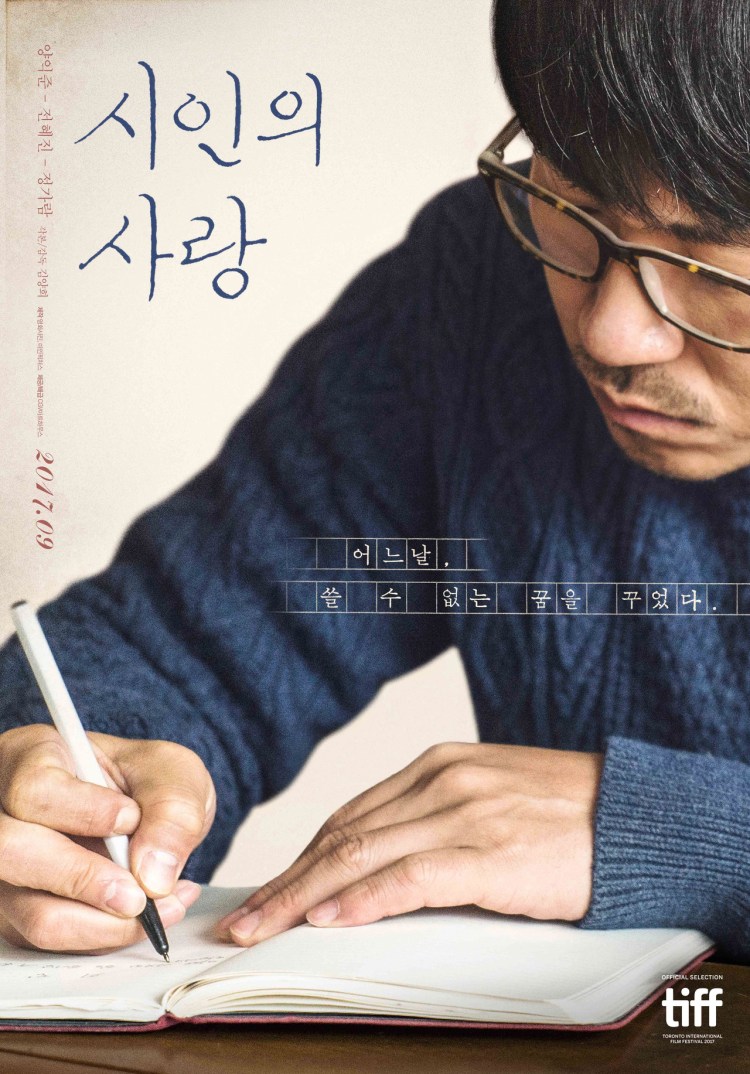
The Poet and the Boy (시인의 사랑, Kim Yang-hee, 2017)

Poet and the Boy posterA poet cries for the sorrow of the world, according to the hero of Kim Yang-hee’s melancholy drama, The Poet and the Boy (시인의 사랑, Sienui Sarang). Unfortunately for him, he lives in his own poet’s world, lonely and disconnected but never knowing the true depth of sadness which would give his verse meaning. Until, that is, he falls in love. Beauty turns out to be a doubled edged sword for a mild mannered yet emotionally brave artist struggling to comprehend his place in the world but discovering that some of it, at least, has already been decided for him.

Hyon Taek-gi (Yang Ik-june) is a 30-something aspiring poet married to a feisty shopkeeper. The couple have been married several years and though they are happy enough together, theirs is a marriage born more of convenience than passion. Having married “late” each has settled in to making the best of things, sure that a greater love will one day blossom between them. Mrs. Hyon (Jeon Hye-jin), feeling an absence in the family home, has been longing for a baby but Taek-gi has never been especially interested in that side of things and isn’t really keen on the idea of becoming a father.

Meanwhile, a brand new donut shop has just opened up in town which is good news for Taek-gi because donuts are one of his favourite things. Unsure whether it’s just his status as a purveyor of sweet goods, Taek-gi develops a fascination with the beautiful boy at the bakery (Jung Ga-ram) which is further inflamed when he accidentally catches sight of him in amorous moment with a female customer. To his mild surprise, Taek-gi finds himself captivated with the male physical form, experiencing feelings and desires he had not even known existed.

As his wife later puts it, a poet’s world is different. Taek-gi stops to appreciate the flowers, watches the children play, and makes a round about detour to a fast food restaurant to observe human life but he doesn’t quite live in the world he inhabits or allow himself to truly experience its beauty. As we first meet him, Taek-gi is writing a poem to open the map of his heart but quickly finds himself lost and wandering, unable to settle on a clear direction and ending up at a disappointingly familiar destination. The poem is interesting but imperfect, somehow hollow and inauthentic.

Taek-gi’s creative block is also an emotional one. What begins with a single moment of captivating beauty expands into something deeper and warmer as the poet gets to know the boy on a more intimate level. Seyun is a troubled young man from an impoverished family caring for his bedridden father while resenting his coldhearted mother. What he sees in Taek-gi is something between friend and father, both wary of and delighting in unsolicited kindness from a virtual stranger. Taek-gi’s wife teases him about his attraction to Seyun, probing him about the nature of their own strange relationship. She wonders if it’s really “love” without intense physical desire – something he has made repeatedly clear that he does not feel for her. Taek-gi insists that it is, citing another romanticised love which remained chaste as further evidence only for his wife to fire back that perhaps all he really wanted was the sadness of unfulfilled longing to complete his poetic world view.

Taek-gi later takes his words back, insisting that what he feels for his wife is not “love” and that their relationship was always doomed to fail. Yet it’s not carnal desire which brings him to this realisation so much a greater motion towards connection. Taek-gi who was always ill-equipped for life and never able to take care of himself, begins to look after the younger man both physically and emotionally asking for nothing in return other than his continued company. Despite his otherworldliness and alienation, there is something uniquely brave in Taek-gi’s willingness to tug on the thread of an unfamiliar feeling, uncertain what it is or might be but determined to find out. Disregarding the conservative values of his society which have led him to embrace conventionality in marrying “late”, supposedly “grateful” that someone allowed him the opportunity to marry at all, Taek-gi moves forward if cautiously, aware that his desires may not be accepted and may present a danger to those around him.

Then again, Taek-gi is a middle-aged man with a series of choices already behind him, many of which entail consequences and responsibilities it would be selfish and irresponsible to break even in the pursuit of individual happiness and fulfilment. Perhaps all he really wants is the grand failed romance that will open the map of his heart through breaking its spine, craving “sadness” to feed his art over “love” to feed his soul. True enough, sorrow does wonders for Taek-gi’s art even if he feels himself trapped by his previous choices and the restrictive social codes of his community but there is also something inescapably poetic in his magnanimity as he prepares to set the thing he loves free in a way he never was and believes he never can be.


The Poet and the Boy was screened as part of the 2018 London Korean Film Festival.

International trailer (English subtitles)

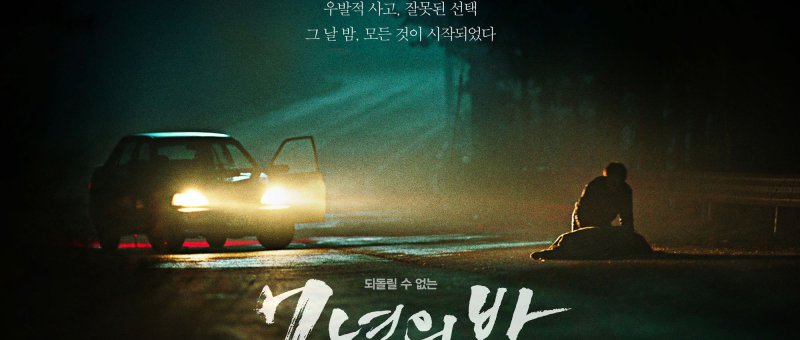
Seven Years of Night (7년의 밤, Choo Chang-min, 2018)

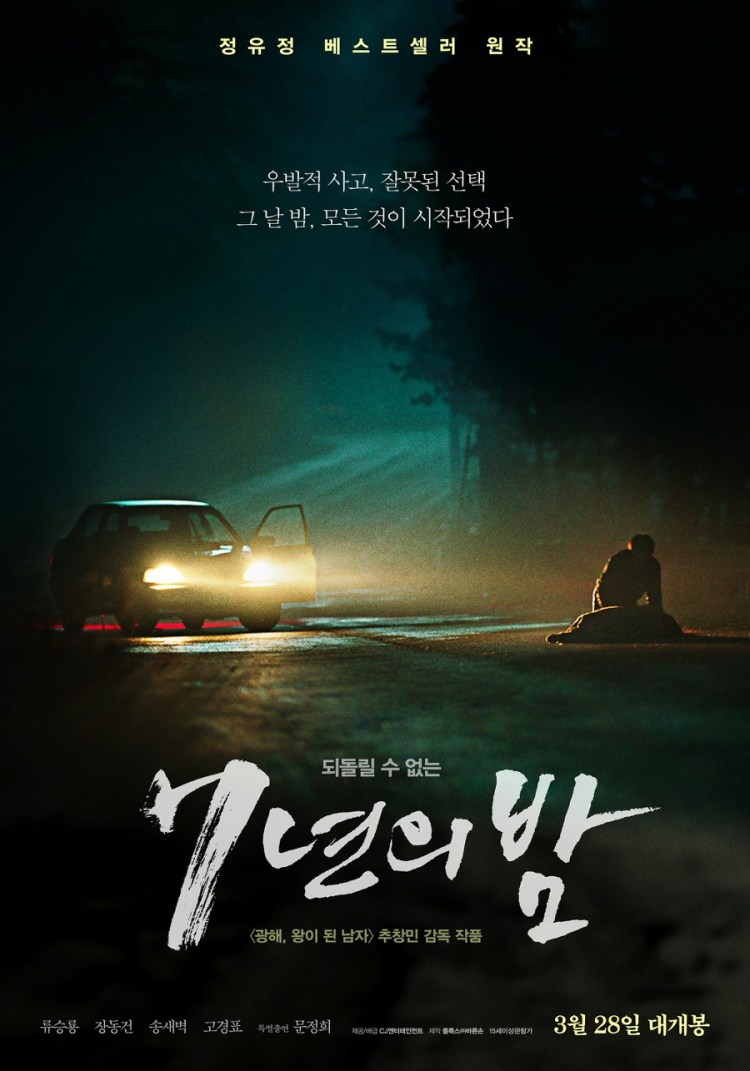
Seven Years of Night posterThe sins of the father are visited upon the son. Cycles of abuse and fatalistic retribution are a persistent theme in Korean cinema but Choo Chang-min plunges them to new depths of tragic inevitability in his adaptation of the best selling novel by Jeong You-jeong. The biblically titled Seven Years of Night (7년의 밤, 7 Nyeonui Bam) pits two visions of failed fatherhood against each other as two broken men attempt to restore order to their lives but damn their children in the process through their own refusal to engage with past trauma.

In 2004, security guard Hyun-su (Ryu Seung-ryong) buys an apartment he can’t afford in order to placate his wife who is in constant worry over their precarious financial circumstances. Hyun-su can’t really manage the interest payments on the mortgage so the family will be renting out the fancy apartment and moving to a remote house provided by his new employers at a hydroelectric dam. On the day that he was supposed to go and check over his new accommodation, Hyun-su partied hard with his former colleagues and set off drunk, getting into an altercation with another driver on the way. Lost in a thick fog and fuzzy from the drink, he hits a little girl who ran out in the middle of the road, panics and hides her body, planning to forget any of this ever really happened.

Forgetting is not, however, something anyone is permitted to do in Choo’s world of elemental retribution in which the buried past is always destined to make its way to the surface sooner or later. The lake around the dam was once home to a village which was sunk, intact, to make way for its construction. Locals fear the water with superstitious dread, believing the lake sucks the souls of men and is polluted with something darker and older than industrial corruption. Attempting to drown the inconvenient may have its appeal, but nothing stays underwater for long and the harder you try to push it down, the faster it will rise.

Unfortunately for Hyun-su, the father of the girl he has killed, known to all as Dr. Oh (Jang Dong-gun), is not a man to be messed with. Dr. Oh, apparently an upscale dentist in the city, rules over all with a tyrannical authority and, as he owns almost all the land around here, enjoys a near feudal level of deference from the villagers. Violent and controlling, Oh’s wife, who describes him as the Devil incarnate, has recently escaped and gone into hiding leaving their small daughter Se-ryung (whose name is coincidentally the same as that of the sunken village) alone to face his wrath. Doubtless, Dr. Oh was raised with an authoritarian father of his own and is unable to see beyond himself and understand that his reign of terror prevents him from achieving the very thing he craves – the love of his wife and daughter.

Desperate for revenge, needing to prove that this is all someone else’s fault to avoid admitting that his own violence drove his wife from him and his daughter into the path of another violent man, Dr. Oh vows poetic retribution by targeting the life of Hyun-su’s innocent son, Seo-won (Go Kyung-pyo). Increasingly disturbed by his crime, Hyun-su dreams of his own father – a violent drunk with PTSD from a pointless war whose death he longed for and who he swore never to become, only to be confronted with a vision of himself as a small boy in the face of his own son watching his father strike his mother in anger. Hyun-su sees. He sees what his father passed to him and what he fears he will pass to his own son. He wants to break the curse, but doesn’t know how. 

Still, Hyun-su would drown the world to save his son even if he hates him for it. Seo-won, left with a series of dubious legacies, struggles to emerge from the shadow of his father’s crimes, is disowned by his family as the son of a murderer and cast out from regular society as one polluted by murderous blood but eventually saves himself through skills learned from a second father, himself hoping to atone for a selfish decision that led only to tragedy. Deliberately disjointed and self-reflexive, Seven Years of Night is a dark tale of supernatural dread masking a horror all too real in the impossible task of exorcising the living ghost of defeated male pride.


Seven Years of Night was screened as part of the 2018 London Korean Film Festival.

International teaser trailer (English subtitles)

Project Gutenberg (無雙, Felix Chong, 2018)

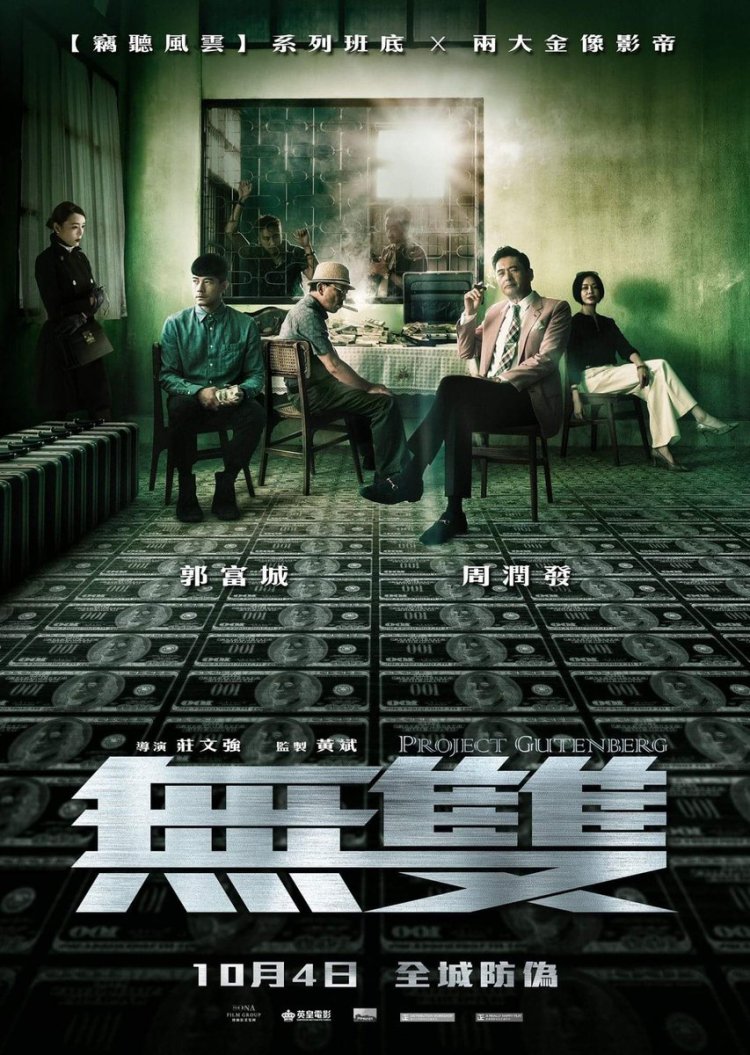
Project Gutenburg poster“Sometimes a fake can be better than the real thing” intones mild mannered counterfeiter Lee Man in Felix Chong’s cineliterate thriller Project Gutenberg (無雙) . At first glance, Project Gutenberg would seem to have nothing at all in common with the archival programme from which it takes its name but perhaps there is something in its continual questioning of whether a facsimile can replace an original. Chong plays with perception, narrative, and a human need for authenticity but most of all with the legacy of heroic bloodshed as a melancholy young man attempts to rewrite his own history with himself in the lead.

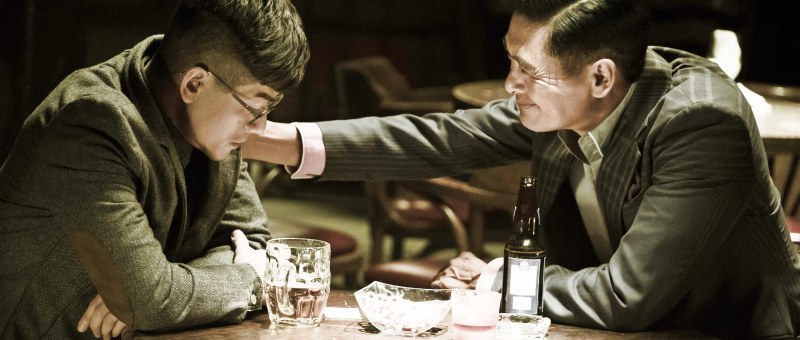
In the late ‘90s, Lee Man (Aaron Kwok) is languishing in a Thai jail from which he manages to get himself rescued by scraping blue powder off the walls and creating an expert forgery of a postage stamp to send a letter of help. Soon after he gets himself picked up by the Hong Kong police who want his help tracking down a notorious counterfeit currency trafficker known only as “Painter” (Chow Yun-fat). Lee is scared witless because Painter has a habit of ruthlessly hunting down associates who talk – something which is well known to HK police inspector Ho (Catherine Chau) who is after him because he killed her Canadian policeman boyfriend. Painter also murdered the fiancé of Lee’s old flame Yuen (Zhang Jingchu) who is the woman he sent the letter to and who has come to his rescue. Which is to say, the situation is much more emotionally complicated than one might expect.

Through flashback, Lee elaborates on how he came to get mixed up with crime. He and Yuen were living on love in 80s Vancouver trying to make it in the art world. While Yuen’s work began to gain traction, Lee’s was going nowhere. Technically proficient, his paintings were thought soulless and derivative but his talent for mimicry soon brings him to the attention of master forgers and thence to Painter who needs someone with expert skills for his next project – forging the US $100 bill.

Lee tells his tale with melancholy relish, dwelling on his days of youthful abandon with Yuen to the extent that Ho interrupts to declare herself disinterested, advising he skip the prologue and get to the bit where Painter shows up. Painter, a suave yet unpredictable criminal type, determines to help Lee become “the leading man” he knows he can be, but to be fair all anyone is ever interested in is the intensely charismatic Painter. As it turns out, there are more reasons for that than it might at first seem, but in the end Lee’s internalised feelings of inadequacy are still the fuel to his fire. Unable to find artistic success, forgery offers Lee the life of a skilful craftsman and he feels himself to have found his niche but in betraying his artistic integrity he also risks forever losing the woman he loves.

Painter has a weird obsession with Lee’s love life, assuring him that once the deal is done he will help him win back Yuen. “A man who gives up on love is destined to fail at everything” Painter tells him. Lee, however, repeatedly gives up on love. He refuses to fight, embraces his own sense of inferiority, and resolves to live on in misery falling ever deeper into Painter’s world of surrealist crime. Leaving aside Painter’s strangely homoerotic relationship with his protege, Lee’s life gets still more complicated when he becomes involved with a woman, Sau-ching (Joyce Feng), who falls in love with him in Thailand and, for complicated reasons, ends up with Yuen’s face thanks to plastic surgery and name thanks to a fake passport. Painter taunts him with a facsimile of his love but berates him for settling for a substitute while Sau-ching resents getting the Vertigo treatment from a man who refuses to let a failed love fade.

Almost offended by her betrayal of true love, Inspector Ho probes Yuen about her fiancé, asking if he was merely a “substitute” for Lee. Yuen asks if the next man Ho will fall in love with will merely be a “substitute” for her fallen colleague to which Ho fires back that there will never be anyone else because her love is “irreplaceable”. Yuen scoffs at her strangely naive romanticism and Ho does indeed appear to meet an echo of her former love in someone new carried once again on noirish cigarette smoke. If you can’t be with the one you love, love the one you’re with the old adage goes but it turns out that inauthentic romance is the hardest kind to bear.

Chong lets Lee’s retelling of his history play out like a heroic bloodshed movie in which Chow re-inhabits the classic characters of his youth. An unreliable narrator, the movie in Lee’s mind is one of honour and glory in which he still cannot allow himself to take the lead. Chong over eggs the pudding with a series of twists and reversals, undercutting all that’s gone before and muddying his message in the process but there’s no arguing with his high stakes style as he turns a simple crime story into an interrogation of authenticity and the power of personal myth making.


Screened as part of the 2018 London East Asia Film Festival.

Original trailer (English subtitles)