The Kamagasaki Cauldron War (月夜釜合戦, Leo Sato, 2018)

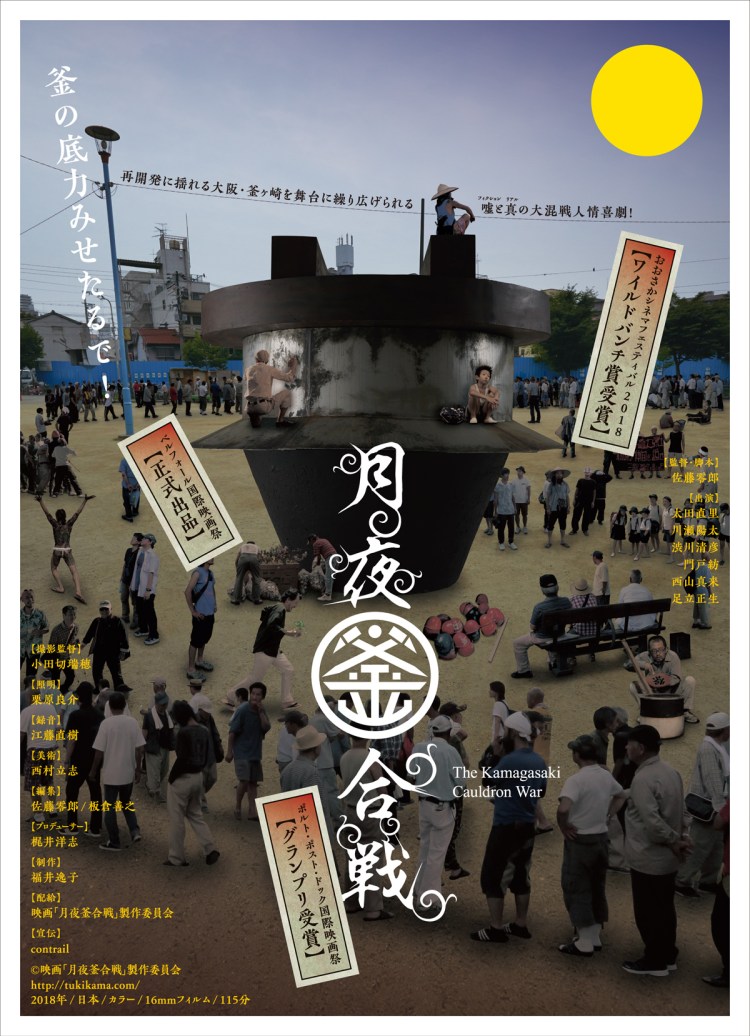
Kamagasaki couldron warAs far as Japanese cinema has been concerned, the city of Osaka is renowned for two very specific things – gangsters and comedy. The Kamagasaki Cauldron War (月夜釜合戦, Tsukiyo no Kamagassen), the debut narrative feature from Leo Sato, neatly brings them both together in an anarchic tale of social inequalities and the pettiness of organised crime. A warmhearted exploration of the eponymous “invisible slum”, Kamagasaki Cauldron War delights in everyday resistance as its ordinary citizens attempt to live their ordinary lives all but forgotten in a society intent on swallowing them whole.

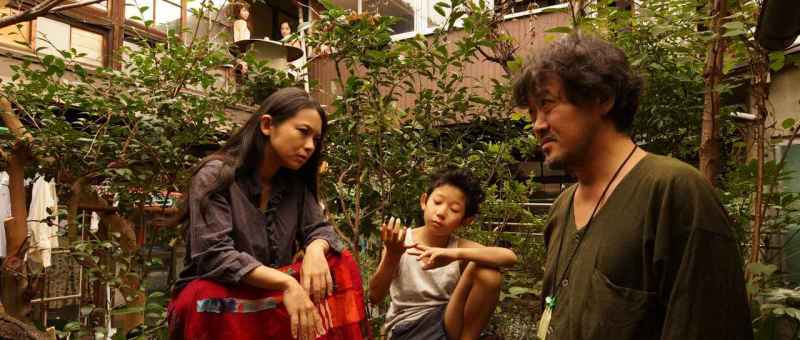
The drama begins with drifter Henmi – a casual labourer with a young son, Kantaro (Tumugi Monko), who dreams of joining the local yakuza gang Kamitari but is rudely rejected by its foot soldiers. In revenge, he steals their precious “kama” sake bowl which is the symbol of their clan and essential for carrying out the succession ritual. This is all the more embarrassing because the elderly boss is thinking of retiring now that his son, Tamao (Kiyohiko Shibukawa), has been released from a 20-year prison stretch. Tamao, however, is secretly pleased because he doesn’t much fancy taking over while the petty yakuza who’s been running the show all this time is also quite happy because he doesn’t really want to give up control. Nevertheless, the precious Kama must be recovered at all costs or the gang will continue to face a significant loss of street cred.

Meanwhile, a bigger drama is underway. Kamagasaki is home to a significant proportion of “homeless” people, many of whom congregate around Sankaku Park where a regular soup kitchen runs next to the giant symbolic Kama cauldron in the park’s centre. It also the last remaining undeveloped post-war area and is therefore rich pickings for unscrupulous property developers such as Capital Beat who are primed to bulldoze the welfare centre to build more housing and therefore need to clear the park of the homeless in order to make the area seem attractive. Already trying to prevent the homeless from settling, the city has put up a series of insidious barriers including floral centrepieces and more obvious metal barriers but is nervous of taking direct action such as physical evictions. Which is where the yakuza come in. Working with Capital Beat and corrupt police, the yakuza take clubs to the soup kitchen and get vulnerable people to commit arson by setting fire to live rats and having them run into “derelict” buildings.

At the centre of events, orphan Nikichi (Yota Kawase) tries to keep himself afloat when the only gigs going are transfers to Turkish nuclear power plants by taking advantage of the Kama crisis and getting his hands on as many as possible little knowing that he is actually in possession of the Kamitari sake bowl thanks to little Kantaro whom he has been persuaded to adopt with his sex worker girlfriend Mei (Naori Ota) who grew up with him in the same orphanage. Coincidentally, the pair were also childhood friends with Tamao who has apparently been holding a torch for Mei all these years as well as grudge against Nikichi for an embarrassing injury caused during a sports contest at school. While they’re busy scrapping it out, the local area decides to fight back against Capital Beat by protesting the city’s treatment of the homeless leaving Nikichi an accidental figurehead for a campaign he doesn’t quite believe in and is only tangentially involved with.

Decrying that there is “no place to rest in the whole world” some enterprising homeless guys have built a tunnel under the giant Kama while others attempt to repurpose their penury by declaring that “garbage is the weapon of the people”. Recalling the anarchic spirit of the student protests (including a surprising cameo by Masao Adachi), the residents of Kamagasaki rise up against social intransigence by taking on the yakuza armed with pots and pans before the police stick their oar in and end up becoming a mutual point of irritation. Filmed on retro 16mm, Kamagasaki Cauldron War offers no real solutions to its various problems but delights in the everyday anarchism of its workaday world in which its scrappy residents do their best to get by in an often hostile environment, finding whatever ways they can to resist societal oppression while maintaining a sense of humour and world weary hope for the future.


The Kamagasaki Cauldron War was screened as part of Japan Cuts 2019.

Original trailer (English subtitles)

I Go Gaga, My Dear (ぼけますから、よろしくお願いします。, Naoko Nobutomo, 2018)

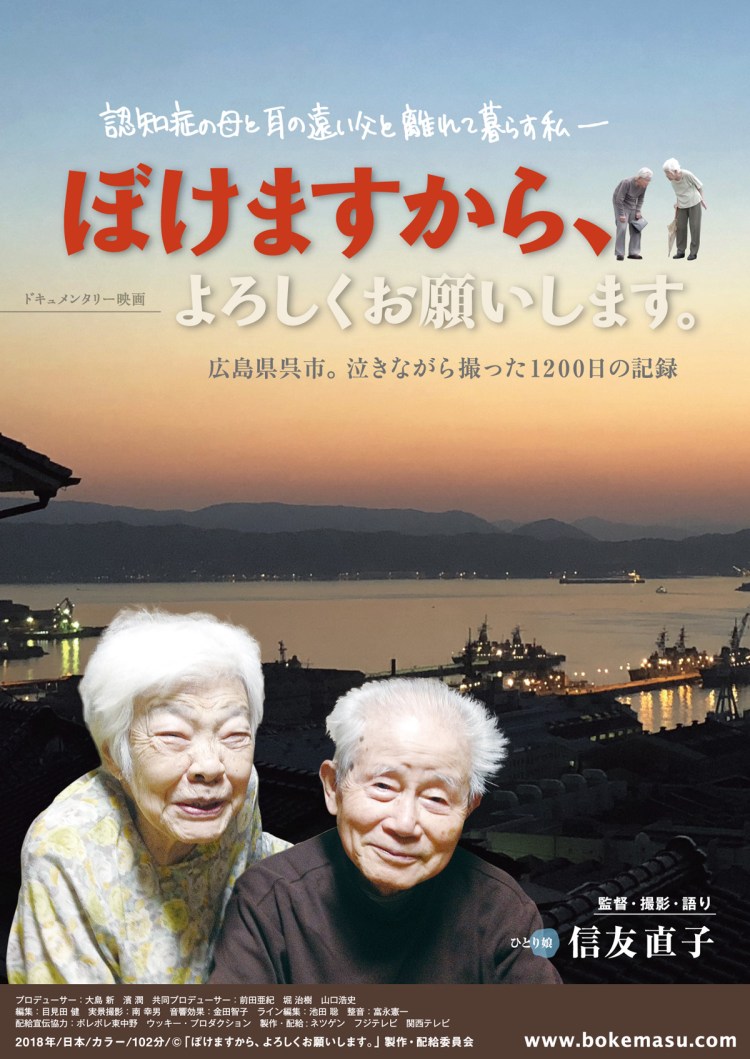
I go gaga posterWith the population ageing at unprecedented levels, Japanese society is facing a series of interconnected social issues as it contemplates the best way of caring for large numbers of elderly people often living away from family members who, in the past, might have been expected to bear responsibility. What sometimes gets forgotten, however, is the human dimension as older people go on living their everyday lives sometimes surrounded by family and sometimes not. Veteran TV director Naoko Nobutomo’s first feature I Go Gaga, My Dear (ぼけますから、よろしくお願いします。, Bokemasukara, Yoroshiku Onegaishimasu) follows her ageing parents from her own perspective as their daughter as they continue supporting each other into old age.

Nobutomo begins her story on New Year’s Day 2014 as she begins to notice a change in her sprightly, independent mother Fumiko and decides to take her to a doctor where they discover she is in the early stages of Alzheimer’s. Over the next three years, Fumiko’s condition intensifies while her husband of 60 years, Yoshinori, does his best to care for her though he himself is already over 90.

Flashing back to home video taken in earlier years, Nobutomo recalls her difficulty dealing with breast cancer at 45 throughout which her mother had been there to look after her. Having looked after her family for all of her life, there is an especial irony that now it’s Fumiko who needs looking after and it is perhaps these small moments of change that force her to acknowledge a gradual decline in her living standards even if she cannot clearly process them. Though Yoshinori bravely starts taking more domestic responsibility at 95, losing the ability to cook for herself is an obvious blow to Fumiko who nevertheless determines to keep her kitchen spotlessly clean.

Luckily, Fumiko and Yoshinori have a generous health insurance policy which entitles them to assistance in the home though that is something they obviously feel ambivalent about accessing. Fumiko, in particular, remains confused about the presence and role of their new helper, believing she is something to do with the insurance company, and is a little resentful of her offer to help with physically difficult housework such as cleaning the bath and emptying the washing machine. Likewise, she is originally reluctant to attend the daycare centre but noticeably perks up after being given a valuable opportunity to socialise rather than staying home all day with relatively little stimulation.

Seeing that her parents are struggling to manage on their own, Nobutomo wonders if she should give up her job in Tokyo and come home to Kure to look after them but is assured by her father that they’d prefer her to go on living her own life. Yoshinori, born in 1920, wanted to study literature at university but the war got in the way. Perhaps for this reason, he was determined that his daughter follow her dreams and is profoundly happy that she’s been able to make a career doing something she loves in the big city. Fumiko too, marrying at the comparatively late age of 30, had been a career woman, graduating from a woman’s school and working as an accountant before her marriage. A notably progressive pair, perhaps usually for the times in which they lived, they were content to let their daughter live the life she wanted to live and never placed any particular pressure on her to conform by getting married and having children.

Married for over 60 years, Fumiko and Yoshinori are determined to go on living independently and managing on their own as best they can. Fumiko, however, has brief painful moments of anxiety in which she is acutely aware of her declining condition and implications for her future. Some days she refuses to get out of bed, either resigned to the fact that “life isn’t always happy”, or lamenting that her life “miserable”. Neither of them want to be a “burden”, but find it increasingly difficult to continue managing on their own as much as they prefer to be as independent as possible. Nevertheless, they go on supporting each other much as they always have living together in hope and happiness while Nobutomo watches warmly from the sidelines supporting them in the same way they supported her, gently and with compassionate understanding.


I Go Gaga, My Dear was screened as part of Japan Cuts 2019.

Original trailer (English subtitles)

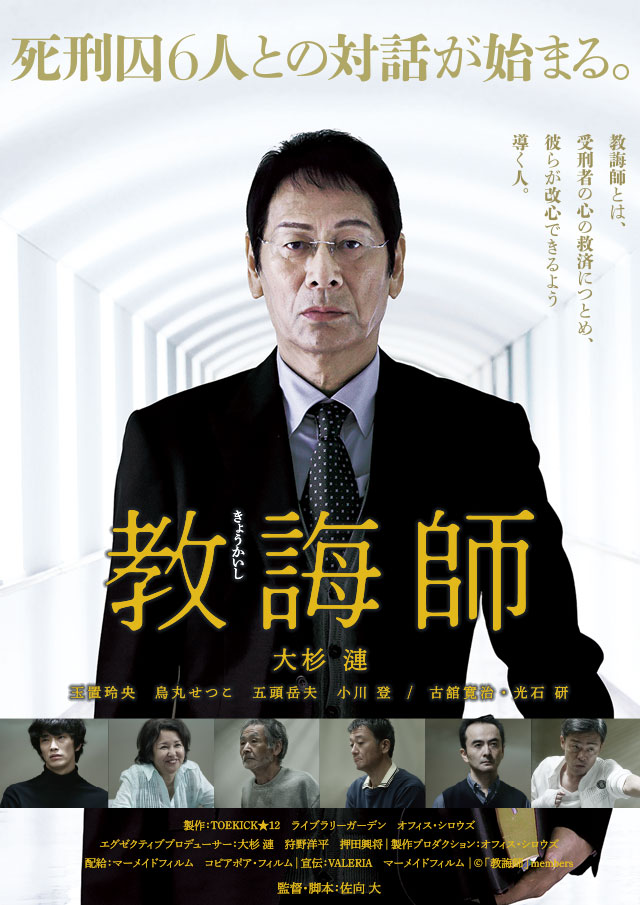
The Chaplain (教誨師, Dai Sako, 2018)

The Chaplian posterJapan is one of the few developed nations which still maintains the death penalty, though in practice infrequently. The sentence of death is handed down almost exclusively to mass or serial murderers, child killers, or those whose crimes are judged to be of extraordinary barbarity. Unlike other nations, Japan houses those on death row not in prisons but in detention centres, denying them the rights that are afforded to regular prisoners such as visitation, exercise, and entertainment. Execution must be carried out within five days of the judgement being handed down. The prisoner themselves is informed on the morning of their death and given a choice of last meal, but their family members, legal team, and the general public are only informed once it has taken place preventing any last minute attempts for a stay.

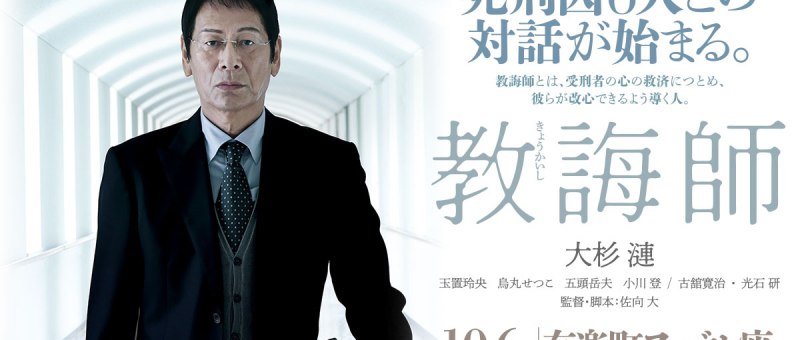
In what would be his final screen role (and his first as a producer), Ren Osugi stars as a prison chaplain, Saeki, attempting to guide a series of Death Row prisoners towards spiritual peace as they prepare to accept their judgement. Though none of the prisoners he visits protests their innocence, some are more repentant than others and not all of them have fully internalised the fact they will never leave the facility even when no further legal attempts to commute their sentences seem to be underway. Some might say there is an element of exploitation in sending a chaplain in at all seeing as this is literally a captive audience. The crimes which lead to being on Death Row are necessarily extreme, many prisoners either have no remaining family members or have been abandoned by them out of shame, leaving them intensely lonely and devoid of human contact (not even televisions or radios are permitted). They are therefore much more interested in conversation than they are in The Bible or accepting Jesus into their hearts.

Then again, Saeki’s first visit is to a man who says nothing at all, allowing him to fill the silence with some of his own backstory which hints at a personal trauma possibly informing his desire to save the souls of these unfortunate people. Another prisoner, by contrast, is all too eager to convert but, as Saeki soon realises, is almost entirely illiterate and therefore struggling to hear the word of God through being unable to read. Saeki does his best to help them, gently listening to their fears and worries but encounters a familiar series of social problems which made their fates inevitable stemming from entrenched poverty and social inequality.

Only six months into the job, he wonders if he’s really getting through and if his efforts are worthwhile. His most challenging prisoner is a young man convicted of a mass killing of those with learning difficulties (inspired by a real life case), whom he deemed to be a drain on national resources. A hyper-rational sociopath, Takamiya (Leo Tamaoki) baits Saeki with unassailable, coldhearted logic which asks why, if he’s happy enough to kill and eat “stupid” animals like cows and pigs, but not “clever” ones like dolphins, his application of the same logic to the human world can be wrong? If all creatures have an equal right to life, then killing for food is as wrong as any other kind of killing and the death penalty nothing more than state sanctioned murder. There is no rational answer for Takamiya’s philosophy and aside from his abhorrent, unfeeling rationality he may have a point when it comes to social hypocrisy. All Saeki can do is ask him to stand with the people that he killed, and acknowledge that God or no God, Saeki too will be with him until the very end.

If Takamiya begins to question the terrifying rationalism which led him to his truly barbaric act, he does so probably not because of Saeki’s ministrations but because of his proximity to death. Meanwhile, another prisoner, Suzuki (Kanji Furutachi), convicted of a stalker murder, seems to have picked up entirely the wrong message in coming to blame just about everyone else for his crime and absolving himself of responsibility. He might have found peace, but it is not the kind of peace he was supposed to find. Noguchi (Setsuko Karasuma), meanwhile, the only female prisoner, continues to talk about the future as if she really thinks she’s getting out. Only Shoichi (Takeo Gozu), an elderly man, seems to truly accept Saeki’s teachings though it is perhaps enough to make him feel as if he really is making a difference.

Sako opts for subtlety in pointing out the inherent hypocritical immorality of the death penalty and particularly in the context of the Japanese legal system which relies heavily on confessions often extracted under duress. Battling his own sense of guilt, Saeki tries to save himself by saving the souls of others but finds his work an uphill battle in a society which prefers not to speak of unpleasant matters and thereby renders itself absolute and unaccountable in the rigidity of its justice.


The Chaplain (教誨師, Kyoukaishi) was screened as part of Japan Cuts 2019.

Original trailer (English subtitles)

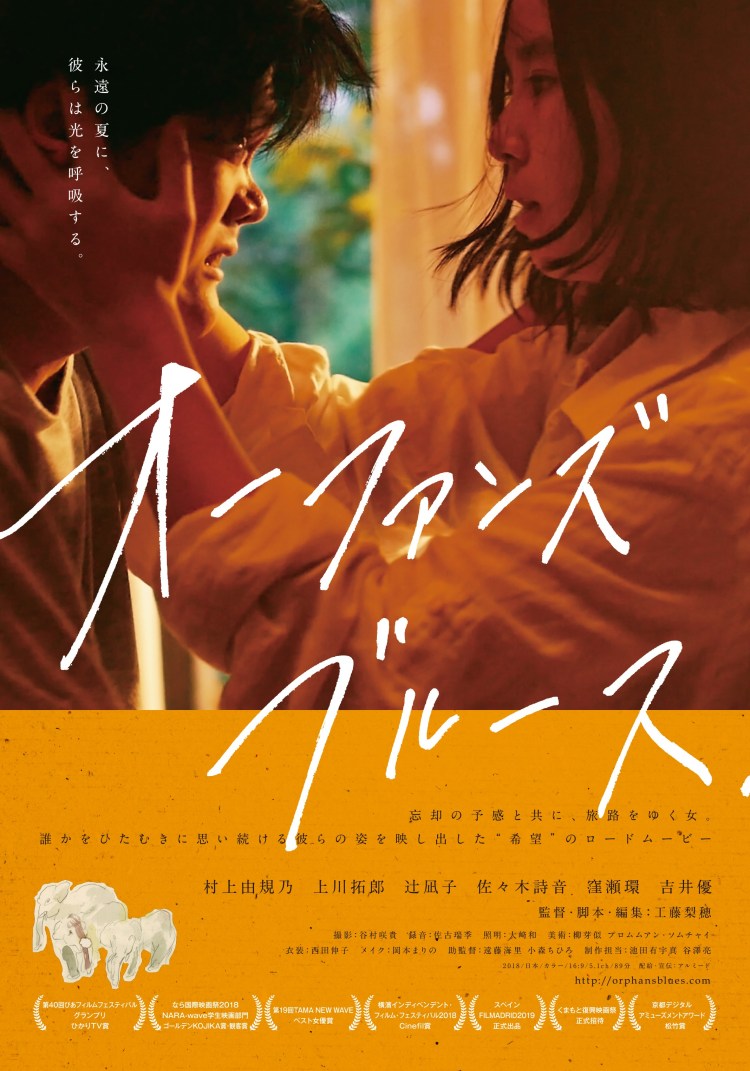
Orphan’s Blues (オーファンズ・ブルース, Riho Kudo, 2018)

Orphan's Blues posterThe past becomes an irresistible trap for a collection of variously troubled souls in Riho Kudo’s Pia winning feature Orphan’s Blues (オーファンズ・ブルース). “Things change” the heroine laments, unable to keep up with the relentless passage of time as her memory begins to collapse in on itself, leaving only nostalgia behind. A poetic exploration of grief, rootlessness, and trauma, Kudo’s bold debut sends its fugitive protagonists on a sad road trip into the long buried past as they attempt to dig up their childhood innocence in escape from an intolerable present.

Emma (Yukino Murakami), a middle-aged woman making a living with a tiny book stand at the side of the road in a small town, has been experiencing unexplained moments of memory loss – forgetting to place a customer’s order, leaving taps on, repeating herself having forgotten that she’s asked this question several times before. Losing the present sends her back to thoughts of the past as evidenced by a picture of a pack of elephants drawn by her childhood friend, Yang (Yu Yoshii), with whom she grew up in the same orphanage. Longing for that same closeness, she decides to track him down but a visit to Chinatown proves fruitless, as does an attempt to call in at the last address she had. Determined to find out what happened to Yang, she reconnects with another friend, Van (Takuro Kamikawa), who is in the process of fleeing to Tahiti with his girlfriend Yuri (Nagiko Tsuji) after stealing some gangsters’ money. When that doesn’t work out they end up accompanying Emma to a small inn run by a woman, Luca (Tamaki Kuboso), who was once in a relationship with Yang, and where a mysterious young man, Aki (Shion Sasaki), is currently staying.

All of our protagonists, bar perhaps Yuri, have a prominent burn somewhere on their body. Emma’s is on her left shoulder – a scald mark she keeps rubbing at times of stress. Van has a scar from a cigarette burn on his right arm, while Luca has what looks like a brand where a wedding ring might once have been worn. Even Aki has some kind scar on his right wrist, conveniently hidden by his long-sleeved shirts. Each of these people is in some way connected by the absent Yang, desperately in search of him even if some perhaps are more aware than others what might have befallen their absent friend.

Luca, who has a series of elephant tattoos across the nape of her neck, recounts that Yang once told her that elephants separate from the pack after receiving a premonition of their deaths. To spare the others the suffering of seeing them pass away, they leave before they go. Yang, they posit, may have followed their example but if he has all he has done is provoke additional suffering among his confused friends. Emma struggles to remember, frustrated by her inability to stay in the present while being pulled towards the past, feeling as if she’s missing some vital clue which will explain everything.

Meanwhile, the tensions between the five residents at the inn ebb and flow. Yuri, who never knew Yang and is beginning to fear she and Van will never get to Tahiti after all, feels herself excluded from the ongoing drama. She resents the closeness between Van and Emma, irritated that only Emma knows how to calm him down in the midst of emotional meltdown, while wondering how long he’s going to keep her waiting in this strangely liminal space caught between a past she never knew and a possibly unattainable future.   

Waiting is however where they are. Van wants to go back, return to a happy place the three childhood friends once travelled and dig up something they buried but can no longer remember. Emma, confused, eventually finds herself rooted in a delusion of the past, unable to see the present clearly while Van is left with little choice other than to abandon himself to facilitate her temporary happiness. Scarred, they run from a disappointing future into childhood nostalgia unable to reconcile the adults they’ve become with the children they once were. Literally as well as figuratively orphaned, they remain adrift with no clear place to belong or return to. Subtle and poetic, Kudo’s beautifully lensed debut is an achingly melancholy piece but one which perhaps finds hope in the solidarity of the lost as much as it suggests there is no path forward for those who can only look back.


Orphan’s Blues screens in New York on July 28 as part of Japan Cuts 2019.

Original trailer (English subtitles)

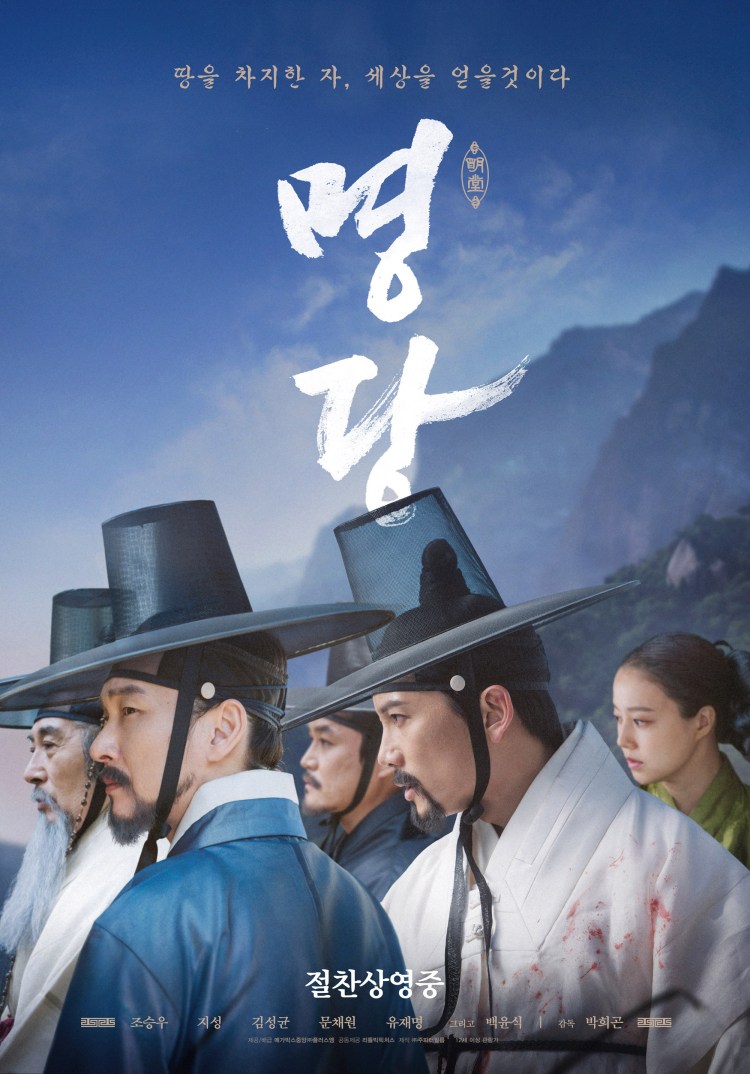
Fengshui (명당, Park Hee-gon, 2018)

FengShui poster 1A would-be-dynast gets overly involved with a weird spiritualist and almost (?) ruins the nation. Does that sound a little familiar? As metaphors go, it might be a stretch but then so much of Park Hee-gon’s Fengshui (명당, Myeong-dang) is just that. Set in the late 19th century, Park’s film is the third in a loose trilogy themed around Korean fortune telling traditions (following The Face Reader, and The Princess and the Matchmaker), but rather than questioning the efficacy of its art asks a series of questions about its application and the internecine lengths those who lust for power or otherwise feel themselves unfairly oppressed will go to to reclaim their rightful position.

Our hero, unwisely honest fengshui master Jae-sang (Cho Seung-woo), is the only one brave enough to point out that the site chosen for the burial of the late king is cursed, but inevitably he is ignored. He is of course right, which means he must be eliminated which is why a troop of soldiers working for the nefarious Kim clan show up and burn his house down, executing his wife and child by the sword when they manage to escape. 13 years later, he finds his expertise called on again when the weak and inexperienced king begins to suspect the Kim clan is plotting against him and that their shenanigans over his father’s grave may have something to do with it.

Like any typical Korean period drama, Fengshui is chiefly concerned with palace intrigue, only this intrigue is stranger than most in its bizarre obsession with the possibilities of manipulating spiritual power through acquiring “auspicious” land for whichever purpose one might wish from conceiving an heir to making sure your line holds power. The Kims are convinced they can win the throne (if by proxy) through digging up their ancestors and replanting them in more advantageous places only to discover that the grass is (literally) always greener. Still, they will stop at nothing from outright murder to psychological game playing in order to manipulate the teenage king into acting as their puppet.

One might ask themselves what the point is, what’s so great about being king anyway? The actual king might say not much, as he discovers himself a humiliated, hollow figure who wields no real power seeing as his soldiers seem set to side with Kim. Heungseon (Ji Sung), however, his “cheerful” uncle might feel differently after experiencing a lifetime of just the same. Forced to prance about doing party tricks for the Kims, barking and eating scraps from the floor like a mangy dog, he might say that being king is the only way to reclaim your self-respect and ensure you will never be at the mercy of ruthless men ever again.

The real key, however, is presented at the end when Jae-sang and his money loving friend Yong-shik (Yoo Jae-myung) are visited some years later by two men in suits who want to know the best place to start a military school to train Independence fighters. Jae-sang, having vowed to stop looking for places to bury people so he can find one to save them, is only too happy to oblige and even comes up with the name “Shinheung Military Academy” (a real school which is also, quite bizarrely, the subject of a smash hit musical). The point is further brought home with Kim’s descendent standing next to a family grave and lamenting that it can’t have been auspicious enough because they’ve lost all their power since the Japanese arrived. The subtext seems to be that feudal corruption and a subversion of traditional values such as ancestor worship and filial piety contributed to the gradual weakening of the Korean state which was plagued by insecure kings and political finagling until finally “sold” to foreign powers in the early 20th century.

Indeed, the ambitious usurpers eventually burn the soul of Korea in order to ensure their own, or rather their children’s, futures even at the expense of their nation’s. Literally fighting over a grave, the elites waste their time on pointless, internecine dynastic squabbling while ordinary people continue to suffer. Jae-sang, having given up on his own petty quest for revenge, comes to the conclusion that all this looking back is a waste of time when what they should be thinking about is the future – not burying things, but planting them. It is a good lesson, but, Park seems to suggest, perhaps one that has not yet been fully learned.


Screened as the latest teaser for the upcoming London Korean Film Festival. The next teaser screening, Zhang Lu’s Ode to the Goose, takes place on 19th August at Picturehouse Central.

International trailer (English subtitles)

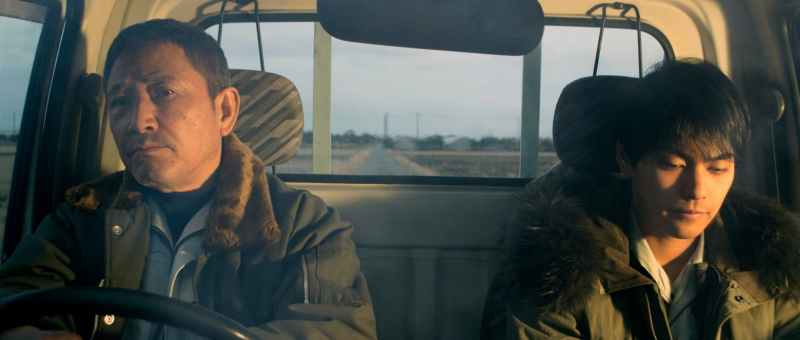
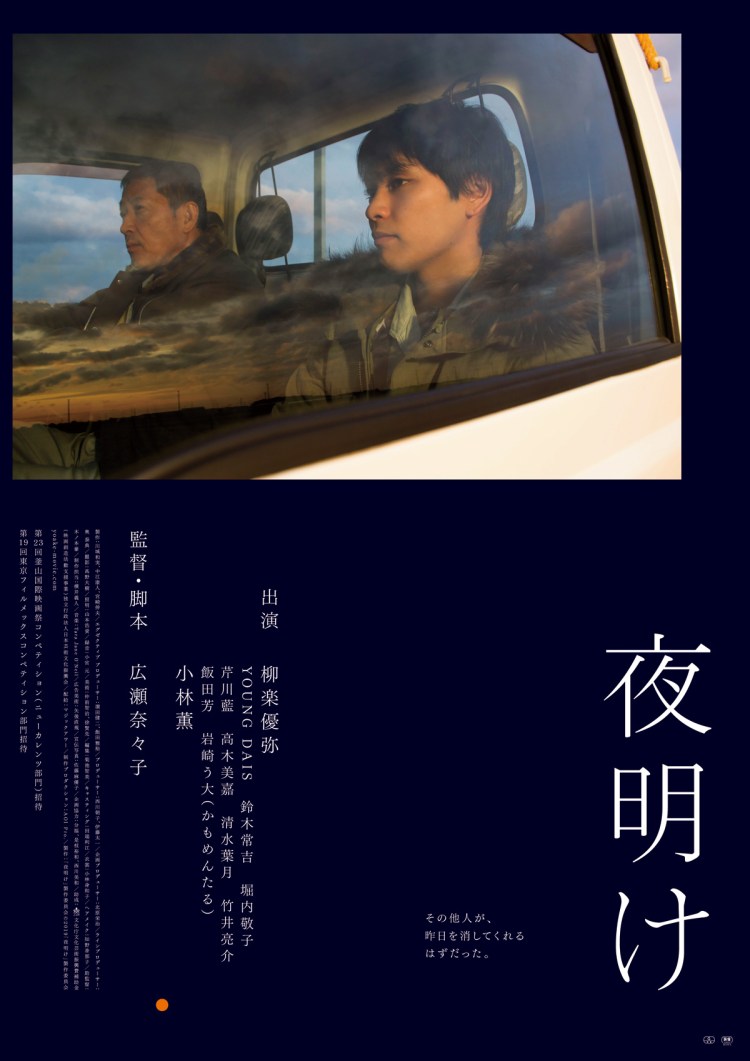
His Lost Name (夜明け, Nanako Hirose, 2018)

His Lost Name poster 1Family as performance has become a prominent theme in the ongoing development of the family drama. Ever since The Family Game punched a gaping hole through the sanctities of the family unit, nothing has quite been the same. Then again, performance only goes so far and will necessarily fail when there is no genuine connection to back it up. Every family has its problems, according to Tetsu the bereaved patriarch at the centre of His Lost Name (夜明け, Yoake), but you cannot simply escape them through substitution or subterfuge.

When Tetsu (Kaoru Kobayashi) finds a young man passed out on a riverbank, his first instinct is to help him. He takes him home, but the man though obviously grateful remains reticent, only latterly identifying himself as “Shinichi Yoshida” (Yuya Yagira) which, as Tetsu points out, is a suspiciously common name. “Shinichi” starts working at Tetsu’s furniture factory and is warmly welcomed by the other employees as well as Tetsu’s fiancée Hiromi (Keiko Horiuchi) who runs the office. He is, however, somewhat nervous, shrinking away from passing policemen and having a full on meltdown when a friend tries to take his picture.

Tetsu, meanwhile, has not been entirely truthful either. His wife and son, also (coincidentally) called Shinichi, were killed in a car accident some years previously. Despite having arranged to officialise his relationship with Hiromi, it seems he’s not quite ready to leave the past behind and is not planning to live with her even after they marry nor has he made much of a motion to separate himself from his former family home.

The arrival of the new “Shinichi” is then a fortuitous one, in some senses, in that it affords Tetsu a path back towards the son he’s lost. This is perhaps why he is so keen to look after Shinichi despite knowing that he’s not telling him the whole truth and is obviously on the run from something or other. Shinichi tells him that he’s on a “soul-searching” vacation and is in this tiny village because he visited it at some unspecified point in the past. Tetsu is content to let him be, confident that Shinichi will offer up more truth when the occasion calls but also hoping to persuade him to stay in the place of the Shinichi he has already lost.

Snippets of what he says may be true – an overbearing, authoritarian father and cold family background suggest Shinichi is looking for exactly what Tetsu offers him. Yet Tetsu, trying his best to do better, may be little different. He argued with his Shinichi because he rejected the furniture business to be an electrician. Tetsu railroaded his son in much the same way Shinichi’s father did him, and despite his instruction to “choose your own path” is clearly grooming his surrogate son as an heir (much to the disappointment of Shoji (Young Dais), a loyal worker at the factory who clearly loves Tetsu and is a good friend to Shinichi).

Both accepting that what passes between them is to some extent a simulacrum, the two men take what they need, fulfilling the roles of family a little more than superficially but painfully missing the mark. Meanwhile, their awkward closeness begins to disrupt Tetsu’s peaceful existence in dredging up memories of the past, damaging his relationship with Hiromi and placing a strain on his business. Shoji, upset that Shinichi froze rather than back him up during an incident we can infer was in some degree triggering, angrily tells him that he should “trust us more”. He may well have a point in that Shinichi’s reticence prevents him becoming a full member of the “family” but it’s less a matter of trust in others than belief in himself that keeps Shinichi silent.

Unable to accept himself as himself, and failing to step into the persona of “Shinichi”, all Shinichi is left with is intense shame and self-loathing. The failure of the Shinichi persona perhaps forces him to reclaim his own name, but the shame still remains as does the sense of drifting confusion which prevents him from moving forward with his life. Tetsu meanwhile is forced to accept that he cannot save his son and is ill-equipped to help this confused young man with whom he has made all the same mistakes as before, burdening him with unfair parental expectations he knows for certain that the boy cannot carry. A tale of fractured identities, fraying familial bonds, and irresolvable guilt, His Lost Name leaves its heroes much as it found them, mired in shame and regret but with perhaps a degree of acceptance for that which cannot be changed.


His Lost Name screens in New York on July 23 as part of Japan Cuts 2019.

International trailer (English subtitles)

Ode to Nothing (Oda Sa Wala, Dwein Ruedas Baltazar, 2018) [Fantasia 2019]

Ode to Nothing poster 3“Maybe it would be better if I just disappeared rather than physically be here but feel invisible all the time” the lonely heroine of Dwein Ruedas Baltazar’s Ode to Nothing (Oda sa wala) sadly laments to her only source of comfort, a semi-embalmed corpse. A melancholy meditation on the living death that is existential loneliness, Ode to Nothing takes its alienated heroine on a journey of hope and disappointment as she rediscovers a sense of joy in living only through befriending death. 
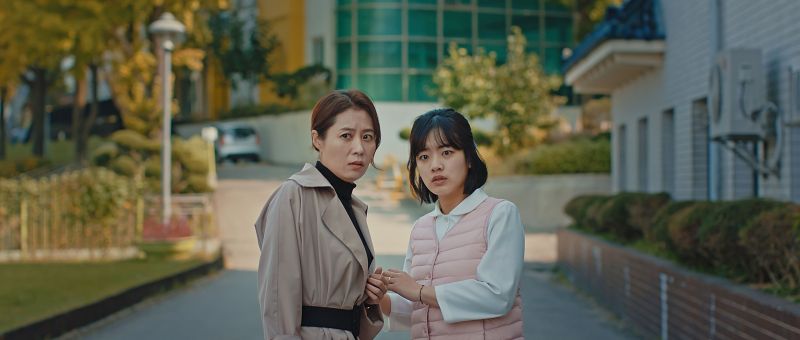
43-year-old Sonya (Marietta Subong, AKA Pokwang) lives alone with her elderly father (Joonee Gamboa) to whom she barely speaks in a large Spanish-style house which doubles as a moribund funeral home. Short on custom, Sonya’s only frequent visitor is sinister loanshark Theodore (Dido de la Paz) who currently holds the deeds to the house while she struggles to make the interest payments. Meanwhile, she spends her days gazing out of open windows, waiting for the handsome young taho seller to arrive, and listening to an ancient cassette tape of Chinese folksong Mo Li Hua.

The stillness of her life is ruptured late one night when a couple of men arrive with the fresh corpse of an old woman, seemingly having run her over and not wanting the bother of taking her to a hospital seeing as she is already dead. Sonya is dubious. She doesn’t want any trouble either, but needs the money and the custom and so she agrees to take the woman in and see if anyone claims her. No one does, and soon enough the corpse has become a new presence in Sonya’s life and home. She begins to confide in it, dresses it in her mother’s old clothes, and sits it at the dinner table where her father too indulges the illusion, finally talking to her once again as if the family had really been restored.

In an odd way, the corpse guides Sonya back to life. No longer so sullen, her funeral parlour finally attracts some customers while she begins to dress more cheerfully, even dancing and skipping along to Mo Li Hua with girlish enthusiasm. “As you get older, you have more reason to do the things you were too afraid to do when you were younger” she explains to the corpse, outlining a brief overture she just made to Elmer (Anthony Falcon), the taho vendor, whose grandfather she also saw off around three years ago after which Elmer took over the taho vending business.

Taho is perhaps the perfect encapsulation of Sonya’s newfound hopes, wholesome sweetness and easy comfort. The blandness of off-white silken tofu mixed with the gentle colouring of the amibal syrup and sago pearls, like the Jasmine flower of the folksong, seem to symbolise the brief moments of possible happiness in an otherwise dull existence but even within her increasing sense of positivity she perhaps knows her rekindled desire for Elmer and for life is likely go answered. In any case, she falls into the corpse’s lap as if it really were her mother, attributing to it a supernatural power that keeps the corpses flowing and beckons both life and death to her lonely home.

As in any good fairy tale, however, you have to be careful what you wish for. Sonya gets what she wanted, but not at all in the way she wanted it. The corpse betrays her, leaving her bereft once again and entombed inside her own funeral home with the feeling that there is only one way out. Baltazar shoots in 4:3 with the rounded corners of nostalgic 16mm, but the frame cannot help but recall the small window on the surface of a coffin, as if we were peeking in on her still life from some other plane. Sonya is, in many ways, already dead, trapped in a moribund and hopeless world where even the fragmentary past is being slowly taken away from her – the broken cassette tape, the rapidly depleting furniture, Elmer’s crushing absence. She confesses that she’s afraid of the dark and of being alone, tired enough of her resignation to abandonment to embrace a corpse which can, of course, never leave you. It can, however, disappoint as all false idols will. A melancholy exploration of loneliness, defeat, and despair, Baltazar’s whimsical drama is a haunting ode to emptiness but one that clings sadly to life and hope even as the night draws in.


Ode to Nothing was screened as part of the 2019 Fantasia International Film Festival.

Original trailer (English subtitles)

Mo Li Hua

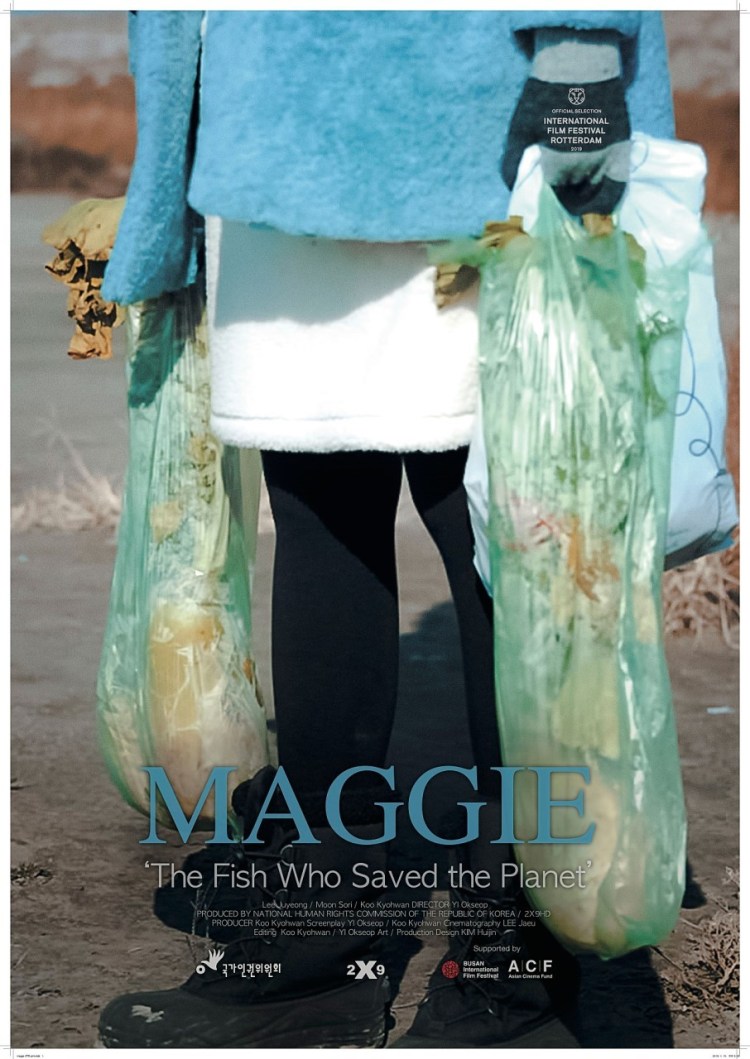
Maggie (메기, Yi Ok-seop, 2018)

Maggie poster 1“When we fall into a pit, what we need to do, is not dig any further but quickly climb out” according to a mysterious post-it discovered by a nurse when picking up the laundry (apparently inexpertly performed by her preferred cleaning service). The aphorism turns out to belong to Doctor Lee (Moon So-ri), the head physician at Love of Maria hospital where the titular Maggie (메기), a catfish, lives in a small tank observing the life around her and sometimes predicting earthquakes and other earth shattering events. A surrealist odyssey across the “pitfalls” of modern society, Yi Ok-seop’s quirky debut feature ponders the ramifications of distance as her various heroes weigh up the nature of “truth” as an absolutist concept.

Narrated by Maggie, the drama begins when the radiographer and her boyfriend are unexpectedly snapped during an intimate moment in the X-Ray room. The picture is then stolen and held up for everyone to see, at which point nurse Yoon-young (Lee Joo-young) worries that she and her boyfriend Sung-won (Koo Kyo-hwan) have been caught out using the privacy of the X-ray booth for unintended purposes. As Maggie says, no one pays much attention to who took the photo only to who might be in it, which is why the entire hospital, except Doctor Lee, ring in sick the next day with only Yoon-young turning up in the morning with the intention to resign. Figuring out what must have happened (and seeing as she’s the only one not embarrassed we can guess who took the photo), Doctor Lee is very upset to realise that the entirety of her staff has probably lied to her. With her intense belief in humanity shaken, Doctor Lee decides to engage in a trust game with her new best friend, Nurse Yoon-young, and simply choose to believe what they’re told, testing their hypothesis by visiting a random employee to verify if they really are “sick”.

Meanwhile, as a result of the earthquakes Maggie intermittently predicts,  mysterious sinkholes have begun appearing all over the nation. This is good news in one sense because it provides lots of extra work for otherwise unoccupied young men like Sung-won who have lost out in Korea’s insanely competitive economy. Like Sung-won, the other men on his team are also well-educated types who otherwise wouldn’t be considering manual work and are hoping for something better once the sinkhole business finally clears up. Mistrust, however, also works its way into their relationship when Sung-won loses a precious white gold ring given to him by Yoon-young, later becoming convinced that one of his colleagues has swiped it.

The loss of the ring leads to an increasing unease between Yoon-young and her boyfriend which is deepened by a visit from Sung-won’s ex who suggests there may have been problems in their relationship which she feels Yoon-young ought to be aware of. Though Sung-won seems sweet natured and laidback, never having acted in any way that would have given Yoon-young cause for concern, she begins to doubt him – suddenly worried by his overly violent crushing of a can out in the street. Doctor Lee’s advice is to simply ask Sung-won directly if the accusations are true, but Yoon-young can’t seem to do it and continues living along side him somewhat resentfully as she eventually comes to the decision to “believe” her friend at face value without investigating further.

“The truth cannot exist wholesomely”, according to Maggie’s “father” (Kwon Hae-hyo). It will always be polluted by self-interest and personal bias. As Doctor Lee says, there will always be people who believe you and people who don’t, so perhaps a healthy level of cynicism is something you need to accept in order to go on living in the world. Even Love of Maria Hospital is not immune to the disease of misrepresentation – a former convent given over as a place of healing it was later bought by an arch capitalist and is now run as a private hospital business (not that it appears to have many “customers”), despite Doctor Lee’s rather amusing ad which proclaims it “of the patients, by the patients, for the patients”.

Finally Yoon-young concedes she’ll need to simply ask Sung-won about his past and gets an honest response, but his honesty only seems to see him falling into a deep pit of despair, calling out from the bottom in the hope of being understood. A surreal exploration of contemporary social woes from the rabidly capitalist society to the growing distance between people in an increasingly interconnected age, Maggie attempts to find the emotional honesty sweet spot but discovers that trust, like everything else, is a complicated business.


Maggie screens on 13th July as part of the 2019 New York Asian Film Festival. It will also be screening as part of the 2019 Fantasia International Film Festival on 17th/18th July.

Interview with director Yi Ok-seop from the Busan International Film Festival

Ma (Kenneth Lim Dagatan, 2018)

Ma poster“Lost or beguiled?” asks the strange talking tree at the centre of Kenneth Lim Dagatan’s Ma in an opening which might as well be aimed at the audience as the confused little boy about to find himself on a very dark path indeed. In this fairytale world nothing comes without a price, but how much would you pay to maintain a connection fate has seen fit to sever?

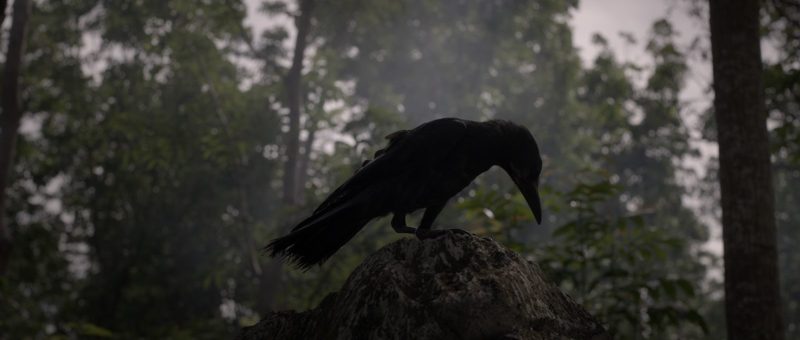
Little Samuel (Kyle Espiritu), arm in a sling, cruelly tortures a dying crow before following another into a mysterious cave where he finds a lone tree, improbable in its vibrant greenery somehow illuminated from above. He touches it and its leaves cut him, before the tree raises its voice to tell him that there is “an end to every pain” but “every blessing comes with a price”. Running from the cave in fear, Samuel trips and discovers that his broken arm is now healed, but makes a shocking discovery on his return home. His mother seems to have become ill with a nasty hacking cough which later produces blood. When she haemorrhages over the dinner table, Samuel and his younger siblings have no idea what to do. Returning to the cave he assumes that the tree requires a sacrifice, “life for life”, and offers up the family’s pregnant cat pleading that his mother be returned to him, but the tree’s desires are deeper and darker. Ma returns, but in a different form.

After this short prologue, Dagatan pulls the focus to heavily pregnant, somewhat distracted, school teacher, Cecile (Anna Luna). Unlike Samuel and his family, Cecile seems to come from a comfortable background but is apparently single and living with her domineering mother (Susan Africa) who wants her to see a different doctor against Cecile’s own wishes. Gradually we learn that there is tension between Cecile and her mother’s younger European husband (Ian Curtis), while she is still deeply grief-stricken over her husband’s suicide. The two plotstrands begin to converge when Cecile decides she’s had enough of her mother and goes to stay with an old friend in her hometown.

While Samuel, a child after all, is prepared to go to great lengths to preserve his status quo through saving his mother, Cecile is far from secure in her impending motherhood. She wonders if her pregnancy tipped her husband over the edge, bristling at her friend Gelyen’s (Kate Alejandrino) claim that it wasn’t her fault with the words “we are all to blame”. Attempting to visit Samuel’s mother Lina (Glydel Mercado) who was in fact a childhood friend, the women too come across the cave, idly wondering if the legend behind it – that the ghost of a pregnant woman raped and killed by the Japanese during the war lurks inside, has been updated for a new generation.

Gelyen lives her life surrounded by religious icons but also suggests, perhaps jokingly, that as people around here are mostly Catholics they’d believe anything. In any case, the cave seems to have a particular meaning to the women surrounding a mysterious incident connected with Gelyen’s apparently missing brother and late father. The cave, a kind of womb itself, appears to feed on familial distress and emotional discord. It can relieve your burdens, but only at a price – the choice is yours should you decide to pay.

Then again, some things are supposed to pass and artificially reviving them might not be the best solution for anyone, not least the hollow simulacrum of a deceased loved one. Did Lina die because Samuel found the cave, did he pay for worrying that crow? Likewise, did Cecile’s husband die because of her childhood adventure? Perhaps the tree guided her here, engineering her inescapable guilt to reclaim what it to needs to live and prosper. Samuel does the unthinkable and drags his little siblings into his dark game, while Gelyen’s room full of religious icons are apparently no match for the ominous power of the natural world. Families are in a sense restored to a kind of satisfaction, but only through great personal sacrifice that alleviates the sense of guilt without offering the relief born of mutual forgiveness. Filled with a macabre sense of dread and gothic fatality, Ma is an ambitious debut from Dagatan which matches its beautifully conceived images with the bloody horror of grief-stricken desperation. 


Ma screened as part of the 2019 New York Asian Film Festival.

Original trailer (no subtitles)

Song Lang (Leon Le, 2018)

Song Lang poster 1“How could the gods be so cruel” a ci lương performer intones, “Allowing us to be together yet worlds apart”. An achingly nostalgic return to the Saigon of the 1980s, Leon Le’s melancholy debut Song Lang is a lament for frustrated connections and the inevitability of heartbreak, taking its lonely heroes on a slow path towards self realisation only to have fate intervene at the worst possible moment.

An enforcer for the steely “Auntie Nga” (Phuong Minh), Dung Thunderbolt (Lien Binh Phat) has long been trying to take revenge on his unhappy life through the intense act of self-harm which is his way of living. A routine job, however, jolts him out of his inertia when he wanders into a theatre where a ci lương opera company is preparing for a performance. There he finds himself catching sight of the famous performer Linh Phung (Isaac), only to run away, in flight from the intensity of being woken from his reverie. Later he returns to claim the debt, threatening to burn the company’s precious costumes until Linh Phung arrives and interrupts him, proudly insisting he will pay the balance after the first performance. Dung leaves confused, refusing to accept the watch and necklace that Linh Phung offered in partial payment.

A second chance meeting confirms that the two men might have more in common than they’d first assumed. The lonely Linh Phung, eating alone in a nearby cafe, gets into a fight with some drunken louts who wanted him to sing a few tunes, but as surprisingly handy as he turns out to be quickly gets himself knocked out at which point Dung steps in to rescue him, eventually taking him home to sleep it off where they later bond through a shared love of violent video games. An opportune power cut allows the two men to enter a greater level of intimacy during which Dung begins to re-embrace his ci lương childhood through the instrument his father left behind.

The Song Lang, as the opening informs us, is an embodiment of the god of music delivering the rhythm of life and guiding musicians towards the moral path. That’s a path that Dung knows all too well that he has strayed from and is perhaps looking to return to. The central theme of ci lương is “nostalgia for the past” – something echoed in Linh Phung’s peculiar philosophy of time travel through people, objects, and places which seems to be borne out in Dung’s constant flashbacks to a more innocent age before his happy childhood ended in parental betrayal and sudden abandonment.

Linh Phung, meanwhile, is nursing his own wounds. His mentor tells him that though he is popular his performance lacks depth because he lacks life experience while his co-star mocks him for never having been in love. Rooting through Dung’s belongings, he discovers a book he’d loved in childhood about a lonely elephant taken away from his jungle and sold to a circus. Both men are, in a sense, exiles from their pack walking a lonely path of confusion and despair but finding an unexpected kindred spirit one in the other as they search for new, more fulfilling ways of being. Bonding with Dung opens new emotional vistas for Linh Phung which allow him to perfect his art, while reconnecting with his childhood self through Linh Phung’s music gives Dung the courage leave his nihilistic life of shady moral justifications behind.

Fate, however, may have other plans and karma is always lurking. Linh Phung’s claim that an artist must know great grief proves truer than he realised, but it’s another passage from the book with which he eventually leaves us, affirming that it’s best to learn to enjoy these present moments rather than lingering in an unchangeable past. Yet the art of ci lương is itself steeped in nostalgia, perfect for a “time traveller” like Linh Phung returning to his sadness through his art, proving in a sense that the past is always present and wilfully inescapable. A melancholy, romantic evocation of Saigon in the 1980s, Song Lang is also a beautifully pitched paen to a fading art form and an  “unfinished love song” to lost lovers in which two lonely souls find an echo in each other but discover only tragedy in the implacability of fate.


Song Lang screened as part of the 2019 New York Asian Film Festival.

Original trailer (Vietnamese subtitles only)