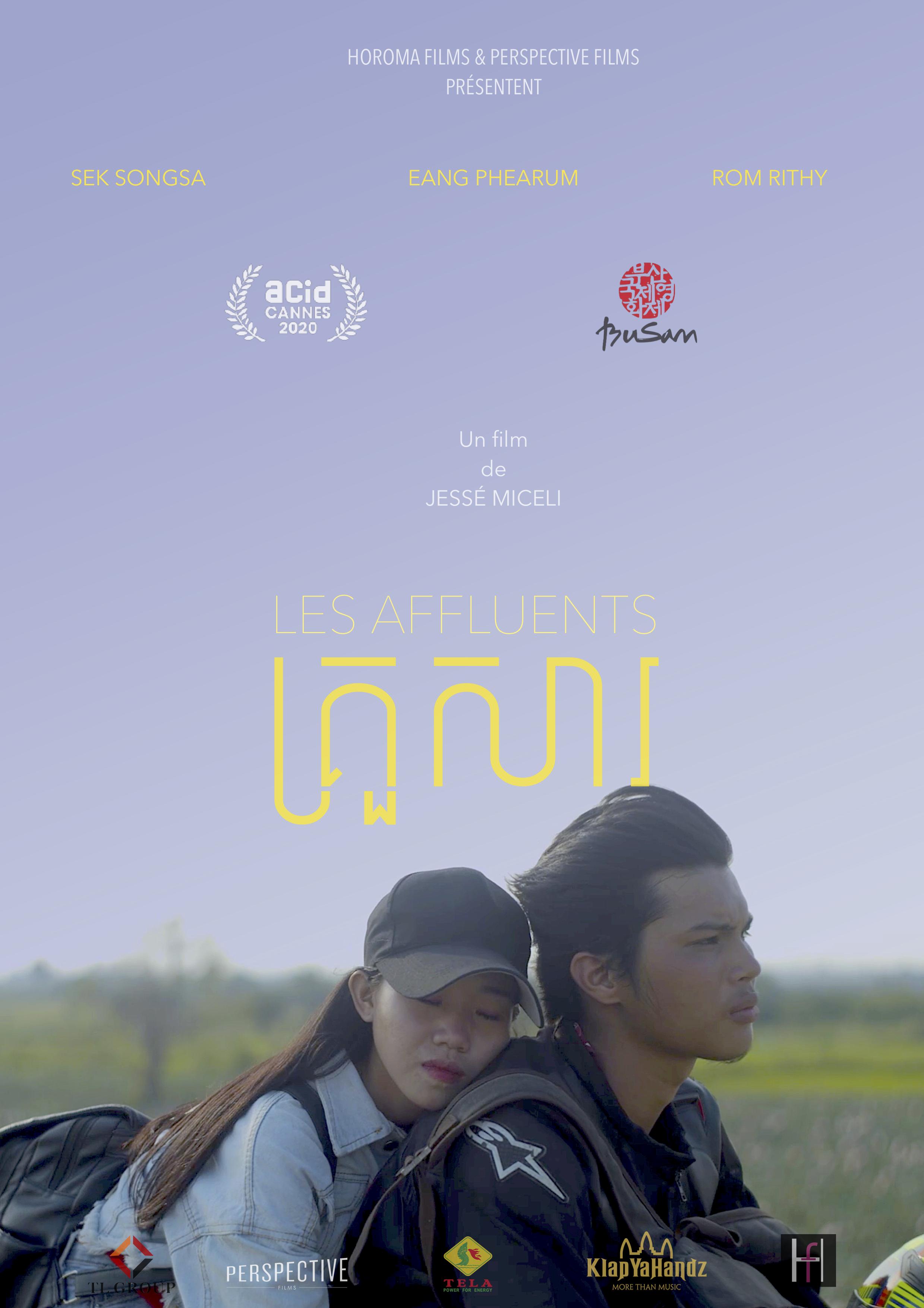
Coalesce (Les affluents, Jessé Miceli, 2020)

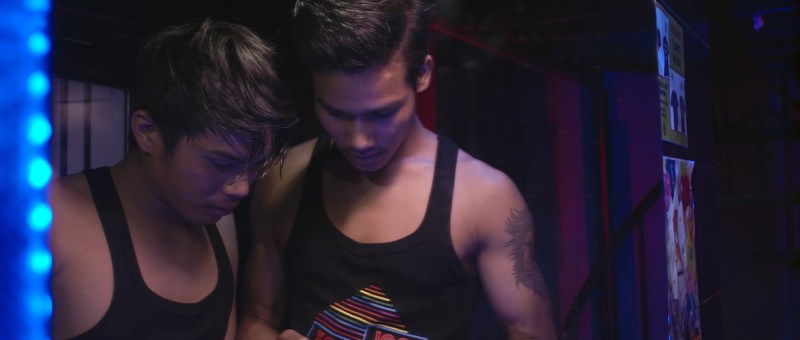
The frustrated dreams of three young men eventually collide in Jessé Miceli’s aptly titled debut Coalesce (Les affluents). Starring mainly non-professional actors, Miceli’s neon-lit journey through the backstreets of Phnom Penh at night exposes a different side of a changing nation caught in the midst of rising urbanisation while contending with the aspirations both of neighbouring economic powers and a thriving ex-pat community. Yet in the end the prognosis is not as bleak as it first seems, some dreams are achieved, if imperfectly, while even those which are not still may be. 

The youngest of the three men, teenager Songsa (Sek Songsa), says almost nothing and if he has a dream it is perhaps only to live his own life as he pleases. 20-year-old Thy (Rom Rithy), meanwhile, yearns for a motorcycle and, apparently disowned by his father who prefers his half-brother, has taken a job as a host/dancer in a gay bar frequented mainly by Western men. 24-year old Phearum (Eang Phearum) borrowed money to buy a taxi to earn money for his family who are in danger of losing their land but is privately preoccupied and perhaps defeated by the news that his schoolteacher wife is expecting a baby. 

Each of the men ultimately find themselves in Phnom Penh in search of different things but discovering something much the same. The contrast with the rural homes of Songsa and Phearum couldn’t be more stark even if quite literally presented in day and night. Songsa, it seems, did not perhaps want to go to the city and especially to sell knock off jeans from a disused taxi bus at the behest of his frustrated tuktuk driver uncle, but in any case the responsibility proves too much for him and he’s clearly not ready for the adult world his uncle and the owner of the bus, Leap, already inhabit. He resents their drinking and rebuffs their attempts to force him to join them, but alone on the bus at night finds himself subject to another element of city darkness as a drunken middle-aged man crawls in through the window and attempts to grope him. His only solace is discovered when he wanders off and stumbles into a death metal rave, head banging his frustrations away. 

Across town, Phearum is at another party in an upscale gallery invited by two, fairly obnoxious, Western women who climbed into his cab not long after he dropped his wife off at a doctor’s clinic for a potentially dangerous medical procedure. Already drunk, the women insult and belittle Phearum in English while one eventually tries to proposition him, offering money when he turns her down. Phearum doesn’t take it but appears to accept the situation with good humour and bemusement. Thy, meanwhile, eventually turns to casual sex work to pay for a bike an injured friend of a friend needs to sell. It’s not clear if Thy is actually attracted to men even if not exclusively, later taking a girl home after a bike ride through the country, or merely in need of well-paying work but it’s difficult to dismiss the implications of exploitation at the American-run club which seems to cater almost exclusively to Westerners exoticising the young, good looking Cambodian staff who earn a dollar’s commission on every drink sold. 

Then again, Phearum’s dream is to give up his taxi and open a garage selling cars to the influx of Chinese businessmen driving the expansion of the local economy largely through casinos and other leisure facilities supported by the tourist trade. He listens intently to an estate agent in the back of his cab who works for Chinese developers, keenly asking about the price of land perhaps weighing up selling rather than buying. The aspirations of the three men are eventually headed for an ironic collision, though the “one year later” conclusion perhaps seems unduly contrived filled as it is with exposition and the conceit that former strangers have become lifelong friends through a single, traumatic episode. Nevertheless, there is more hope than expected in Miceli’s vision even if tempered by compromise as the trio remain determined to push forward having identified their direction of travel, reclaiming the city as their own while also looking out for each other in what appears to be an often hostile environment. 


Coalesce streams in the US until March 21 as part of the 12th season of Asian Pop-Up Cinema.

Original trailer (English subtitles)
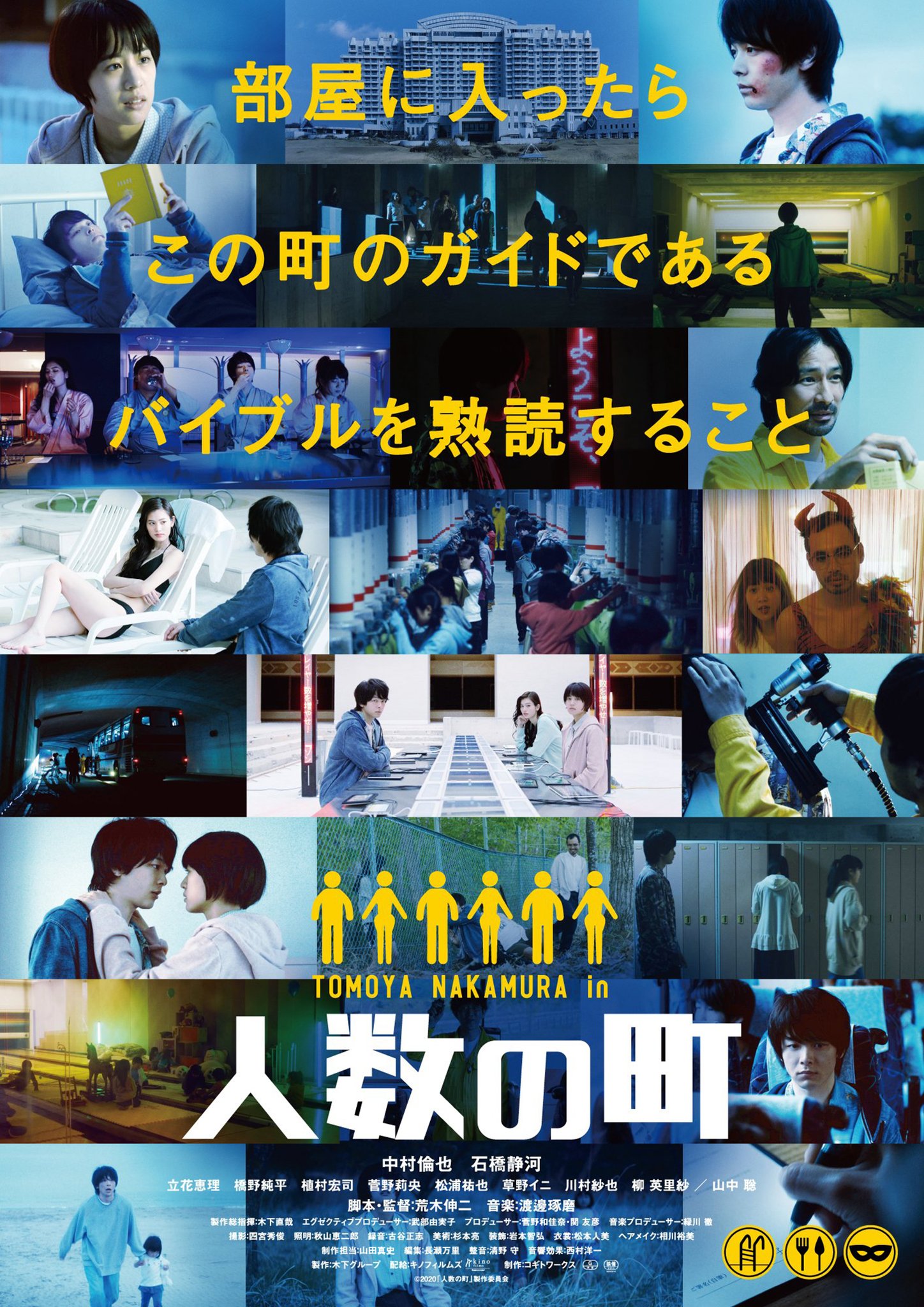
The Town of Headcounts (人数の町, Shinji Araki, 2020)

“You’re free now, so the world is more beautiful” the hero of Shinji Araki’s dystopian thriller The Town of Headcounts (人数の町, Ninzu no Machi) is unironically told by a mysterious saviour even as a watchtower lingers on the horizon behind him. Modern Japan, it seems to say, is no paradise but is it worth trading your identity and existence for the guaranteed satisfaction of your basic needs? Freedom, happiness, and love may be nebulous concepts which mean different things to different people, but in the end leading a satisfactory life might just come down to what it is you decide you can live without. 

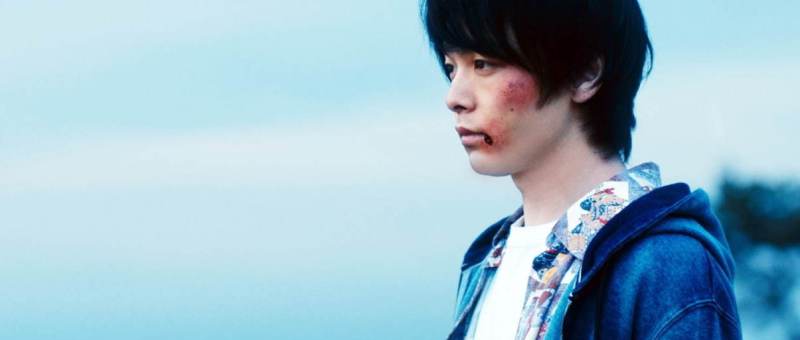
The nameless protagonist later credited as Aoyama (Tomoya Nakamura) describes himself as an “average joe” who has “a weak will” and doesn’t “belong anywhere in society”. While being beaten up by a loanshark, he’s unexpectedly rescued by the miraculous appearance of the mysterious “Paul” (So Yamanaka), a middle-aged man dressed in an orange jump suit who tells him there’s a place he can go where’d he fit right in. After a lengthy bus ride, he finds himself a new resident of “The Town” where those like him who for one reason or another felt themselves rejected by mainstream society can live in ease and comfort, only as he later discovers he is unable to leave. Should he walk too far beyond the fence, the microchip in his head activates a sonic wave of painful and disabling distortion. 

Somewhere between a utopian cult commune and a penal colony occupying a disused conference centre, The Town is a free love society which insists that equality is possible and that freedom and peace are more than mere dreams. Family creates inequality, so The Town’s Bible says, so residents must live alone. Pregnancy is prohibited, while children brought into the compound are separated from their parents and raised in a communal nursery. All basic needs, food, warmth, shelter and even sex, are otherwise guaranteed though the residents are expected to “work” to earn them, performing often pointless tasks parasitically underpinning modern capitalism such as writing meaningless product reviews in return for treats, or performing as stooges to create hype around new store openings. Aoyama’s sense of morality is however shaken when he’s asked to commit electoral fraud by repeatedly voting for a chosen candidate with stolen ballots, later recruited as a crisis actor in a fake terrorist incident intended to further influence an election in the wake of a corruption scandal. 

In The Town, he’s told his existence is meaningful and given a place to belong. Yet he has to surrender his name, known as “Dudes” residents must greet each other ritualistically only by the word “fellow” followed by some kind of compliment. All his needs may be met, but he’s forbidden to fall in love, can never marry or have a family, and it does seem troubling that there are no elderly people around even if some suggest there are other “Towns” just for them. Some might say, The Town is way is a way for mainstream society to get rid of all the people it doesn’t want or feels have no value. Araki throws up frequent title cards featuring various statistics such as the numbers of homeless people, bankruptcies, unemployment etc along with brief flashbacks to whatever it was that brought residents to The Town from being thrown thrown out of a manga cafe after attempting to live there to being almost choked to death by debt-collecting yakuza suggesting there’s little “freedom” in the rigid contemporary society and most particularly for those unable or unwilling to live by its rules.  

In The Town rules are few, and you’re well looked after, but you can’t leave and though it seems like an individualist paradise where you’re free to satisfy each of your physical desires you have no further control over your existence. As one resident puts it, “life here is kind of weightless”, perhaps a relief for some but a crushing existential crisis for others. Aoyama realises that in The Town he rarely feels angry, but perhaps he feels nothing much of anything else, either. Just as he’s starting to adjust, his feelings of unease are strengthened by the arrival of a young woman who apparently had no previous societal issues but has come to The Town in search of her younger sister whom she failed to help despite knowing she was trapped in an abusive relationship. Unlike Aoyama, Beniko (Shizuka Ishibashi) claims not to have felt much of anything in the regular world, unsure even what love is and unimpressed by the beautiful vistas of freedom that are supposed to define The Town, but doesn’t want to stay and be rendered a mindless drone exploited by mysterious forces for whatever purpose they may choose.

What Aoyama realises he craves is the love and companionship of a conventional family life. “We want to support each other and work hard. Love each other and live together” he explains to a non-plussed Paul who seems to pity him, his simple desire at once at odds with the values of The Town and perhaps equally unobtainable in contemporary Japan. In the end, the only “freedom” he may find lies in complicity with one system or another, becoming an oppressor as one of the oppressed. The question is what sort of life is most satisfying, freedom from the anxiety of hunger and cold, or the freedom to love and live fully in manner of your choosing. The modern society may not grant you either, and both perhaps have their costs. A bleak dystopian thriller, Araki’s steely drama features innovative production design and slick direction mimicking the hero’s sense of disaffection with detachment and a total lack of resistance to the otherwise bewildering world of The Town but saves its real sense of confusion for the state of the modern society and the fate of those who survive on its margins. 


The Town of Headcounts streams in the US March 15 – 19 as part of the 12th season of Asian Pop-Up Cinema.

Original trailer (English subtitles)
B/B (Kosuke Nakahama, 2020)

“It’s been a while since I asked, who are you?” comes the incongruous question at the beginning of Kosuke Nakahama’s stylish, hugely accomplished graduation movie B/B. What begins as an unconventional, reverse investigation of a bizarre crime committed in a bizarre world, eventually descends into a philosophical interrogation of the modern society and most particularly its continued indifference. “All the oppressors and all the oppressed, those who didn’t notice the pain. We’re all complicit. You think you’re the exception?” asks the witness of her questioners, partly perhaps in justification but also pointing the finger back at a society which prefers to avoid asking uncomfortable questions. 

Set in an alternate 2020 in which the Olympics has been suspended not because of a global pandemic but because of a bribery and corruption scandal, and a terrorist gas attack by a shady cult has recently been foiled, the central mystery revolves around the murder of a convenience store manager dubbed by some the “Icarus” killing. Sana (Karen), a high school girl, has been called in as a person of interest because of her connection with the victim’s son Shiro (Koshin Nakazawa) who has become withdrawn and is unable to offer testimony of his own. The problem is that it’s not exactly “Sana” that they want to talk to as the young woman apparently suffers from Dissociative Identity Disorder, once known as multiple personality. A cynical policeman and sympathetic psychiatrist have been tasked with trying to sort out her unreliable narrative to discover her connection with the crime. 

In a handy piece of symbolism, Sana apparently hosts 12 distinct personalities, a perfect inner jury, while the body of the murdered man was apparently dismembered into 12 parts. As the psychiatrist later advances, the personalities are a symptom of Sana’s mental fracturing in response to trauma and were not born altogether but arrived individually following the increasingly traumatic events of her life presumably beginning with her mother’s death. It’s this sense of parental abandonment that allows her to bond with Shiro who, like her, avoids school by hanging out in local parks in his case because of a further sense of rejection in realising that his teachers are aware of the abuse he suffers at home, Sana immediately noticing the scars protruding from the collar and sleeves of his T-shirt, but have chosen to do nothing to protect him. 

The goal is not to unlock the mystery of Sana, to cure her or to address the various traumas which lie at the root of her psychological fracturing but to investigate the Icarus murder. She is not, however, a credible witness. An infinitely unreliable narrator, her personalities switch at random each giving their own contradictory testimonies in their characteristic fashion. Nakahama mimics Sana’s mania through frantic cutting and abrupt edits, close ups on hands, feet or random objects rather than faces or landscapes. The earliest scenes with Sana and her posse of imaginary friends, only six of whom she is apparently able to manifest at one time, hanging out in the park are shot with a beautiful summer glow coloured with its own kind of nostalgia as she slowly befriends Shiro bonding in shared trauma and a mutual sense of safety. 

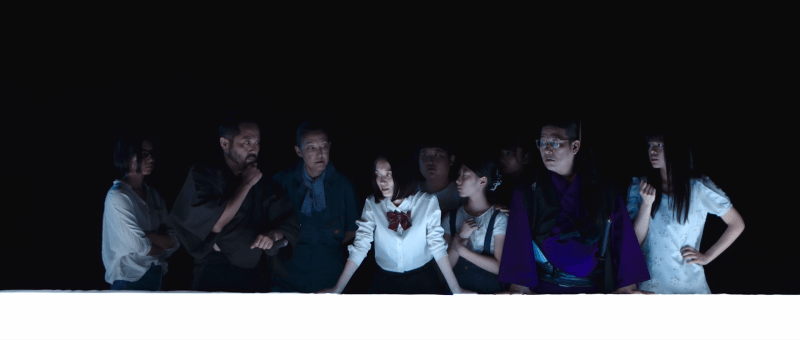
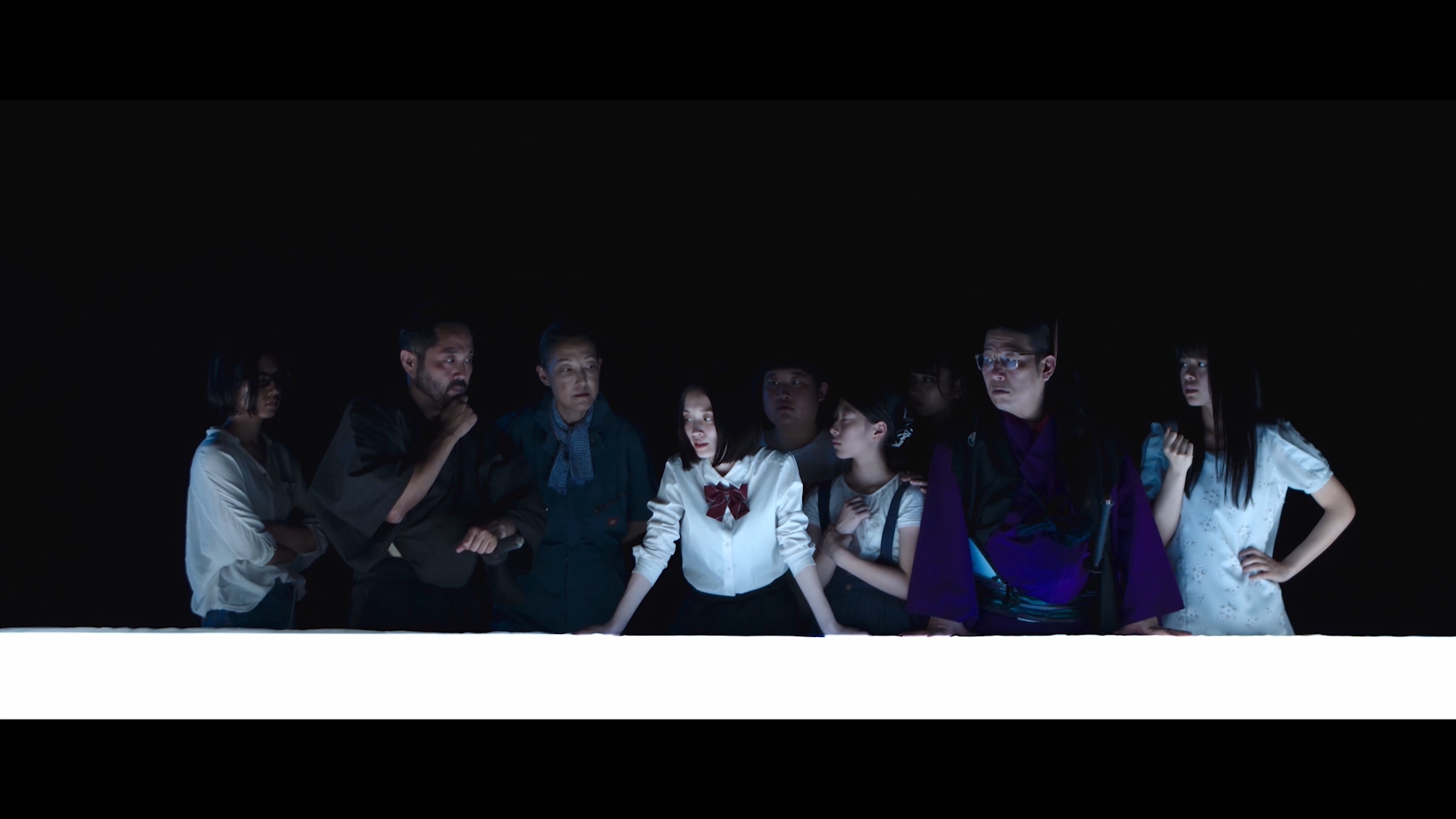
While the interrogation scenes trapped in the relative claustrophobia of the doctor’s office may have a sense of the clinical, the judicial manifests most clear in Sana’s mind. The “Council of Sages” in which all her personalities are present takes place in a minimalist space of black and white, shot like a Renaissance painting with echoes of the The Last Supper, as they crowd around and wonder what’s to be done about the Shiro problem, the manic pace slowing somewhat as Sana’s thoughts apparently clear. Yet as she later says to the disbelieving policeman pointing out the absurdity of prosecuting crimes committed as opposed to preventing those yet to occur, “This is hell, we are all trapped in hell”, advancing that she does not believe someone from hell belongs in heaven and would rather reign below than live in pitiable servitude above. Anchored by a phenomenally strong performance by Karen, sophisticated fast paced dialogue including more than a few surprisingly retro pop culture references, and featuring stylish on screen text Nakahama’s striking debut ultimately takes aim at societal indifference and perhaps points the finger at the viewer to pay more attention in a world of constant suffering. 


B/B screened as part of the 2021 Osaka Asian Film Festival.

Original trailer (no subtitles)

Along the Sea (海辺の彼女たち, Akio Fujimoto, 2020)

Japan has famously tough immigration law and surprisingly robust labour protections though enforcing them often proves difficult. The plight of undocumented migrant workers can however be stark as Akio Fujimoto’s Along the Sea (海辺の彼女たち, Umibe no Kanojotachi) makes plain. The three women at the film’s centre, originally from Vietnam, came to Japan legally as part of the government-backed Technical Intern Training Program set up in the early ‘90s supposedly to provide temporary training opportunities for workers from developing economies. Perhaps inevitably, the scheme has often come in for criticism that it amounts to little more than legalised people trafficking allowing employers to maintain exploitative working practices while hiring cheap foreign labour and placing the so-called interns into positions which offer no real technical training. 

This is very much the experience of Phuong (Hoang Phuong), Nhu (Quynh Nhu), and An (Huynh Tuyet Anh), three women in their early 20s who decide to leave their placement because of untenable exploitative conditions requiring them to work 15-hour days with little provision for meals or rest and no payment of overtime. Little different from traffickers, the employers have also held onto the women’s documentation in an attempt to prevent them leaving. The result of this, however, is that they will be living in Japan essentially illegally and without any kind of paperwork at all making it extremely difficult to return to Vietnam. 

Fujimoto opens with the women’s nighttime escape, a perilous journey carrying heavy bags through the night until reaching a train station and then on to buses and ferries to the frozen north of Japan where they are met by a man in a van who takes them to their new place of employment, a fish packing warehouse in Aomori. Though the work is physically strenuous, the payment is much higher than they were previously receiving and paid on time, and the conditions are much more like a regular job with more reasonable hours including weekends off. They are not watched and have a much greater degree of freedom but are obviously nervous of discovery and prevented from participating in certain activities owing to having no ID. This becomes a particular problem for one of the women, Phuong, who has begun feeling ill but is unable to get medical treatment without some kind of documentation to show hospital staff. 

What Phuong hasn’t shared with the other two women is that she suspects she may be pregnant by her hometown boyfriend. During their escape there had existed between them a fierce solidarity and now in a sense they have only each other to rely on, otherwise entirely alone in a foreign land. Phuong’s pregnancy revelation however drives a wedge between the women with Nhu in particular quickly losing sympathy and heavily pressurising her towards an abortion less out of concern and practicality than fear that she may give them all away. The later conclusion can only be that one or both of the women has betrayed Phuong by telling the broker about her pregnancy further piling on the pressure and almost certainly destroying the only support network the women had through an irreparable breach of trust. 

Turned away by the hospital Phuong resolves to buy fake documentation only to be exploited once again by a fixer who suddenly demands more money forcing her to trek through the frozen countryside after losing her train fare home. Like the broker, who is actually nice, polite, and considerate (to a point) in his treatment of the women, the fixer is also Vietnamese a reminder that the women are in a sense being exploited by their fellow countrymen. One of the broker’s chief concerns is obviously that he’s taking 10% of the women’s pay on top of his original commission on finding the work and therefore he loses out if Phuong is unable to work during her pregnancy while childcare is also incompatible with her current lifestyle. Compounding the problem is the fact that each of the women is working to provide not for themselves but for their families meaning that Phuong is in no way free to simply decide to go home and raise her child. Cheerfully discussing what they’d like to do if they had more money, Nhu and An want to pay off their parents’ debts and provide for their siblings’ education. Phuong’s predicament affects more than just the lives of the three women and it seems they are not above forcing her hand in order to protect the better life they’re suffering to provide for their families.

A melancholy character study, Fujimoto’s unflinching drama follows Phuong with documentary precision towards an almost inevitable conclusion as she finds herself hemmed in by the demands of others entirely unable to act on her own desires while denied basic rights and freedoms by virtue of her lack of documentation. Shining a light on the all too hidden lives of migrant workers, Along the Sea paints a bleak picture of the contemporary society in which even solidarity can be broken by the cruel desperation of those who have nothing else on which to depend.


Along the Sea screened as part of the 2021 Osaka Asian Film Festival.

Original trailer (English subtitles)
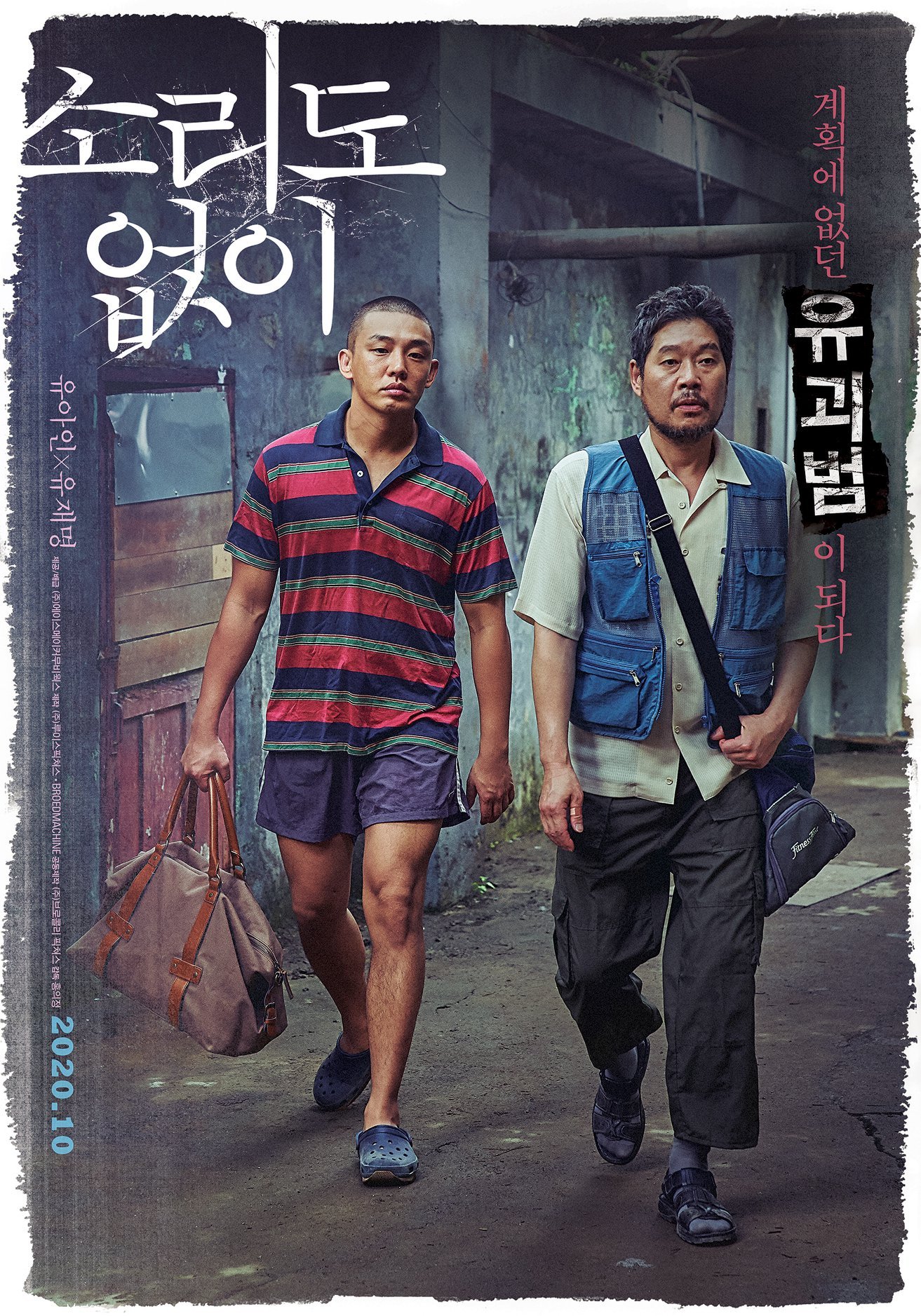
Voice of Silence (소리도 없이, Hong Eui-jeong, 2020)

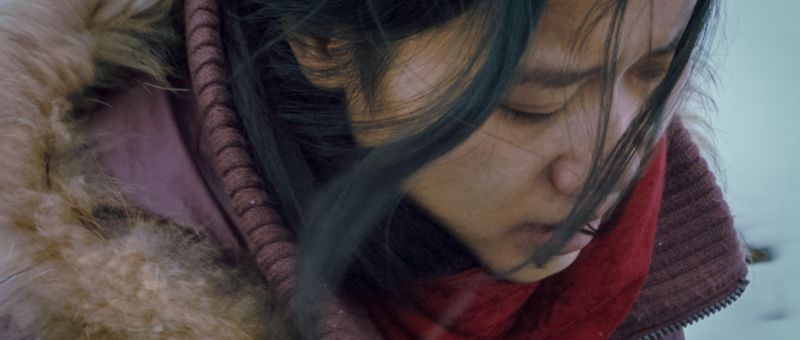
“Once you join a family, you have to pitch in, right?” the aphorism-loving protagonist of Hong Eui-jeong’s disturbingly warmhearted crime caper Voice of Silence (소리도 없이, Sorido Eopsi) explains to a little girl who has recently come into his “care” as she dutifully begins massaging the earth towards a half-buried body. Partly an exploration of the family bond and its propensity to arise even in the most duplicitous of circumstances, Hong’s ironically cheerful drama is also a mild condemnation of the modern society and its capacity to push good people to do bad things in its infinite oppressions. 

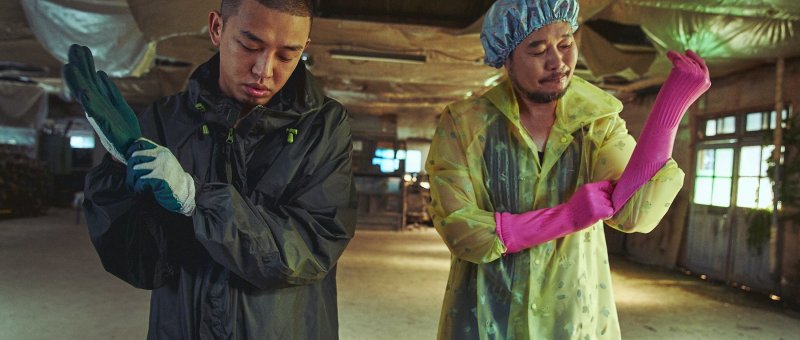
Egg farmer Chang-bok (Yoo Jae-myung), for example, is a man of faith who places great stock in protestant virtues of hard work and humility. Yet he sees no irony in the sign reading “Today’s honest sweat is tomorrow’s happiness” on the wall of a disused barn where he carries out his second job preparing torture victims for gangsters and then disposing of the bodies even going so far as to say a little prayer for them, bible in hand, as he places them into shallow graves in the forest. He and his mute partner Tae-in (Yoo Ah-in) dutifully wait outside as the violence takes place, rejecting entirely their sense of complicity with the corruption of the gangster world viewing themselves only as providing a service and taking pride in providing it well.

Nevertheless, when their “manager” pays them an unexpected visit and gives them an unusual assignment of “looking after” a person for a few days they can hardly refuse even as Chang-bok reminds him it’s not in their job description. Contrary to expectation, however, the “person” turns out not to be sequestered gangster but an 11-year-old girl, Cho-hee (Moon Seung-ah), whose father is haggling over a ransom payment. When the manager is consumed by the same system he previously operated, it leaves them with a problem. They can’t simply let the girl go because the kidnappers want their cut, but the father won’t pay up and so the only other option is handing her over to child traffickers. Chang-bok and more particularly Tae-in would rather that didn’t happen, but on the other hand they aren’t really doing too much to actively prevent it. 

Just as Chang-bok and and Tae-in are “egg farmers”, the child traffickers run their business out of a moribund chicken farm. The rural economy is apparently not faring so well in the modern society. Yet Hong’s countryside vistas are presented as an idyllic paradise with bluer than blue, cloudless skies and fields of verdant green. Then again those who live off the land are perhaps most aware of its compromises and of the price of survival. Chang-bok is fond of spouting vaguely religious aphorisms such as “whatever you do, do your best and be humble. Always be thankful for what you have”, later blaming his predicament on his recent laxity in attending church, but evidently sees no contradiction between his creed and way of life. He doesn’t want to hand Cho-hee over the child traffickers, but he won’t resist it either merely seeing it as an inevitable consequence of events already in play in which he is but a passive participant. 

Tae-in, meanwhile, though literally voiceless is beginning to reject his passivity. Apparently raised by Chang-bok from infancy, he is currently a guardian to a mysterious “sister”, Moon-joo (Lee Ga-eun) around 15 years younger than he is though no mention is made of their parents or what might have happened to them. Charged with taking care of Cho-hee he finds himself developing a paternal fondness for her while she quite unexpectedly slides neatly into his home, bringing a strangely maternal if perhaps in its own way problematic order in tidying the place up and giving Tae-il a more concrete sense of familial rootedness. When the pair picked her up, they wondered if Cho-hee’s father was haggling over the ransom amount because the kidnappers took his daughter when they meant to take his son. Chang-bok is morally outraged, believing sons and daughters should be treated the same and shocked a father would’t immediately do everything he could to protect his little girl. But Cho-hee knows only too well that they value her brother more and in fact doubts her father will help her. She carries these old fashioned patriarchal values into Tae-in’s village home, brushing Moon-joo’s rather feral hair, teaching her to fold clothes away neatly, instructing her to speak more politely to her brother and not to start eating until he has taken his first bite. 

Despite themselves, the four become an accidental family cheerfully enjoying ice lollies on a hot summer’s day trying to figure out a polaroid camera which has been bought for a slightly less happy purpose. There is perhaps an idea that Cho-hee might simply not return to her wealthy, urban family in which she feels unwanted and inferior but stay here in the more “innocent” countryside where the people are “honest”, value their daughters the same as their sons (even the child traffickers apparently charge the same discriminating only by age and blood type), and bury their bodies together. Chang-bok and Tae-in aren’t bad people, just members of a corrupt society who’ve internalised a sense of powerlessness that encourages them to be “humble” and complicit doing what they can to survive. Each marginalised by disability, Chang-bok walking with a pronounced limp and Tae-in rendered impotent by his inability to speak, they do not want to turn to “crime” but are trapped at the bottom of the social hierarchy and dependent on the illicit economy. Is Cho-hee any worse off with them than with the father who wouldn’t pay to get her back? The jury is most definitely out. 


Voice of Silence streamed as part of the Glasgow Film Festival.

Original trailer (English subtitles)
Our Midnight (아워 미드나잇, Lim Jung-eun, 2020)

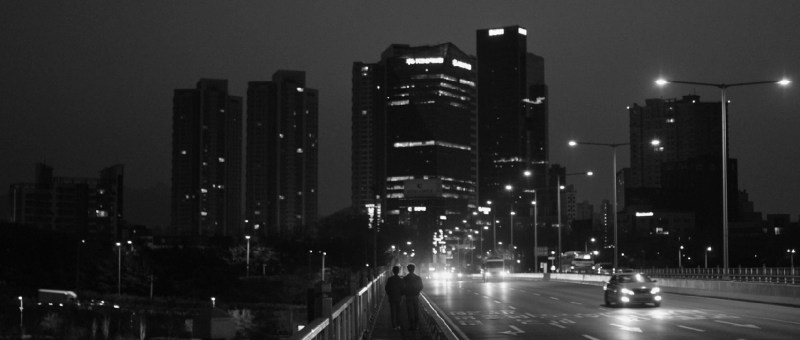
Should you continue following your dreams or accept defeat and “grow up” into a conventional adulthood with a steady job, marriage, and comfortable home? The hero of Lim Jung-eun’s Our Midnight (아워 미드나잇) is reluctant to give up on his acting dreams while his friends look down on him in bemusement, all secretly miserable in the regular corporate careers they’ve opted for partly for practical reasons but also because of intense social pressure. Meanwhile, across town a young woman finds herself dealing with the other side of the same problem struggling under the weight of patriarchal norms in which it becomes impossible to separate the personal and the professional. Approaching the same bridge from opposite directions, the pair of youngsters begin to find a sense of peace in shared anxiety emerging from the heavy gloom of a midnight city into a brighter light of day. 

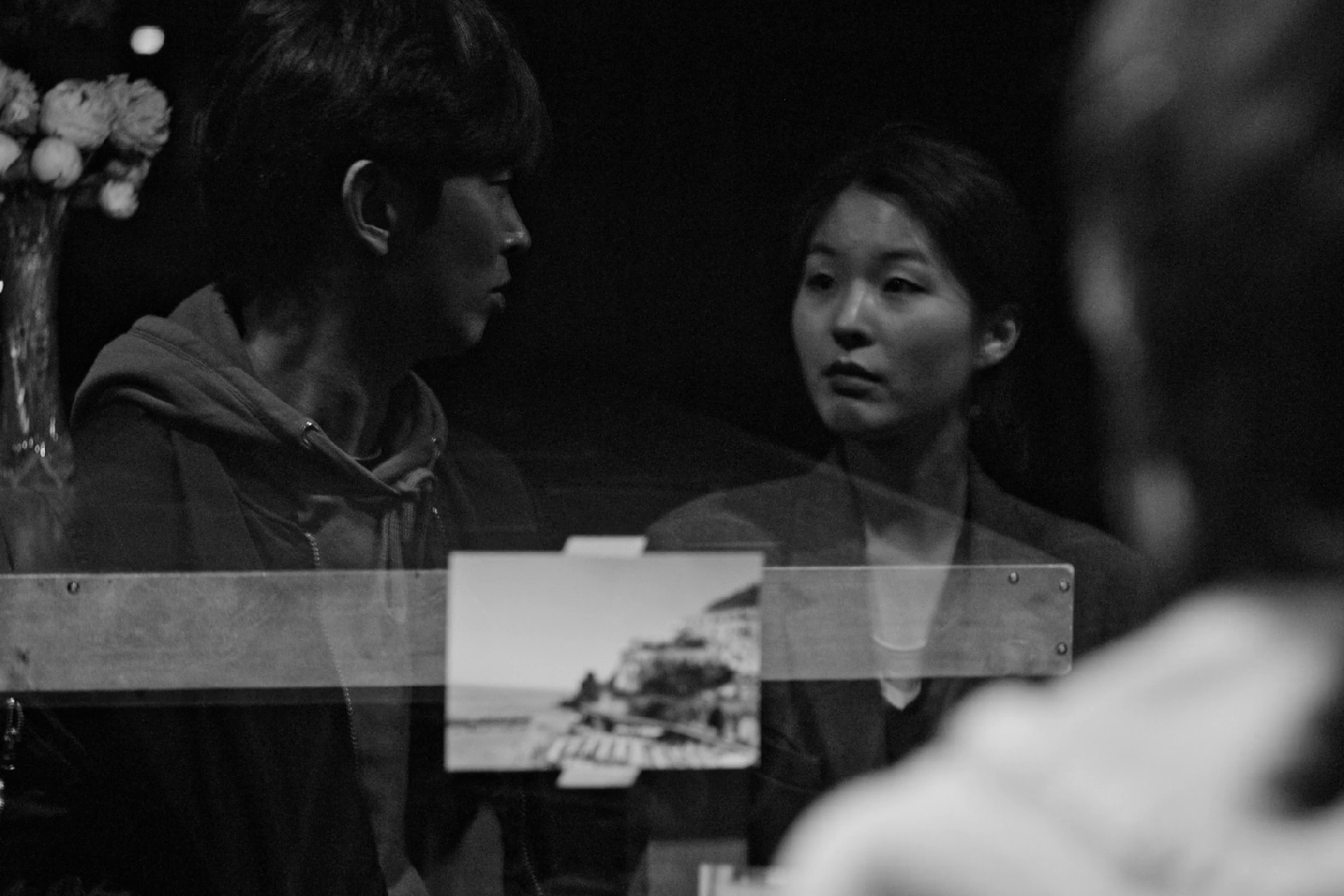
Now in his 30s, Jihoon (Lee Seung-hun) is still an “aspiring” actor trapped in exploitative part-time work in which he has to actively fight to be paid the money he is rightfully owed. He finds himself hanging out in the old rehearsal room from his student days as if nothing had changed in the decade since he graduated. Meanwhile, his nine-year relationship with Areum (Han Hae-in) which began when they were both student actors is about to come to an abrupt end. She’s already “grown up” with a regular job earning real money and is sick of Jihoon’s fecklessness. Areum wants to get married and settle down, but not with Jihoon. Approaching another uni friend now apparently a civil servant (Lim Young-woo), Jihoon is offered a strange new job which ironically reflects the pressures of the world in which he lives. In order to combat Seoul’s notoriously high suicide rate, an experimental programme is being set up in which a squad of samaritans will patrol the local bridges overnight looking for people who seem to be in distress and may be thinking of taking their own lives. 

As one of the other employees points out, if you’re in a dark place perhaps the last thing you want is some guy turning up with a series of platitudes about how you’ll feel better in the morning but all Jihoon has to do is wander round at night so he might as well give it a try. His new role, however, may also feed into his hero complex while allowing him the opportunity to rehearse for real life in the streets. It’s on one nighttime voyage that he first encounters Eunyoung (Park Seo-eun) as she collapses on the bridge after mournfully peering out over the edge. As he later discovers, Eunyoung is a lower grade office worker who is facing workplace discrimination and career insecurity after experiencing domestic violence in her relationship with a co-worker. After reporting the matter to the police, she finds her own job in jeopardy, the older male bosses concluding she is the one at fault for causing embarrassment by dragging this taboo matter into the light while her abuser presumably gets a free pass to continue his career without further penalty. 

In any case, it seems that Jihoon’s friends aren’t faring much better in the world of work, one lamenting that Jihoon has it made because he’s living the way he chooses while another exclaims that his life is about to end because he’s getting married. In a coffee shop, he overhears a cynical businessman on the phone to his boss about scapegoating a middle-aged woman for a workplace mistake presumably to avoid keeping her on the books. Still in his hero mode, Jihoon eventually decides to say something and let the woman know she’s being manipulated, but his intervention is of little use. Like Eunyoung, the woman realises her lack of agency in the corporate hierarchy and accepts that she’s losing her job whatever happens so she might as well take the blame with the money. After all, she’s unlikely to find another position very easily in Korea’s famously difficult employment market. 

All in all, it isn’t difficult to understand why so many people are pushed towards ending their own lives, crushed by the various pressures of Hell Joseon. Yet through their midnight walk through the strangely empty streets the pair begin to generate a kind of solidarity, literally role playing their way out of mutual despair as they each stand up to those who try to keep them down be it an abusive partner and internalised shame or dismissive friends and family who disapprove of those who refuse to follow the accepted path to conventional success. A black and white odyssey through a depressed city, Our Midnight throws up its strangely colourful title card in a vibrant yellow and purple at the half hour mark, allowing its wandering heroes finally to board the train out of despair through mutual acceptance crossing the bridge together into a brighter, less oppressive existence. 


Our Midnight streamed as part of the Glasgow Film Festival.

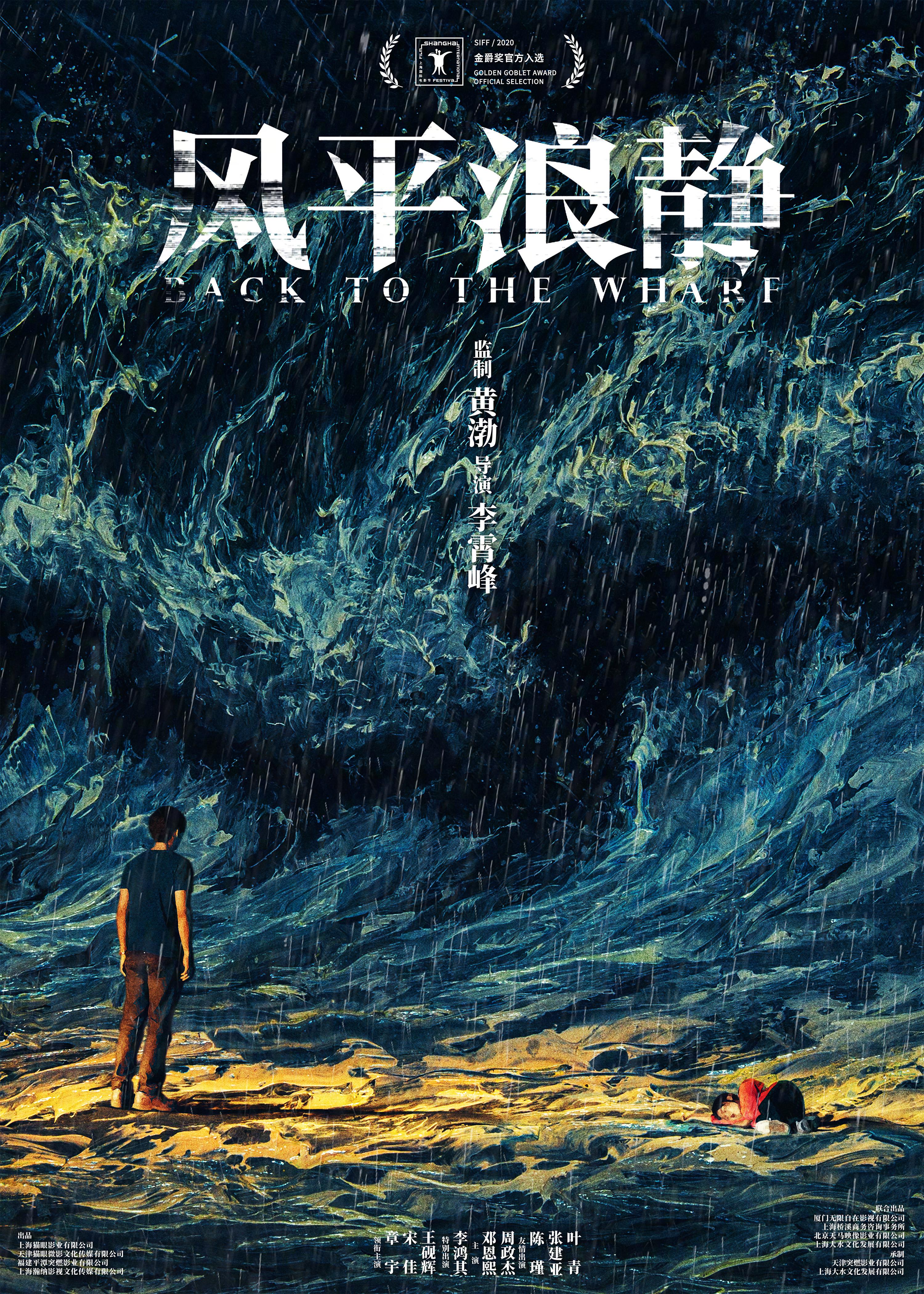
Back to the Wharf (风平浪静, Li Xiaofeng, 2020)

“How dare you want to live when your existence is pointless” a father admonishes his blameless son, deflecting his own willing complicity in the persistent decline of the modern China. Repeatedly abandoned and betrayed firstly by his society, then by his friend, and finally by his father, the hero of Li Xiaofeng’s moody neo-noir Back to the Wharf (风平浪静, Fēngpínglàngjìng) first chooses self-exile only to eventually return and wonder if his crime has been forgotten allowing him to live again before discovering that nothing really changes, there is no escape from the whims of the rich and powerful in an increasingly feudal society. 

Quiet and studious, Song Hao (at 17: Zhou Zhengjie / at 32: Zhang Yu) first wakes up to life’s unfairness in 1992 when he’s called into school on a holiday by his headmaster who breaks the news that he’s losing his guaranteed university place supposedly because his grades are good enough to get there on his own and others need it more. “I like to prioritise the collective over the individual” he explains, reminding him that an extra person from the school going to a top uni can only be a good thing though it’s obviously a blow to Hao not to mention his ambitious father Jianfei (Wang Yanhui) who immediately rings up to complain and discovers that the place is going not to a needy student but Hao’s best friend Li Tang (Lee Hong-chi), son of the local mayor. Angry and confused, father and son set off on circular journeys to confront their respective counterparts, but there’s a storm raging and Hao accidentally wanders into the wrong house after noticing the door flapping in the wind. After walking past a baby sleeping upstairs he runs into an old man who mistakes him for someone else and soon lashes out, shoving fruit into his mouth and trying to suffocate him at which point Hao picks up a knife and stabs his attacker in the belly. Taking flight in terror Hao believes he has just killed a man and orphaned a little girl, never knowing that his father arrived a few minutes later and finished the old man off to stop him talking or that Li Tang was watching the whole thing from a window in the opposite building. 

Returning 15 years later for his mother’s funeral, it’s Li Tang who is most pleased to see Hao when he runs into him by chance at the ruins of the scene of his crime now a future development site for the young real estate tycoon, that is if the now young woman (Den Enxi) the orphaned baby has become whom Hao had been following out of guilt-ridden curiosity would agree to vacate her family property. While Hao has been languishing as a lonely construction worker, Tang has prospered off the back of the 90s economic boom largely thanks to an entrenched network of local corruption that runs from his father the mayor through Hao’s father Jianfei who was handed a fat promotion presumably to placate him over the uni places scandal. Tang has, in a sense, stolen his future leaving him quite literally displaced wandering in the ruined landscape of a haunted past while his father, he discovers, had divorced his mother and remarried in order to have another son. “Your upbringing was a failure” he cooly explains, he needed another male heir to salvage the family reputation and restore his name. Jianfei has, however, done pretty well out of the arrangement now a wealthy man with a separate apartment Hao is not welcome to visit but planning to send his wife and child abroad and retire to Australia. 

Intending to leave as soon as possible, Hao nevertheless starts to wonder if it hasn’t blown over and he might in a sense be allowed to seek happiness, bamboozled into a romance with an old school friend (Song Jia) apparently carrying a torch for him all this time. The past, however, will not let him go. The corruption runs deeper than he even suspected as does Li Tang’s insecure greed and duplicity, attempting to force friendship through blackmail. An embodiment of post-70s fuerdai Li Tang is an amoral capitalist willing to do anything it takes in pursuit of wealth, but at heart a coward ashamed that he owes everything to his father’s machinations and perhaps projecting all of his resentment onto his old friend Hao whose future he so casually stole.   

Yet the message seems clear, men like Hao will always be at the mercy of men like Tang. Perhaps this is the bargain his father has made, but it’s one that Hao can no longer tolerate once Tang forces him to destroy the roots of his redemption. The only sane response to the madness of the modern China, he seems to say, is to go mad in one way or another. Even so, this being a Mainland movie, the nihilistic fatalism of the inevitable conclusion is somewhat undermined by the brief coda in which a policeman reassures a young woman that the crime has been investigated and the wrongdoers punished while the now familiar title card explains to us who went to prison and for how long for their many and various moral transgressions. Hao’s existence is rendered “pointless” because he is unable to live by the rules of a corrupt society, yet his self-destructive act of rebellion does perhaps bring about change if only in the names involved. Beautifully shot with brief flashes of expressionism amid the rain drenched streets of a decaying city to the melancholy strains of a noirish jazz score, Li’s fatalistic takedown of the inequalities of the post-90s society is an exercise in style but one which lets few off the hook as its nihilistic conclusion stabs right at the heart of patriarchal corruption. 


Back to the Wharf streamed as part of the Glasgow Film Festival.

Original trailer (simplified Chinese subtitles only)

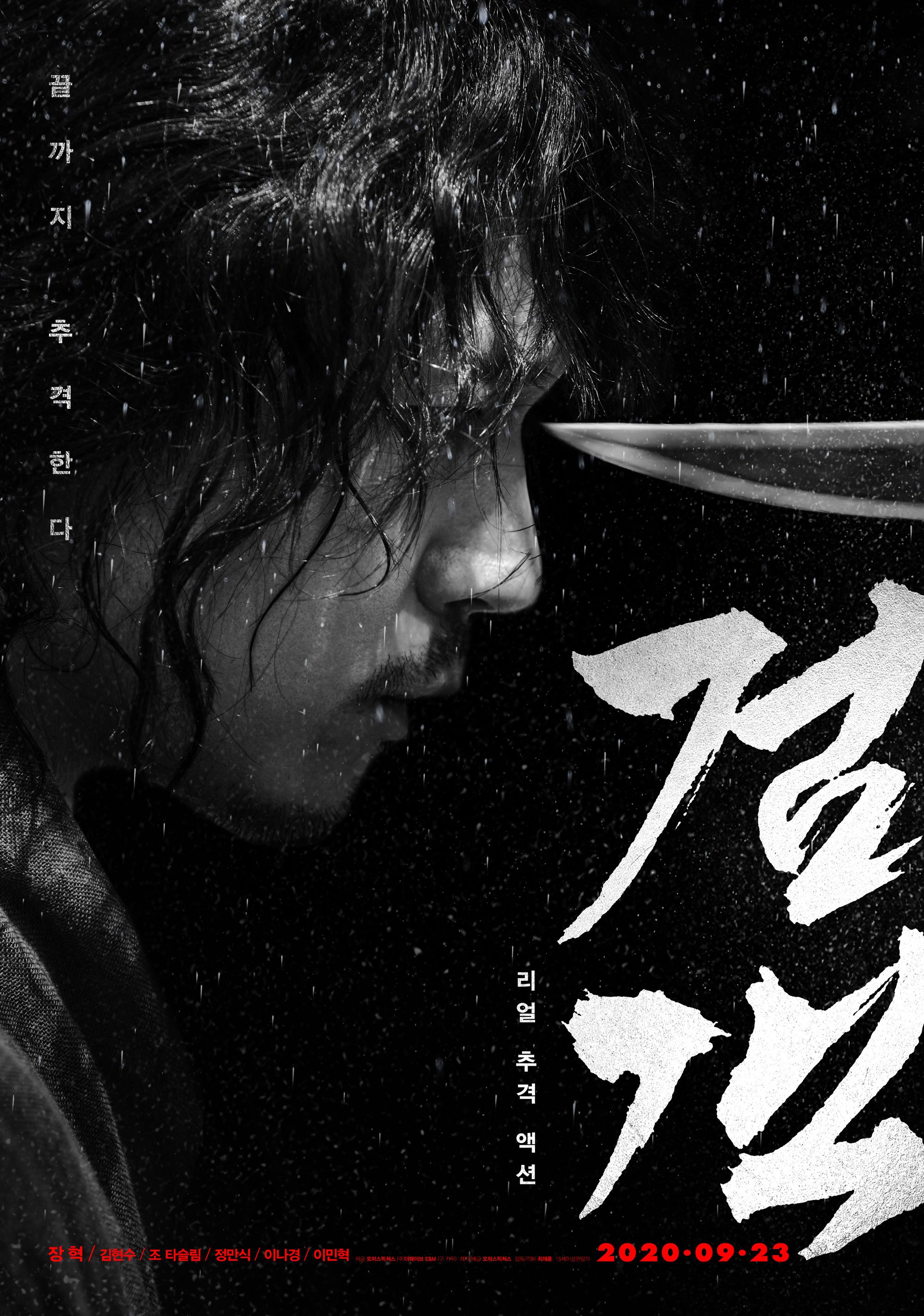
The Swordsman (검객, Choi Jae-hoon, 2020)

“Is this all there is to being a soldier?” a jaded young man asks of an apparently reluctant mentor as he, also reluctantly it seems, prepares to betray his king merely because the balance of power has shifted. Drawing heavily from wuxia and chanbara, Choi Jae-hoon’s The Swordsman (검객, Geomgaek) once again takes on the futility of violence as the two men who might each lay claim to the title attempt to escape the complicated world of Joseon politics but find themselves unable to escape the legacy of the blade while facing an internal debate as to how to protect that which is most precious to them.

Loosely “inspired by true events” as the opening title card insists, the action opens in 1623 with King Gwanghae (Jang Hyun-sung) fleeing the palace in the wake of insurrection. Like pretty much every other ruler, he’s been accused of murdering his siblings to usurp the throne and has lost the the support of the army, including his personal swordsman Min Seung-ho (Jung Man-sik), after instructing his generals to surrender to the enemy. Valiantly protected by lone defender Tae-yul (Jang Hyuk), Gwanghae makes the ultimate sacrifice for his people and agrees to go quietly pausing only to secretly entrust his infant daughter to the last man standing. 

Flashforward 15 years or so and Tae-yul is now a mountain recluse raising his teenage daughter Tae-ok (Kim Hyun-soo) alone in hiding from nefarious forces. The problem is that his eyesight is now failing and a trip to the physician to acquire medicine proves fruitless when it turns out such rare substances are available only to those with connections. Tae-ok wants to take up an offer from a local lord to become his foster daughter in order to get her father the medicine, but he is understandably reluctant. Meanwhile, a new threat has arrived in town in the form of thuggish Qing slave traders apparently intent on further disrupting the already unbalanced Joseon political situation which is divided in support of the Ming. 

The political context in itself is only subtly conveyed, though this is a rare period drama in which the focus is only tangentially on courtly intrigue in the suggestions that constant machinations by ambitious lords have undermined the notions of soldierly honour and loyalty that ordinarily support the feudal system. The conflicted Min, a man of the sword, retires from the court because he isn’t certain he acted correctly in his actions towards Gwanghae and fears he was merely manipulated as he later is by bloodthirsty slave trader Gurantai (Joe Taslim). Gurantai and his henchmen seem to be on the look out solely for a worthy opponent to satiate their boredom, threatening an entire kingdom in the process. Tae-yul, by contrast, has renounced the way of the sword altogether and attempted to isolate himself from worldly violence in order to better protect his daughter only to find himself dragged down from the mountain by her love for him in insisting he find the means to fix his eyes. 

When Tae-ok is kidnapped by Gurantai who has figured out who she is (in one sense or another), Tae-yul enters full on Taken mode determined to save both the girl herself and reclaim this relic of an earlier, purer world to which she is perhaps the heir pausing only to free a few slaves on his way. Operating on a much lower budget than your average period drama, Choi shoots mainly in a shaky handheld maintaining an indieish aesthetic in keeping with the rough and ready quality of the narrative which seems to draw equally from Hollywood westerns, Hong Kong wuxia, and Japanese samurai movies in its relentless drive towards the final showdown. Making a few points about he changing nature of the times and the futility of violence, the minions of a venal lord are eventually cutdown by rows of Qing armed with rifles while they flounder helplessly with only their blades, swordsmanship itself now an obsolete art though apparently one still valuable to bored, insecure leaders such as Gurantai. Nevertheless, the expertly choreographed action scenes have a mounting intensity from Tae-yul’s early refusal to unsheathe his distinctive double-edged blade to the merciless killing of a female bystander at the film’s conclusion. Ending with an ironic return to the world, apparently now changed, The Swordsman kicks back against feudal hypocrisies while its blinded hero uses the only weapons available to him in order to protect what he considers to be worth protecting. 


The Swordsman streamed as part of the Glasgow Film Festival.

US trailer (English subtitles)

Da Capo (다시 만난 날들, Shim Chan-yang, 2020)

Do what you love and never work a day in your life is what everyone says, but turning your passion into a job can be a soul-destroying process. The hero of Shim Chan-yang’s Da Capo (다시 만난 날들, Dasi Mannan Naldeul) is beginning to wonder if it’s all worth it and whether the reason he’s not getting ahead is his own pig headedness or the increasingly soulless music industry apparently only interested in “catchy tunes” and “simple love songs”. Feeling maudlin he’s beginning to dwell on what it was he loved about music in the first place and realising perhaps it wasn’t about the tunes after all. 

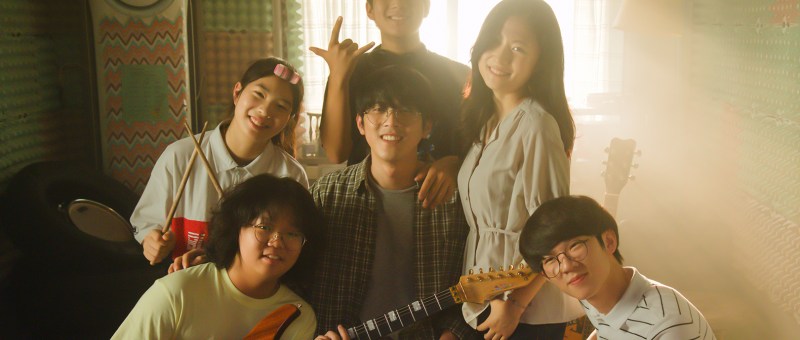
Approaching 30, Tae-il (Isaac Hong) has recently returned from abroad and is currently slogging it out as a singer-songwriter in Seoul. Handed a potential opportunity in a card from a powerful A&R woman best known for managing a top idol, he ponders trying to write a generic pop song but keeps stumbling over a simple lyric about the sea thinking back on his days in a high school band and the friends he may never see again. Taking a visit back to his home town for inspiration brings him into contact with former bandmate Ji-won (Jang Ha-eun) now working as a guitar teacher at her uncle’s music academy, and a collection of nerdy yet passionate kids hoping to hit no. 1 on the Billboard charts with their innovative fusion of nu-metal, post-grunge, and traditional Korean instrumentation (to be added at a later date). 

Though perhaps harbouring a little resentment over Tae-il’s apparently abrupt departure overseas, Ji-won allows him to stay on her sofa while helping him figure out how to finish his simple pop song, a plaintive ballad about lost love and regret. Secretly, he may be looking down on her a little, thinking she’s failed in someway slumming it as a guitar teacher in their old home town but unlike him Ji-won has maintained her passion for music while honing all her skills. She later reveals that she once had a recording contract but eventually decided against it, having realised it wasn’t all about the music and apparently not wanting the rubbish that goes with chart success. Tae-il, however, isn’t so sure especially after the song they wrote together is optioned by the A&R woman though attending the meeting means breaking a promise to the kids he helped to mentor to be there for them at their big concert. 

Like Ji-won, the kids are all full of the joy of music even if they’ve slightly contradictory ideas, lead singer Deok-ho (Seo Young-jae) simultaneously penning grisly death metal lyrics yet wanting mainstream acclaim. Deok-ho apparently decided rock was his thing because the girl he liked liked it, but now she likes hip hop and an older, thuggish sort of boy. He doesn’t take kindly to Tae-il’s taking their metal beat and reconfiguring it as coffeeshop lo-fi, but eventually comes round and takes his advice about authentic songwriting, allowing each of his buddies the chance to shine in putting the track together as a team. 

Meanwhile, Tae-il finds himself relegated to the back of a music video in a garish New Wave outfit, standing in front of an inflatable flamingo, and handed a guitar with no strings in a pointed piece of symbolism especially as he realises they’ve added a rap section just to spice it up a bit. Observing the kids at the beginning of their musical journey and thinking back on his days in a high school band he begins to realise that what he liked about making music was the excitement of collaboration and the gentle camaraderie of after-jam dinners. Perhaps Ji-won has it right and all the rubbish isn’t worth it when you can just stay home and make music with your friends without caring too much about pleasing the commercial aspirations of A&R execs looking for the distinctive generic. Not quite a romance and surprisingly uninterested in the band’s concert journey, Shim’s soulful drama allows its two old friends the space to find new equilibrium brokered by their shared love of music while gleefully ceding ground to the eager youngsters as they too bond through common endeavour discovering the pure joy of creative connection and emotional harmonies. 


Da Capo streamed as part of the Glasgow Film Festival.

Original trailer (English subtitles)
Soirée (ソワレ, Bunji Sotoyama, 2020)

“You can run but not from yourself” a gruff but sympathetic farmer explains to a fugitive young couple, astutely perhaps understanding the quality of their flight. Less a lovers on the run romantic fantasy than a gentle character study in trauma and insecurity, Bunji Sotoyama’s Soirée (ソワレ) finds its two wounded youngsters struggling to find safety and security in an increasingly indifferent society in which they are perhaps expected to care for an older generation they may feel has long since abandoned them. 

Aspiring actor Shota (Nijiro Murakami) for instance has been participating in a spate of “It’s Me!” scams targeting the older generation in which they are convinced that their grandson has been involved in some sort of trouble and is in desperate need of money. We can see by the ambivalent look on his face that he hates himself for his “role” in this sordid piece of modern day drama but also that it plays into his self-destructive conviction that he is no good and cannot achieve conventional success. His need for slapdash, quick fix solutions is further driven home by the coach at his acting class who gives him a very public dressing down for coming in unprepared, insisting that he’ll never move anyone until he gets some real life experience and engages with the text. 

While Shota takes an envelope from an anxious grey-haired old lady, Takara (Haruka Imou), a withdrawn young woman working at a nursing home, gently brushes another’s hair only for her to suddenly disappear while Takara hums a comforting lullaby. We witness her nervousness at the unexpected ring of the doorbell and the panic attacks when some of the older gentlemen mistakenly grab at her, later realising they are each responses to a deep-seated trauma as revealed by a letter telling her that her estranged father who had been in prison for long term abuse is about to be released. 

The pair eventually meet when Shota returns to his hometown with an acting troupe hired to put on a play at the home though things get off to an ominous start when one of the old ladies suddenly collapses while working with the actors, the head of the troupe rather cynically musing on DNR orders and the desires of some absentee children to keep their parents alive in order to continue receiving their pension. These contradictory impulses, Takara’s warmth and compassion towards the elderly people in her care and Shota’s wilful exploitation of their weakness, is brought home when Takara’s father suddenly returns, barges his way into her home asking for a fresh start claiming to have paid his debt, and then proceeds to rape her all over again. Discovered mid-act by Shota who had come to collect her for the local festival, Takara eventually stabs her father with a pair of dressmaking scissors in order to protect him, the pair thereafter finding themselves on the run. 

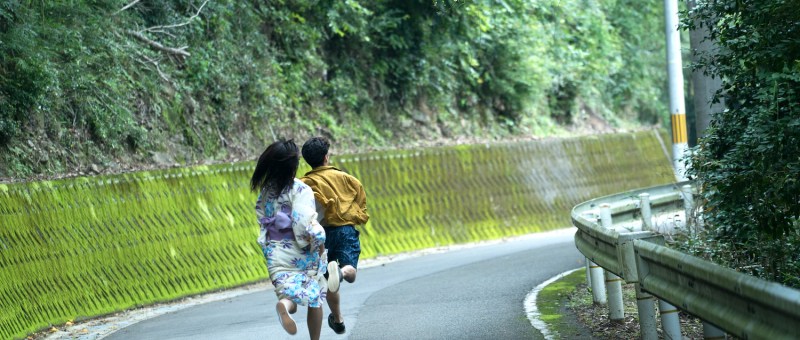
Coming to her senses, Takara intends to hand herself in but is convinced by Shota to make a run for it. “Why do the ones who struggle most get hit worst, why do the weakest always lose?” he ironically asks her, “We weren’t born to be hurt”. Yet their contradictory qualities are only further highlighted as they try to chart a new course for themselves. The pair find temporary refuge with a pair of plum farmers who take pity on them thinking they are a young couple eloping as apparently they once were, only Shota later makes a half-hearted attempt to rob them which he quickly gives up on being challenged by the sympathetic husband. In the next town, Takara determines to look for work while Shota tries to make money through bicycle races and pachinko, chastened by her admonishment on finding employment that it’s possible to support oneself without cheating others. 

Somewhat tritely, Shota tries to tell her that God never burdens you with more than you can bear, while the older woman at the plum farm also offers that plums are all the sweeter for their suffering during a harsh winter dangerously playing into a notion of internalised shame that told Takara she would blossom into the kindest soul who ever lived once her suffering was over only to leave her feeling empty and despoiled as if she somehow deserved everything that happened to her. Shota’s troubles are by comparison small, his conservative brother irritatedly telling him he should accept he has no talent and get a real job, while he too perhaps thinks he is empty inside and therefore incapable of moving anyone just as his director told him. Finding salvation in mutual acceptance they begin to see the “way out” only for their essential connection to be threatened by its very existence. 

A melancholy character study through the legacy of trauma and toxicity of internalised shame, Sotoyama’s occasionally ethereal drama takes on the qualities of a fable through the repeated allusions to princess Kiyohime and her doomed love for the wandering monk Anchin yet he is careful enough to hold out a ray of hope for each of the wounded lovers in their apparently fated connection even as they struggle to find refuge in an often hostile society.


Soirée streamed as part of the 2021 Japan Foundation Touring Film Programme.

Original trailer (English subtitles)