The Furious (火遮眼, Kenji Tanigaki, 2025)

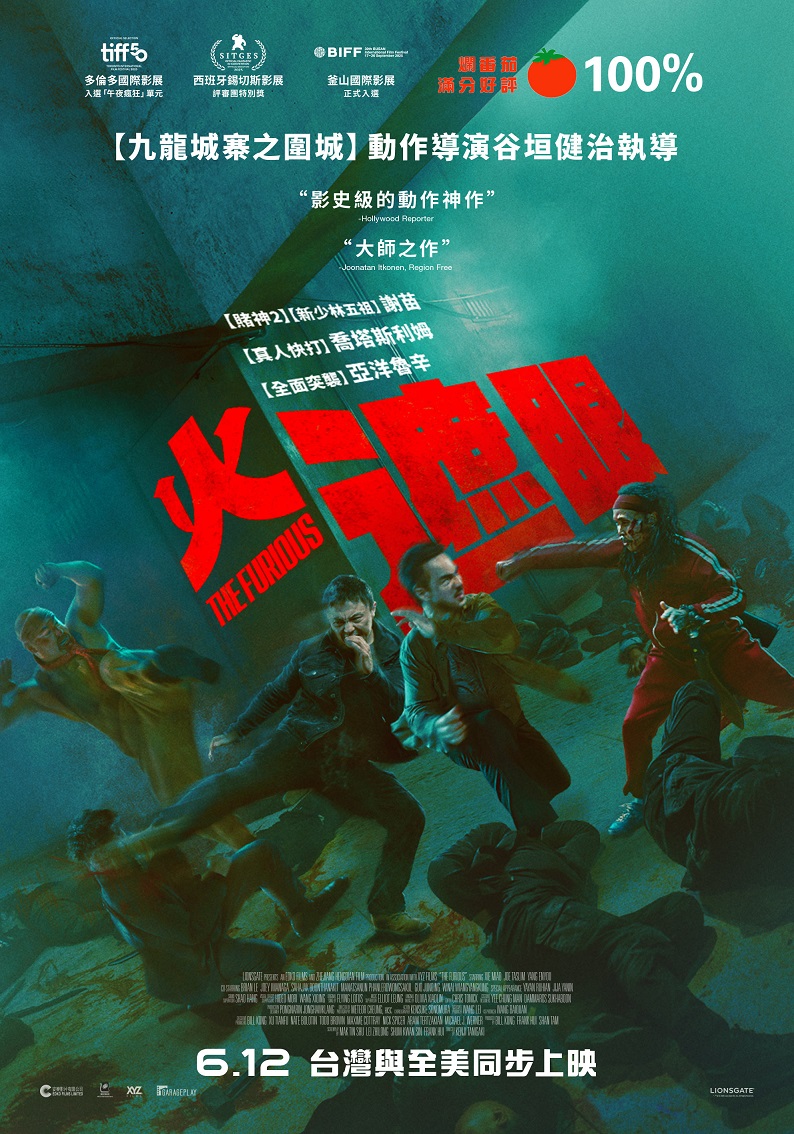
A gang of child traffickers kidnap the wrong man’s daughter in Kenji Tanigaki’s non-stop action thriller, The Furious (火遮眼). Once again set in a fictional South East Asian nation, the film sees two men team up against a world of corruption as the last line of defence rescuing kidnapped kids and returning them to their families but in return incurring the wrath of the powers that be who are all too happy go along with traffickers for the financial benefits it offers.

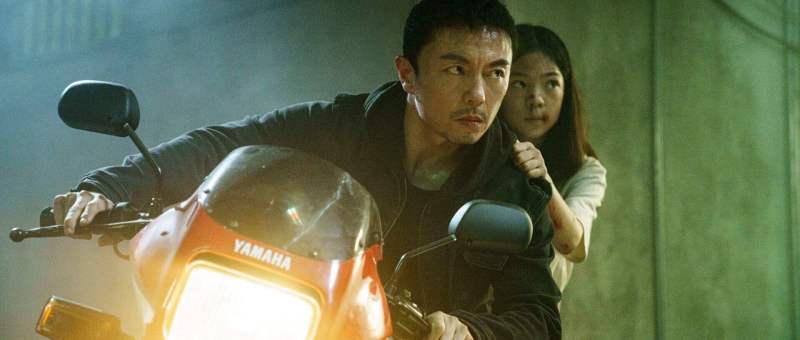
Wang Wei (Xie Miao) is living in South East Asia while seemingly unable to return to China for unclear reasons with the implication that he is some kind of fugitive. His young daughter Rainy (Yang Enyou), who lives with her grandmother on the Mainland, has been staying with him for the summer and constantly begs Wang either to return to China with her or let her stay here with him. Wang rejects both of these options while insisting that Rainy learn kung fu so that she is able to defend herself in his absence, though she claims that she actually hates it and sees her training only as a means of being able to spend time with her father. 

In some ways, and a little uncomfortably, Wang’s desire to train his daughter for independence is depicted as a rejection of his paternal responsibilities while Rainy rejects it in favour of a more traditional femininity, reusing to get her hair cut short out of fear her classmates will make fun of her. It’s after an argument about the haircut that Rainy is lured by the traffickers having stormed out of the hairdressers while the neighbourhood aunties stop Wang going after her, assuring him that she’s just at that age and needs some space to blow off steam. Rainy’s skills might not be enough to protect herself against the traffickers and may even in a way endanger her when she actively tries to fight adult men much bigger and stronger than herself, but do perhaps give her confidence to continue trying to escape.

Wang, meanwhile, tries to report Rainy’s kidnapping to the police but finds them entirely uninterested with the police chief actively telling him that his complaint is unimportant. Seeing a large wall full of missing child posters convinces him that if he wants his daughter back, he’ll have to get her himself. The film suffers from the decision to have a large part of the dialogue in English with several lines unconvincingly dubbed which is likely intended to play into the idea of this place being a melting pot of cultures and languages in addition to a hub for a crime network stretching across Asia with incidental dialogue from the trafficking gang offered in Tagalog. The implication is then that fail son-in-law Paklung was sent to the US for an international education but is unable to integrate into this gangster society, engaging in the taboo activity of child trafficking and causing his father-in-law to suggest making him the fall guy. Paklung, however, cannot accept this rejection and goes on a sociopathic rampage that ironically destroys the future he had dreaming of.

On the other hand, the resolution lies in a defiance of authority as an earnest police woman gains the courage to turn against the corrupt police chief partly thanks to rising public resentment generated by the disappearance of a reporter who was investigating the trafficking ring and live streams from her husband Navin who is trying to find her. Frustrated father son relationships become something of a theme with giant-baby like henchman Ho also seeking revenge for the death of his father, killed by Paklung’s arrow-wielding minion, Tak (Yayan Ruhian). 

The fact is that no had really cared much about these children because they were poor and were viewed as disposable, though it is surprising in a way that the gang wouldn’t just give up Rainy rather than go to the bother of dealing with Wang. Though he had refused to go back and help the old woman in the opening sequence, telling Rainy that it was none of their business, Wang’s sense of responsibly is reawakened by Rainy’s desire to go back and save the other kids while extending a hand of friendship towards the boy who tricked her in the knowledge that he didn’t really have much choice either and lacked the courage to resist because he was alone and was only trying to survive. The brutal and frenetic action sequences reflect the nihilism of the world of the world around them in which Wang and Navin face attacks from all sides and seemingly immortal opponents while mustering all of their strength and ingenuity to protect those closet to them.


Trailer

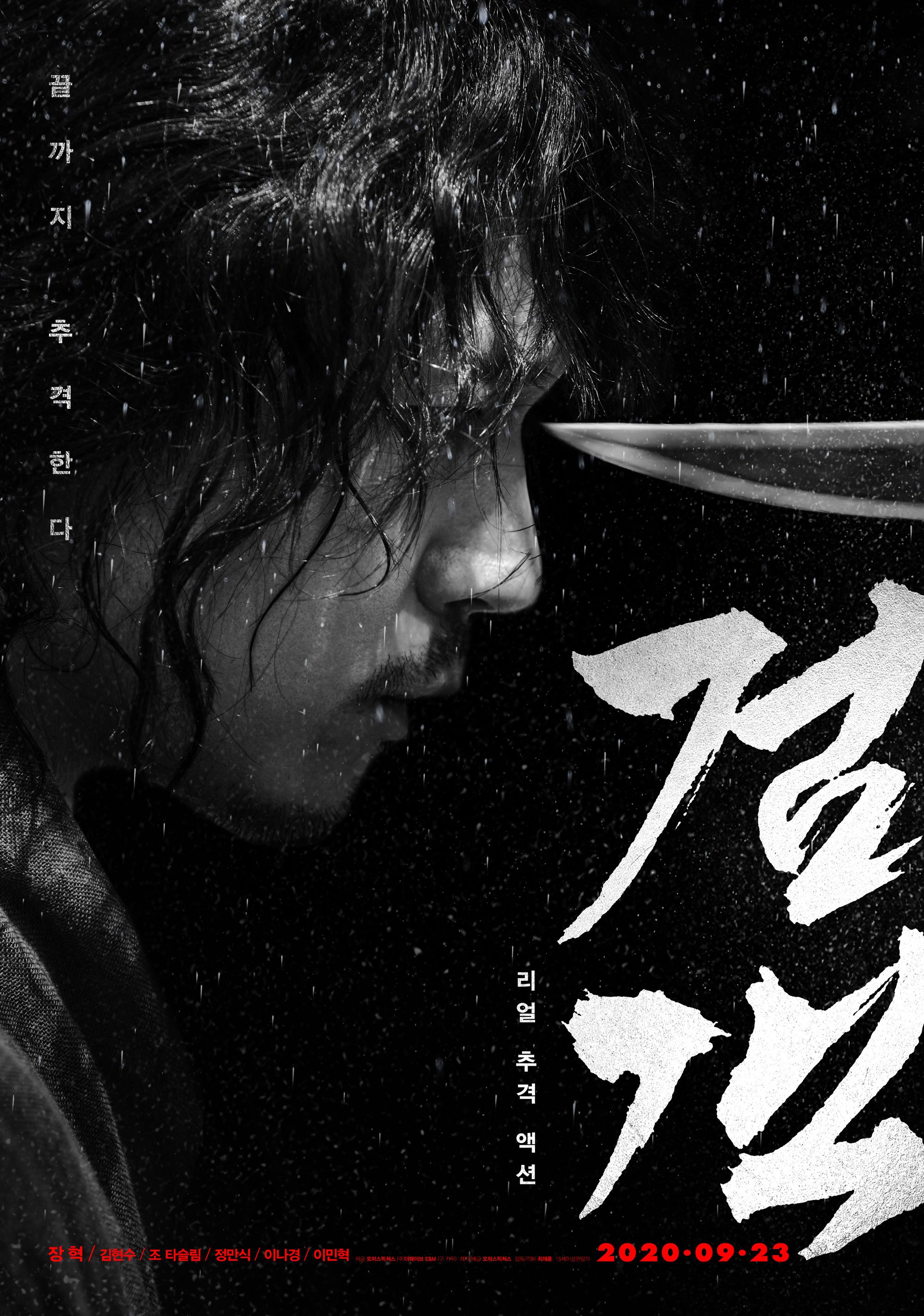
The Swordsman (검객, Choi Jae-hoon, 2020)

“Is this all there is to being a soldier?” a jaded young man asks of an apparently reluctant mentor as he, also reluctantly it seems, prepares to betray his king merely because the balance of power has shifted. Drawing heavily from wuxia and chanbara, Choi Jae-hoon’s The Swordsman (검객, Geomgaek) once again takes on the futility of violence as the two men who might each lay claim to the title attempt to escape the complicated world of Joseon politics but find themselves unable to escape the legacy of the blade while facing an internal debate as to how to protect that which is most precious to them.

Loosely “inspired by true events” as the opening title card insists, the action opens in 1623 with King Gwanghae (Jang Hyun-sung) fleeing the palace in the wake of insurrection. Like pretty much every other ruler, he’s been accused of murdering his siblings to usurp the throne and has lost the the support of the army, including his personal swordsman Min Seung-ho (Jung Man-sik), after instructing his generals to surrender to the enemy. Valiantly protected by lone defender Tae-yul (Jang Hyuk), Gwanghae makes the ultimate sacrifice for his people and agrees to go quietly pausing only to secretly entrust his infant daughter to the last man standing. 

Flashforward 15 years or so and Tae-yul is now a mountain recluse raising his teenage daughter Tae-ok (Kim Hyun-soo) alone in hiding from nefarious forces. The problem is that his eyesight is now failing and a trip to the physician to acquire medicine proves fruitless when it turns out such rare substances are available only to those with connections. Tae-ok wants to take up an offer from a local lord to become his foster daughter in order to get her father the medicine, but he is understandably reluctant. Meanwhile, a new threat has arrived in town in the form of thuggish Qing slave traders apparently intent on further disrupting the already unbalanced Joseon political situation which is divided in support of the Ming. 

The political context in itself is only subtly conveyed, though this is a rare period drama in which the focus is only tangentially on courtly intrigue in the suggestions that constant machinations by ambitious lords have undermined the notions of soldierly honour and loyalty that ordinarily support the feudal system. The conflicted Min, a man of the sword, retires from the court because he isn’t certain he acted correctly in his actions towards Gwanghae and fears he was merely manipulated as he later is by bloodthirsty slave trader Gurantai (Joe Taslim). Gurantai and his henchmen seem to be on the look out solely for a worthy opponent to satiate their boredom, threatening an entire kingdom in the process. Tae-yul, by contrast, has renounced the way of the sword altogether and attempted to isolate himself from worldly violence in order to better protect his daughter only to find himself dragged down from the mountain by her love for him in insisting he find the means to fix his eyes. 

When Tae-ok is kidnapped by Gurantai who has figured out who she is (in one sense or another), Tae-yul enters full on Taken mode determined to save both the girl herself and reclaim this relic of an earlier, purer world to which she is perhaps the heir pausing only to free a few slaves on his way. Operating on a much lower budget than your average period drama, Choi shoots mainly in a shaky handheld maintaining an indieish aesthetic in keeping with the rough and ready quality of the narrative which seems to draw equally from Hollywood westerns, Hong Kong wuxia, and Japanese samurai movies in its relentless drive towards the final showdown. Making a few points about he changing nature of the times and the futility of violence, the minions of a venal lord are eventually cutdown by rows of Qing armed with rifles while they flounder helplessly with only their blades, swordsmanship itself now an obsolete art though apparently one still valuable to bored, insecure leaders such as Gurantai. Nevertheless, the expertly choreographed action scenes have a mounting intensity from Tae-yul’s early refusal to unsheathe his distinctive double-edged blade to the merciless killing of a female bystander at the film’s conclusion. Ending with an ironic return to the world, apparently now changed, The Swordsman kicks back against feudal hypocrisies while its blinded hero uses the only weapons available to him in order to protect what he considers to be worth protecting. 


The Swordsman streamed as part of the Glasgow Film Festival.

US trailer (English subtitles)