
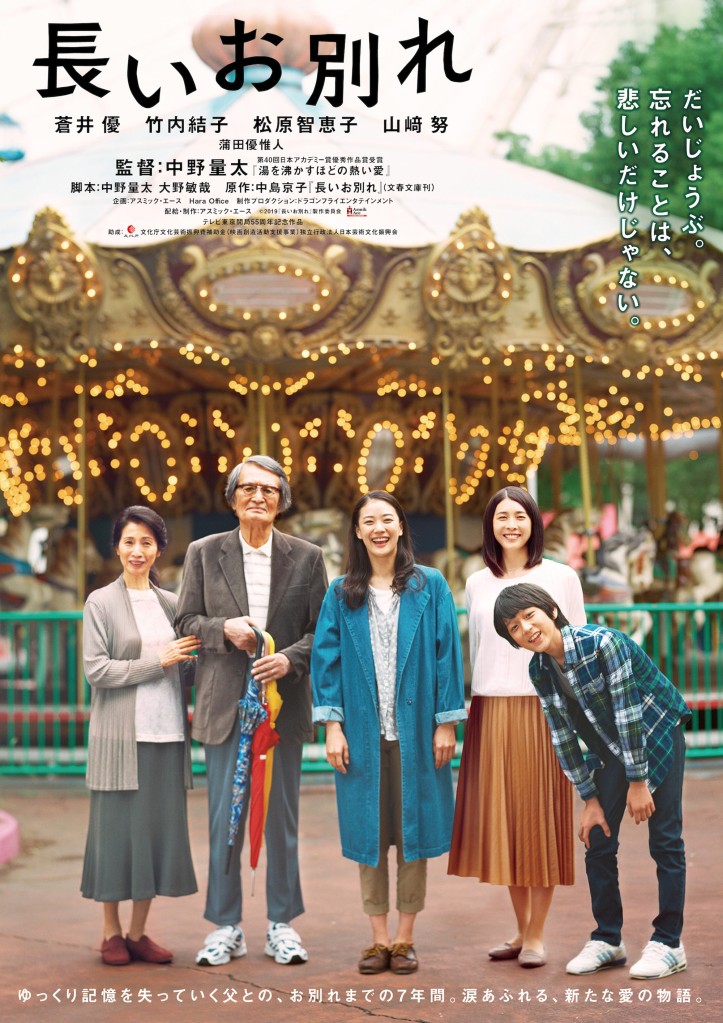
A Long Goodbye (長いお別れ, Ryota Nakano, 2019)

Contemporary Japanese cinema has gone lukewarm on the idea of family, presenting it more often as a toxic rather than supporting presence. Among the few remaining positive voices, Ryota Nakano’s previous films Capturing Dad and Her Love Boils Bathwater never made any attempt to pretend that families are always perfect or that the family as a concept is one which must always be defended, but ultimately found warmth and solace in the mutual act of pulling together as the sometimes wounded protagonists found strength rather than suffocation in unconditional love. 

A Long Goodbye (長いお別れ, Nagai Owakare) finds something much the same as three women are forced to deal in different ways with their relationships with austere father Shohei (Tsutomu Yamazaki), once an authoritarian head master but now suffering from dementia and rapidly losing the ability to read. The first signs of decline are felt in 2007, prompting mum Yoko (Chieko Matsubara) to ring both of her increasingly distant, almost middle-aged daughters, and invite them to their father’s 70th birthday party, 

33-year-old Fumi (Yu Aoi) is in the middle of breaking up with a boyfriend who’s giving up on his dreams of being a novelist to take over the family potato farm. Fumi’s dream is owning her own restaurant, but somehow it seems a long way off. Older sister Mari (Yuko Takeuchi), meanwhile, is a housewife and mother living with her fish scientist husband Shin (Yukiya Kitamura) and son Takashi (Yuito Kamata) in California. Lonely in her marriage, Mari struggles with her English and finds it difficult to make friends with her husband’s colleagues who openly criticise her language skills from across the room while Shin makes no attempt to defend her. 

Meanwhile, Yoko carries the heaviest burden alone in trying to manage her husband’s decline even as he begins to wander off, forever asking to go “home” even when he is already there. The concept of “home” however may be difficult to define in a rapidly changing society. All the way across the sea, Mari frets about her parents and feels guilty that, as the older sister, she should be doing more and has unfairly left everything to Fumi just because she happens to be in closer proximity. She is then slightly perturbed to realise that Fumi hasn’t seen their parents since the previous New Year and is equally shocked at the noticeable change in her father who goes off on random tangents and suddenly loses his temper over trivial things. 

Mari flies back to Japan when crises occur but her husband is not as understanding as one might expect. His research concerns fish which adapt to their environment and it’s clear he’s begun to follow their example, falling wholesale for Western individualism. He criticises Mari’s anxiety for her parents’ health by reminding her that her “family” is her husband and son, bearing no responsibility for additional relatives. Shin now believes strongly in individual responsibility, that Shohei and Yoko need to look after themselves. As such he takes little interest in his family leaving all the childcare duties to Mari in somehow believing that children raise themselves. When the teenage Takashi (Rairu Sugita) goes off the rails and starts skipping school, Mari turns to the time old philosophy that he needs a good talking to from his father, but all Shin can come up with is that his son’s his own man and he’s sure he has his reasons. 

The young Takashi is acclimatising too, getting himself a red-haired Californian girlfriend who’s obsessed with J-pop and kanji, but later replaces him with another Asian guy when he goes back to Japan to spend time with Shohei while he’s still somewhat present. Meanwhile, Fumi works hard to realise her dream but encounters a series of disappointments both romantic and professional as she too reconsiders the idea of family and whether it’s truly possible to slide into one that has already fractured. Becoming responsible for her parents’ care shifts her into a maternal role she might not have expected, maturing in a slightly different direction while Mari remains trapped and lonely, neglected by her newly individualist husband who only cares about his research and shut out by her understandably angsty teenage son. 

Crises are, however, good for bringing people back together. Shohei it seems was a typical father of his times, distant and authoritarian, perhaps not always easy to be around. Fumi worries that she disappointed him, not becoming a teacher as he’d hoped while also failing to achieve her dreams of becoming a restaurateur, while Mari just wants what her parents had in a loving and supportive marriage surrounded by the warmth of  family. Shohei might not always have shown it, but there’s a lot unsaid in his constant desire to go “home” back to the time his kids were small. Home is where the heart is after all, even if you don’t quite remember the way. 


Original trailer (No subtitles)
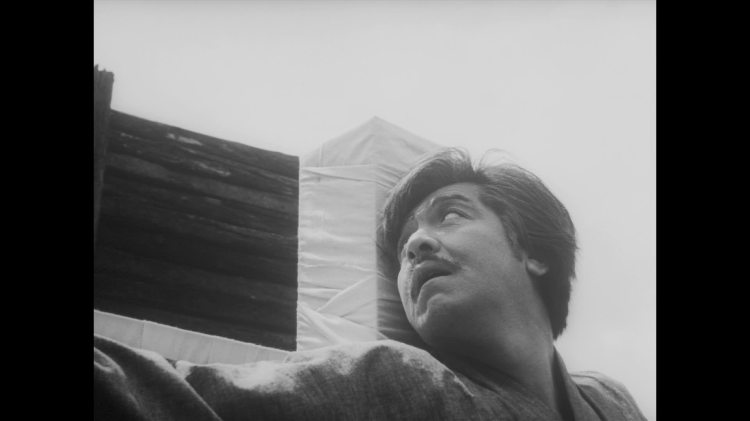
Coup d’Etat (AKA Martial Law, 戒厳令 Kaigenrei, Kiju Yoshida 1973)

Snapshot-2015-11-18 at 01_34_49 PM-1660087891Having taken avant-garde story telling to its zenith in Heroic Purgatory, Yoshida returns to the realm of politics with a far more accessible effort in Coup d’Etat (AKA Martial Law, 戒厳令 Kaigenrei). Inbetween the two films, Yoshida had made another more mainstream offering, Confessions Among Actresses, which had been moderately successful with both audiences and critics but with Coup d’Etat he came back to the artistic fare he’d been pursuing since leaving Shochiku. Unlike the other two films in Arrow’s Love + Anarchy boxset, Coup ‘Etat deals with a right wing rebellion rather than the communists and anarchists which are more familiar to the post-war world.

The film begins with a nervous young man brutally stabbing an elderly businessman in the street before taking his own life. On claiming his remains, the man’s sister finds a letter addressed to Ikki Kita – a well known right wing intellectual in favour of the institution of martial law. Kita, or more particularly his work, becomes a figurehead for a putative revolution organised by young army officers who have become disillusioned with the elected government, its plans for increasing Westernisation and treatment of the poor. They seek to overthrow parliament and put the Emperor back in charge for a kind of paternalistic socialist state. Kita remains on the fringes of this movement, coming into contact with a young soldier who wants to join the revolution and advising him but repeatedly making it clear that he is not involved with the coup itself. Nevertheless, even if not directly involved, Kita will still pay the price for his radical ideas.

Less an examination of the historical events of the time or the coup itself, Coup d’Etat is a psychological portrait of Kita’s last days. Marking the only time Yoshida was not involved in the screenplay (this time leaving things entirely to playwright Minoru Betsuyaku) the film follows a much more linear structure rather than playing with time in the same way as Eros + Massacre or Heroic Purgatory. Kita had written a hugely influential book which advocated moving to a system of martial law under the paternalistic care of the emperor alongside nationalisation of industries, minimisation of private property and a better welfare state. However, Kita is a public intellectual not an activist. He takes no personal part in the armed struggle (though he is aware of each of the actions and close to the people who facilitated them), yet still he pays the price. Whether this is an indictment of his lack of physical commitment to the ideals that he spoke of, or an indictment of a system which seeks to shoot the messenger is up for debate but in any case Kita is “betrayed” by the very same emperor that he worshipped as a god.

Having said that, it’s Emperor Meiji who hangs on Kita’s wall. What Kita and the officer class wanted was a “Showa Restoration” in line with the “Meiji Restoration” but almost the reverse as they returned to a form of paternalistic government where personal freedoms were restricted but everyone was well cared for. We actually don’t learn a lot about Kita during the film (a strange thing to say about a “biopic” which is often how the film is described) but it seems that he had a strict childhood in which he was prohibited from feeling fear – each time a boy was a afraid, he was supposed to cut himself as a punishment. Yet Kita is afraid and this tension between intellectual thought and irrepressible emotion is one that restricts his physical actions to the point that he remains a solitary figure entrapped by his own ideology. That he is then betrayed by the very figures that he sought to exult is the very highest form of tragedy and it’s difficult not to believe that the real coup d’etat is being perpetrated against Kita himself.

Perhaps because of its relative narrative simplicity, Coup d’Etat is a visual masterpiece taking Yoshida’s especial gifts for composition to new heights of beauty. Once again shot in black and white 4:3 Academy ratio, the film is an unsettling maze of shadows and light coupled with uncomfortable angles and a musical score that’s almost like a science fiction film. Yoshida’s prognosis is indeed bleak – the young soldier for example who’s unable to carry out his part of the mission and eventually falsely confesses to having been a spy simply because he felt insignificant and wanted to be a part of something is symptomatic of the self-centred ineffectuality of the younger generation. Once again, youth has been evaluated and found wanting though age doesn’t fare much better in the end. The filming of Coup d’Etat was delayed for sometime as Yoshida underwent an operation to remove a tumour from his stomach. His ultimate satisfaction with the film and the feeling of having come to the end of a cycle coupled with the need to recuperate more fully kept Yoshida away from the director’s chair until 1986 though he’d never return to it with the same intensity as in his political trilogy.


Available now on blu-ray in the UK as part of Arrow Films’ Kiju Yoshida: Love + Anarchism box set.

Scene from near the end of the film:

http://www.youtube.com/watch?v=L4A0rZwpOqc

Reviews of the other movies in the set: