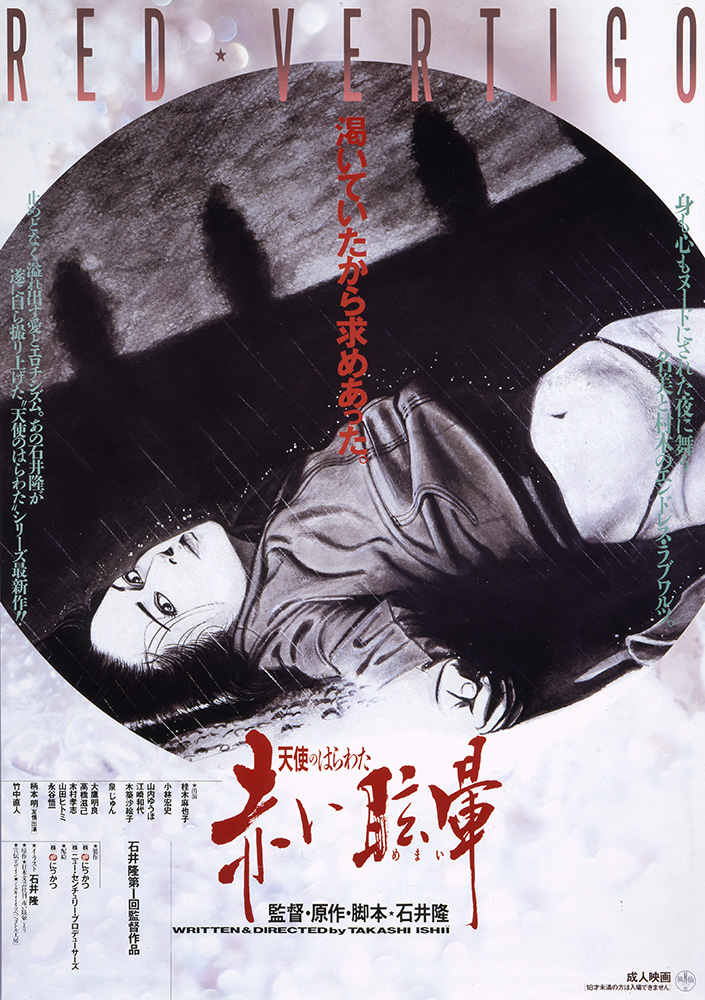
Angel Guts: Red Vertigo (天使のはらわた 赤い眩暈, Takashi Ishii, 1988)

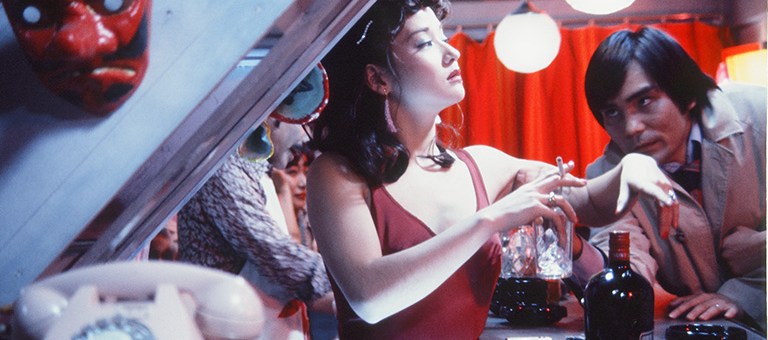
Throughout the Angel Guts series, a woman named Nami and a man called Muraki somehow come together and explore the complex interplay between men and women. In his first directorial effort adapting his own source material Takashi Ishii takes the series in a dreamlike and melancholic direction, shaving off some of its harsh edges but also fully indulging in a nourish sense of fatalistic nihilism. They may not know it, but these are of course two people dancing on the edge of an abyss with no place to go back to.

In fact, the very nature of sleeping and waking has become blurred for exhausted nurse Nami (Mayako Katsuragi) despite the heart monitors bleeping all around her. She thinks of her boyfriend, Kenji (Hirofumi Kobayashi), who takes erotic photographs he claims are all of her, but doesn’t seem altogether sincere under the red lights of his darkroom as he repeatedly asks Nami to pose for him. Her patients, meanwhile, often call her for reasons that aren’t strictly medical. Trying to stay awake on her rounds, she’s violently accosted by two men only for her supervisor to insist that the room is currently vacant. Perhaps Nami dreamed it, though the experience is traumatic enough for her to go home early and inadvertently catch Kenji with one of his models in their apartment. He tells the model that he’s not interested in marriage, though she asks about his “wife”, adding to Nami’s pain and confusion on hearing him describe their relationship so casually.

Meanwhile, Muraki is dreaming more literally. He imagines himself fondling a woman who runs a bar before being coaxed towards an ominous-looking bath that presages his visit to the love hotel with Nami. We hear that his wife has left him, and that he’s being hounded by debt collectors while on the run after embezzling a large amount of money from his company believing it was “easy” and that no one would really notice or care. This is, after all, an age of excess that would only later become known as the Bubble era, though the bubble has certainly burst for Muraki. Ironically enough, he’ll meet a sticky end after getting on the wrong side of a man driving a Mercedes (Akira Emoto) as if he were literally gunned down by a rampant status-driven consumerism. The man looks and behaves like a yakuza, but is unusually reckless even if hotheaded in believing he’s been treated with an insufficient amount of respect for a man with a fancy ride.

Nami too is hit by a car, literally colliding with Muraki who first thinks he’s killed her and somehow made his situation even worse. On realising she’s still alive, though having measured her pulse with his thumb which proves nothing other than his own heart is still beating, he decides to assault her instead later explaining that he just wanted warmth which only makes him seem even more pathetic. Nami, however, fights back wielding a plank like a phallic object and taking back control only for Muraki to keep her prisoner in an abandoned building. There is, however, something that develops between the pair with the rain beating down and isolating them from the outside world. Stuck in this liminal place, they each accept that they have no place to go back to and therefore have only each other. 

But there is really no salvation in this harsh world and nowhere to go which is why Muraki is stopped in his tracks and Nami condemned to a perpetual waiting even if she’s found a kind of freedom dancing alone in her limbo state and under the colourful neon lights of the abandoned warehouse. Asked what he most feared in this world, a character in David Lynch’s Twin Peaks replied “the possibility that love is not enough,” an idea which seems to echo through Ishii’s melancholy urban landscapes, all garish neon offering the semblance of warmth but always drenched in rain. Even interior spaces seem misty and uncertain, leading us into a kind of dream space otherwise indistinguishable from waking life. Muraki and Nami are, however, evidently on different paths and unlikely to find their way back to each other even if either of them manage to break free of their respective dead ends.


Angel Guts: Red Vertigo is available as part of The Angel Guts Collection released on blu-ray 23rd February courtesy of Third Window Films.
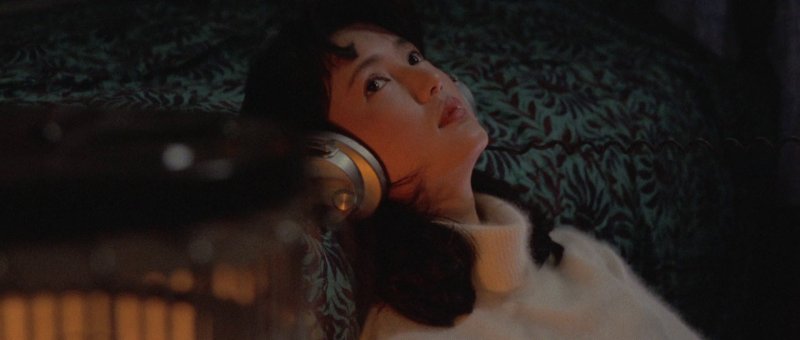
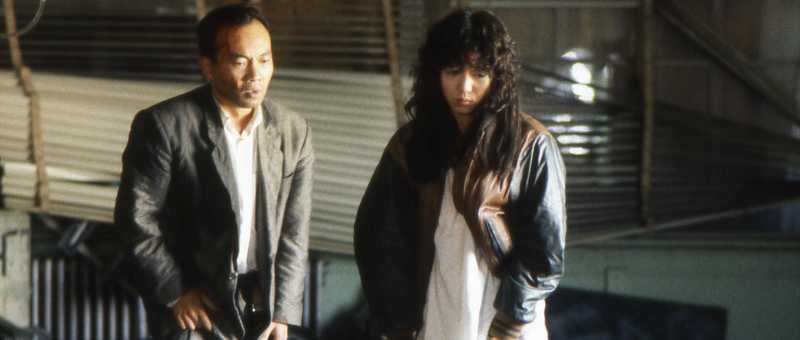
Angel Guts: Red Porno (天使のはらわた 赤い淫画, Toshiharu Ikeda, 1981)

“Lots of perverts around these days”, Nami (Jun Izumi) sighs to herself on becoming convinced that someone’s stalking her. She isn’t wrong, but her increasing paranoia bears out the sense of threat in the contemporary city. Perhaps something has happened to her before, or maybe it’s because she’s a young woman living alone who has been receiving dirty calls from anonymous heavy breather, but she can’t escape the sense of being watched even when she’s at home on her own.

Nami isn’t a well-known person, but it’s not beyond the realms of possibility that some strange man has followed her home from the department store where she works after taking a liking to her. She sees herself clearly as not that kind of woman, and ostensibly leads a very proper life with a decent job and her own apartment. The fact that she masturbates under her kotatsu might be both an expression of her loneliness and an attempt to own her sexuality, but also hints at its illicitness in the fact that it is hidden and out of view. When her friend asks her to fill in at her part-time gig, Nami agrees out of politeness but far from the simple modelling job she was expecting, she’s forced into a shoot for a bondage magazine and becomes an unexpected pinup star.

The reason she’s so popular may indeed be because of the real shock and confusion obvious in her almost comical expression. Though the team from the magazine want her to come back promising a sizeable paycheque, Nami refuses and is unable to accept the image of herself as a pornographic model. When a man, Muraki (Masahiko Abe), chases her into a ladies’ bathroom at the train station, she keeps telling him that she’s not that sort of woman, but there’s uncertainty in her voice and what she most seems to want is vindication. Meanwhile, she’s basically harassed into an affair with her married floor manager who gets her drunk and takes her to a hotel room explaining that she was regarded as the “hardest girl to get” among the department store staff. He becomes increasingly forceful as Nami resists before finally giving in and thereafter continuing an affair with him. 

Even before she became an accidental magazine star, Nami was indeed the focus of unwanted attention and felt herself threatened by simply by existing in a male society. Muraki peeps on the teenage girl who lives in the posh house next to his rundown apartment building as she, ironically, masturbates by shoving an egg into her vagina and cracking it open with a set of pencils. Later it seems as if the girl knew Muraki was watching her, but evidently continued to do it anyway. In any case, Muraki’s peeping is also a kind of class transgression as is his fantasy of raping his landlady after she enters his apartment without permission in the belief that he’s been stealing women’s underwear. Unable to get a job, his existence is fairly dismal and he’s viewed with suspicion by his neighbours due to his slovenly appearance and uncouth manner. He too becomes fixated on Nami’s photo, fantasising about her as a possible source of salvation based only on her image in the magazine.

When he eventually encounters Nami, he too like her boss first seems as if he means to force himself on her, but then pulls back, explains that his feelings are genuine, and he’d rather meet her in a more normal way in a public place to go on a conventional date, making clear that he’s interested in Nami, not just the image of her from the magazine onto which he’s projected his own fantasies. But conversely, as much as it might inspire a sense of hope in the readers, the photo is also a liability and when her floor manager discovers it, he attempts to blackmail her into shifting the dynamics of their relationship so that he’d no longer have to pay for hotel rooms or expend any extra funds on Nami. Despite the fact her friend has been a nude model for ages, Nami is dismissed from the department store. The boss describes her as “just a slut”, though lamenting it’s a shame seeing as she was so pretty as he instructs her floor manager to fire her, bearing out the double standard that men are free to view these images but scorn the women who are in them.

Nevertheless, the encounter with Muraki and being let go from the department store provoke a kind of liberation in which Nami flips the kotatsu over and masturbates with the chair leg bathed in the red glow of the heater. She has perhaps fully embraced her sexuality, indulging in rope play and no longer hidden beneath the curtain of the blanket but orgiastically pleasuring herself out in the open. Muraki, meanwhile, pays another sort of price in being the prime suspect in a rape and murder just because the neighbours think he’s a bit weird and assume it must be him. He continues to cling to the idea of Nami as a kind of salvation, while she too seems drawn to him and is about to throw away the magazine and say goodbye to this sorry episode in her life until a potential happy ending is abruptly cut short. Filled with urban melancholy, the film paints both Muraki and Nami as prisoners of their society, unable to find self-acceptance or security save in the frustrated bond they unexpectedly discover in their shared desire for escape.


Angel Guts: Red Porno is available as part of The Angel Guts Collection released on blu-ray 23rd February courtesy of Third Window Films.

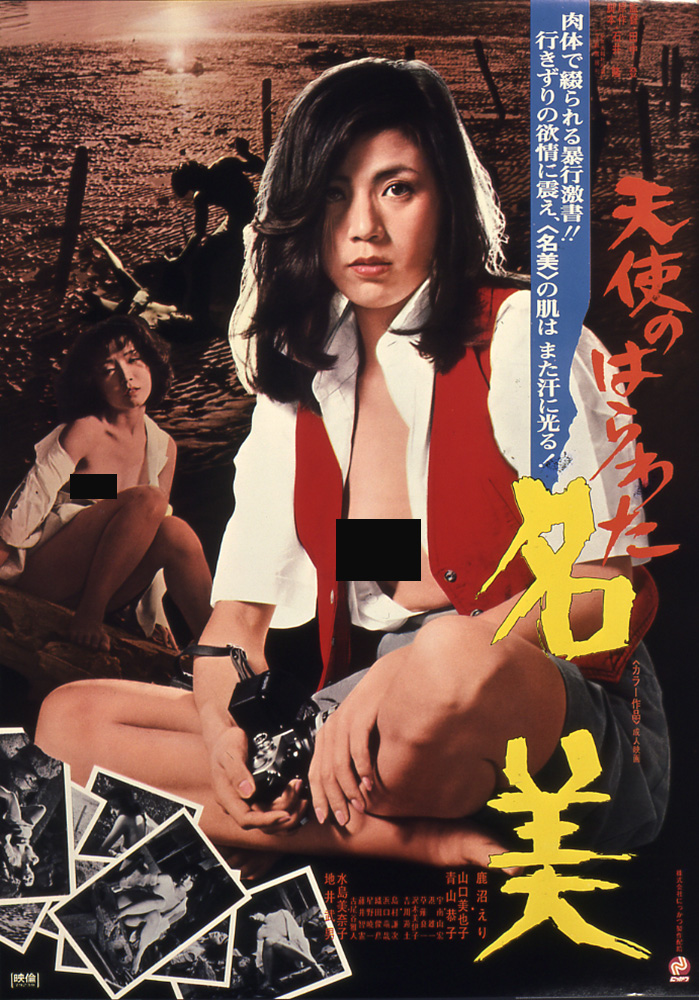
Angel Guts: Nami (天使のはらわた 名美, Noboru Tanaka, 1979)

Aspiring journalist Nami Tsuchiya (Eri Kanuma) works for a magazine called “The Woman,” but it soon becomes clear she’s their only female reporter and one of a handful of women in an office otherwise staffed by men. Her editor has her writing a series titled “Rape and its Consequences” in which she attempts to interview women who’ve experienced sexual assault in an attempt to root out the effect it’s had on their lives. At times Nami seems a little conflicted, puffing away on a cigarette with a pensive look on her face, but there’s no denying that she’s sold out other women for a chance to make it in a man’s world by exploiting a suffering she does not herself share.

Muraki (Takeo Chii), formerly a top magazine editor, reminds her that not everyone who reads her magazine is a woman, but there is something perverse about the idea of her article which is otherwise conceived from a perspective that seems very male. The female readership of this magazine would not need to be educated about the prevalence of rape nor its consequences. Nami’s article doesn’t seem to want to find success stories, but to revel in misery. She accosts one of the women she’s hoping to interview and tries to badger her into talking on the record. Yoshiko appears fed up and tells her that recounting what happened would be like being raped all over again, but still Nami doesn’t relent. She tries to guilt her into speaking by suggesting that her testimony would stop other women being assaulted, which is backwards logic seeing as it isn’t the women who are responsible and even if she were advancing a victim blaming narrative that it’s on women to protect themselves, Yoshiko had not done anything that could be seen to be “wrong” nor is there any way she could have prevented what happened to her.

Through her articles, Nami has become complicit in this culture and is effectively an agent of rape herself in her desire to tear into the lives these women have tried to build for themselves and extract even more salacious detail. She describes Yoshiko as “happily married,” but she’s living in a rundown house on the margins of the city. It seems her husband maybe ill and therefore unable to work. Yoshiko may have married him out of a lack of other options and it’s not clear if her husband knows about her past or how he would react if he learned of it now. The fact that Nami’s attempt to interview others about Yoshiko fails bears out the social stigma that can surround those who’ve experienced sexual assault and suggests that Yoshiko has now become an outcast. The photos that they publish only black out Yoshiko’s eyes making it easy for those in her community to identify her which could certainly make her life much more difficult and lead to a loss of employment or social further exclusion.

It’s clear that Nami hasn’t really thought any of this through and is only focussed on impressing her male editors to be given better assignments. This may in part be what she means when she says that she’s been assaulted in her office by the people she works with on gaining more of an insight into the consequences of her writing. Though he threatens to rape her himself, Muraki seems to be a representative of a more compassionate masculinity but at the same time has been emasculated, rendered impotent after his own wife was raped by an intruder and then left him because he couldn’t satisfy her sexually. He connects Nami with a mentally disturbed nurse who was assaulted by a doctor with an autopsy fetish, though the incident was covered up by the hospital. None of these men, except Muraki, is held responsible for their actions. Nami, however, becomes all of these women, envisioning herself abandoned at the scene half-naked and clothes torn, discarded on the rubbish tip of the modern society. At the beginning of the film, a woman smashes the lens of the camera as a man moves towards her, as if she meant to rebuke us for watching, while even Nami finds herself becoming dangerously aroused by watching other women being assaulted or listening to their stories before she too cracks and begins to see herself as nothing more than an anonymous object at the mercy of male society.


Angel Guts: Nami is available as part of The Angel Guts Collection released on blu-ray 23rd February courtesy of Third Window Films.
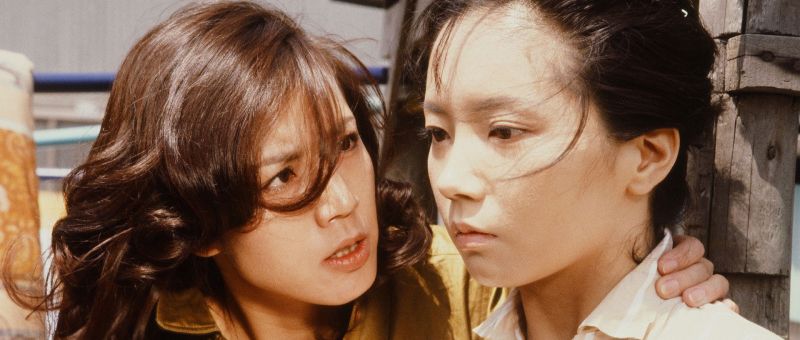
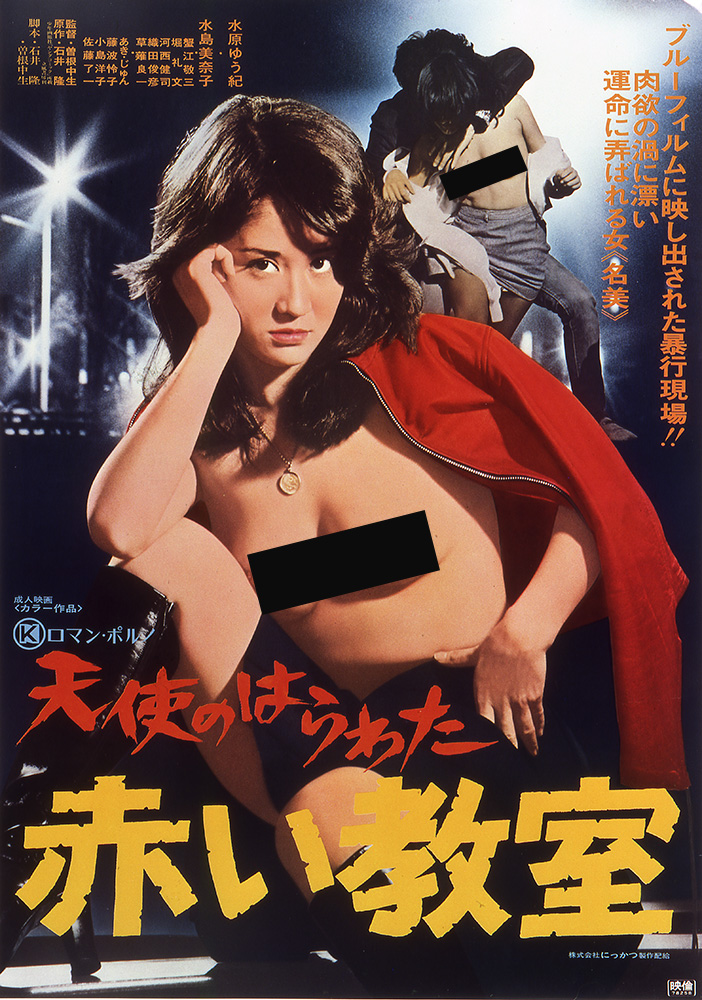
Angel Guts: Red Classroom (天使のはらわた 赤い教室, Chusei Sone, 1979)

Chusei Sone’s Angel Guts: Red Classroom (天使のはらわた 赤い教室, Tenshi no Harawata: Akai Kyoshitsu) opens with grainy 8mm footage of a woman being gang raped, but this turns out to be a film being watched by the protagonist, Muraki (Keizo Kanie), rather than the one we’re actually watching. Nevertheless, in presenting the footage in this way, the film has made us somewhat complicit in witnessing this woman’s exploitation for the purposes of entertainment. A producer of pornographic magazines, Muraki is captivated by the woman’s ruined innocence and becomes obsessed with the idea of finding her.

Though he says he doesn’t think she belongs in this world, Muraki does not so much want to save Nami (Yuki Mizuhara) as get her to work for his magazine. He declares that years of this kind of work have left him numbed and desensitised. Watching her video was the first time he’s felt moved in years. However, it turns out that this may be because the video wasn’t a movie in which the actress had consented to appear, but raw footage of an actual gang rape committed against a trainee teacher. The implication is that this traumatic incident has numbed Nami in the same way Muraki has been numbed by his exposure to pornography, leaving her with a permanently vacant, inscrutable expression and reducing her to nothing but a sexual object. Though the 8mm “blue movie” is an illegal form of pornography that can be watched only in underground clubs, she claims to have run into several men like Muraki who recognise her and has concluded that the only way to get rid of them is to satisfy their desire by sleeping with them. She says she won’t feel anything anyway, but has scars on her wrist and seems to have turned to potentially dangerous sex with random men as a means of self-harm.

Muraki refuses to sleep with her, but in Nami he seems to be looking for his own buried innocence and masking the shame he feels towards his line of work. His parents think he publishes books for children, he tells Nami, but rants to another woman that his magazines are all the same and he doesn’t know how to make them better. He can’t take the kind of pictures he wants to, because he wouldn’t be able to publish them under the increasingly strict censorship laws. Repeated references are made to the need to avoid showing any pubic hair which is considered obscene under Japanese law, though they’re otherwise free to depict scenes of sexual violence and degradation. Ironically, Muraki is unable to meet Nami at their rendezvous because he’s been arrested for breaking the Protection of Minors Act after having photographed a 15-year-old girl, though Muraki claims he was just trying to help her. He says she told him she was 19, recently arrived from Aomori and had been reduced to shoplifting, so he gave her a job out of the kindness of his heart.

It’s things like this that might have Muraki desperate to prove he’s not “scum” but a good man and an artist rather than a purveyor of pornography and exploiter of women. The film has its cake and eats it too, critiquing female exploitation but simultaneously trading on it, if doing its best to make the viewer feel at least conflicted. Three years later, Muraki is in a relationship with a woman he once exploited who couldn’t let him go and has fathered a child, but the papers are full of news about suicides and domesticity does not seem to him provide much of a refuge. He continues to search for Nami in order to reclaim his innocence, but discovers that she has become a vacant sex worker, ironically working at a bar called “blue” and the plaything of a man in a James Dean-style red jacked who has broken dreams of his own. Unlike Muraki, she has only fallen further, and he is ultimately forced to watch what his business has reduced her to as a group of men set on a captive high school girl like a pack of wolves, ironically echoing the opening sequence. Yet in the end, it’s Nami who frees him by literally showing Muraki the way out of this place as he urges her to leave though she seems to say it’s already too late. Looking at her own distorted image in a puddle, she no longer knows who she is and has no identity that is not forced upon her by a violent male gaze.


Angel Guts: Red Classroom is available as part of The Angel Guts Collection released on blu-ray 23rd February courtesy of Third Window Films.