Seven Days in Heaven (父後七日, Essay Liu & Wang Yu-Lin, 2010)

A young woman embarks on what she describes as the most ridiculous journey of her life after her father passes away and she must return to her hometown for a series of incredibly involved traditional funeral rites in Essay Liu and Wang Yu-Lin ’s lighthearted drama Seven Days in Heaven (父後七日, fù hòu qī rì). Perhaps the intent is more to keep the mourners occupied in a slow burn dissolve of their grief than it is to console a parting soul but in any case Mei finds herself meditating on the past and her already fading memories of her late father. 

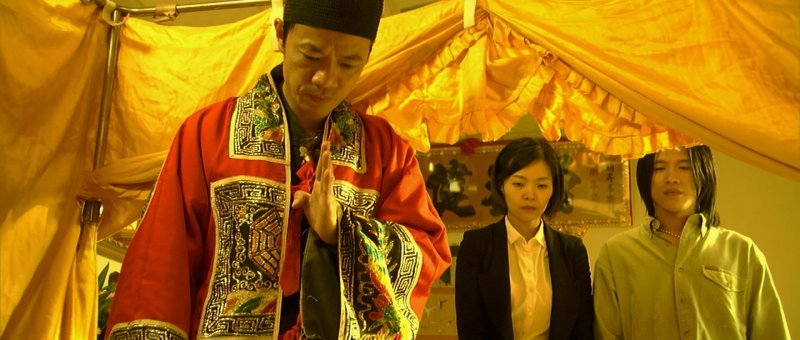
The strangeness begins at the hospital where Mei (Wang Li-Wen) and her brother Da-zhi (Chen Cha-Shiang) are repeatedly asked to explain to their father, who has just died, that they are taking him home. In the transport ambulance they ask if the family is Buddhist or Christian, and then simplify the question to whether they use incense sticks when a confused Mei is uncertain how to answer though as it turns out the rites they will be performing are largely Taoist. Anyway, the driver accidentally puts in the wrong tape and they get a blast of the Hallelujah chorus before he switches over to a series of sutras instead. A similar confusion sets in once they arrive back at the house where the funeral is being managed by a distant relative who works as a Taoist priest performing rituals largely concerned with death. 

A running gag sees these familial relationships so tangled that they need lengthy explanations, Yi (Wu Peng-Fong) the priest explaining to Mei’s cousin Zhuang (Chen Tai-hua) that he should have been calling him “brother” and not “uncle” while as it turns out Yi still carries a torch for Zhuang’s mother, Feng (Angie Wang), who left him to work in another town and married a wealthy man. Currently in Paris, she does not return for her father’s funeral and sends her son instead who is equally mystified by these strange rituals and decides to film them as part of a university project. 

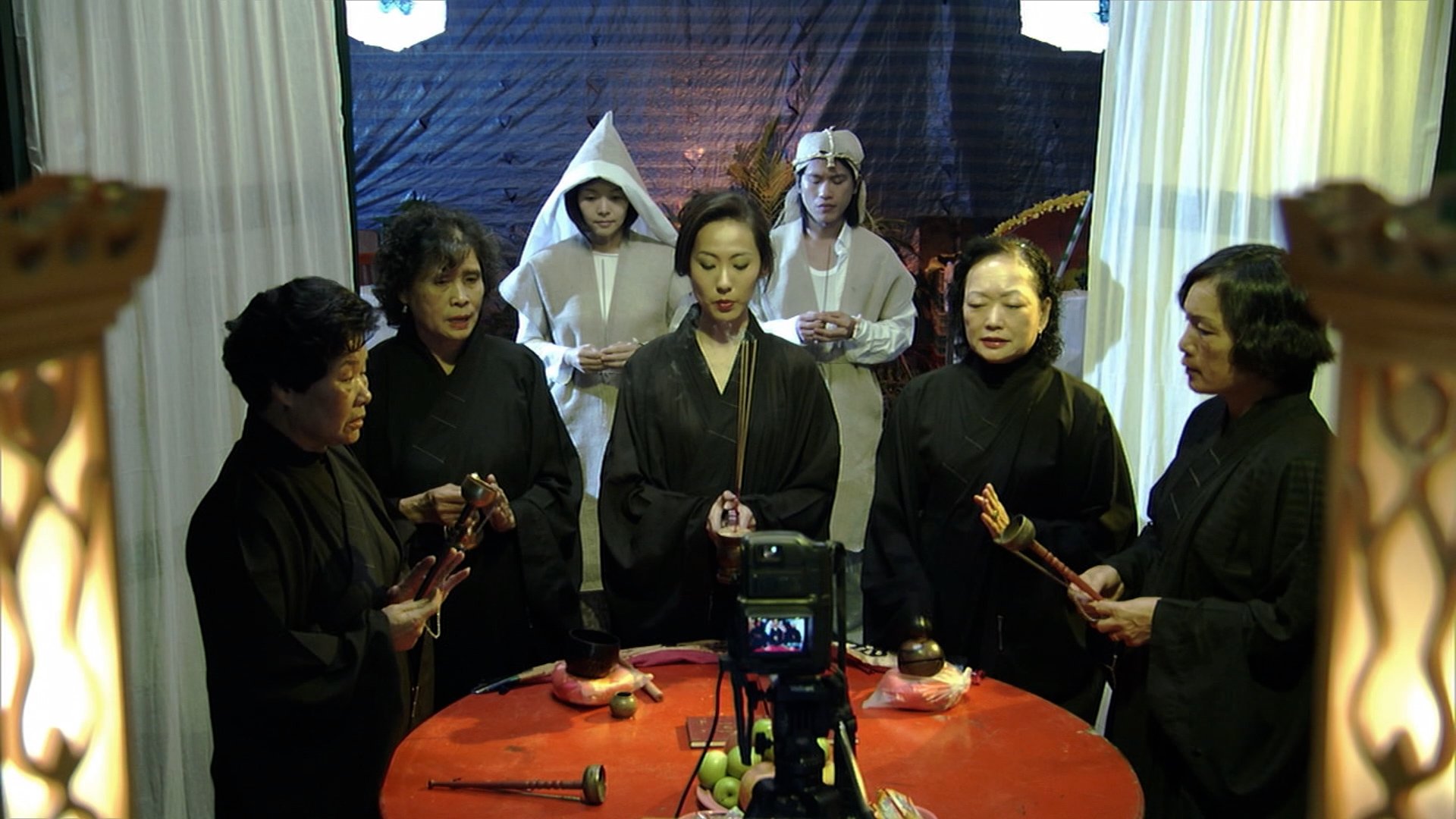
Yi consults some religious calendars and schedules the days of the funeral accordingly from when they close the coffin to when they conduct the final rites with Mei and Da-zhi merely expected to keep up. A detached Mei explains that as the daughter she’s explicitly instructed when to cry and when not to, forced to run in and wail by the coffin on cue. Yi’s partner, Chin (Chang Shih-Ying), herself works as a professional mourner wailing on the behalf of others merely altering the identity of the deceased but in this case the siblings are alternately bored and run ragged, possibly too exhausted by the process of mourning to fully process their grief. 

Zhuang’s film exposes the labour involved as he closes in Da-zhi explaining that he has to sweep up the ashes from the burning of ghost money. He asks him how he feels about his father’s death which might in itself be a little insensitive especially while pointing a camera in his face and he snaps back that he doesn’t know. Mei meanwhile is repeatedly drawn back to memories of her father, picking out a picture of him singing karaoke for the altar only to be told off by the older relatives. Zhuang eventually photoshops it to replace the mic with flowers and the background with a more appropriate scene of mountains and rivers. She doesn’t tell her friends her father passed away until months later and still finds herself forgetting, brought to tears on accidentally reminding herself to pick up some “longevity” cigarettes for him on a trip back from abroad only to realise there’s no need anymore. “Please stow your emotions” she imagines hearing the captain say in her father’s voice as she strives to accommodate her grief. 

Filled with a series of humorous digressions from Yi’s love life and their late father’s ability to charm his nurses even at death’s door, the film paints a warm and nostalgic portrait of small-town life and the various rituals that go along with it, including a small tangent on political corruption as a host of politicians are obliged to attend the funeral, because of the aforementioned ill-defined familial relationships, and send elaborate gifts including a large tower of beer cans that later collapses and requires even more tiding up. Finally the siblings must burn their mourning clothes as if symbolically moving on from their seven says in “heaven” and returning to their everyday lives but discover perhaps that grief is an ongoing process the rituals of which may continue long after the funeral is finished.


Seven Days in Heaven is available to stream in the US Sept. 25 to Oct.1 as part of the 17th season of Asian Pop-Up Cinema.

Trailer (English subtitles)
Alifu, the Prince/ss (阿莉芙, Wang Yu-lin, 2017)

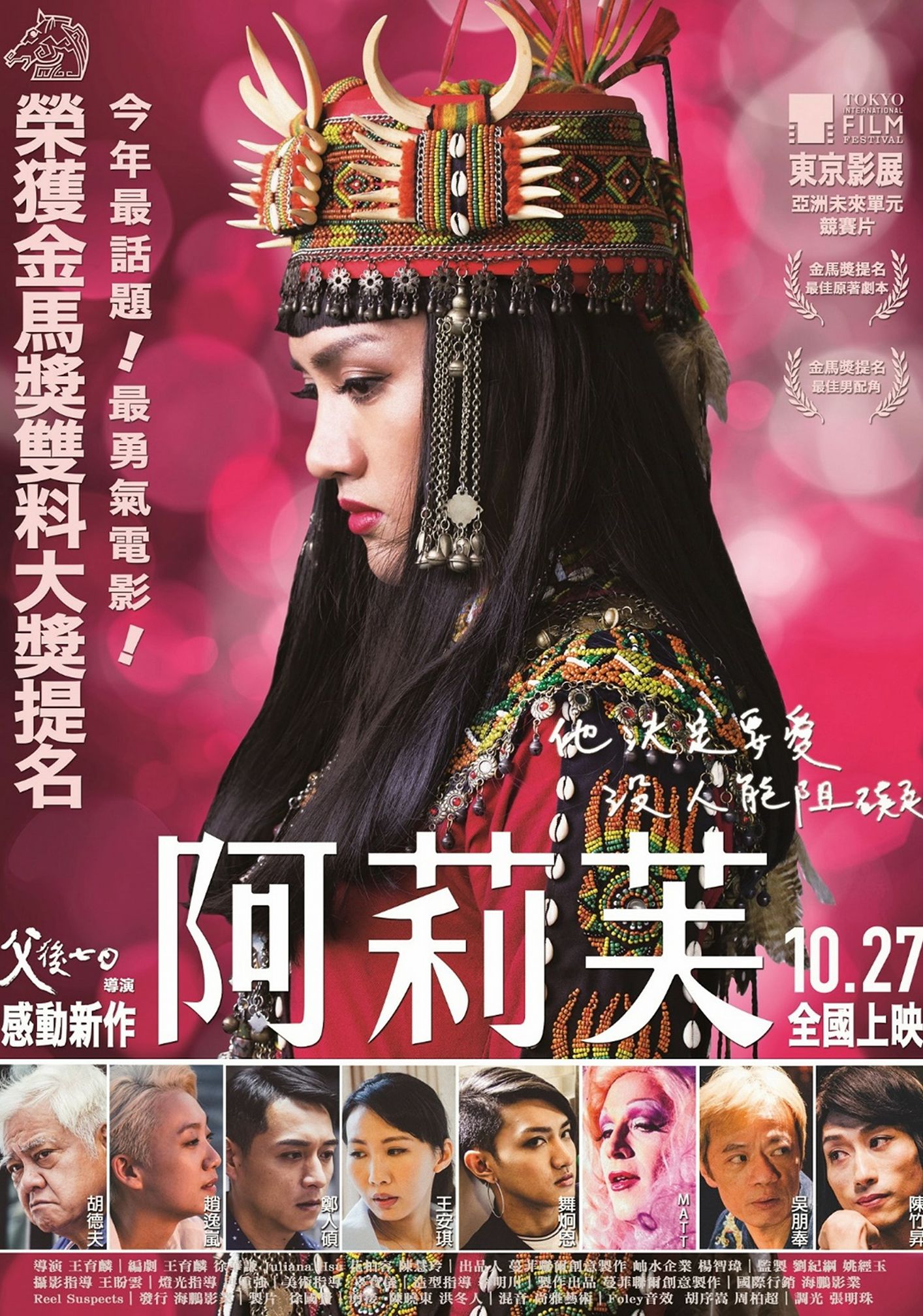
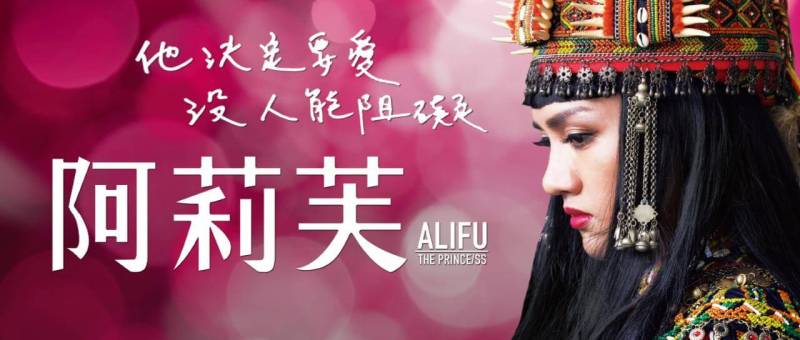
Alifu posterAmong Asian nations, Taiwan has a reputation for being liberal and permissive but if you’re a minority within a minority life is far from easy even if you manage to find support from others in a similar position. So it is for Alifu (Utjung Tjakivalid) – the conflicted soul at the centre of Wang Yu-lin’s nuanced depiction of the road towards self acceptance and actualisation in the face of competing duties and obligations, Alifu, the Prince/ss (阿莉芙, Ālìfú). While Alifu struggles with the demands of being the heir to the Chieftainship of an indigenous tribe with all the rights and obligations that entails, her lesbian roommate struggles with a bad breakup and growing feelings for her transitioning best friend, a drag queen is conflicted about his sexuality, and a transgender bar owner worries for the future of those close to her after she is diagnosed with a terminal illness. Despite the multitude of difficult circumstances, each attempts to deal with their problems in a mature and rational fashion finding love and mutual support from their friends and community even if others sometimes require a little more time.

Alifu, born the son of a tribal chief, identifies as a woman and has been working in a hairdressers in the city to save up for gender reassignment surgery. Her plans for the future are thrown into disarray when she is abruptly called home, walking into a family meeting during which her father (Ara Kimbo) suddenly announces that he is stepping down because of poor health and that his son will be taking over. Though it is possible for a woman to succeed as chief, Alifu has not disclosed her intentions to transition to her traditionally minded father who wears a prominent wooden cross around his neck and does not seem to be particularly understanding of his child’s feelings or emotions, caring only for his appearance in the eyes of the tribe.

Alifu’s transition is subtly revealed in the lengthy opening in which she slowly sheds her “masculine” appearance by discarding her baseball cap, rearranging her hair and stepping into the ladies loos where she puts on colourful lipstick and hoop earrings before making her way to the hairdressers where she earns her living. Meanwhile, her lesbian roommate Pei-Zhen (Chao Yi-Lan) thinks nothing of leaving the house dressed in a way which best makes her feel comfortable only to cause a mini ruckus in the salon when her ex gives her the side-eye for openly flirting with another client apparently after “something special”. After hours, Alifu picks up extra money by doing hair and makeup for the drag acts at a local gay bar where she has also drawn close to the owner, Sherry (Bamboo Chen), who is in a long-term though apparently non-sexual relationship with a former gangster (Wu Pong-fong).

Alifu soon develops a liking for a new drag act at the bar, describing him as somehow “not like the others”. Chris (Cheng Jen-shuo), a local government worker, is a mild mannered sort apparently happily married to a piano teacher (Angie Wang) and living a conventional middle-class life, except that he likes to stay out late on Fridays performing at Sherry’s drag bar. Though it would be a mistake to assume Chris is gay just because he enjoys drag, his “secret life” eventually places a wedge between himself and his wife who is hurt to find out about his alter-ego through a third party. Chris’ wife doesn’t necessarily disapprove of his drag career but is disturbed to discover such a big secret in her married life and, understandably, has a lot of questions about the status of their relationship – something Chris isn’t keen on talking about leading to his wife finally throwing him out. Struggling to reconcile his drag persona with his need for a conventional life, Chris finds himself exiled and unable to integrate himself fully as whole person, torn between his conflicting desires. 

Meanwhile, Alifu’s ever supportive best friend Pei-Zhen has begun to develop feelings for her roommate despite the fact that Alifu has no interest in women and Pei-Zhen is a lesbian with no previous interest in male genitals. Seducing her, Pei-Zhen reassures Alifu that male or female she will always love her – something which becomes a minor theme in arguing for fluidity and self identification over culturally defined notions of gender, echoed in the relationship of Sherry and her partner which seems to be deep and loving but also celibate. Perhaps overly convenient, the union of Alifu and Pei-Zhen does at least provide an opportunity to experience the best of both worlds in allowing Alifu to fulfil her obligations to her tribe while also living an authentic life as a transgender woman.

Warm and filled with a particularly Taiwanese brand of humour, Alifu is a sympathetic exploration of life on the margins, both from the perspectives of the LGBT community and that of the indigenous peoples attempting to preserve their traditional culture whilst acknowledging their place in the modern world. Arriving at an important moment, Wang Yu-lin’s empathetic drama is a celebration of love and equality but most of all of the power of self-acceptance and actualisation in bringing about real social change.


Screened as part of the Chinese Visual Festival 2018.

Original trailer (English subtitles)

https://youtu.be/WxCBr6Adkw8