Leonor Will Never Die (Ang Pagbabalik ng Kwago, Martika Ramirez Escobar, 2022)

A grief-stricken screenwriter resolves to write her way out of self-imposed inertia while trapped in a world of her own creation in Martika Ramirez Escobar’s meta dramedy Leonor Will Never Die (Ang Pagbabalik ng Kwago). Drawing inspiration from the action exploitation films of the 1980s, the film asks some big questions about grief and agency and the role stories play in our lives while celebrating a sense of community in cinema along with the accidental immortality it may grant. 

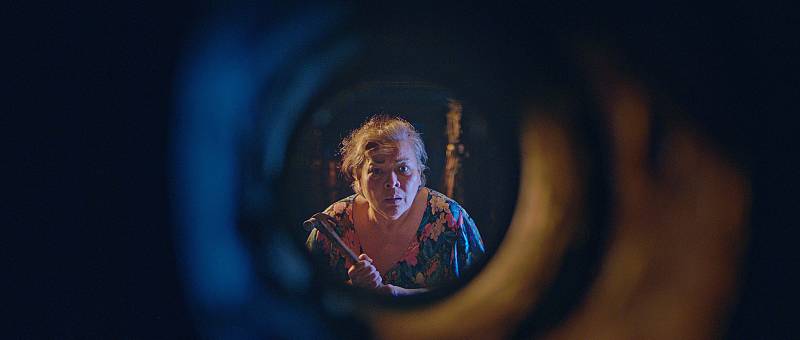
Once a successful screenwriter of action films, Leonor Reyes (Sheila Francisco) is now an elderly lady who has largely shut herself away following the tragic death of her eldest son, Ronwaldo (Anthony Falcon). Her youngest, Rudie (Bong Cabrera), still lives with her but as she later reveals there is distance between them and a sort of repellant dependency in which each resents the other and longs for freedom while simultaneously afraid to chase it. When Leonor “forgets” to pay her electricity bill and is berated by Rudie, she is handed a newspaper by the ghost of Ronwaldo containing an ad for a screenplay competition and decides to dust off the script she broke off when he died. While taking a cigarette break, she is hit on the head by a flying TV thrown out by the man next-door fed up with his wife’s addiction to soap operas and finds herself falling into the world of the film hoping she can save the hero, also named Ronwaldo (Rocky Salumbides), from his tragic fate. 

Shifting into a grainy 4:3 with mono aural sound, Escobar perfectly recreates the world of retro action drama but subtly updates it from its Marcos-era backdrop in replacing activists with drug users, her authoritarian thugs carrying out extrajudicial killings for reasons of intimidation. The movie Ronwaldo is set on revenge against a corrupt mayor and his vigilante son who shot his brother and then placed a pistol and a small packet of drugs next to the body, resisting authoritarianism in a way it may not have actually been possible to do so directly in the movies of the past. In any case, Leonor slips into her own screenplay as an awkward omnipotent force writing as she goes but struggling with her own role and agency before picking up a hammer and venturing into danger to rescue the hero and his love interest herself.  

From the other side of the screen, Rudie asks her if she’d be OK with someone else finishing her screenplay which is in a way asking her if she’s alright with her final decisions being made for her. That might be what Leonor is trying to decide for herself by rewriting in real time, searching for the right ending for her life’s story. Rudie had resented his mother, blaming her for keeping him behind when he planned to apply for an overseas work visa to join his boyfriend abroad but she wonders if he isn’t just using her as an excuse while afraid to take the risk. She by turn insists she can manage alone, but is perhaps afraid she can’t which, along with the grief she feels over Ronwaldo’s death, leads her to push him away. 

Leonor’s coma perhaps brings them both clarity that allows them to discover what it is they really want, Rudie finally handing agency back to his mother in telling her do what she has to do in a world of her own creation while she tells both her sons to be sure they write their own lives. The doctor had told Rudie that Leonor was trapped in a world between sleeping and waking and that you can’t wake someone who is not asleep, they will have to find a way to escape by themselves something which in one way or another Leonor perhaps does coming to terms with Ronwaldo’s death and breaking free of her grief through recapturing her creative spirit if writing a poetic end for herself. Then again as an authorial voice breaks through, life is never as simple as narrative and we’re rarely given the opportunity to edit our own stories or decide the way in which they end, perhaps Leonor isn’t either but even so passes into a world of joy and song in which there are no real endings only a great expanse of cinema. Charmingly surreal and filled with good humour, Leonor Will Never Die is at once the story of an old woman rediscovering herself while letting go of her grief and a celebration of escapist pleasures as paths towards self actualisation. 


Leonor Will Never Die screens in Amsterdam on 30th October as part of this year’s Imagine Fantastic Film Festival.

US release trailer (English subtitles)
Midnight in a Perfect World (Dodo Dayao, 2020)

“It doesn’t matter what’s happening as long as nothing’s happening to me” a middle-aged woman exasperatedly exclaims, irritated by a young man’s naive curiosity. A dark exploration of the legacy of Martial Law, Dodo Dayao’s surrealist horror movie Midnight in a Perfect World asks how much of your freedom you’re prepared to sacrifice for security and if the illusion of a “perfect world” in which everything “just works” is worth the price of your complicity. 

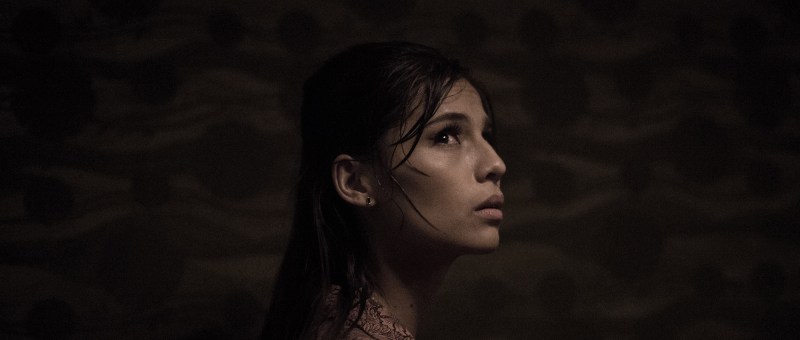
In a near future Manila in which all of the city’s infrastructural problems have been solved, conspiracy theorist Tonichi (Dino Pastrano) is convinced that a mysterious force is disappearing people in random parts of the city after midnight, a theory which is only strengthened after his friend Deana rings him in a panic convinced she’s become a victim of his “blackouts” and insisting that someone’s stolen the moon. Tonichi’s other friends, the sensible Mimi (Jasmine Curtis-Smith), reckless Jinka (Glaiza de Castro), and melancholy hospital worker Glenn (Anthony Falcon), are less convinced but caught in the street after midnight the gang have no option but to look for a “safe house” in order to escape the creeping darkness. For unexplained reasons, Tonichi is unable to enter with his friends and finds himself trapped outside in “God’s Blindspot”, as the mysterious Alma (Bing Pimentel), a middle-aged woman and safe house veteran, describes it. 

Alma might in a sense be seen as the embodiment of the Martial Law generation, holing up in her safe house minding her own business and defyingly not caring what’s going on outside determined only to make it through the night. She offers cryptic words of advice to the youngsters, but does not really try to help them outside of trying to prevent them from interfering with her own survival. The so-called safe house has a hidden upper floor apparently invisible from the outside and hiding its own secrets. When one of the gang manages to break open the door and pays a heavy price for their curiosity, Alma merely creeps forward fearfully and closes it again ensuring she is safe from its myriad horrors even in her wilful ignorance. 

Still, you have to ask yourself why if this world is now so “perfect” the youngsters seem so unhappy. Their drug use appears not to be particularly hedonistic but may offer them a degree of escape from a society which has become oppressive in its efficiency. Sensible Mimi cautions Jinka against associating with smarmy drug kingpin Kendrick (Charles Aaron Salazar) who spins bizarre stories of weird aliens while proffering a new drug which supposedly feels “like dying and going to heaven.” On her way from Kendrick’s Jinka passes a group of intense men and immediately pegs them as a hit squad, realising that Kendrick’s hideout has been exposed and she herself may now be in danger in an echo of the extra-judicial killings which have become a grim hallmark of Duterte’s Philippines. “Beta version Martial Law” is the way Jinka later describes it, drug users now taking the place of “activists” as targets not solely of legitimate authority but vigilante bounty hunters. The rumours of strange disappearances, people “erased” from their society, are yet another means of control inviting complicity with an unofficial curfew for a population ruled by fear.  

As if to ram the allegory home, Dayao ends the credit roll with the Martial Law era slogan “Sa ikauunlad ng bayan, disiplina ang kailangan” or “For the nation’s progress, discipline is needed” followed by the English phrase “Never Again”. Yet, it is happening again, the extra-judicial killings of the Duterte era no different from the disappearances of “activists” under Marcos. Jinka refers to the old Manila as the world capital of malfunction, its transformation seemingly brought about by a mysterious force but unlike Mimi who seems otherwise prepared to accept complicity in her “everything works” conspiracy theory remains dejected and suspicious. None of these young people is happy with their new utopia or prepared to pay the price demanded to live in it yet there appears to be no real way to resist and their eventual decision to brave the darkness exposes nothing so much as their naivety. Scored with eerie sci-fi synths and often shot in total darkness, Dayao’s surreal horror show offers a bleak prognosis for the contemporary society unable to escape from the permanently haunted house of an authoritarian legacy. 


Midnight in a Perfect World screened as part of this year’s Neuchâtel International Fantastic Film Festival (NIFFF).

Original trailer (English subtitles)

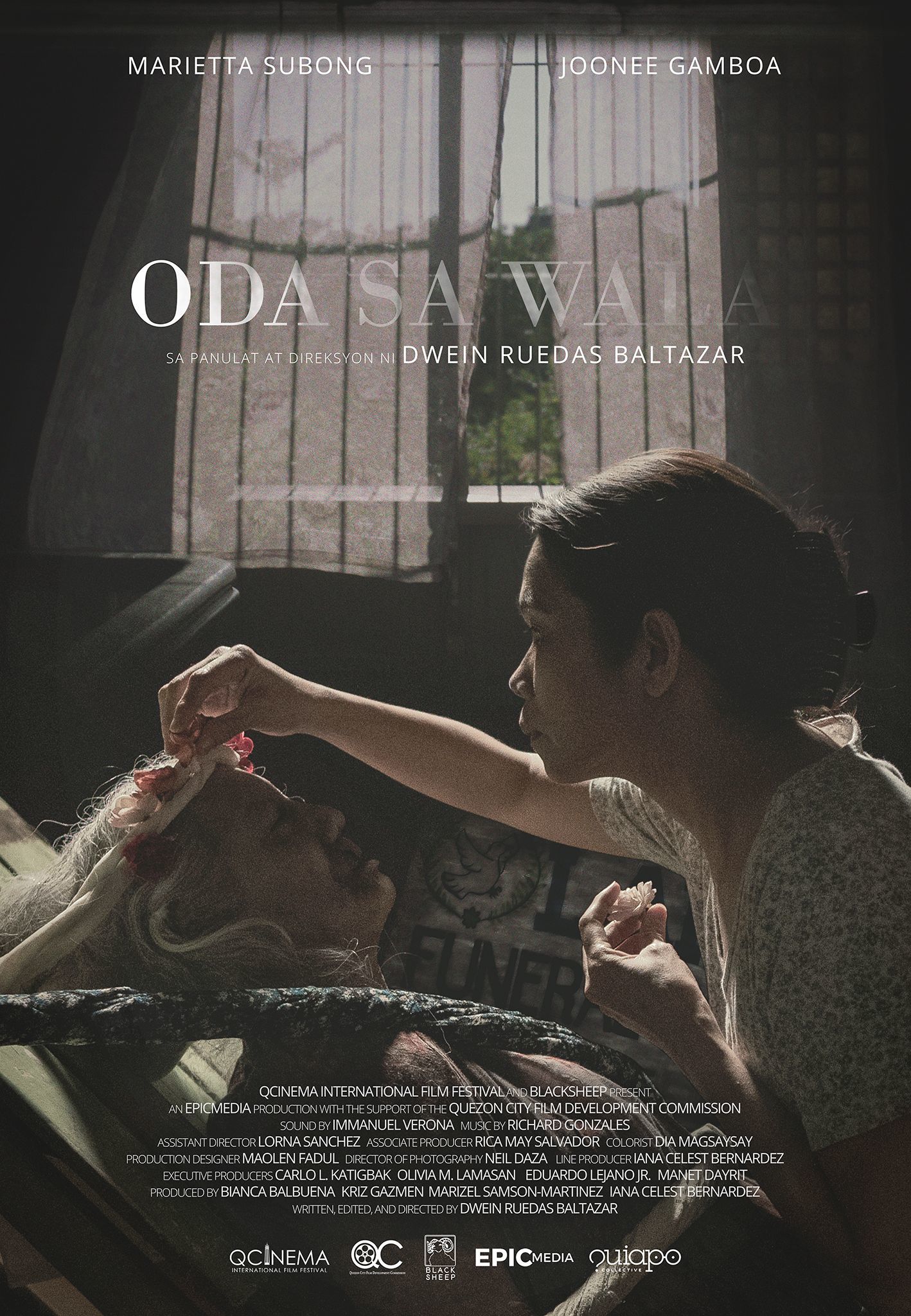
Ode to Nothing (Oda Sa Wala, Dwein Ruedas Baltazar, 2018) [Fantasia 2019]

Ode to Nothing poster 3“Maybe it would be better if I just disappeared rather than physically be here but feel invisible all the time” the lonely heroine of Dwein Ruedas Baltazar’s Ode to Nothing (Oda sa wala) sadly laments to her only source of comfort, a semi-embalmed corpse. A melancholy meditation on the living death that is existential loneliness, Ode to Nothing takes its alienated heroine on a journey of hope and disappointment as she rediscovers a sense of joy in living only through befriending death. 

43-year-old Sonya (Marietta Subong, AKA Pokwang) lives alone with her elderly father (Joonee Gamboa) to whom she barely speaks in a large Spanish-style house which doubles as a moribund funeral home. Short on custom, Sonya’s only frequent visitor is sinister loanshark Theodore (Dido de la Paz) who currently holds the deeds to the house while she struggles to make the interest payments. Meanwhile, she spends her days gazing out of open windows, waiting for the handsome young taho seller to arrive, and listening to an ancient cassette tape of Chinese folksong Mo Li Hua.

The stillness of her life is ruptured late one night when a couple of men arrive with the fresh corpse of an old woman, seemingly having run her over and not wanting the bother of taking her to a hospital seeing as she is already dead. Sonya is dubious. She doesn’t want any trouble either, but needs the money and the custom and so she agrees to take the woman in and see if anyone claims her. No one does, and soon enough the corpse has become a new presence in Sonya’s life and home. She begins to confide in it, dresses it in her mother’s old clothes, and sits it at the dinner table where her father too indulges the illusion, finally talking to her once again as if the family had really been restored.

In an odd way, the corpse guides Sonya back to life. No longer so sullen, her funeral parlour finally attracts some customers while she begins to dress more cheerfully, even dancing and skipping along to Mo Li Hua with girlish enthusiasm. “As you get older, you have more reason to do the things you were too afraid to do when you were younger” she explains to the corpse, outlining a brief overture she just made to Elmer (Anthony Falcon), the taho vendor, whose grandfather she also saw off around three years ago after which Elmer took over the taho vending business.

Taho is perhaps the perfect encapsulation of Sonya’s newfound hopes, wholesome sweetness and easy comfort. The blandness of off-white silken tofu mixed with the gentle colouring of the amibal syrup and sago pearls, like the Jasmine flower of the folksong, seem to symbolise the brief moments of possible happiness in an otherwise dull existence but even within her increasing sense of positivity she perhaps knows her rekindled desire for Elmer and for life is likely go answered. In any case, she falls into the corpse’s lap as if it really were her mother, attributing to it a supernatural power that keeps the corpses flowing and beckons both life and death to her lonely home.

As in any good fairy tale, however, you have to be careful what you wish for. Sonya gets what she wanted, but not at all in the way she wanted it. The corpse betrays her, leaving her bereft once again and entombed inside her own funeral home with the feeling that there is only one way out. Baltazar shoots in 4:3 with the rounded corners of nostalgic 16mm, but the frame cannot help but recall the small window on the surface of a coffin, as if we were peeking in on her still life from some other plane. Sonya is, in many ways, already dead, trapped in a moribund and hopeless world where even the fragmentary past is being slowly taken away from her – the broken cassette tape, the rapidly depleting furniture, Elmer’s crushing absence. She confesses that she’s afraid of the dark and of being alone, tired enough of her resignation to abandonment to embrace a corpse which can, of course, never leave you. It can, however, disappoint as all false idols will. A melancholy exploration of loneliness, defeat, and despair, Baltazar’s whimsical drama is a haunting ode to emptiness but one that clings sadly to life and hope even as the night draws in.


Ode to Nothing was screened as part of the 2019 Fantasia International Film Festival.

Original trailer (English subtitles)

Mo Li Hua