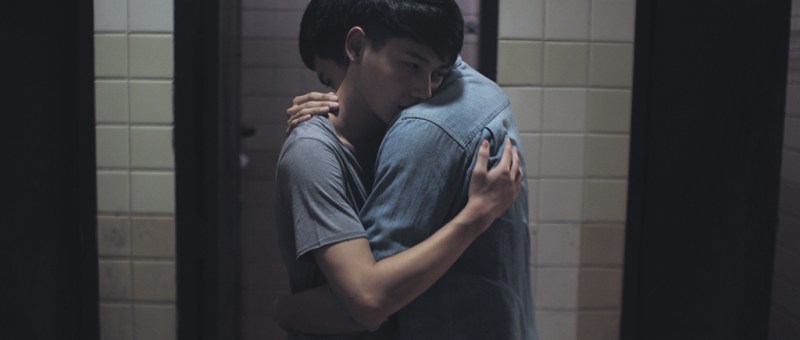
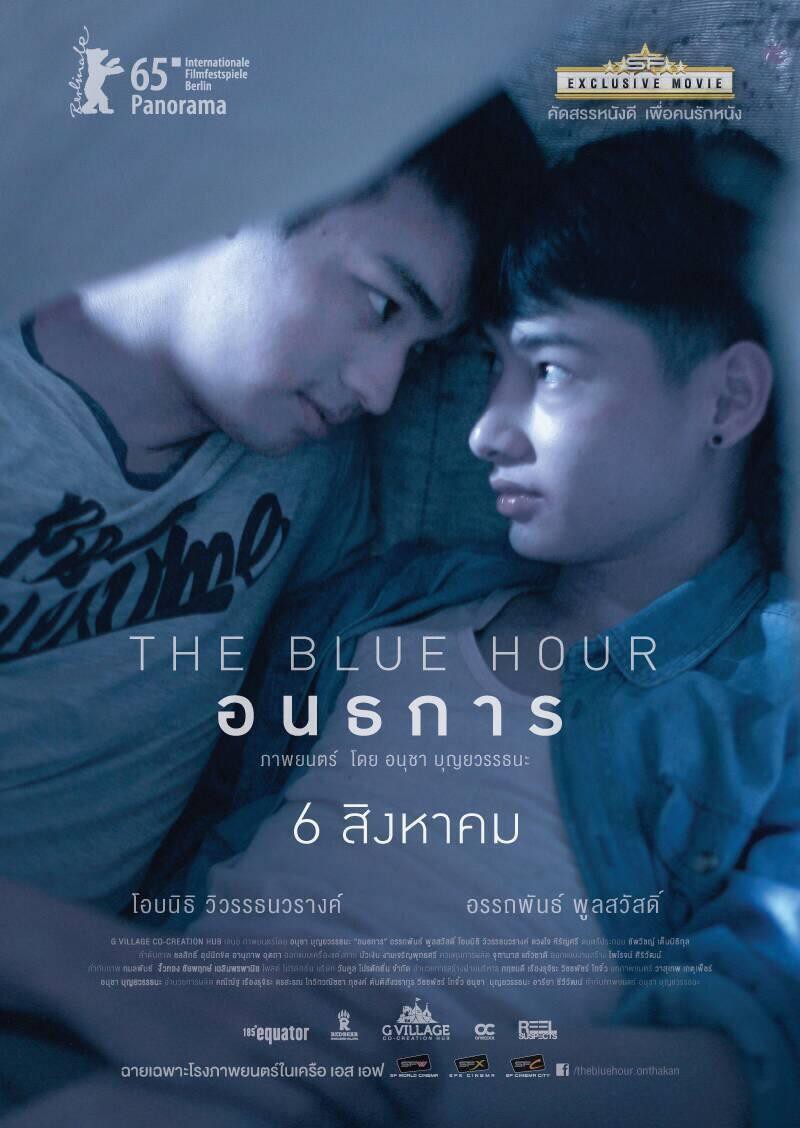
Reality and fantasy begin to blur for a young man rejected by his family and persecuted by a society he feels has no place for him in the ethereal debut from Anucha Boonyawatana, The Blue Hour (อนธการ). Imbued with a strong sense of spiritual dread, the film casts its duplicitous hero adrift in an increasingly confusing reality in which his relationship with a mysterious boy encountered online may be his only anchor while drawn towards darkness and a lonely obsolescence.
As we first meet high schooler Tam (Atthaphan Phunsawat) he is bloodied and bruised, a scene later repeated finding him beaten by bullies after money he’d supposedly borrowed from them but is unable to to return. He seems to be carrying an intense amount of resentment and self-loathing, not least towards his mother and brother who he says do not trust him accusing him of being responsible for anything untoward that occurs in their home. Then again, as Tam explains to new friend Phum (Oabnithi Wiwattanawarang), sometimes he actually did do what he’s accused of yet still resents the assumption while undermining our faith in him as a reliable narrator of his own history. In any case, Tam’s mother has figured out he’s gay and is very unhappy about it directly asking him why he can’t “change” while taking his sexuality as a personal slight against her parenting, asking him if he hasn’t considered her feelings and reminding him that his father “hates it”. In Tam’s mind his family’s negative view of him is directly tied to his sexuality and concurrent sense of otherness, fearing that they see him as inherently wicked simply because he is different. “My family don’t hit me in the face” he reassures Phum when questioned about the collection of scars and bruises across his body hinting that they hurt him in other ways that the world can’t see.
Yet his meeting with Phum is also in its way dark and ominous as if Phum himself is one of the spirits of which he later speaks hiding people away until they can claim them for the spiritworld. Their first meeting takes place at a dilapidated, disused swimming pool Phum claims is haunted which has eerie stains in the shape of people covering its walls one of which looks just like the figure of Tam sitting on the pool’s edge. If that weren’t odd enough, Phum later takes him on a date to garbage dump he says is on land that his family once owned but were unfairly cheated out of. This literal dumping ground nevertheless has its own sense of spiritual oddness, Tam finding the body of a man which seems to have regained some kind of life as does the body of a dog he later leaves there. Meanwhile, he’s shot at by a random man with a gun, presumably one of the gangsters Phum says are squatting on his land, and eventually clubs him over the head in act of violence later to recur whether in fantasy or reality outside of Tam’s direct memory.
When Phum tells him that “if we can get rid of them then this land will be ours. Then we can live here together” he’s perhaps talking more widely or at least to Tam’s fracturing psyche suggesting that if he could rid himself of the oppressive forces in his society then he’d be able to live freely having reclaimed his emotional landscape and cleared it of the trash left behind. His visions become darker, haunted by a sense of dread as he tries to scrub the silhouette of himself from the pool’s wall and encounters bloody scenes of his own violence whether real or imagined. What he seems to seek is the promised oblivion of Phum’s stress beating ritual immersed beneath the murky waters of his escapist dreamscape. Oneiric and elliptical, Anucha Boonyawatana’s beautifully photographed non-linear tale of repression and release paints a darkening picture of the contemporary society for boys like Tam fracturing under the weight of rejection and resentment, their mounting rage and loneliness turned inward yet threatening to explode into self-destructive violence. Hidden away he might well be and bound for another world hand in hand with his mysterious saviour.
The Blue Hour screens at the Barbican on 23rd May as part of this year’s Queer East.
Original trailer (English subtitles)
 Windows on Worlds